This guide contains affiliate links. We may earn a commission at no extra cost to you — see our Affiliate Disclosure and Affiliate Disclosure Policy for details.
Ever pictured walking through a mountainside of a thousand crimson gates, or watching a golden pavilion glow above a still pond at sunrise? What if one city could give you a thousand years of history, a festival every season, and some of the best food in Japan — all in one compact, walkable trip?
That city is Kyoto. Kyoto tourist places are unlike anything else in Japan — the imperial capital for over a thousand years, and it still feels like it. Golden pavilions reflected in still ponds, thousands of vermilion torii gates climbing a forested mountain, geiko hurrying down lantern-lit alleys at dusk. So where do you start? What do you eat? When should you go, and how much will it actually cost? This guide answers all of it: the best season to visit, festival dates worth planning around, the food you have to try, hotel picks for every budget, and a full step-by-step schedule you can copy straight into your trip planner.
Whether you’re traveling solo, bringing the whole family, or planning a honeymoon, this guide breaks down realistic costs and a day-by-day route so you’re not wasting time crisscrossing the city. Let’s get into it.
To book your stay, click here. To Book Local Travel, click here
Traveling overseas? Click here to buy an eSIM. For more info, click here
Table of Contents
Why Kyoto Tourist Places Top Every Japan Itinerary
Tokyo gets the neon and the crowds, but Kyoto tourist places are where Japan’s history actually lives. The city survived World War II bombing largely untouched, so it holds over 2,000 temples and shrines, 17 UNESCO World Heritage Sites, and entire neighborhoods — like Gion and Higashiyama — that look almost identical to how they did centuries ago. For first-time visitors to Japan, Kyoto is usually the second stop after Tokyo, and for good reason: it’s compact enough to explore over 3–7 days, walkable in most districts, and connected to the rest of the country by the shinkansen (bullet train).
Unlike Tokyo, where sights spread across a sprawling metro area, most Kyoto tourist places cluster into a handful of walkable districts — Higashiyama in the east, Kinkaku-ji and Kitayama in the north, Arashiyama in the west, and central Kyoto around Nijo Castle and Nishiki Market. That geography is exactly why this guide is organized the way it is: by season, by festival calendar, by budget, and then by a day-by-day route that follows the city’s natural layout instead of zigzagging across town.
How to Get Around Kyoto Tourist Places
Kyoto’s public transport is simple once you understand the basics, and getting it right saves real time across a multi-day trip.
- City buses connect almost every major Kyoto tourist place and are the most common way tourists get around. A one-day bus pass costs around ¥700 and pays for itself after three rides.
- Subway (Karasuma and Tozai lines) is faster than buses for crossing the city but covers fewer of the outer sightseeing areas like Arashiyama or Fushimi Inari.
- JR trains are the quickest way to reach Fushimi Inari (Inari Station, 5 minutes from Kyoto Station) and Arashiyama (Saga-Arashiyama Station), and they’re covered by the Japan Rail Pass if you’re using one for a wider Japan trip.
- Taxis are pricier than in most of Asia but reasonable for short hops, especially useful late at night or when traveling with young kids and luggage.
- Bicycles are a popular way to see Arashiyama and the Philosopher’s Path at your own pace; rental shops near Kyoto Station and Arashiyama Station charge roughly ¥1,000–¥1,500 per day.
Most travelers mix a one-day bus pass with the occasional JR train or taxi ride, which comfortably covers every major stop on this Kyoto tourist places list.
Book Your Hotel Stay – Kyoto
Best Time to Visit Kyoto Tourist Places
Picking the right season matters more in Kyoto than almost anywhere else in Japan, because the city’s temples, gardens, and mountainsides transform dramatically through the year.
Spring (Late March – April): Cherry Blossom Season
This is the single most popular time to visit Kyoto tourist places, and also the busiest and most expensive. Cherry blossoms (sakura) typically bloom from late March through mid-April along the Philosopher’s Path, in Maruyama Park, and around Nijo Castle. Book hotels 4–6 months ahead if you’re targeting this window — rooms near Kyoto Station and Gion sell out fast every year.
Summer (June – August): Festivals but Heavy Humidity
June brings the rainy season, and July–August is hot and humid (often 33–35°C / 91–95°F). The upside is Gion Matsuri, one of Japan’s biggest festivals, which runs through all of July. If you can handle the heat, this is a great trade-off for smaller crowds at temples outside the festival dates.
Autumn (Mid-November – Early December): Fall Foliage
Autumn is arguably the most beautiful season for Kyoto tourist places. The maple trees (momiji) at Tofuku-ji, Eikan-do, and Arashiyama turn deep red and orange, and many temples hold special night illuminations. Like cherry blossom season, this is peak tourist season — expect crowds and higher hotel prices.
Winter (December – February): Quiet and Budget-Friendly
Winter is the most underrated time to visit Kyoto tourist places. Crowds thin out dramatically, hotel prices drop, and occasional snowfall on Kinkaku-ji’s golden roof is genuinely one of the most photographed sights in Japan. Temperatures hover around 3–10°C (37–50°F), so pack layers.
Quick recommendation: if you want fewer crowds and lower prices, go in winter or early June. If the cherry blossoms or fall colors are non-negotiable, book everything (flights, hotels, and even restaurant reservations) months in advance.
Festival Times in Kyoto for Tourist Visits
Timing a trip around a festival is one of the best ways to see a different side of Kyoto tourist places beyond the temples.
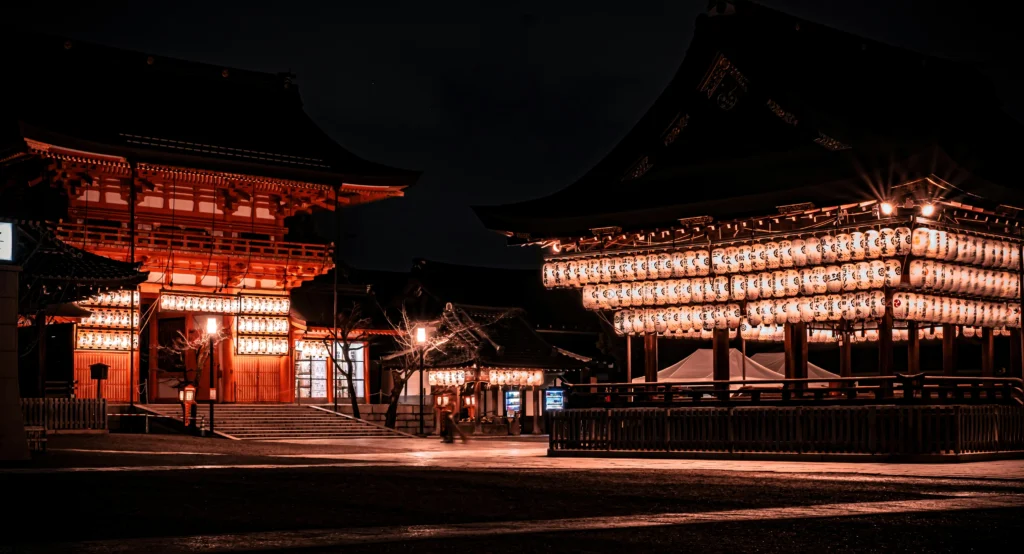
- Gion Matsuri (July 1–31): Kyoto’s most famous festival, centered on Yasaka Shrine, with the spectacular Yamaboko Junko float procession on July 17 and 24.
- Hanatoro (Mid-March, Higashiyama & Arashiyama): Evening walking paths lit by thousands of lanterns through historic streets and bamboo groves.
- Aoi Matsuri (May 15): A Heian-era costume procession from the Imperial Palace to Shimogamo and Kamigamo Shrines.
- Jidai Matsuri (October 22): A “Festival of Ages” procession featuring costumes spanning 1,000+ years of Japanese history, ending at Heian Shrine.
- Arashiyama Momiji Matsuri (Mid-November): A boat festival celebrating the autumn maple season on the Katsura River.
If your travel dates align with any of these, you’ll get a livelier, more cultural version of the same Kyoto tourist places you’d otherwise see as quiet monuments.
Top Kyoto Tourist Places: The Full Guide
Here’s a closer look at the Kyoto tourist places that consistently rank as must-sees, along with practical visiting tips for each.
1. Fushimi Inari Taisha
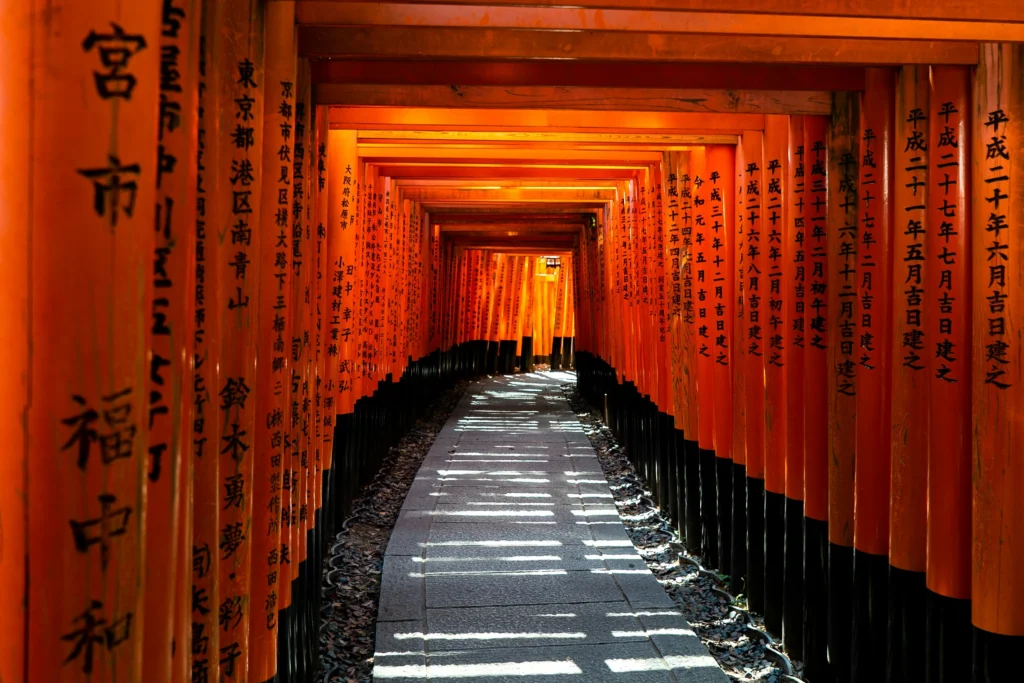
The thousands of vermilion torii gates winding up the mountain behind this shrine are probably the single most recognizable image of Kyoto tourist places. It’s open 24 hours and free to enter. Arrive before 7 AM to get the famous gate tunnels without crowds — the full hike to the summit and back takes about 2–3 hours, but even a 30-minute walk through the first gates is worth it.
2. Kinkaku-ji (The Golden Pavilion)
A Zen Buddhist temple whose top two floors are covered in gold leaf, set beside a reflecting pond. It’s one of the most photographed of all Kyoto tourist places and a UNESCO World Heritage Site. Visits are quick (30–45 minutes) since you follow a set path around the grounds rather than entering the building. Open 9 AM–5 PM; admission is around ¥500.
3. Kiyomizu-dera
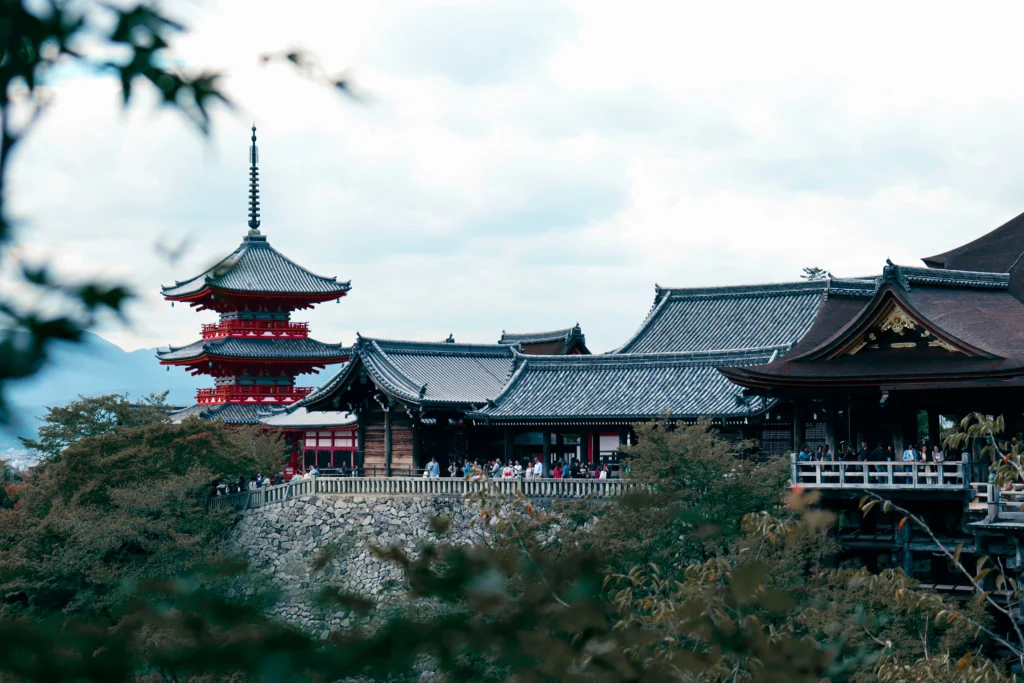
A wooden temple built on a hillside without a single nail, famous for its large veranda offering sweeping views over Kyoto. The approach through Higashiyama’s preserved streets — Sannenzaka and Ninenzaka — is as much a highlight as the temple itself. Open 6 AM–6 PM.
4. Arashiyama Bamboo Grove
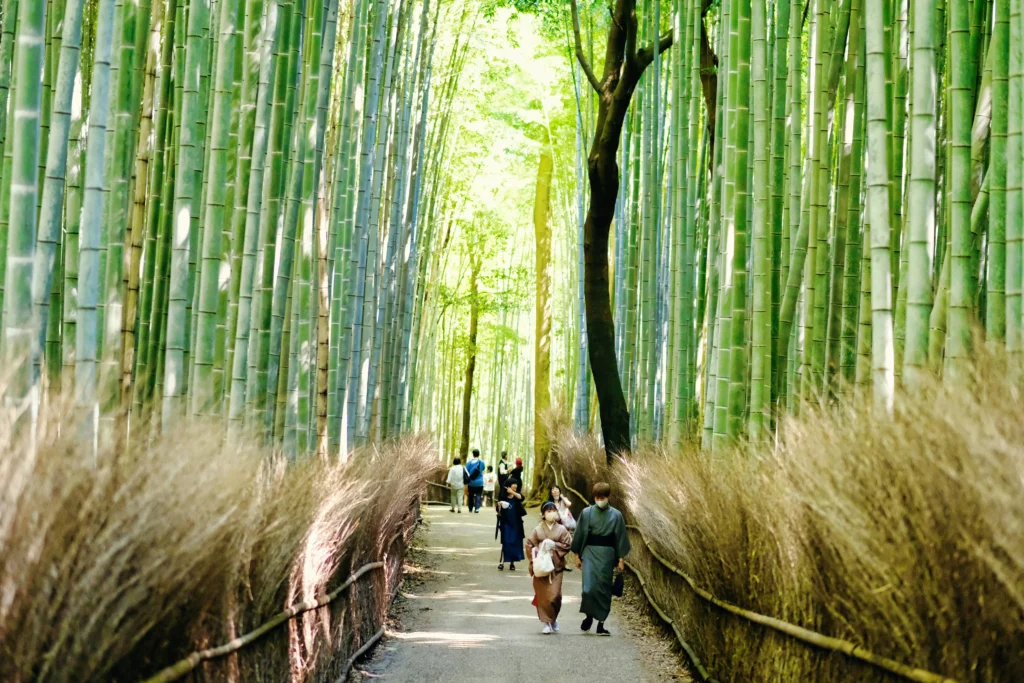
A short but striking walk through towering bamboo stalks, best experienced at sunrise before tour groups arrive. Combine it with the nearby Tenryu-ji Temple gardens and the Togetsukyo Bridge for a half-day in western Kyoto.
5. Gion District
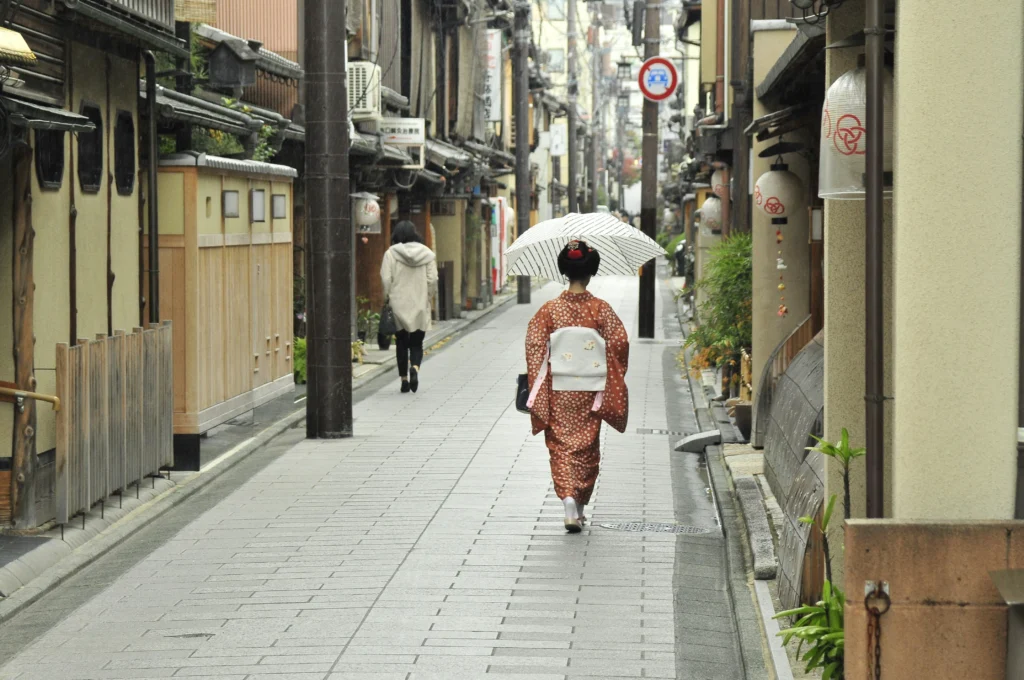
Kyoto’s historic geisha district, with wooden machiya townhouses, traditional teahouses, and a chance (though never guaranteed, and never chase or photograph without consent) of spotting a geiko or maiko heading to an appointment in the early evening. Hanamikoji Street is the most atmospheric stretch.
6. Nijo Castle
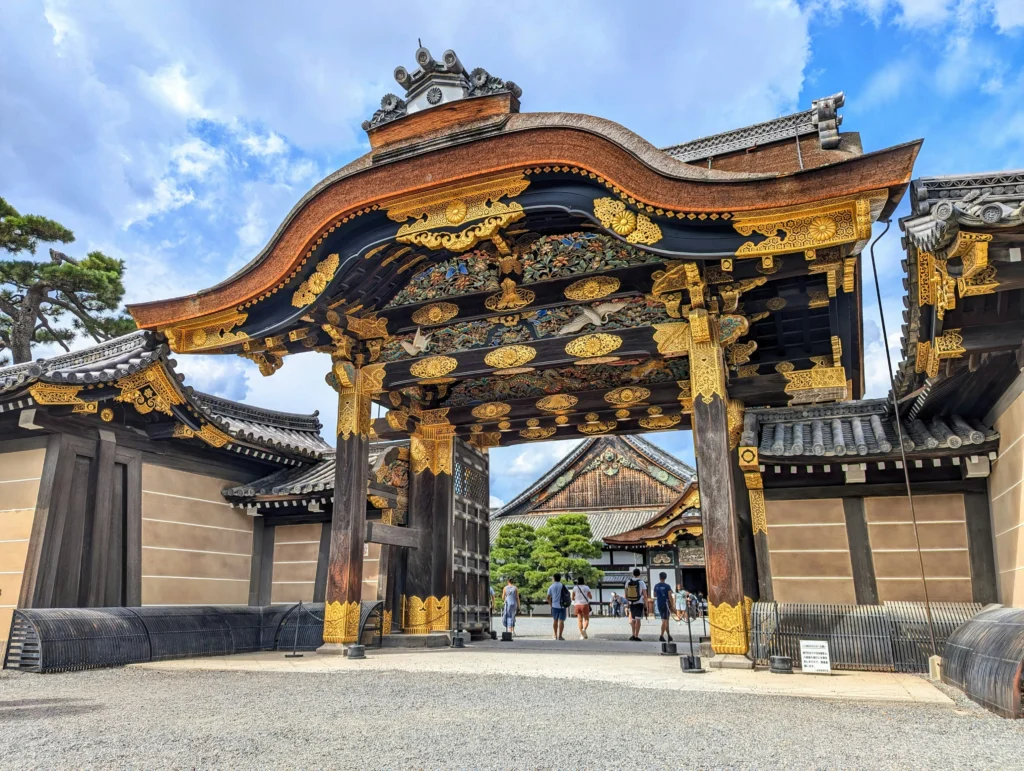
The former residence of the Tokugawa shoguns, known for its “nightingale floors” that chirp underfoot — an intentional security feature against intruders. The castle grounds are also a strong cherry blossom spot in spring.
7. Nishiki Market
A five-block covered market nicknamed “Kyoto’s Kitchen,” lined with stalls selling street food, pickles, knives, and local sweets. It’s the best single stop for sampling Kyoto’s food culture in one walk.
8. Philosopher’s Path
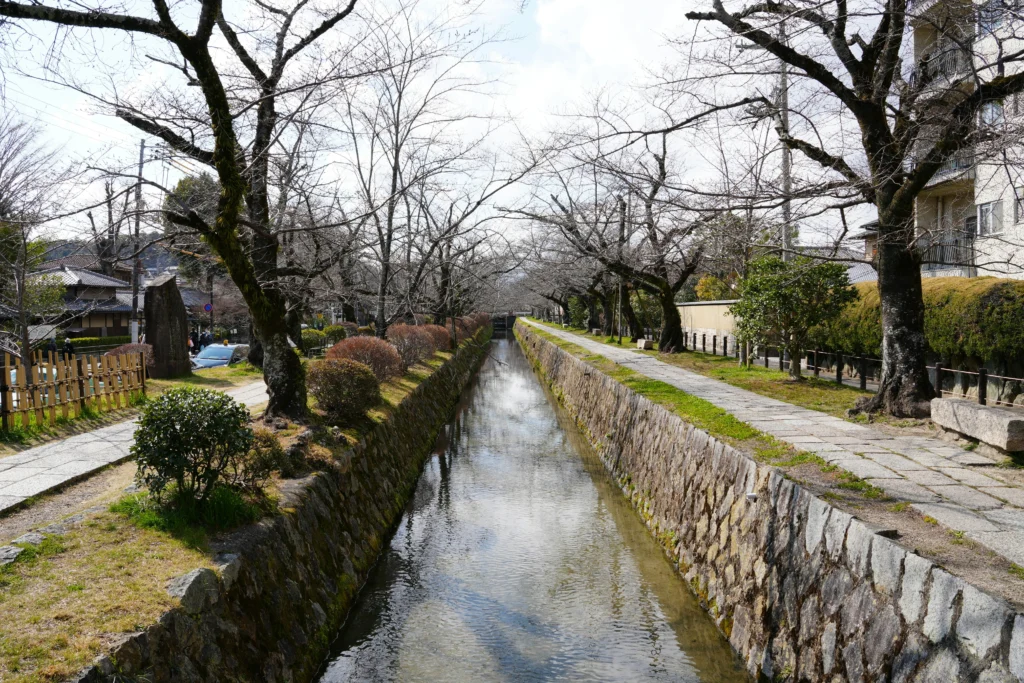
A stone path following a canal lined with hundreds of cherry trees, connecting Ginkaku-ji (the Silver Pavilion) to Nanzen-ji Temple. Quiet, scenic, and a nice contrast to the busier Kyoto tourist places on this list.
9. Off-the-Beaten-Path Kyoto Tourist Places
If you’ve done a previous Japan trip or just want to escape the crowds at the major sites, these lesser-known Kyoto tourist places are worth the detour:
- Fushimi Sake District – a canal-side neighborhood south of the city with historic sake breweries, several offering tastings and tours.
- Kurama and Kibune – a short train ride north into the mountains, with a hiking trail connecting a mountain temple to a riverside dining village famous for kawadoko (platform dining over the river) in summer.
- Otagi Nenbutsu-ji – a small temple in the hills above Arashiyama with 1,200 individually carved stone statues, each with a different expression.
- Shisen-do – a quiet garden temple in northern Kyoto, rarely crowded even during peak cherry blossom or fall foliage weeks.
- Kyoto Botanical Gardens – a good rainy-day option, especially during the spring bulb and autumn color seasons.
These spots won’t replace the headline Kyoto tourist places on your first visit, but they’re excellent additions on a return trip or a longer stay.
Book Your Tour Package – Kyoto
Famous Food to Try in Kyoto
No visit to Kyoto’s tourist places is complete without eating your way through the city’s food scene, which leans more delicate and seasonal than Tokyo’s.
- Kaiseki ryori – a multi-course traditional meal built around seasonal, beautifully presented dishes; considered the pinnacle of Kyoto cuisine.
- Yudofu – simmered tofu hot pot, a specialty around the temples of Arashiyama and Nanzen-ji, where Buddhist vegetarian cooking traditions run deep.
- Matcha sweets – Kyoto is Japan’s matcha capital (Uji, just south of the city, grows some of the country’s best green tea); try matcha parfaits, soft-serve, and warabi mochi.
- Yatsuhashi – a cinnamon-scented sweet made from rice flour, sold fresh (nama-yatsuhashi) or baked into cracker form; Kyoto’s signature souvenir sweet.
- Obanzai – Kyoto’s home-style comfort food, made from seasonal vegetables and simple seasoning, served at small family-run restaurants.
- Nishiki Market street food – try tako tamago (octopus stuffed with quail egg), fresh yuba (tofu skin), and skewered dashimaki tamago (rolled omelet).
For a memorable splurge, book a kaiseki dinner in Gion or Pontocho — many restaurants overlook the Kamo River, especially magical at sunset. If you’re traveling with kids, look for casual obanzai restaurants with set lunch menus (teishoku); they’re far more affordable than dinner kaiseki and still give you an authentic taste of Kyoto’s food culture without a multi-hour tasting menu.
Coffee culture is also strong here — Kyoto has a growing scene of specialty cafés tucked into converted machiya townhouses, particularly around Higashiyama and Pontocho, which make a nice midday break between temple visits.
Etiquette and Packing Tips for Kyoto Tourist Places
A few practical notes that make visiting Kyoto’s temples and shrines smoother:
- Dress modestly at temples and shrines — shoulders and knees covered is a safe default, and some inner halls require you to remove your shoes, so wear socks without holes.
- Photography rules vary — Fushimi Inari and Arashiyama are fully open for photos, but some temple interiors (like parts of Kinkaku-ji and Nijo Castle) restrict photography; always check posted signs.
- Never photograph geiko or maiko without permission in Gion — parts of Hanamikoji and the surrounding lanes have introduced fines for harassment of geisha, driven by overtourism in recent years.
- Cash still matters — while more places accept cards now, smaller shops, temple entry counters, and food stalls in Nishiki Market often prefer cash.
- Comfortable walking shoes are essential; a single day covering two or three Kyoto tourist places easily adds up to 15,000–20,000 steps.
- Pack for the season — summer needs breathable fabrics and a portable fan; winter needs real layers, since temple grounds are unheated outdoor spaces.
How Many Days Do You Need for Kyoto Tourist Places?
- 2 days: A rushed but doable highlight reel — Fushimi Inari, Kiyomizu-dera, Kinkaku-ji, and Gion.
- 3–4 days: The sweet spot for most travelers. Covers the major Kyoto tourist places above plus Arashiyama and Nishiki Market without feeling rushed.
- 5–7 days: Ideal if you want day trips to Nara, Uji, or Osaka, plus time for slower experiences like a tea ceremony, a kimono rental day, or a cooking class.
If Kyoto is one stop on a broader Japan trip, budget a minimum of 3 full days; anything less and you’ll only see the surface.
Where to Stay Near Kyoto Tourist Places
For Families
Look for hotels near Kyoto Station or Karasuma, which offer easy access to the subway/bus network and larger family rooms. Kyoto Station itself has direct train connections to Nara, Osaka, and Universal Studios Japan, useful if your itinerary spans the wider Kansai region. Budget: roughly ¥15,000–¥30,000 (~$100–$200) per night for a family room.
For Solo Travelers
Higashiyama and Pontocho are great bases if you want to walk to major sights and enjoy the evening atmosphere without needing taxis. Hostels and capsule hotels in this area run ¥3,000–¥8,000 (~$20–$55) per night; solo-friendly business hotels run ¥8,000–¥15,000 (~$55–$100).
For Honeymooners
Consider a traditional ryokan in Arashiyama or Higashiyama with a private onsen (hot spring bath) and in-room kaiseki dinner — this is the single most memorable splurge for a Japan honeymoon. Expect ¥30,000–¥80,000+ (~$200–$550+) per night, but it’s a genuinely different experience from a standard hotel room.
A Note for Honeymooners
Beyond the ryokan stay, consider adding a private evening kaiseki dinner in Pontocho, a couples’ kimono rental day in Higashiyama (many shops offer photo packages around Kiyomizu-dera and Yasaka Pagoda), and a quiet morning at the Philosopher’s Path before the day-trippers arrive. Slowing the pace down — three Kyoto tourist places a day instead of five — tends to make a honeymoon feel far more memorable than a packed checklist.
A Note for Families
Kids generally respond best to Fushimi Inari (climbing through the gates feels like an adventure), the Arashiyama Bamboo Grove, and Nishiki Market’s snack-stall browsing, more than long temple-interior visits. Break up temple time with the Kyoto Railway Museum or the Kyoto Aquarium, both near Kyoto Station, if you need a change of pace mid-trip.
Hotel Picks by Budget
While exact availability shifts by season, these are the categories worth searching within when booking near Kyoto tourist places:
- Budget ($30–$60/night): Capsule hotels and hostels around Kyoto Station and Karasuma Oike, most with coin laundry and shared kitchens — good for solo travelers on longer stays.
- Mid-range ($100–$180/night): International chain and boutique hotels around Shijo-Karasuma and Kyoto Station, offering private rooms with easy subway access to most Kyoto tourist places.
- Upscale ($250–$450/night): Design-forward hotels in Higashiyama and Nijo with views of temple rooftops or the Kamo River, popular with couples and small families wanting more space.
- Ryokan/luxury ($350–$800+/night): Traditional inns in Arashiyama, Higashiyama, or along the Kamo River with kaiseki dinners, private baths, and tatami rooms — the top choice for honeymooners.
Kyoto Tour Expenses: What to Budget
Costs vary widely depending on travel style, but here’s a realistic per-day range (excluding international flights):
| Travel Style | Accommodation | Food | Local Transport & Entry Fees | Daily Total (approx.) |
|---|---|---|---|---|
| Solo (budget) | $25–$45 | $20–$30 | $10–$15 | $55–$90/day |
| Family of 4 (mid-range) | $130–$200 | $80–$120 | $30–$50 | $240–$370/day |
| Honeymoon (upscale) | $250–$550+ | $80–$150 | $30–$50 | $360–$750+/day |
A few money-saving tips: buy a Kyoto City Bus one-day pass if you’re relying on buses, most major shrines (Fushimi Inari, Gion’s public streets) are free to enter, and eating at Nishiki Market or standing-counter noodle shops keeps food costs well under restaurant prices.
Step-by-Step Kyoto Itinerary: Which Places to Visit First
Here’s a practical day-by-day route through the main Kyoto tourist places, grouped by geography so you’re not backtracking across the city.
Day 1 – Southern & Eastern Kyoto
- Fushimi Inari Taisha (early morning, 7–9 AM, before the crowds)
- Kiyomizu-dera and the Sannenzaka/Ninenzaka streets (late morning)
- Gion district and Hanamikoji Street (evening, for the best atmosphere and dinner)
Day 2 – Northern Kyoto
- Kinkaku-ji (Golden Pavilion), first thing in the morning
- Ryoan-ji’s rock garden (nearby, if time allows)
- Nijo Castle (afternoon)
- Nishiki Market (early evening, for dinner and snacks)
Day 3 – Western Kyoto (Arashiyama)
- Arashiyama Bamboo Grove (sunrise, before 8 AM)
- Tenryu-ji Temple gardens
- Togetsukyo Bridge and the riverside area (lunch)
- Philosopher’s Path and Ginkaku-ji (late afternoon)
Day 4 – Day Trip to Nara Take the 45-minute train south to Nara. Spend the morning at Nara Park with its free-roaming deer, then visit Todai-ji Temple, home to Japan’s largest bronze Buddha statue. Return to Kyoto by early evening for dinner in Pontocho.
Day 5 – Day Trip to Uji A 30-minute train ride brings you to Uji, Japan’s historic center for matcha production. Visit Byodo-in Temple (the building depicted on the ¥10 coin), then spend the afternoon at a matcha tasting house along the river. This is a quieter, slower day compared to the rest of the itinerary — a good reset before your final days.
Day 6 – Slow Culture Day in Kyoto Use this day for the experiences that don’t fit neatly into a walking route: a tea ceremony class, a kimono rental day with photos around Yasaka Pagoda, or a half-day cooking class focused on kaiseki or obanzai cooking. This is also a good day to revisit any Kyoto tourist place you rushed through earlier in the week.
Day 7 – Fushimi Sake District & Departure Prep Spend the morning in the Fushimi sake district south of the city, sampling at one or two historic breweries, then head back to central Kyoto for last-minute shopping at Nishiki Market before departure.
This order minimizes cross-town travel and puts you at the most crowd-sensitive Kyoto tourist places — Fushimi Inari, Kinkaku-ji, and Arashiyama’s bamboo grove — right at opening time. If you only have 3–4 days, stop after Day 3 and pick a single day trip from Days 4–5 based on your interest (deer and a giant Buddha statue vs. matcha and riverside temples).
Interactive Google Maps of Key Kyoto Tourist Places
Embed these directly in your CMS as iframes, or use them as clickable links — coordinates are exact.
1. Fushimi Inari Taisha (34.9677° N, 135.7792° E) Open in Google Maps Embed code: <iframe src="https://www.google.com/maps?q=34.9676945,135.7791876&output=embed" width="100%" height="400" style="border:0;" loading="lazy"></iframe>
2. Kinkaku-ji (Golden Pavilion) (35.0394° N, 135.7292° E) Open in Google Maps Embed code: <iframe src="https://www.google.com/maps?q=35.03937,135.7292431&output=embed" width="100%" height="400" style="border:0;" loading="lazy"></iframe>
3. Arashiyama Bamboo Grove (35.0168° N, 135.6713° E) Open in Google Maps Embed code: <iframe src="https://www.google.com/maps?q=35.0168187,135.6713013&output=embed" width="100%" height="400" style="border:0;" loading="lazy"></iframe>
Planning the Rest of Your Japan Trip
Once you’ve mapped out your Kyoto tourist places, it’s worth building the rest of your Japan route around it. For help sequencing your full itinerary — flights, rail passes, and multi-city routing — see Ryde Travel’s Japan trip-planning guides for additional destination breakdowns and booking resources.
For official transit planning, the Japan Rail Pass website is the most reliable source for shinkansen routes between Kyoto, Tokyo, and Osaka. For verified opening hours, entry fees, and any temporary closures at major sites, check the Kyoto City Official Travel Guide and UNESCO’s listing of Kyoto’s Historic Monuments before you go, since fees and hours do change seasonally.
Book Your Air Ticket
Frequently Asked Questions About Kyoto Tourist Places
What are the top Kyoto tourist places to visit?
Fushimi Inari Taisha, Kinkaku-ji, Kiyomizu-dera, Arashiyama Bamboo Grove, and Gion district are the five most visited Kyoto tourist places, each offering a different side of the city’s history and culture.
Do I need to book temple tickets in advance?
Most Kyoto tourist places, including Fushimi Inari, Kiyomizu-dera, and the Arashiyama Bamboo Grove, don’t require advance booking and charge on entry (or are free). Kinkaku-ji and some special exhibitions occasionally require timed tickets during peak season, so it’s worth checking the official site the week before your trip.
What’s the single best Kyoto tourist place if I only have one day?
If forced to choose one, most repeat visitors point to Fushimi Inari Taisha for its scale and free 24-hour access, paired with a walk through Higashiyama toward Kiyomizu-dera in the same morning.
Is Kyoto expensive compared to the rest of Japan?
Kyoto runs slightly higher than smaller Japanese cities but is generally comparable to, or a little cheaper than, central Tokyo for food and mid-range hotels. Ryokan stays and kaiseki dinners are where costs climb fastest.
Is Kyoto walkable, or do I need a car?
You don’t need a car. Most Kyoto tourist places within a district are walkable, and buses and trains cover the rest. Renting a car adds parking headaches without saving meaningful time.
Is Kyoto expensive compared to Tokyo or Osaka?
Kyoto is generally comparable to or slightly cheaper than central Tokyo for food and mid-range hotels, though ryokan stays and kaiseki dinners can push costs higher.
Which Kyoto tourist places are best for a honeymoon?
Arashiyama’s ryokans with private onsen baths, a kimono photo session near Kiyomizu-dera, and a sunset kaiseki dinner in Pontocho are the top honeymoon picks.
What festivals should I plan my Kyoto trip around?
Gion Matsuri (all of July) and Jidai Matsuri (October 22) are Kyoto’s biggest festivals, offering a livelier experience at the same Kyoto tourist places.
Nearby Places
If you have extra days built into your trip, these nearby destinations pair naturally with a Kyoto itinerary:
- Nara (45 min by train) – Todai-ji’s giant Buddha statue and the free-roaming deer of Nara Park.
- Osaka (15 min by shinkansen, ~45 min by regular train) – Dotonbori’s street food scene and Osaka Castle. 15 Amazing Osaka Tourist Places to Visit in 2026
- Uji (30 min by train) – Byodo-in Temple (featured on the ¥10 coin) and some of Japan’s best matcha.
- Himeji (~1 hour by shinkansen) – Himeji Castle, Japan’s best-preserved original castle and a UNESCO World Heritage Site.
- Lake Biwa (30–40 min by train) – Japan’s largest lake, good for a slower, scenic half-day outside the city.
Kyoto rewards travelers who slow down and plan around the seasons rather than trying to see everything on a single pass. Whether you’re chasing cherry blossoms, planning a honeymoon ryokan stay, or budgeting a family trip, the Kyoto tourist places above will anchor a trip you’ll be talking about long after you’re home.
Visit our other blogs
10 Must-See Tourist Places in Tokyo, Japan You’ll Love
15 Amazing Osaka Tourist Places to Visit in 2026
Yokohama Tourist Places: 15 Amazing Spots to Visit
Niigata Tourist Places: 10 Amazing Spots for Your 7-Day Trip
Sapporo Tourist Places: 15 Amazing Spots for Your 5-Day Trip




Leave a Reply