This guide contains affiliate links. We may earn a commission at no extra cost to you — see our Affiliate Disclosure and Affiliate Disclosure Policy for details.
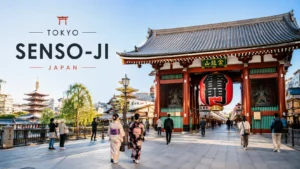
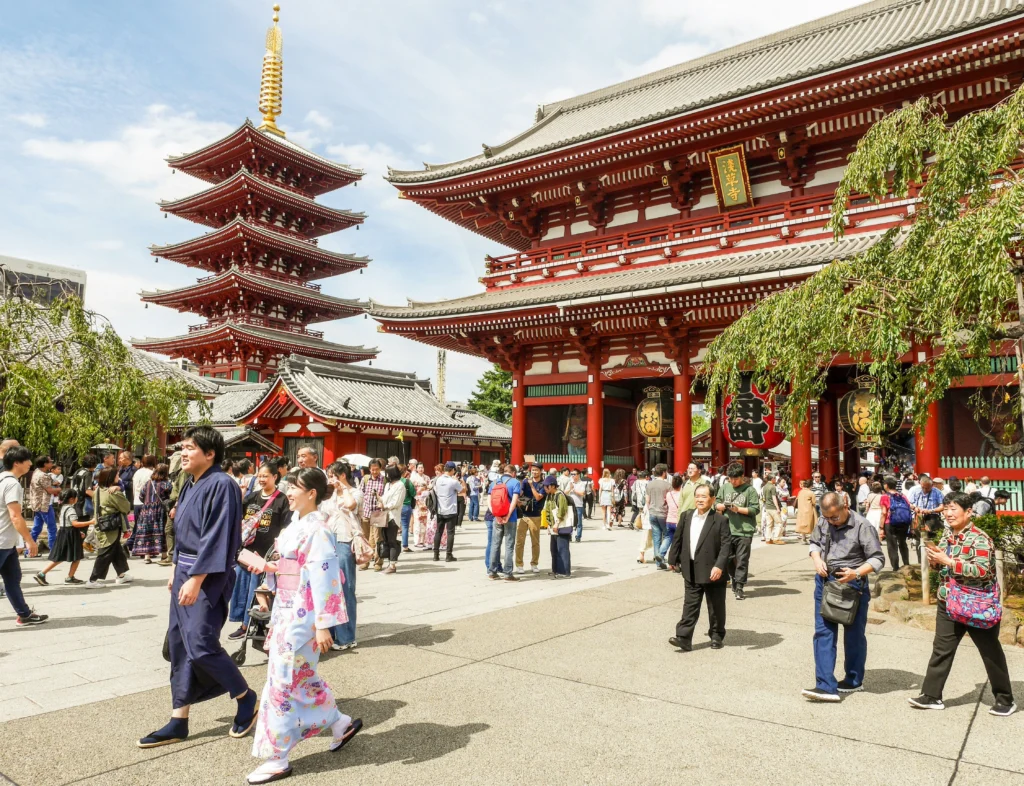
Senso-ji Temple is Tokyo’s oldest Buddhist temple and, with roughly 30 million visitors a year, one of the most visited religious sites on Earth. Sitting at the heart of the old-Tokyo district of Asakusa, Senso-ji is where most travelers get their first real taste of traditional Japan — a giant red lantern, an incense-filled courtyard, a five-story pagoda, and a shopping street that has been selling souvenirs since the Edo period.
This guide covers everything you need to plan a smooth visit to Senso-ji Temple: its history, opening hours, entrance fee, how to get there from anywhere in Tokyo, what to see nearby, and practical tips for families, solo travelers, and photographers alike.
To book your stay, click here. To Book Local Travel, click here
Traveling overseas? Click here to buy an eSIM. For more info, click here
Table of Contents
History & Significance
According to legend, in the year 628 AD two fishermen brothers, Hinokuma Hamanari and Hinokuma Takenari, pulled a small golden statue of Kannon (the Buddhist goddess of mercy) from the Sumida River. No matter how many times they returned it to the water, the statue kept coming back to them. The local village chief recognized its sanctity, enshrined it, and remodeled his own home into a small temple so villagers could worship. That original structure became Senso-ji.
The temple was formally established a few years later and has been rebuilt many times since — most notably after the Great Fire of 1657, the 1923 Great Kanto Earthquake, and World War II bombing raids that destroyed most of the original wooden complex in 1945. The current main hall dates to 1958, reconstructed in concrete for durability but faithfully modeled on the historic design.
Senso-ji Temple is dedicated to Kannon, and it remains an active place of worship, not just a tourist attraction. Locals come to pray, draw omikuji fortunes, and mark milestones like the New Year’s first shrine visit (Hatsumode), when millions pass through the gates in the first days of January. That living, working spirituality — layered onto more than 1,300 years of history — is what makes Senso-ji Temple so significant, both to Tokyo and to Japan as a whole.
Over the centuries, Senso-ji Temple grew from a small riverside shrine into the spiritual center of what became known as Shitamachi, or “low city” — the merchant and artisan district that formed the beating heart of old Edo (Tokyo’s former name). Shoguns, samurai, and commoners alike made pilgrimages to Senso-ji, and by the 18th century the approach street had already developed into the bustling shopping corridor that would become Nakamise-dori. That continuity is part of what separates Senso-ji Temple from many reconstructed historical sites: the pattern of pilgrims walking from gate to gate, buying snacks and charms along the way, has repeated in roughly the same physical space for well over 300 years.
The temple’s resilience is also part of its story. Senso-ji Temple has survived earthquakes, at least two major fires, and the near-total destruction of Asakusa during the Allied firebombing of Tokyo in 1945, when the original Main Hall, built in the Edo period, was lost. Rather than treat this as an ending, the local community and temple authorities rebuilt Senso-ji as a symbol of the city’s postwar recovery — which is one reason the temple is often described not just as a historic site, but as a monument to Tokyo’s ability to rebuild itself again and again.
Why Visit Senso-ji Temple?
Senso-ji Temple packs an outsized amount of “classic Japan” into a compact, walkable area:
- It’s the real deal. Unlike some heavily commercialized attractions, Senso-ji is still a working temple with genuine religious practice happening daily.
- The approach is an experience in itself. Walking from the giant Kaminarimon Gate down Nakamise Shopping Street to the Hozomon Gate and main hall is one of the most photographed sequences in Japan.
- It’s free and open-air. There’s no ticket booth, no timed entry, and the grounds are accessible 24 hours a day.
- It anchors an entire neighborhood. Asakusa’s rickshaws, kimono rental shops, riverside parks, and old-school food stalls all radiate outward from the temple.
- It pairs naturally with Tokyo Skytree. The two landmarks — one ancient, one ultramodern — sit about a 20-minute walk apart across the Sumida River.
Book Your Tour Activities
Best Time to Visit
Season: Late March to early April (cherry blossoms along the Sumida River) and November (autumn foliage) are the most beautiful times to visit Senso-ji Temple, though also the most crowded. Winter is quieter and crisp, aside from the extremely busy first week of January during Hatsumode.
Time of day: Arrive before 8:00 AM to see the temple grounds nearly empty and to photograph Kaminarimon Gate without a crowd blocking the lantern. Nakamise Street shops open around 9:00–10:00 AM, so return mid-morning if you want to shop. Evenings after 6:00 PM are also peaceful — the main buildings are illuminated after dark, and the crowds thin out considerably even though the grounds stay open all night.
Avoid if possible: Midday on weekends and national holidays, and the Sanja Matsuri festival weekend (third weekend of May), when Asakusa becomes extremely crowded — wonderful for a festival, difficult for a quiet temple visit.
Opening Hours
| Area | Hours |
|---|---|
| Temple grounds | Open 24 hours, every day |
| Main Hall & amulet counters | 6:00 AM – 5:00 PM (April–September); 6:30 AM – 5:00 PM (October–March) |
| Nakamise Shopping Street | Roughly 9:00 AM – 6:00 PM (individual shops vary; many close one evening a week) |
There’s no single official closing time for the temple itself — the grounds, Kaminarimon Gate, and five-story pagoda are visible and accessible at any hour, which is why early-morning and after-dark visits are so popular with photographers.
Entrance Fee
Senso-ji Temple is completely free to enter. There’s no admission ticket for the main grounds, the main hall, or the surrounding gardens. Small optional costs exist inside the complex, such as:
- Omikuji (fortune slips): ¥100
- Incense bundle at the large cauldron: ¥100
- Omamori (protective amulets): roughly ¥500–¥1,000
- Five-story pagoda and Asakusa Shrine: free to view from outside
If you book a guided walking tour of the temple and Asakusa district, expect to pay separately — typically ¥3,000–¥8,000 per person depending on group size and inclusions.
How to Reach Senso-ji Temple
Asakusa Station is the gateway to Senso-ji, served by four separate train lines (Tokyo Metro Ginza Line, Toei Asakusa Line, Tobu Skytree Line, and Tsukuba Express), so you’re rarely more than one transfer away no matter where you’re starting from in Tokyo.
From Tokyo Station
Take the JR Yamanote Line or JR Chuo Line one stop to Kanda Station, then transfer to the Tokyo Metro Ginza Line and ride it to Asakusa Station (the last stop). Total journey time is roughly 20–25 minutes for about ¥330–¥340. Alternatively, walk about 8 minutes to Kyobashi Station and take the Ginza Line directly to Asakusa in around 15 minutes.
Buy Your Train Tickets
From Shinjuku
The most reliable route is the JR Chuo Line to Kanda Station, then transfer to the Ginza Line to Asakusa — about 28–32 minutes and ¥340 total. A second option is the Toei Shinjuku Line to Bakuroyokoyama Station, transferring to the Toei Asakusa Line straight into Asakusa; this keeps you on Tokyo Metro/Toei tickets the whole way if you’re using a subway pass.
From the Nearest Airport ✈️
- Haneda Airport: Take the Keikyu Line to Sengakuji, transfer to the Toei Asakusa Line, and ride it directly to Asakusa Station — one transfer, around 45–55 minutes, roughly ¥600–¥700.
- Narita Airport: The Keisei Skyliner or Keisei Main Line runs to Nippori or directly connects to the Asakusa Line network; total journey is around 60–75 minutes depending on the train type, with fares from roughly ¥1,300 (limited express) to ¥2,600 (Skyliner combined fare).
Transportation & Estimated Cost
Train 🚆
The cheapest and most predictable way to reach Senso-ji Temple. Fares from central Tokyo typically run ¥170–¥350 one-way depending on your starting station and line combination. A prepaid IC card (Suica or Pasmo) makes transfers seamless and is strongly recommended over paper tickets.
Bus 🚌
Local Toei buses connect Asakusa to areas like Ueno, Ryogoku, and the Tokyo waterfront for a flat fare of around ¥210–¥240. Buses are slower than the subway and less intuitive for visitors, but useful if you’re combining Senso-ji with a stop that isn’t near a train station.
Taxi 🚕
Convenient for groups, luggage, or late-night arrivals. A taxi from central Tokyo (e.g., Tokyo Station or Ginza) to Asakusa typically costs ¥2,500–¥4,000 depending on traffic, with a base fare that starts around ¥500 and rises with distance and time. From either airport, expect a considerably higher fare — often ¥7,000–¥9,500 from Haneda and more from Narita — so trains remain the better value for airport transfers.
Things to See & Do
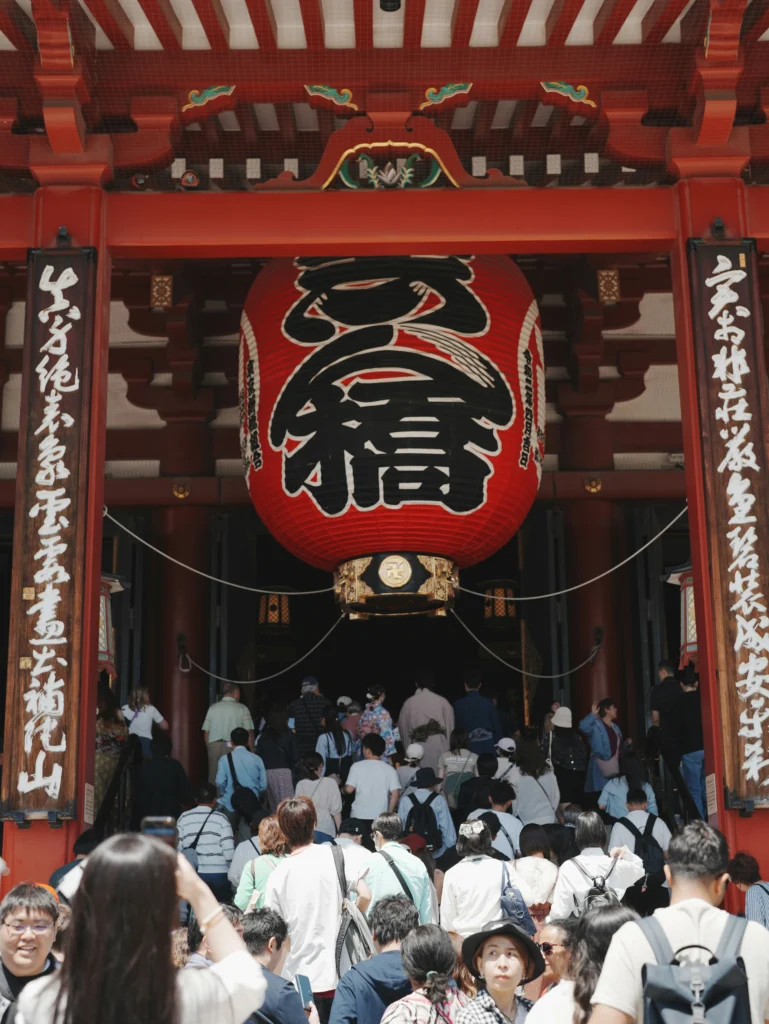
- Pass under the giant red lantern at Kaminarimon Gate and photograph the flanking guardian statues of Fujin and Raijin.
- Walk the full length of Nakamise Shopping Street, browsing traditional snacks, folding fans, and souvenirs.
- Pass through Hozomon Gate, the second and larger gate, guarded by a pair of fierce Nio statues.
- Light incense at the large bronze cauldron in front of the Main Hall and waft the smoke over yourself for good fortune.
- Draw an omikuji fortune slip — if you get bad luck, tie it to the designated rack rather than taking it home, a common local custom.
- Visit Asakusa Shrine, right next door, dedicated to the founders of Senso-ji.
- Admire the five-story pagoda, one of the tallest of its kind in Japan.
- Walk to nearby Sumida Park for river views and, on clear days, a straight-on shot of Tokyo Skytree across the water.
- Rent a kimono or yukata from one of the many shops on the surrounding streets and spend an hour exploring the grounds in traditional dress.
- Duck into the smaller side alleys off Nakamise, like Dempoin-dori, which recreate an Edo-period streetscape with fewer crowds.
- Watch the twice-daily ritual cleaning and incense-lighting around the main cauldron, a small but memorable piece of temple life.
- Check the event calendar before you go — Senso-ji Temple hosts recurring festivals such as the Sanja Matsuri in May, the Hozuki Market in July, and the Hagoita Market in December, each transforming the grounds for a few days.
Main Attractions
Kaminarimon Gate
Kaminarimon, or “Thunder Gate,” is the outer gate of Senso-ji Temple and arguably the single most photographed spot in Asakusa. Its enormous paper lantern, painted with the character for “thunder,” weighs several hundred kilograms and is repainted periodically by craftsmen using traditional techniques. Flanking the lantern are statues of Fujin, the god of wind, and Raijin, the god of thunder.
Nakamise Shopping Street
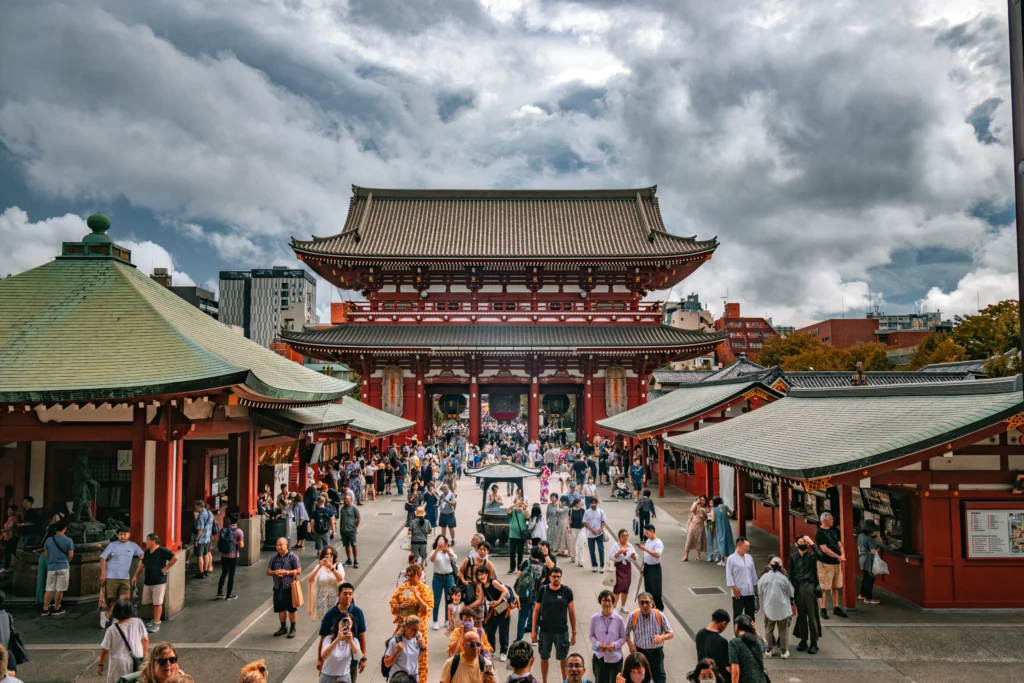
Stretching about 250 meters between Kaminarimon and Hozomon, Nakamise-dori is one of Japan’s oldest shopping streets, with roots going back to the late 17th century, when nearby residents were granted the right to sell souvenirs to temple pilgrims. Today it’s lined with roughly 90 small shops selling everything from folding fans and yukata robes to fresh-made rice crackers, dorayaki pancakes, and melon-pan.
Hozomon Gate
The second and larger of Senso-ji Temple’s two main gates, Hozomon houses a treasury on its upper floor containing sutras and other temple valuables (not open to the public). Two giant straw sandals, each weighing around 400 kilograms, hang on the rear of the gate — offerings said to demonstrate the size and strength of the guardian deities protecting the temple, symbolically warning evil spirits away.
The Main Hall (Kannon-do)
The spiritual center of Senso-ji Temple, housing the hidden statue of Kannon that, according to tradition, is never shown to the public. Visitors approach the hall to toss a coin offering, clap or bow according to their own custom, and pray. The ceiling features a striking painted dragon, and the surrounding eaves are a good spot to appreciate the traditional joinery and roofline up close.
Five-Story Pagoda
Standing just west of the Main Hall, the pagoda is one of the tallest traditional wooden-style pagodas in Japan and one of the most photographed structures on the grounds, especially framed against Hozomon Gate or, from a distance, Sumida Park.
Food & Dining Options
Asakusa is one of the best neighborhoods in Tokyo for casual, affordable Japanese street food and old-school restaurants:
- Nakamise Street snacks: Ningyo-yaki (small cakes filled with red bean paste), age-manju (fried buns), and senbei rice crackers, most for a few hundred yen.
- Kappabashi-dori: A short walk west of the temple, this kitchenware street has cafés and shops selling the famous plastic food-model replicas.
- Tempura and unagi restaurants: Asakusa has several long-running tempura and grilled-eel specialists in the streets just south of the temple, popular for a proper sit-down lunch.
- Sukiyaki and shabu-shabu houses: A handful of traditional restaurants near Asakusa Station serve hot-pot lunch sets, often better value at midday than dinner.
- Asahi Beer Hall rooftop: Across the Sumida River, this is a good spot for a drink with a Skytree view at a fraction of the cost of the tower’s own observation deck.
Nearby Places to Visit
- Tokyo Skytree – Japan’s tallest structure, about a 20-minute walk or short train ride from Senso-ji, with observation decks offering panoramic city views.
- Sumida Park – A riverside park connecting Asakusa to the Skytree, known for cherry blossoms in spring and unobstructed tower views year-round.
- Asakusa Shrine – Located directly beside the Main Hall, honoring the founders of Senso-ji.
- Matsuchiyama Shoden – A quieter, lesser-known hillside shrine a short walk north, associated with prosperity and good fortune.
- Imado Shrine – Known as the birthplace of the “beckoning cat” (maneki-neko) legend, a fun stop for cat lovers.
- Kappabashi Kitchen Street – Rows of shops selling professional cookware and the famous plastic food models.
- Asakusa Hanayashiki – Japan’s oldest amusement park, dating to 1853, with a small vintage roller coaster.
- Ryogoku – A short ride away, home to the Sumo stadium (Ryogoku Kokugikan) and the Edo-Tokyo Museum.
Photography Spots 📸
- Kaminarimon Gate at sunrise — empty streets and soft light on the lantern before 7:30 AM.
- Hozomon Gate looking back toward the pagoda — a classic frame combining two of the temple’s structures.
- Asakusa Culture Tourist Information Center rooftop — a free observation deck directly across from Kaminarimon with a wide-angle view of the gate, Nakamise Street, and Skytree in the distance.
- Sumida River Walk / Sumida Park — Senso-ji’s pagoda glimpsed against a backdrop of Tokyo Skytree.
- Nakamise Street mid-morning — the red lanterns and shop awnings create strong leading lines down the corridor.
- Illuminated Main Hall after dark — a completely different, more atmospheric shot than the daytime crowd scene.
How Much Time Do You Need?
- Quick visit (45–60 minutes): Kaminarimon Gate, Nakamise Street, Hozomon Gate, and the Main Hall — enough to see the highlights without lingering.
- Standard visit (2–3 hours): Add Asakusa Shrine, the five-story pagoda, a snack stop on Nakamise, and a slower walk through side streets like Dempoin-dori.
- Full Asakusa day (5–7 hours): Combine Senso-ji with Sumida Park, a Sumida River cruise, Kappabashi Kitchen Street, lunch or dinner in the area, and a walk or short train ride over to Tokyo Skytree in the afternoon or evening.
Family Trip Guide 👨👩👧
Kid-friendly?
Yes — the open courtyard, snack stalls, and nearby Asakusa Hanayashiki amusement park (with rides suited to younger kids) make Senso-ji an easy stop with children. The incense cauldron and fortune-drawing ritual are usually a hit with curious kids.
Elderly-friendly?
The main walking route from Kaminarimon to the Main Hall is flat, paved, and shaded by Nakamise Street’s covered arcade, making it manageable for visitors with limited mobility. There are benches along the grounds and inside Sumida Park for rest stops.
Stroller/accessibility considerations
Nakamise Street and the main temple courtyard are stroller-friendly, though they get crowded around midday, which can make maneuvering a stroller slow going. Multipurpose restrooms with diaper-changing facilities are available just inside the temple grounds and at Asakusa Station exits. Elevators exist at Asakusa Station, but the routing between subway lines can be indirect — budget extra time if traveling with a wheelchair or stroller and multiple train transfers.
Solo Travel Guide 🎒
Safety/general practical tips
Asakusa and the Senso-ji grounds are very safe by international standards, including at night, since the temple grounds stay open 24 hours. Standard city-travel precautions apply: watch your belongings in the Nakamise Street crowds, and keep a photo of your accommodation address in Japanese in case you need it for a taxi.
Best way to explore alone
Early morning is ideal for solo travelers — quieter streets, easier photos, and no need to coordinate schedules with anyone else. Follow up with breakfast at a local café before the crowds arrive, then continue solo toward Sumida Park or Kappabashi Street at your own pace. Many solo travelers also enjoy renting a kimono nearby for an hour or two and wandering the temple grounds in costume, a popular and low-pressure solo activity.
Budget & Estimated Travel Cost
Approximate per-person cost for a half-day Senso-ji Temple visit from central Tokyo:
Entry
¥0 (free)
Transport
¥340–¥700 round trip by train, depending on starting point
Food
¥1,000–¥3,000 for street snacks and a casual lunch nearby
Optional activities
¥500–¥1,000 for omamori/omikuji; ¥3,000+ for kimono rental; ¥3,000–¥8,000 for a guided walking tour
Estimated total: roughly ¥2,000–¥5,000 (about $13–$33 USD) per person for a self-guided half-day visit, excluding accommodation.
Travel Tips
- Carry small yen coins and bills — many Nakamise Street stalls and the temple’s omikuji boxes are cash-only.
- Load a Suica or Pasmo IC card onto your phone or a physical card before you arrive; it works across every train line serving Asakusa.
- Dress modestly and be mindful of noise near the Main Hall — it’s an active place of worship, not just a photo backdrop.
- Photography is generally allowed throughout the grounds, but check posted signs near specific altars or ceremonies.
- Combine your visit with the free observation deck at the Asakusa Culture Tourist Information Center across the street for the best overview shot before you go in.
Temple Etiquette
Senso-ji Temple is a functioning place of worship, so a few basic customs go a long way. Bow slightly before passing through each gate, keep your voice down near the Main Hall, and if you draw an omikuji fortune slip and it predicts bad luck, tie it to the designated wooden rack rather than taking it with you — this is thought to leave the misfortune behind at the temple rather than carrying it home. It’s fine to photograph the buildings and grounds, but be considerate around people who are actively praying, and avoid stepping directly in front of the incense cauldron while others are using it.
Tips for Shopping
- Compare prices before buying on Nakamise Street — many items (fans, keychains, snacks) are sold at multiple stalls at similar prices, so there’s no rush to buy at the first shop.
- Try before you commit: several snack stalls offer small free samples of senbei or sweets.
- For higher-quality souvenirs (lacquerware, ceramics, textiles), the side streets just off Nakamise — like Dempoin-dori — tend to have better craftsmanship than the main tourist strip.
- Kappabashi Kitchen Street, a 10-minute walk away, is the place for serious cookware, knives, or the famous plastic food replicas as a genuinely unique gift.
- Most small shops don’t accept international cards — carry cash for anything under a few thousand yen.
Book Your Ticket
FAQ
Is Senso-ji Temple free to visit?
Yes, admission to the temple grounds and Main Hall is completely free.
What are Senso-ji Temple’s opening hours?
The grounds are open 24 hours daily. The Main Hall is open 6:00 AM–5:00 PM in summer and 6:30 AM–5:00 PM in winter.
How do I get to Senso-ji Temple?
Take any train line to Asakusa Station (Tokyo Metro Ginza Line, Toei Asakusa Line, Tobu Skytree Line, or Tsukuba Express); the temple is a 5-minute walk from any of the station’s exits.
How long should I spend at Senso-ji Temple?
Budget at least 1.5–2 hours to see the gates, Nakamise Street, and Main Hall without rushing; a full Asakusa day with nearby sights takes 5–7 hours.
Can I combine Senso-ji with Tokyo Skytree in one day?
Yes — the two landmarks are about a 20-minute walk apart via Sumida Park and the Sumida River Walk, and many visitors do both in a single afternoon.
Is Senso-ji Temple worth visiting if I’ve seen other temples in Japan?
Yes — Senso-ji’s combination of history, scale, and the surrounding Nakamise Street shopping experience makes it distinct from quieter temples elsewhere in Japan.
Is Senso-ji Temple crowded?
It can be, especially between 10:00 AM and 4:00 PM on weekends, holidays, and during festivals like Sanja Matsuri in May. Early morning and evening visits are noticeably quieter.
What should I wear to Senso-ji Temple?
There’s no strict dress code, but modest, comfortable clothing and walking shoes are recommended, since you’ll be on your feet on stone and paved surfaces for most of the visit.
Nearby Places (Quick Reference)
- Tokyo Skytree — ~20 min walk
- Sumida Park — ~5 min walk
- Asakusa Shrine — adjacent to the Main Hall
- Kappabashi Kitchen Street — ~10 min walk
- Asakusa Hanayashiki amusement park — ~5 min walk
- Ryogoku Sumo Stadium & Edo-Tokyo Museum — short train ride
Interactive Map
Below is an embeddable Google Map centered on Senso-ji Temple (2 Chome-3-1 Asakusa, Taito City, Tokyo). Paste this iframe directly into your page’s HTML block:
Coordinates: 35.7148° N, 139.7967° E Direct link: View Senso-ji Temple on Google Maps
Planning more than just Asakusa? RydeTravel can help you build a full Tokyo itinerary around Senso-ji Temple, Tokyo Skytree, and the rest of the city. For official visitor information, see Japan National Tourism Organization’s Senso-ji page and Tokyo Metro’s route planner for up-to-date train fares and schedules.
Images courtesy of Liang Lin, Karen Mollison, and Tim D via Unsplash.
Visit our other blogs
10 Must-See Tourist Places in Tokyo, Japan You’ll Love
15 Amazing Osaka Tourist Places to Visit in 2026
Sapporo Tourist Places: 15 Amazing Spots for Your 5-Day Trip
Niigata Tourist Places: 10 Amazing Spots for Your 7-Day Trip
Yokohama Tourist Places: 15 Amazing Spots to Visit
Mount Fuji Tourist Places: 7 Incredible Spots You Can’t Miss




Leave a Reply