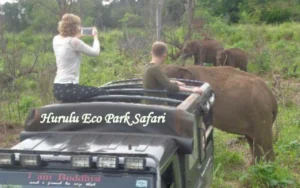

✈️ Quick Take: Hurulu Eco Park is Sri Lanka’s quieter alternative to Minneriya, offering close-up wild elephant safaris — with up to 150 elephants gathering in peak season — minus the crowds.
✈️ Key Highlights:
- Best visited December–January, when migrating elephant herds arrive from Minneriya, or June–September for peak dry-season gatherings.
- Located near Habarana (5–15 min away), just 22 km from Sigiriya — easy to pair with a Cultural Triangle itinerary.
- A private jeep safari (3–4 hrs) costs around USD 40–80, shared among up to 6 people — cheaper than Yala.
To book your stay, click here. To Book Local Travel, click here
Traveling Overseas click here to buy a eSIM. For more info click here
Table of Contents
To book your stay, click here. To Book Local Travel, click here
Traveling Overseas: click here to buy an eSIM. For more info, click here
Picture this. You are in an open jeep. The engine is off. Around you, a family of 30 wild elephants drinks from a still tank. No crowds. No noise. Just you and the herd. That is Hurulu Eco Park — Sri Lanka’s best-kept safari secret.
Most visitors rush past Hurulu on their way to Minneriya. Big mistake. This quiet gem in Sri Lanka’s Cultural Triangle offers world-class wildlife in a crowd-free setting. In this guide, we cover everything you need to plan your visit — from the best time to go, to what animals to expect, to how it stacks up against its famous neighbours.
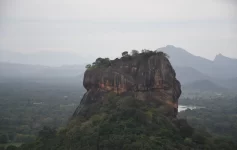
Sigiriya Rock Fortress UNESCO listing
What Is Hurulu Eco Park?
Hurulu Eco Park sits in Sri Lanka’s North Central Province, near the town of Habarana. It covers around 25,000 hectares of dry-zone wilderness — forest, grassland, scrubland, and seasonal tanks (man-made reservoirs). UNESCO declared it a Biosphere Reserve in 1977, recognising its vital role in protecting dry evergreen forest ecosystems.
Book Your Tour Package for Hurulu Eco Park
Department of Wildlife Conservation Sri Lanka
The park is managed by Sri Lanka’s Forest Department — not the Wildlife Department, which runs most other parks. This means it stays quieter, less developed, and far more raw. Wildlife moves freely here. Human impact is kept low.
Its location is a huge plus. Hurulu sits at the heart of the Cultural Triangle — the region that also holds Sigiriya, Dambulla Cave Temple, Polonnaruwa, and Anuradhapura. You can spend the morning climbing a 5th-century rock fortress, then do an evening safari in the same afternoon.
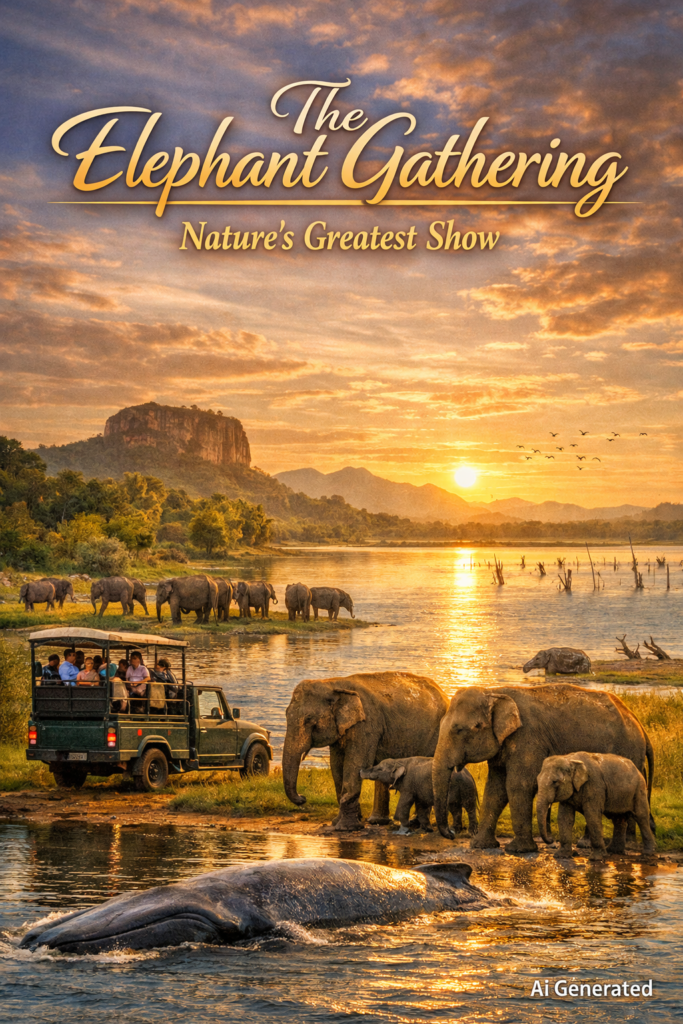
The Elephant Gathering: Nature’s Greatest Show
Sri Lanka has one of the world’s highest densities of wild Asian elephants. Hurulu plays a key part in their annual migration across the Cultural Triangle.
Here is how the migration works. Each year, large herds move between three parks depending on water and food availability:
Book Your Flight Package
July to September — Elephants gather at Minneriya National Park as the Minneriya Tank dries out.
October to November — Rains fill the Minneriya Tank, so herds shift to Kaudulla National Park.
December to January — Elephants complete their migration and arrive at Hurulu Eco Park.
This means Hurulu gets the elephants when Minneriya is quiet and cold. During peak season, you can see 50 to 150 wild elephants in a single safari. Mothers and calves. Lone bulls. Ancient matriarchs leading their families to the water’s edge. It is a truly humbling sight.
And unlike Minneriya, you will share the experience with very few other jeeps. That intimacy makes all the difference.
Wildlife You Can See at Hurulu Eco Park
Elephants get the headlines. But Hurulu is rich with wildlife. Its mix of dry forest, open grassland, and wetland supports a wide range of species:
Hurulu Eco Park safari trails on AllTrails
- 🐘 Asian Elephants — The stars of the show. Expect close, calm encounters, especially near the Hurulu Wewa tank.
- 🐆 Sri Lankan Leopard — Rare but present. Dawn safaris give the best chance of a sighting.
- 🐻 Sloth Bear — Uncommon but spotted in the denser forest areas.
- 🦌 Spotted Deer and Sambar — Plentiful throughout the park, often seen in large groups.
- 🐊 Mugger Crocodile — Found in and around the tank and waterways.
- 🐒 Purple-Faced Langur and Toque Macaque — Active in the forest canopy.
- 🐦 Birds — Over 150 species recorded, including Indian Peafowl, Crested Serpent Eagle, Sri Lanka Junglefowl, bee-eaters, and painted storks.
- 🦎 Star Tortoise and Monitor Lizard — Look for them basking in sunny patches.
Morning safaris are best for birds. Evening safaris are best for large elephant herds. If you have two days, do both — you will have a completely different experience each time.
Book Your Local Travel to Hurulu Eco Park
Best Time to Visit Hurulu Eco Park
You can visit Hurulu year-round. The park is open every day from 6:00 AM to 6:00 PM. But each season offers a different experience:
| Season | Months | What to Expect |
|---|---|---|
| Peak Season | June – September | Large elephant herds migrate in from Minneriya. Best for big gatherings. Dry and hot. |
| Elephant Migration | December – January | Final leg of migration brings hundreds of elephants to Hurulu. Excellent sightings with fewer crowds than Minneriya. |
| Green Season | February – April | Lush, green landscape. Large herds still present. Great for photography. |
| Off Season | October – November | North East Monsoon. Park stays open. Quiet and cheap. Excellent bird activity. |
Our top pick: December to January. You get the full elephant migration at Hurulu while Minneriya is quiet. Fewer tourists, lower prices, and incredible wildlife.
How to Get to Hurulu Eco Park
Hurulu is easy to reach. Habarana town is your base — it is just 5 to 15 minutes from the park entrance.
From Colombo by Road
Take the A6 highway through Kurunegala and Dambulla to Habarana. The total distance is about 183 km. Expect 3.5 to 4.5 hours by car or bus.
From Colombo by Train
Trains run from Colombo Fort to Habarana on the Batticaloa and Trincomalee lines. From Habarana station, a tuk-tuk to your hotel takes under 10 minutes. This is a comfortable, scenic option.
From Sigiriya or Dambulla
Both are 30 to 45 minutes by road. Many visitors combine a morning at Sigiriya with an afternoon safari at Hurulu — a perfect full day.
Getting into the Park
You must enter by jeep. You cannot walk or drive your own vehicle inside. Hire a jeep through your hotel or a local operator in Habarana. Most hotels offer this service. A private jeep for a 3–4 hour safari costs around USD 50–80, shared between up to 6 people. Entry fees for foreign visitors are set by the Forest Department and can change, so check current rates before you go.
Top Safari Tips for First-Time Visitors
A little preparation makes a big difference. Here are our best tips for getting the most out of Hurulu:
- Go early or go late. Wildlife is most active in the two hours after sunrise and the two hours before sunset. Midday heat slows everything down.
- Book a local guide. A knowledgeable guide knows the animal trails. They also add fascinating context — like recognising individual elephants by their ear markings.
- Wear muted colours. Khaki, olive, brown, and grey blend into the environment. Avoid white and bright colours that can startle wildlife.
- Stay quiet in the jeep. Noise carries far in open scrubland. The quieter you are, the closer the wildlife will come.
- Bring binoculars. Elephant encounters can be very close. But birds and leopards benefit enormously from magnification.
- Carry water. Dry-zone heat is intense. Bring a refillable bottle — hydration is essential.
- Give elephants space. Never push your driver to get closer than is safe. A calm elephant will often walk right past the jeep if you are quiet and still.
- Allow 3–4 hours minimum. This gives enough time to cover the main zones without rushing.
Hurulu vs Minneriya vs Kaudulla: Which Park Is Best?
Sri Lanka’s Cultural Triangle has three famous elephant parks. They are often compared. Here is an honest breakdown:
| Feature | Hurulu Eco Park | Minneriya NP | Kaudulla NP |
|---|---|---|---|
| Crowd Level | Low 🟢 | High 🔴 | Medium 🟡 |
| Best For Elephants | Dec – Jan, Jun – Sep | Jul – Oct | Sep – Dec |
| Leopard Sightings | Best chance 🟢 | Rare 🔴 | Rare 🔴 |
| Birdwatching | Excellent 🟢 | Good 🟡 | Good 🟡 |
| Landscape | Dense forest + tank | Open plains + tank | Open plains + tank |
| UNESCO Status | Biosphere Reserve ✅ | National Park | National Park |
| Price | Lower 🟢 | Higher 🔴 | Medium 🟡 |
The verdict: Minneriya delivers the biggest elephant gatherings in July–October. But if you value quiet, raw nature, and a more intimate experience, Hurulu wins. It also gives you the best chance of seeing a leopard — a rare and electric experience.
If you can, visit all three. They each have their own character. But if you only have time for one, choose based on when you are visiting and what you want to see.
Nearby Attractions to Pair with Hurulu
Hurulu’s location is one of its biggest strengths. World-class heritage sites are all within an hour:
- 🏔️ Sigiriya Rock Fortress (22 km) — A UNESCO World Heritage Site. Climb the 5th-century lion rock for sweeping jungle views. Go early to beat the heat.
- 🕌 Dambulla Cave Temple (30 km) — Sri Lanka’s largest cave temple complex, with 2,000-year-old Buddhist murals across five caves.
- 🚲 Polonnaruwa Ancient City (45 km) — Explore the ruins of Sri Lanka’s medieval capital. Best explored by bicycle.
- 🌅 Pidurangala Rock (25 km) — Quieter than Sigiriya, with arguably the best sunrise view in the whole Cultural Triangle.
- 🍛 Habarana Village Experience — Many local guesthouses offer traditional Sri Lankan cooking classes and village walks. A lovely cultural contrast to wildlife days.
Suggested 2-Day Itinerary: Culture + Wildlife
Day 1 — Rock Fortresses and First Safari
- ☀️ 6:00 AM — Sunrise climb at Pidurangala Rock
- 🍳 8:30 AM — Breakfast at your Habarana hotel
- 🏰 10:00 AM — Visit Sigiriya Rock Fortress (allow 2–3 hours)
- 😴 1:00 PM — Lunch and rest during the midday heat
- 🐘 3:30 PM — Evening jeep safari at Hurulu Eco Park
- 🌙 7:00 PM — Dinner in Habarana. Try a full Sri Lankan rice and curry spread
Day 2 — Caves, Ruins, and Morning Wildlife
- 🌄 5:45 AM — Early morning safari at Hurulu (best for birds and leopards)
- 🍳 9:00 AM — Breakfast and freshen up
- 🕌 10:30 AM — Dambulla Cave Temple
- 🚗 1:00 PM — Drive to Polonnaruwa (45 minutes)
- 🚲 2:30 PM — Explore Polonnaruwa’s ancient ruins by bicycle
- 🌇 5:30 PM — Continue onward or return to base
Practical Information at a Glance
Sri Lanka Tourism official travel guide
| Detail | Info |
|---|---|
| Opening Hours | 6:00 AM – 6:00 PM, open 365 days a year |
| Safari Duration | 3–4 hours (half day) or full day |
| Jeep Cost | LKR 6,000 – 10,000 per jeep (approx. USD 20–35) |
| Private Safari Cost | Approx. USD 40–80 per jeep (includes guide and entry) |
| Nearest Town | Habarana (5–15 minutes away) |
| Best Base | Habarana — central, affordable, great for the Cultural Triangle |
| What to Bring | Sunscreen, hat, water bottle, binoculars, camera with zoom, insect repellent |
| Governing Body | Sri Lanka Forest Department |
Frequently Asked Questions About Hurulu Eco Park
1. Is Hurulu Eco Park better than Minneriya for elephants?
It depends on when you visit. Minneriya has the largest elephant gatherings from July to October. Hurulu is better from December to January, when the migrating herds arrive for the final leg of their annual journey. Hurulu is also far less crowded than Minneriya, so the experience often feels more personal and memorable — even if the total number of elephants is smaller.
2. What is the best time to visit Hurulu Eco Park?
The park is open year-round. For the best elephant sightings, visit between June and September (dry season) or December to January (elephant migration). For birdwatching, the period from October to February is excellent. February to April offers lush green scenery and good-sized herds, making it popular with photographers.
3. How do I get to Hurulu Eco Park from Colombo?
The easiest options are by road or train. By car, take the A6 highway through Kurunegala and Dambulla to Habarana — about 183 km and 3.5 to 4.5 hours. By train, take the Batticaloa or Trincomalee line from Colombo Fort to Habarana. From Habarana, the park is only 5 to 15 minutes away by tuk-tuk or taxi.
4. Can I see leopards at Hurulu Eco Park?
Yes, leopards do live in Hurulu Eco Park, and it gives you a better chance of seeing one than Minneriya or Kaudulla. That said, sightings are still rare — leopards are elusive by nature. Your best chance is an early morning safari, when they are most active. The dense dry-zone forest provides good cover, so an experienced guide greatly increases your odds.
5. How much does a safari at Hurulu Eco Park cost?
A jeep hire for a half-day safari (3–4 hours) costs roughly LKR 6,000 to 10,000 per jeep. For a fully private safari including a guide, jeep, and park entry, budget around USD 40 to 80 per jeep — shared between up to 6 people. This is considerably cheaper than Yala National Park. Entry fees for foreign visitors are set by the Forest Department and may be updated, so confirm current rates when booking.
6. Is Hurulu Eco Park good for families with children?
Absolutely. Hurulu is one of the most family-friendly safari options in Sri Lanka. The jeep safaris are safe and comfortable. The elephant encounters are close but calm. Children love spotting deer, peacocks, and monkeys alongside the elephants. The park is quieter than Yala or Minneriya, so there is no stress from heavy traffic or crowded jeep convoys. Most operators in Habarana are experienced at hosting families and can adjust the safari pace to suit young children.
Book Your Activities
Visit Our Related Articles
Ultimate Pekoe Trail Sri Lanka: A 7-Day Tea Country Hiking Adventure
Nuwara Eliya Hill Station: Your Complete Travel Guide to Sri Lanka’s Little England
Best Surf Camps in Sri Lanka 2026: Ultimate Surfing & Guide
Make Your Travel Arrangements
Planning your trip to Sri Lanka? Browse more of our Sri Lanka travel guides at rydetravel.com — from the best beach escapes to the most thrilling wildlife adventures. We help you travel smarter, deeper, and better.


Leave a Reply