This guide contains affiliate links. We may earn a commission at no extra cost to you — see our Affiliate Disclosure and Affiliate Disclosure Policy for details.
🤖 Quick Answer — AI Summary
Best Places to Visit in Kashmir (2026)
⚡ Quick Take: Kashmir in 2026 remains India’s top Himalayan escape, offering snow-capped peaks, houseboat stays on Dal Lake, and cool weather that’s ideal for honeymooners, families, and adventure travelers alike.
🔑 Key Highlights
- Best Time to Visit: March–June for pleasant weather and blooming valleys, or December–February for snowfall and skiing in Gulmarg.
- Ideal Itinerary: Cover Srinagar, Gulmarg, Pahalgam, and Sonmarg — plan at least 5–6 days to explore comfortably.
- Insider Tip: Book houseboats and Gulmarg Gondola tickets in advance during peak season (May–June), as availability drops fast and prices surge closer to the date.
To book your accomadation, click here. To Book Local Travel, click here. To book your Travel insurance here
Traveling Overseas: Click here to buy an eSIM. For more info on eSIM, click here
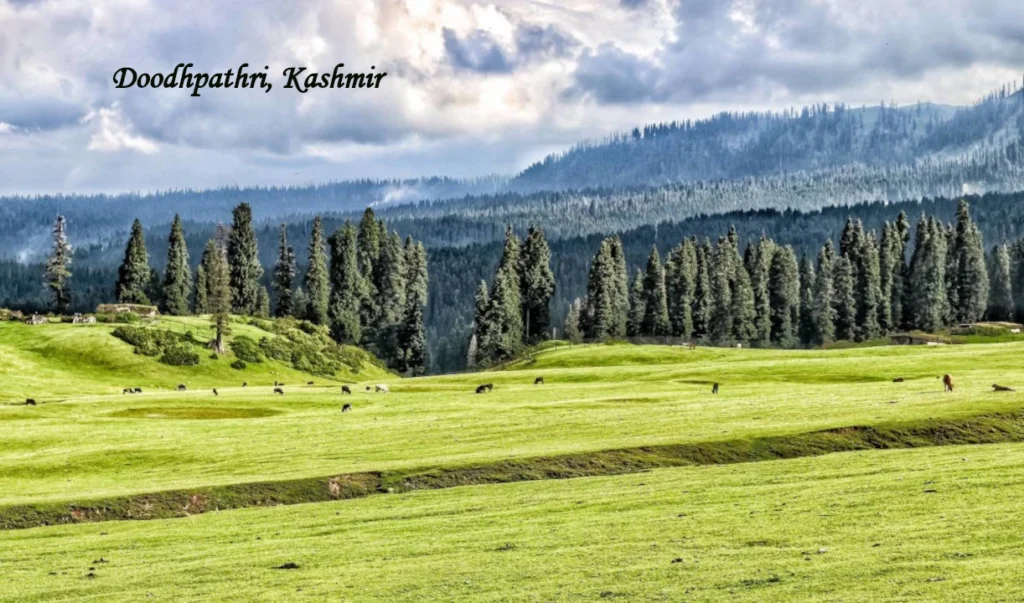
Table of Contents
Kashmir Travel Guide 2026: Best Places to Visit
Kashmir remains one of India’s most rewarding destinations in 2026, offering snow-capped peaks in Gulmarg, houseboat stays on Dal Lake, meadows in Pahalgam, and glacier views in Sonamarg. The ideal trip length is 6–10 days, the best time to visit is March–June (pleasant weather) or December–February (snowfall), and both leisure tourists and business travelers can access Srinagar easily via daily flights from Delhi, Mumbai, Chennai, and Bengaluru.
History of Tourist Places in Kashmir
Kashmir’s tourism roots trace back to the Mughal era, when Emperor Jahangir developed the Mughal Gardens — Shalimar Bagh, Nishat Bagh, and Chashme Shahi — as royal retreats along Dal Lake. Gulmarg, meaning “meadow of flowers,” was a favorite grazing ground of local shepherds before the British developed it into a hill retreat and later Asia’s highest golf course. Pahalgam, once a humble shepherd’s village (“Pahal” means shepherd), grew into a base camp for the Amarnath Yatra pilgrimage.
Sonamarg, the “meadow of gold,” served as a historic trade route gateway to Ladakh along the ancient Silk Route. Post-independence, the Jammu & Kashmir Tourism Development Corporation (JKTDC) was established in 1970 to formally develop and promote these sites, and the region has since evolved into a year-round destination for leisure, honeymoon, adventure, and MICE (business) travel.
Top Tourist Places in Kashmir
- Dal Lake & Houseboats, Srinagar
- Mughal Gardens (Nishat, Shalimar, Chashme Shahi)
- Gulmarg (Gondola, skiing, golf course)
- Pahalgam (Betaab Valley, Aru, Chandanwari)
- Sonamarg (Thajiwas Glacier)
- Shankaracharya Temple & Hazratbal Shrine
- Doodhpathri (offbeat meadow destination)
1. Dal Lake & Houseboats, Srinagar
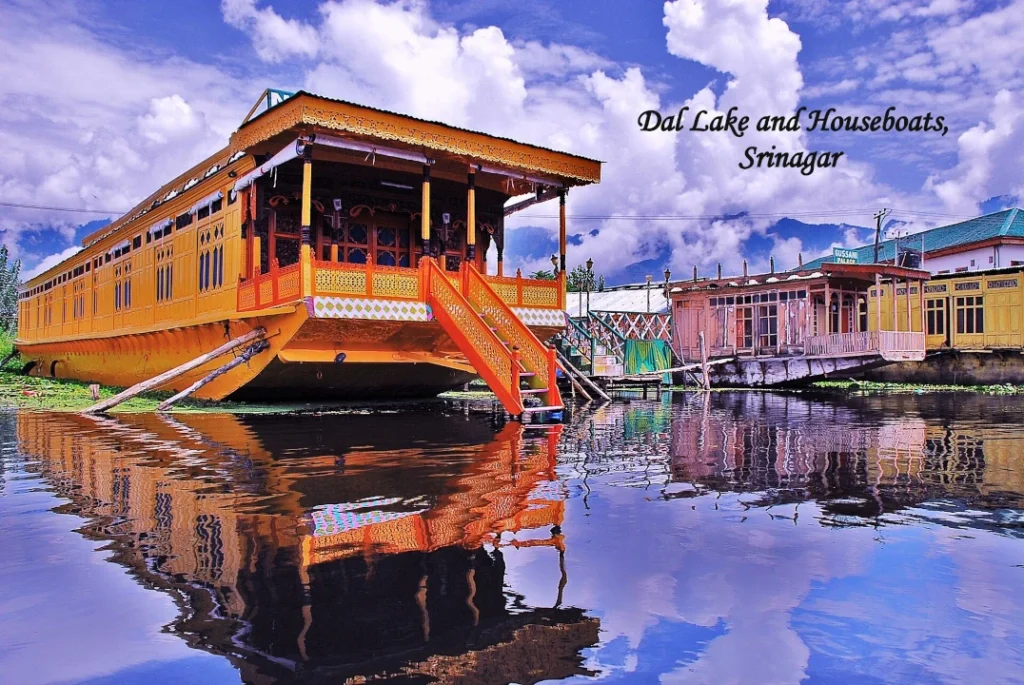
Dal Lake is Kashmir’s most iconic attraction — a sprawling 18 sq. km urban lake bordered by Mughal-era gardens and the Zabarwan mountain range. Stay overnight on a traditional wooden houseboat (a legacy of British-era colonial rule when foreigners couldn’t own land in Kashmir), and cruise the waters on a Shikara, the region’s ornately decorated version of a gondola. Don’t miss the early-morning floating vegetable market, where vendors trade produce boat-to-boat — one of the most photographed scenes in the Valley. In July–August, the lake’s floating gardens bloom with lotus flowers.
- Best time to visit: Sunrise (floating market) or sunset (Shikara ride)
- Ideal for: Couples, families, first-time visitors
2. Mughal Gardens — Nishat, Shalimar & Chashme Shahi
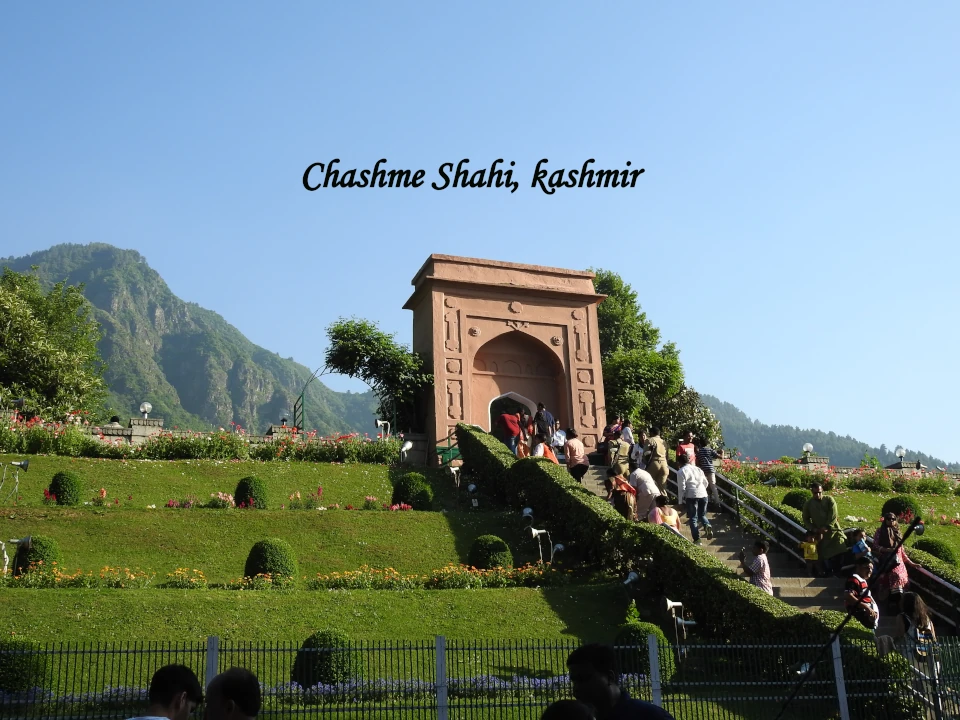
Built during the reign of Emperor Jahangir in the 17th century, these terraced gardens showcase classic Mughal landscaping — cascading fountains, chinar trees, and symmetrical flowerbeds set against the lake and mountains. Nishat Bagh (“Garden of Bliss”) is the largest, with 12 terraces representing the zodiac signs. Shalimar Bagh was built by Jahangir as a gift for Empress Nur Jahan and is considered the crown jewel of Mughal garden architecture in India. Chashme Shahi, the smallest of the three, is built around a natural spring believed to have medicinal properties.
- Best time to visit: April (Tulip season nearby) or October (autumn chinar foliage)
- Ideal for: Photography, heritage/history enthusiasts, leisurely walks
3. Gulmarg — Gondola, Skiing & the World’s Highest Golf Course
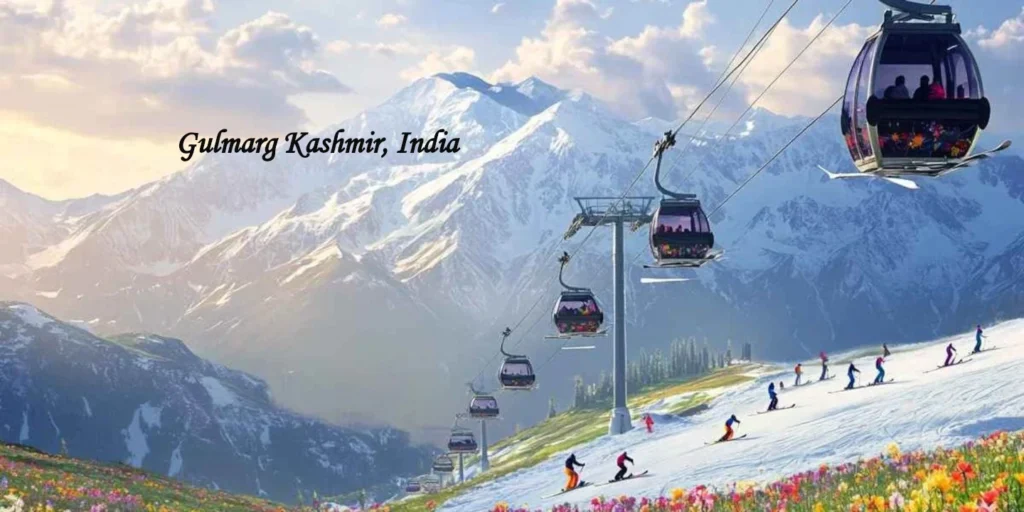
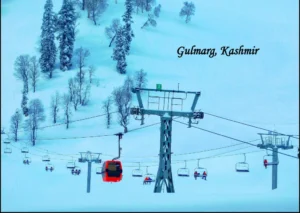
Gulmarg (“Meadow of Flowers”) is Kashmir’s premier hill resort, home to the Gulmarg Gondola — the world’s second-highest cable car — which climbs to Apharwat Peak at over 13,000 feet. In winter (December–February), Gulmarg transforms into India’s top ski and snowboard destination, with slopes suited to both beginners and experienced skiers. In summer, the meadows turn green and open up to golfing at the world’s highest green golf course, along with pony treks and short hikes toward Alpather Lake and Khilanmarg.
- Best time to visit: December–February for snow sports, April–June for meadows and golf
- Ideal for: Adventure travelers, skiers, honeymooners
4. Pahalgam — Betaab Valley, Aru Valley & Chandanwari
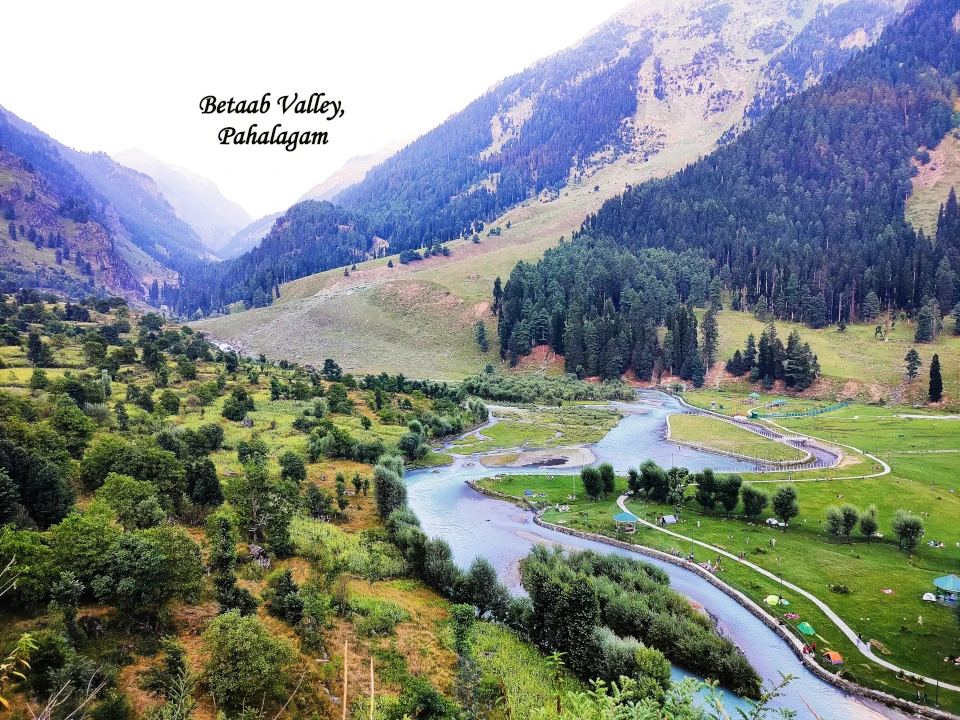
Pahalgam (“Village of Shepherds”) sits along the Lidder River and serves as the base camp for the Amarnath Yatra pilgrimage. Betaab Valley, named after the 1983 Bollywood film shot here, is known for its pine forests and river views. Aru Valley, a short drive away, offers pony treks, camping, and access to high-altitude lakes like Tarsar and Marsar for serious trekkers. Chandanwari marks the starting point of the Amarnath Yatra trek route and is famous for its snow bridge (Zero Point) that persists well into early summer.
- Best time to visit: March–June and September–October
- Ideal for: Trekkers, families, pilgrimage travelers
5. Sonamarg — Thajiwas Glacier
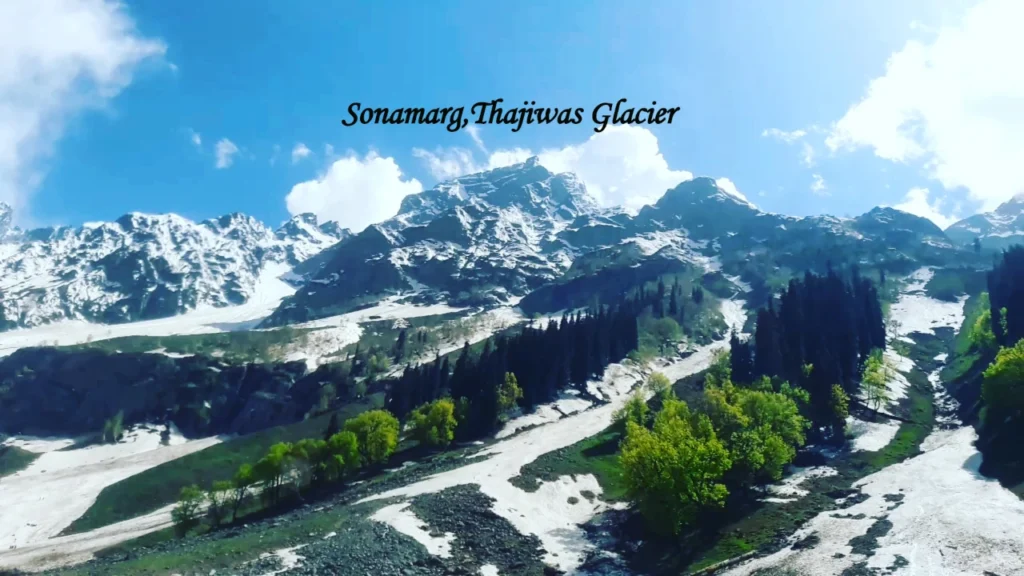
Sonamarg (“Meadow of Gold”) is the last major town before the Zoji La Pass, the historic gateway connecting Kashmir to Ladakh along the ancient Silk Route. The main draw is Thajiwas Glacier, reachable via a moderate 3–4 km pony ride or trek from the main road, framed by pine forests and the Sindh River running alongside the highway. The area remains snow-covered for much of the year, making it a popular day trip even in summer.
- Best time to visit: May–September (road typically closed in peak winter)
- Ideal for: Day-trippers, moderate trekkers, photographers
6. Shankaracharya Temple & Hazratbal Shrine
Shankaracharya Temple, perched atop a hill roughly 1,000 feet above Srinagar, is one of the oldest shrines in the Kashmir Valley, dedicated to Lord Shiva, and offers a panoramic view of the entire city and Dal Lake. Hazratbal Shrine, located on the northern bank of Dal Lake, is one of the holiest Islamic sites in Kashmir, believed to house a relic of Prophet Muhammad. Its white marble domes reflected in the lake make it one of the most striking religious landmarks in the region.
- Best time to visit: Morning hours for fewer crowds and clearer views
- Ideal for: Pilgrims, culture and heritage travelers
7. Doodhpathri — The Offbeat Meadow Destination
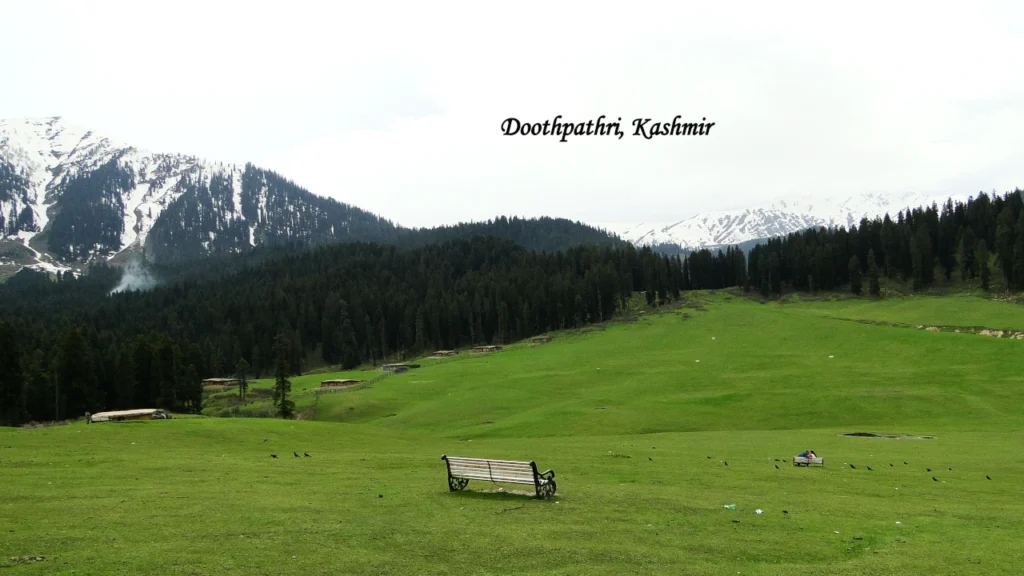
Doodhpathri (“Valley of Milk”) is one of Kashmir’s best-kept offbeat secrets — a vast, undulating meadow roughly 40 km from Srinagar, named for the milky-white color of its streams caused by mineral-rich glacial melt. Unlike the more commercialized Gulmarg and Pahalgam, Doodhpathri remains largely untouched by mass tourism, making it ideal for travelers seeking quiet nature walks, horse rides, and picnic spots surrounded by pine forests and rolling green hills.
- Best time to visit: May–September
- Ideal for: Offbeat travelers, nature photographers, peaceful day trips
10-Day Kashmir Itinerary (2026)
| Day | Itinerary |
|---|---|
| Day 1 | Arrive Srinagar, check into houseboat, evening Shikara ride on Dal Lake |
| Day 2 | Mughal Gardens (Nishat, Shalimar, Chashme Shahi), Hazratbal Shrine |
| Day 3 | Local Srinagar sightseeing, Shankaracharya Temple, Old City markets |
| Day 4–5 | Drive to Gulmarg, Gondola ride (Phase 1 & 2), Alpather Lake / skiing (winter) |
| Day 6–7 | Drive to Pahalgam via Awantipora ruins, visit Betaab Valley, Aru Valley, Chandanwari |
| Day 8 | Return to Srinagar via Anantnag, saffron fields (season-dependent) |
| Day 9 | Day trip to Sonamarg, Thajiwas Glacier |
| Day 10 | Leisure/shopping day (Pashmina, papier-mâché, dry fruits), departure |
10-Day Kashmir Itinerary 2026 — Day-Wise Details & Booking Links
Day 1: Arrival in Srinagar & Houseboat Check-In
Land at Srinagar International Airport (SXR) and transfer to your pre-booked houseboat on Dal Lake or Nagin Lake. Spend the afternoon settling in, sipping traditional Kahwa tea on the deck, and take an evening Shikara ride to watch the sunset over the lake with the Zabarwan hills in the background. Houseboats typically include breakfast and dinner in the tariff — confirm this at the time of booking.
- Book Houseboat: JKTDC Official Houseboat Booking or verified listings on MakeMyTrip Srinagar Houseboats
- Book Flight: Srinagar Airport (AAI) Info | Book via Air India, IndiGo
Day 2: Mughal Gardens & Hazratbal Shrine
Visit the three iconic Mughal-era gardens built along Dal Lake’s shoreline: Nishat Bagh (Garden of Bliss) with its terraced lawns and Zabarwan mountain backdrop, Shalimar Bagh (built by Emperor Jahangir for Empress Nur Jahan), and Chashme Shahi, known for its natural spring water. In the afternoon, visit Hazratbal Shrine, which houses a relic believed to be a hair of Prophet Muhammad, and is one of the most revered Islamic sites in the Kashmir Valley.
- Entry Tickets & Timings: Check current garden entry fees and timings on the J&K Tourism Official Portal
- Local Cab Booking: Pre-paid taxis available at Srinagar Airport counter or via app-based cabs in the city
Day 3: Local Srinagar Sightseeing
Climb to Shankaracharya Temple, perched atop a hill offering panoramic views of Srinagar city and Dal Lake — one of the oldest shrines in the region, dedicated to Lord Shiva. Spend the afternoon exploring the Old City’s narrow lanes, visiting Jama Masjid, and shopping for Pashmina shawls, papier-mâché items, and Kashmiri carpets in the Lal Chowk and Polo View Market areas.
- Shopping (Authentic/GI-Tagged Products): GI Tag Registry — Verify Authentic Kashmiri Pashmina
Day 4–5: Gulmarg — Gondola, Skiing & Alpather Lake
Drive roughly 2.5 hours from Srinagar to Gulmarg (“Meadow of Flowers”), home to the world’s second-highest cable car — the Gulmarg Gondola. Phase 1 takes you from Gulmarg to Kongdoori, and Phase 2 continues to Apharwat Peak at over 13,000 feet. In winter, this is India’s premier skiing and snowboarding destination; in summer, enjoy the world’s highest green golf course and short treks to Alpather Lake, a glacial lake that remains partially frozen most of the year.
- Book Gondola Tickets (Official — Online Only): Jammu & Kashmir Cable Car Corporation — Official E-Ticket Portal
- Note: There are no offline ticket counters at Gulmarg — all Gondola bookings must be made online in advance to avoid touts and last-minute unavailability.
- Skiing/Snowboarding Gear Rental: Available at Gulmarg base station; book guided ski lessons through JKTDC-registered instructors on-site.
Day 6–7: Pahalgam via Awantipora — Betaab Valley, Aru & Chandanwari
En route to Pahalgam, stop at the Awantipora ruins — 9th-century sun temple remains built by King Avantivarman. Once in Pahalgam (“Valley of Shepherds”), explore Betaab Valley (named after the Bollywood film shot here), Aru Valley for its pine forests and pony trails, and Chandanwari, the starting point of the Amarnath Yatra pilgrimage route. Local sedan taxis are not permitted beyond certain points — shared jeeps/ponies operate on fixed rate cards.
- Local Jeep/Pony Rate Card: Check official rates at the Pahalgam Tourist Reception Centre or on the J&K Tourism Portal
- Amarnath Yatra Info (if applicable/seasonal): Shri Amarnathji Shrine Board — Official Registration
Day 8: Return to Srinagar via Anantnag & Saffron Fields
Drive back to Srinagar through Anantnag, one of Kashmir’s oldest towns. If traveling between late October and early November, this route passes through Pampore’s famous saffron fields — the only place in India where saffron is commercially cultivated. Use this day for rest, laundry, or an optional Ayurvedic/Kashmiri massage at your houseboat or hotel.
- Saffron Authenticity Check: Verify GI-Tagged Kashmiri Saffron (Kesar) before purchasing
Day 9: Sonamarg Day Trip & Thajiwas Glacier
Take a day trip (approx. 3-hour drive) to Sonamarg (“Meadow of Gold”), the last major town before the Zoji La Pass gateway to Ladakh. Trek or ride a pony to Thajiwas Glacier, a popular short trek suitable for most fitness levels. This route also offers scenic views of the Sindh River running alongside the highway.
- Road Advisory (Zoji La Pass status): Border Roads Organisation — Road Status Updates
Day 10: Leisure, Shopping & Departure
Use your final day for last-minute shopping — Pashmina shawls, papier-mâché handicrafts, walnut wood carvings, and dry fruits from local emporiums. Government-emporium shopping (Kashmir Government Arts Emporium) offers fixed, transparent pricing compared to private shops. Depart from Srinagar Airport with checked-in baggage allowances confirmed in advance for fragile handicraft purchases.
- Government Emporium: Kashmir Government Arts Emporium, Residency Road, Srinagar — fixed-price authentic handicrafts
- Flight Check-In/Baggage Rules: Srinagar Airport — Airports Authority of India
Travel Guidelines and Tips
- Carry a valid government photo ID (Aadhaar/Passport) — checkpoints are common on highways.
- Domestic Indian tourists do not need a special permit for Srinagar, Gulmarg, Pahalgam, or Sonamarg; foreign nationals should check current entry advisories before travel.
- Check the latest security and weather advisory on the official J&K Tourism portal before finalizing travel dates.
- Book flights and houseboats 60–90 days in advance for peak season (May–July, December–January).
- Carry woolens even in summer — evenings in Gulmarg and Sonamarg can drop below 10°C.
- Keep cash handy; card/UPI acceptance is limited in remote valleys like Aru and Chandanwari.
- Business travelers attending Srinagar-based conferences should pre-confirm hotel Wi-Fi and backup power, as outages are occasional in winter.
Checklist for Families Travelling with Infants
- Carry sufficient baby formula/food — availability is limited beyond Srinagar city.
- Pack extra thermal layers; Gulmarg and Sonamarg have sharp temperature drops after sunset.
- Avoid high-altitude points like Khilanmarg or glacier treks with infants due to thin air.
- Carry a basic pediatric first-aid kit (fever, motion sickness, hydration salts).
- Pre-book houseboats/hotels with hot water and heating (bukhari) confirmed in the room.
- Keep travel insurance with pediatric coverage active for the full trip duration.
Types of Tickets and Available Tour Plans
- Gulmarg Gondola: Phase 1 (Gulmarg–Kongdoori) and Phase 2 (Kongdoori–Apharwat) sold as separate or combined tickets at the counter or via the official Gulmarg Gondola booking window.
- Dal Lake Shikara: Priced per boat (not per person) for fixed durations — typically 1-hour and 2-hour slots, negotiable with the local Shikara union.
- Pony/Sledge Rides: Fixed-rate cards displayed at Gulmarg, Pahalgam, and Sonamarg tourist reception centres — always confirm the rate card before boarding.
- Tour Packages: Available as fixed departure group tours, private customized packages, or houseboat-inclusive packages via JKTDC and registered private operators.
Local Transport in Kashmir
Srinagar International Airport connects to major Indian cities daily. Within the city, pre-paid taxis, app-based cabs, and local Tonga/auto services are available. For inter-town travel (Srinagar–Gulmarg–Pahalgam–Sonamarg), hire an SUV/Innova via a J&K Tourism-registered operator, as these routes involve hill terrain. Shared sumo taxis run fixed routes between towns at lower cost for budget travelers.
Tour Operators (Verify Current Registration Before Booking)
- Jammu & Kashmir Tourism Development Corporation (JKTDC): The official government tour operator offering houseboat stays, government hotel bookings, and curated tour packages. jktdc.co.in
- Registered Private Operators (via TAAK): Book only through operators listed with the Travel Agents Association of Kashmir or verified on the official J&K Tourism portal to avoid unregistered/unsafe operators. tourism.jk.gov.in
Preferred Hotels for Accommodation
- The Lalit Grand Palace, Srinagar — A heritage palace property on the banks of Dal Lake, suited for both leisure and business travelers needing event/conference facilities.
- Vivanta Dal View, Srinagar — A premium hotel with lake and mountain views, business centre, and easy access to Srinagar airport — a good fit for corporate travel.
Note: Always confirm current rates and availability directly with the hotel or a verified booking platform before travel, as pricing changes seasonally.
Food Facilities Inside Tourist Places
- Srinagar: Wide range of restaurants serving Wazwan (multi-course Kashmiri feast), Kahwa tea stalls, and houseboat-hosted home meals.
- Gulmarg: Limited food courts near the Gondola base station; carry snacks if trekking beyond Phase 2.
- Pahalgam: Local dhabas and hotel restaurants along the main market; fewer options past Chandanwari.
- Sonamarg: Basic tea stalls and dhabas near the glacier point; main meals best had before/after the day trip in Srinagar or Sonamarg town.
Official & Authentic Travel Resources
- Jammu & Kashmir Tourism Official Portal
- Ministry of Tourism, Government of India — J&K Page
- JKTDC — Government Hotels & Tour Booking
- Incredible India — Official National Tourism Site
- IRCTC — Rail & Combined Travel Bookings
- Airports Authority of India — Srinagar Airport
Frequently Asked Questions
1. What is the best time to visit Kashmir in 2026?
March to June is ideal for pleasant weather and blooming gardens, while December to February suits travelers seeking snowfall and skiing in Gulmarg.
2. How many days are enough for a Kashmir trip?
A 6-day trip covers the essentials (Srinagar, Gulmarg, Pahalgam), while a 10-day itinerary allows a relaxed pace including Sonamarg and offbeat spots like Doodhpathri.
3. Do Indian tourists need a permit to visit Kashmir?
No special permit is required for domestic tourists visiting Srinagar, Gulmarg, Pahalgam, or Sonamarg. Only a valid photo ID is needed for checkpoints.
4. Is Kashmir safe for family travel with infants?
Yes, with proper preparation — stick to well-connected towns, avoid high-altitude points, and carry warm clothing and baby essentials, as noted in the family checklist above.
5. How do I book the Gulmarg Gondola ticket?
Tickets are sold at the Gondola base station counter for Phase 1 and Phase 2 separately or combined; arrive early during peak season to avoid long queues.
6. What is the local transport option between Srinagar and Gulmarg/Pahalgam?
Registered SUVs/taxis via J&K Tourism-approved operators are the safest option for hill routes; shared sumo taxis are available for budget travel.
7. Is Kashmir suitable for business travel?
Yes. Srinagar has business-friendly hotels with conference facilities, daily flight connectivity to major Indian cities, and growing MICE tourism infrastructure.
8. Where can I check the latest Kashmir travel advisory?
Always refer to the official Jammu & Kashmir Tourism portal (tourism.jk.gov.in) or the Ministry of Tourism, Government of India, before finalizing travel dates.
Visit our related Travel Blogs
Final Thoughts
Kashmir in 2026 continues to prove why it’s called “Paradise on Earth” — a rare destination that works equally well for a relaxed family holiday, a snow-filled honeymoon, an adventure-packed trek, or a short business trip to Srinagar. Whether you have 6 days or a full 10-day window, the Valley rewards travelers with layered experiences: floating markets at sunrise on Dal Lake, Mughal-era gardens by afternoon, gondola rides over snow peaks in Gulmarg, and quiet meadows in offbeat spots like Doodhpathri that most tourists never find.
The key to a smooth trip is planning ahead — book your Gulmarg Gondola tickets and houseboat stay online in advance, travel with the season that matches your interests (snow, spring blooms, or autumn chinar colors), and always check the latest travel advisory on the official J&K Tourism portal before you go. Families traveling with infants should prioritize warm accommodation and avoid high-altitude points, while business travelers can rely on Srinagar’s improving hotel and connectivity infrastructure for short work trips.
However you plan your journey, Kashmir Travel Guide 2026 is built to help you experience the Valley the right way — safely, affordably, and with the kind of memories that bring travelers back year after year.

Leave a Reply