This guide contains affiliate links. We may earn a commission at no extra cost to you — see our Affiliate Disclosure and Affiliate Disclosure Policy for details.
✈️ Quick Take: Thailand in 2026 remains the top budget-friendly, visa-free escape for Indian travellers, blending Bangkok’s city buzz, Phuket and Krabi’s beaches, and Chiang Mai’s culture into one easy, affordable trip.
✈️ Key Highlights:
- Indian passport holders get visa-free entry for stays up to 60 days (extendable by 30 more), making short 5-7 day trips hassle-free.
- A comfortable Bangkok-Pattaya-Phuket circuit can be done for roughly ₹45,000-₹70,000 per person (excluding flights), covering stay, food, and local transport.
- Insider tip: Travel between November and February for cool, dry weather, and book flights/hotels early to avoid Songkran (April) price surges.
To book your accomadation, click here. To Book Local Travel, click here. To book your Travel insurance here
Traveling Overseas: Click here to buy an eSIM. For more info on eSIM, click here
Thailand Tourist Places 2026 offers Indian tourists and business travellers visa-free entry for up to 30 days (as confirmed by Thailand’s Cabinet on 14 July 2026), with must-visit spots including Bangkok’s Grand Palace, Phuket and Krabi’s beaches, Chiang Mai’s temples, and Ayutthaya’s ruins — all reachable via a well-connected mix of flights, the BTS Skytrain, and long-distance buses, on a comfortable budget of ₹45,000–₹90,000 per person for a 7–10 day trip, provided every traveller completes the mandatory Thailand Digital Arrival Card (TDAC) online before flying.
Table of Contents
Why Thailand Is Still the Top Pick for Indian Travellers in 2026
Thailand has topped outbound booking charts from India for years, and 2026 is no different. A flight time of barely four to five hours, visa-free entry, a favourable exchange rate, and a mix of city life, beaches, and culture make it an easy yes for families, couples, solo travellers, and corporate delegations alike. Whether you’re chasing sunsets in Phuket, walking through centuries-old temples in Ayutthaya, or attending a trade expo in Bangkok, this guide walks you through everything — history, itinerary, tickets, transport, hotels, food, and the official links you’ll actually need.
History of Tourist Places in Thailand
Thailand’s tourist map is really a timeline. Ayutthaya, a UNESCO World Heritage Site, was the capital of the Siamese kingdom from 1350 to 1767 and once rivalled European capitals in trade and scale before being sacked by the Burmese army — its broken temple spires still tell that story. Sukhothai, founded around 1238, is considered the birthplace of Thai script and classical Thai art, and its historical park is where the country’s distinct Buddhist architecture first took shape.
Bangkok became the capital in 1782 under King Rama I, and the Grand Palace built that same year has been the ceremonial heart of the monarchy ever since. Chiang Mai, founded in 1296 as the capital of the Lanna Kingdom, kept its own architectural and cultural identity for centuries before joining Siam, which is why its temples look distinctly different from Bangkok’s. Meanwhile, Phuket, Krabi, and Pattaya grew as tourist destinations only from the mid-20th century onward, once tin-mining and small fishing towns transformed into resort economies after Thailand’s tourism boom of the 1980s and 90s.
Top Tourist Places in Thailand
- Bangkok — Grand Palace, Wat Arun, Wat Pho, Chatuchak Market, rooftop bars, and the business district of Sukhumvit/Silom.
- Phuket — Patong Beach, Phi Phi Islands day trips, Old Phuket Town, Big Buddha.
- Krabi — Railay Beach, Ao Nang, limestone cliffs, island-hopping tours.
- Chiang Mai — Doi Suthep Temple, Old City temples, Elephant sanctuaries, Night Bazaar.
- Pattaya — Beach clubs, Nong Nooch Garden, Coral Island, family entertainment parks.
Bangkok: Thailand’s Vibrant Capital City
1. The Grand Palace
Bangkok is the capital and largest city of Thailand, known for its magnificent temples, royal heritage, bustling markets, modern shopping malls, celebrated street food, and lively nightlife. It offers a compelling blend of traditional Thai culture and contemporary urban life, which is why it remains one of the most visited cities in Southeast Asia.
From the historic Grand Palace and the riverside beauty of Wat Arun to the tranquil Wat Pho, the bustling Chatuchak Weekend Market, and the modern Sukhumvit district, Bangkok has something for nearly every kind of traveller. It also functions as an important commercial and business hub — areas such as Sukhumvit and Silom are lined with hotels, corporate offices, restaurants, shopping centres, and conference facilities, making the city equally suited to leisure travel and business trips.
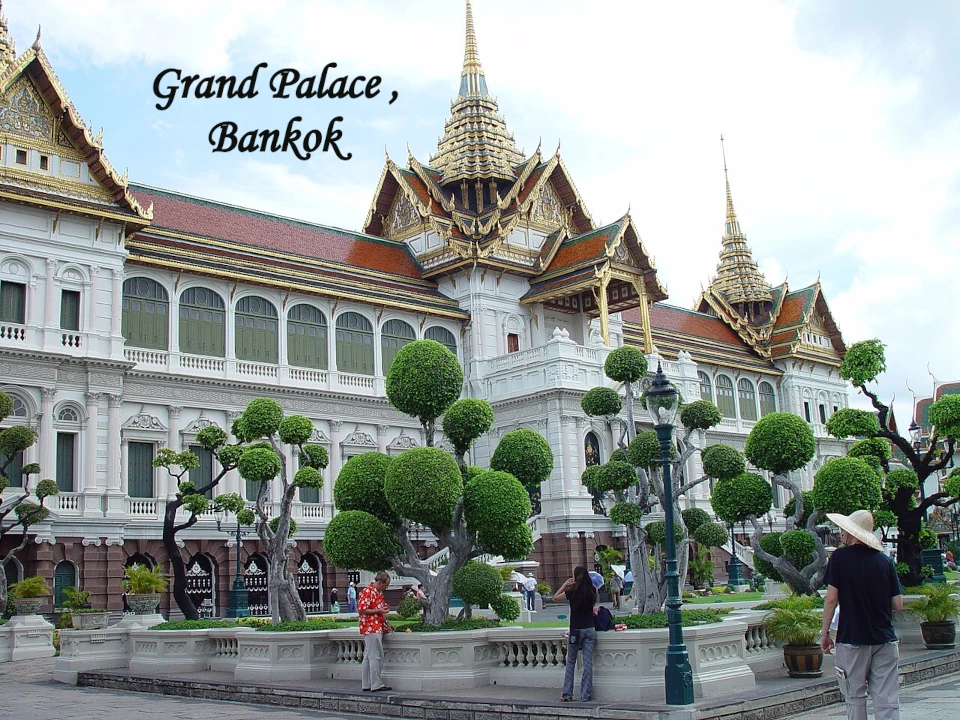
The Grand Palace is one of Bangkok’s most iconic landmarks and a lasting symbol of Thailand’s royal history. Built in 1782, the complex served as the official residence of the Thai kings for generations and remains the ceremonial heart of the monarchy today.
Visitors can explore its ornate buildings, intricate decorations, and traditional Thai architecture. The complex also houses Wat Phra Kaew, home to the revered Emerald Buddha.
Why visit:
- Experience Thailand’s royal heritage firsthand
- Admire classic Thai architecture and craftsmanship
- Visit the Temple of the Emerald Buddha
- Capture striking architectural photography
2. Wat Arun (Temple of Dawn)
Wat Arun, known as the Temple of Dawn, is one of Bangkok’s most recognisable temples. Standing on the western bank of the Chao Phraya River, it is especially striking around sunrise and sunset, when the light plays across its ornate spires.
The temple’s central prang is inlaid with colourful porcelain and ceramic fragments, creating an intricate, mosaic-like appearance. From the temple grounds, visitors also get sweeping views of the river and Bangkok’s skyline.
Best experience: Visit in the late afternoon and stay on to watch the view transform as the city lights come on.
3. Wat Pho
Located a short walk from the Grand Palace, Wat Pho is home to the enormous Reclining Buddha statue. The temple is also closely tied to traditional Thai massage and is regarded as an important centre for preserving and teaching this practice.
The complex features numerous stupas, Buddha images, murals, and finely decorated structures worth exploring at a slow pace.
Why visit:
- See the famous Reclining Buddha
- Explore historic temple architecture
- Learn about traditional Thai massage and culture
- Combine the visit with the nearby Grand Palace and Wat Arun
4. Chatuchak Weekend Market
For shopping and local culture, Chatuchak Weekend Market is one of Bangkok’s most exciting destinations. Spread across a vast area, it offers everything from clothing and handicrafts to home décor, artwork, accessories, and local street food — making it a favourite for visitors hunting for unique Thai souvenirs and an energetic shopping experience.
Travel tip: Wear comfortable footwear and carry water — you can easily spend several hours exploring the market’s many lanes.
5. Sukhumvit
Sukhumvit is one of Bangkok’s best-known modern districts and a popular base for hotels, restaurants, shopping, and business travel. Well connected by public transport, it’s surrounded by shopping centres, cafés, international restaurants, and contemporary city attractions.
Ideal for:
- Business travellers
- First-time visitors
- Shopping and dining
- Experiencing modern Bangkok
6. Silom
Silom is another major commercial district in Bangkok. By day, it functions as a key business area; by evening, it transforms into a lively destination for restaurants, markets, and entertainment. Its central location also makes it a convenient base for exploring the rest of the city.
7. Chao Phraya River
The Chao Phraya River has shaped Bangkok’s history and daily life for centuries. A river cruise or boat ride offers a different perspective of the city, revealing temples, riverside neighbourhoods, hotels, and modern buildings from the water — a journey that’s particularly rewarding around sunset, as the city’s landmarks begin to light up.
8. Bangkok Street Food
Bangkok’s food scene is one of its biggest draws, with everything from noodle dishes and rice meals to grilled skewers, fresh fruit, desserts, and traditional snacks available on nearly every street corner. Yaowarat (Chinatown) is especially well known for its lively food culture, while local markets and neighbourhood stalls offer a chance to sample regional Thai flavours.
9. Modern Shopping
Beyond its markets, Bangkok is also a strong shopping destination in its own right. The city’s large shopping complexes bring together international brands, Thai designers, restaurants, entertainment, and cafés — many conveniently located in central Bangkok, allowing visitors to combine sightseeing with shopping in the same day.
10. Bangkok Rooftop Views
Bangkok’s skyline is best appreciated from one of its many elevated viewpoints and rooftop venues, where visitors can take in skyscrapers, temples, roads, and the Chao Phraya River from above. Sunset and early evening are the most popular times to enjoy the city’s panoramic views.
Best Time to Visit Bangkok
The cooler, drier months from November to February are generally considered the most comfortable period for sightseeing. Bangkok can get hot and humid for the rest of the year, so it’s worth planning outdoor activities with breaks and staying well hydrated throughout the day.
Getting Around Bangkok
- BTS Skytrain — covers many central areas and major attractions
- MRT — connects several important neighbourhoods across the city
- River boats — the most practical way to reach riverside attractions
- Taxis and ride-hailing apps — convenient for areas away from rail stations
- Walking — ideal for exploring compact, temple-dense areas like the Old City
Suggested 2-Day Bangkok Itinerary
Day 1: Grand Palace → Wat Pho → Wat Arun → Chao Phraya River cruise → Chinatown (Yaowarat)
Day 2: Chatuchak Weekend Market → Sukhumvit → Shopping → Rooftop sunset views
Why Bangkok Should Be on Your Thailand Travel List
Bangkok brings together royal heritage, magnificent temples, vibrant markets, outstanding street food, modern shopping, river experiences, and a genuinely dynamic city atmosphere — all within a single, easily navigable destination. Whether you’re travelling for leisure, culture, shopping, or business, Bangkok offers enough depth and variety to anchor a memorable Thailand trip.
Flight booking: Fly into Suvarnabhumi Airport (BKK) or Don Mueang Airport (DMK), served directly from major Indian cities by IndiGo, Air India, Thai Airways, and AirAsia. Book via IndiGo, Air India, Thai Airways, or compare fares on Skyscanner.
Local travel: The BTS Skytrain and MRT cover most tourist and business areas; use the Grab app for door-to-door rides, and the Chao Phraya Express Boat for river-side attractions like Wat Arun and Wat Pho.
Phuket: Thailand’s Largest Island and Premier Beach Destination
Phuket is Thailand’s largest island and its most developed beach destination, sitting off the Andaman coast in southern Thailand. It brings together lively beach towns, a well-preserved historic quarter, hilltop temples, and easy access to some of the country’s most photographed islands — all supported by strong tourism infrastructure that makes it an easy first stop for both new and returning visitors.
What sets Phuket apart from Thailand’s other beach destinations is its sheer range: Patong Beach delivers the nightlife and water sports crowd, Old Phuket Town offers a quieter, culture-forward alternative, and the island’s temples and viewpoints — Big Buddha, Wat Chalong, and Promthep Cape — give it a spiritual and scenic depth that pairs well with day trips to the Phi Phi Islands and Phang Nga Bay.
1. Patong Beach
Patong is Phuket’s best-known beach and its liveliest stretch of coastline — a wide bay lined with hotels, restaurants, and the island’s most concentrated nightlife along Bangla Road. By day, it’s a hub for jet skiing, parasailing, and beachfront cafés; by night, it becomes Phuket’s main entertainment district.
Why visit:
- Phuket’s most accessible beach for first-time visitors
- Wide range of water sports, from jet skiing to parasailing
- The island’s liveliest nightlife along Bangla Road
- The largest concentration of hotels, restaurants, and shopping on the island
Travel tip: If you’d rather skip the crowds, Kata Beach offers calmer water suited to families, while Nai Harn Beach is a quieter option favoured by couples and solo travellers.
2. Old Phuket Town
Away from the beaches, Old Phuket Town reveals a different side of the island — rows of Sino-Portuguese shophouses dating back to the island’s 19th-century tin-mining boom, when Chinese and European traders settled here and left behind a distinct architectural mix of Thai, Chinese, and colonial European styles. The colourful facades, ornate balconies, and shuttered windows along Soi Rommanee are among the most photographed streets in Phuket.
Why visit:
- 19th-century Sino-Portuguese architecture found nowhere else in Phuket
- Street art, boutique cafés, and small museums like the Thai Hua Museum
- The Sunday Walking Street Market for local food and crafts
- A quieter, culture-focused alternative to the beach towns
3. Big Buddha
Sitting atop Nakkerd Hill in the island’s south, the Big Buddha is a 45-metre marble statue and one of Phuket’s most recognisable landmarks. Beyond its religious significance as an active site of worship, the hilltop location offers sweeping panoramic views across the island — one of the best vantage points in Phuket.
Travel tip: Visit in the early morning or late afternoon for cooler weather and better light, and dress modestly with shoulders and knees covered, as this remains a sacred site.
4. Wat Chalong
Wat Chalong is Phuket’s largest and most revered Buddhist temple complex, and an important pilgrimage site for Thai visitors. Its intricate gold carvings, chedis, and murals make it worth combining with a visit to the Big Buddha, since both sites sit relatively close together in the island’s south.
5. Promthep Cape
At the island’s southernmost tip, Promthep Cape is widely regarded as Phuket’s best sunset viewpoint, with uninterrupted views over the Andaman Sea as the sky turns orange and gold. It’s a popular spot in the late afternoon, so arriving a little early secures a good vantage point.
6. Phi Phi Islands Day Trip
A day trip from Phuket takes you to the Phi Phi Islands, where jungle-covered limestone cliffs rise straight out of the Andaman Sea. Maya Bay, on Phi Phi Leh, is the standout stop — made famous by the film The Beach — alongside excellent snorkelling spots and the region’s clearest waters.
Best experience: Book an early-departure speedboat tour to reach Maya Bay before the midday crowds and heat set in.
7. Phang Nga Bay and James Bond Island
North of Phuket, Ao Phang Nga National Marine Park is known for its dramatic limestone rock formations rising out of calm, sheltered water. The park’s best-known feature is Khao Phing Kan, popularly called James Bond Island after its appearance in The Man with the Golden Gun, along with sea caves and mangrove channels that are typically explored by longtail or kayak.
Best Time to Visit Phuket
November to April is Phuket’s dry season, bringing calm seas and reliable weather that’s ideal for island-hopping and beach days. May to October is the rainier, low season — quieter and cheaper, but with a higher chance of rough seas disrupting boat trips to Phi Phi and Phang Nga Bay.
Getting Around Phuket
- Grab app — the most reliable option for point-to-point rides across the island
- Scooter rentals — popular for reaching viewpoints and temples independently; an international driving permit and helmet are strongly advised
- Tuk-tuks and metered taxis — widely available in Patong and Phuket Town, though fares should be agreed upfront
- Longtail boats and speedboats — depart from Rassada Pier for Phi Phi, Phang Nga Bay, and other island day trips
Suggested 3-Day Phuket Itinerary
Day 1: Big Buddha → Wat Chalong → Promthep Cape → Patong Beach
Day 2: Old Phuket Town → Thai Hua Museum → Sunday Walking Street Market (if timed right)
Day 3: Full-day boat trip to the Phi Phi Islands or Phang Nga Bay and James Bond Island
Why Phuket Should Be on Your Thailand Travel List
Phuket’s biggest advantage is variety within a single destination — beaches for every mood, a genuinely historic old town, spiritual landmarks with some of the best views on the island, and effortless access to two of Thailand’s most scenic island regions. It’s this combination, backed by well-developed infrastructure, that keeps Phuket at the top of most Thailand itineraries.
Flight booking: Phuket International Airport (HKT) has direct flights from several Indian cities via IndiGo and Thai AirAsia, or connect via Bangkok. Book via IndiGo, AirAsia, or Skyscanner.
Local travel: Rental scooters and Grab taxis are the most common way to get around; longtail boats and speedboats run from Rassada Pier for island-hopping trips to Phi Phi and Phang Nga Bay.
Krabi: Limestone Cliffs, Island Escapes, and Andaman Charm
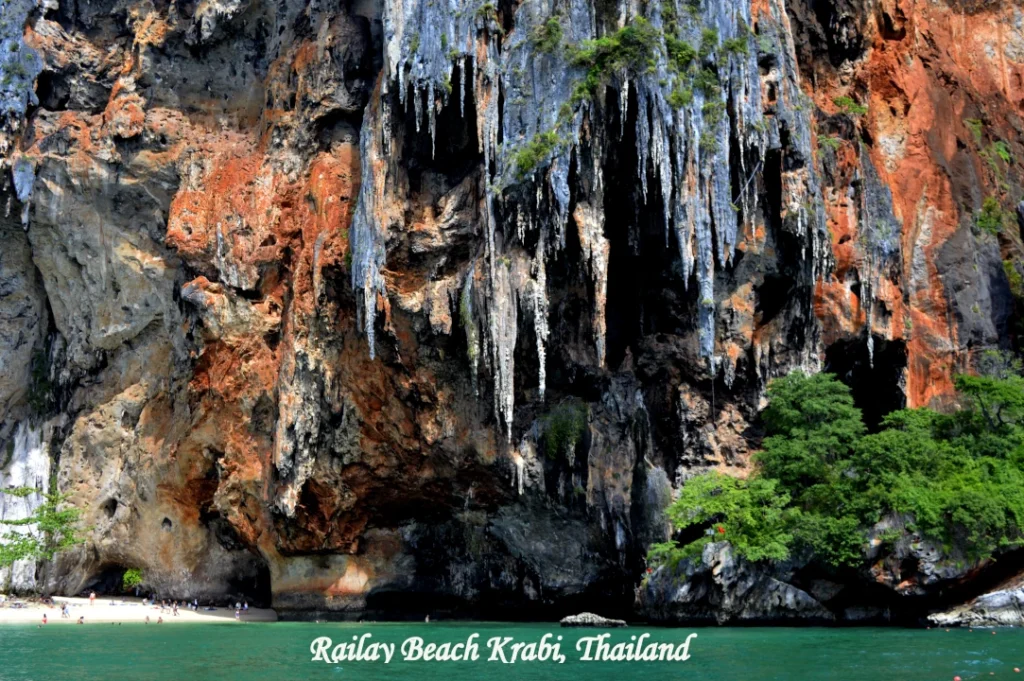
Krabi is one of Thailand’s most striking coastal provinces, known for dramatic limestone karsts rising straight out of turquoise water, boat-only beaches, and some of the best island-hopping in the Andaman Sea. Unlike the high-rise resort strips found elsewhere in Thailand, Krabi has kept much of its natural scenery intact, making it a favourite for travellers who want beaches, adventure, and a slower pace in the same trip.
Most visitors base themselves in Ao Nang, Krabi’s main tourist hub with hotels, restaurants, and tour agencies, though Railay’s dramatic cliffside setting and Krabi Town’s local, budget-friendly atmosphere are equally valid bases depending on what kind of trip you’re planning.
1. Railay Beach
Railay is technically a peninsula, but its sheer limestone cliffs make road access impossible — the only way in is by a short longtail boat ride from Ao Nang. That isolation is exactly what makes it special: four distinct beaches (Railay West for sunset views, Railay East for mangroves and budget stays, the postcard-perfect Phra Nang with its cave shrine, and Tonsai for climbers and backpackers), all framed by vertical cliff walls on three sides and open sea on the fourth.
Why visit:
- Some of Thailand’s most photographed beach scenery
- World-class rock climbing on limestone cliffs for all skill levels
- Phra Nang Cave shrine, a working site of local worship
- A car-free, boat-access-only atmosphere unlike anywhere else in Krabi
Travel tip: Longtail boats from Ao Nang to Railay take about 10 minutes and cost 100–200 THB, with fixed prices posted at the pier.
2. Ao Nang
Ao Nang is Krabi’s main tourist base — a lively beach town with hotels, restaurants, night markets, and tour operators clustered along a walkable stretch of coastline. It’s also the launch point for nearly every boat trip in the region, from Railay to the Phi Phi Islands.
Beyond the beach itself, Ao Nang’s Monkey Trail offers a short jungle hike with sea views and resident long-tailed macaques, leading to the quieter Pai Plong Beach on the other side.
Ideal for:
- First-time visitors who want everything within walking distance
- Booking island-hopping and day-trip tours
- Families and groups needing a wider choice of hotels
- Evening night markets and beachfront dining
3. Phi Phi Islands
A day trip from Ao Nang or Krabi Town takes you to the Phi Phi Islands, home to dramatic cliffs, coral reefs, and Ko Phi Phi Don, the only inhabited island in the group. Quieter corners like Long Beach offer a chance to swim alongside blacktip reef sharks, while the surrounding waters are popular for snorkelling and diving.
Best experience: Join an early-morning speedboat tour to reach the main viewpoints and bays before the midday crowds arrive.
4. Koh Poda and the Four Islands Tour
Closer to the mainland, Koh Poda is a popular stop on Krabi’s classic “Four Islands” boat tour, prized for its calm, shallow water, powder-white sand, and easy snorkelling just off the beach. It’s typically combined with Chicken Island, Tup Island, and a stop at Phra Nang Beach on Railay, making it an easier, shorter alternative to a full Phi Phi Islands day trip.
5. Tiger Cave Temple (Wat Tham Suea)
For a different side of Krabi, Tiger Cave Temple rewards visitors with one of the best panoramic views in the province — at a price. Reaching the golden Buddha statue at the summit means climbing roughly 1,237 steps carved into the hillside, passing shrines, cave chambers, and resident monkeys along the way.
Travel tip: Start the climb early in the morning to avoid the heat, wear comfortable shoes, and dress modestly with shoulders and knees covered, as this is an active place of worship.
6. Emerald Pool and Hot Springs
Inland from the coast, the Emerald Pool (Sa Morakot) sits inside the Khao Pra-Bang Khram Wildlife Sanctuary, fed by warm mineral streams that give the water its striking turquoise-green colour. A short jungle trail connects it to the nearby Blue Pool, and a natural hot spring in the same area offers a warm soak — though it isn’t suitable for swimming.
7. Krabi Town and Its Night Markets
Krabi Town is the province’s administrative centre and a far more local, budget-friendly base than Ao Nang, with easy ferry access to the islands. Its weekend night market and the smaller Poo Dam Night Market are good spots to sample Thai street food, browse local crafts, and get a feel for daily life away from the resort strips.
Best Time to Visit Krabi
November to April is Krabi’s dry season and the best window for island-hopping, snorkelling, and beach days, with December to February offering the coolest, most comfortable temperatures. The monsoon season, roughly May to October, brings rougher seas and can disrupt boat trips to Railay and the outer islands, though rates are noticeably lower and the crowds thinner.
Getting Around Krabi
- Longtail boats — the only way to reach Railay Beach and the outer islands; fixed fares are posted at the piers
- Songthaews — shared trucks running between Krabi Town and Ao Nang, roughly 60–80 THB, less frequent after dark
- Scooter rentals — useful for Tiger Cave Temple, the Emerald Pool, and exploring Krabi Town at your own pace; an international driving permit and helmet are strongly advised
- Grab and taxis — available in Ao Nang and Krabi Town for point-to-point trips
Suggested 3-Day Krabi Itinerary
Day 1: Ao Nang → Railay Beach → Phra Nang Cave Beach → Tonsai Beach
Day 2: Tiger Cave Temple → Emerald Pool and Hot Springs → Krabi Town Night Market
Day 3: Full-day island-hopping tour to the Phi Phi Islands or the Four Islands (Koh Poda, Chicken Island, Tup Island)
Why Krabi Should Be on Your Thailand Travel List
Krabi offers a rarer combination in Thailand — genuinely dramatic natural scenery, low-key beach towns, and enough adventure (climbing, hiking, diving, island-hopping) to fill several days, without the density of Phuket or Pattaya. For travellers who want their Thailand trip to feel more like an escape into nature than a resort holiday, Krabi is hard to beat.
Flight booking: Krabi Airport (KBV) has no direct India connections yet — fly into Bangkok or Phuket first, then take a short domestic hop via AirAsia, Nok Air, or Bangkok Airways.
Local travel: Songthaews (shared pickup trucks) and Grab cover Ao Nang and Krabi Town; longtail boats are required to reach Railay Beach since it has no road access.
Chiang Mai: Temples, Mountains, and the Soul of the Lanna Kingdom
Chiang Mai was founded in 1296 as the capital of the Lanna Kingdom, and that heritage still shapes the city today — in its temple architecture, its Northern Thai cuisine, and the craft traditions still practised in the Old City’s workshops. Home to more than 300 Buddhist temples, Chiang Mai offers a slower, more culturally rooted alternative to Bangkok, built around a walled, moat-ringed Old City, a sacred mountaintop temple, and an increasingly strong ethical tourism scene led by its elephant sanctuaries.
Most first-time visitors base their trip around three layers: the mountain-side temple sequence at Doi Suthep, a walking tour of the Old City’s historic temples, and at least one properly chosen nature or elephant experience — ideally spread across three to four days rather than rushed into one.
1. Wat Phra That Doi Suthep
Perched at 1,073 metres on Doi Suthep mountain, this is Chiang Mai’s most iconic temple and one of the holiest sites in Northern Thailand. Founded in 1383 to house a relic believed to belong to the Buddha, the temple is reached by climbing a 309-step staircase flanked by naga (serpent) statues, leading up to a 24-metre gold chedi and sweeping views across the city below.
Why visit:
- One of Thailand’s most sacred and historically significant temples
- Panoramic views over Chiang Mai from the mountainside
- A dramatic naga-flanked staircase leading to a gleaming gold chedi
Travel tip: Visit at sunrise or sunset for cooler weather, softer light, and quieter grounds — a red songthaew from the city centre is the most common way up the mountain.
2. The Old City Temple Walk
Chiang Mai’s Old City is enclosed by ancient brick walls and a square moat that once protected the Lanna capital, and it remains the best place to experience the city’s temple heritage on foot. Wat Chedi Luang’s partially ruined stupa, built between 1391 and 1475, once stood 82 to 86 metres tall and briefly housed the Emerald Buddha before it was moved to Luang Prabang. Wat Phra Singh is considered one of the finest examples of classic Lanna architecture, while Wat Chiang Man, built during the reign of King Mengrai, is the oldest temple in the city.
Why visit:
- Dozens of historic temples within easy walking distance inside the moat
- Wat Chedi Luang’s dramatic, centuries-old ruined stupa
- Wat Chiang Man, the city’s oldest temple, dating to its 1296 founding
- Monk chat sessions at several temples for a closer look at Buddhist practice
3. Ethical Elephant Sanctuaries
Chiang Mai is widely regarded as home to Thailand’s best ethical elephant experiences, typically located 30 to 60 kilometres outside the city. Rather than offering rides, reputable sanctuaries such as Elephant Nature Park focus on rescue and rehabilitation, letting visitors feed, bathe, and observe elephants in a setting closer to their natural behaviour.
Travel tip: Choose a sanctuary carefully — look for operators that explicitly avoid elephant riding and shows, as this is the clearest sign of a genuinely ethical operation.
4. Saturday and Sunday Night Bazaars
Chiang Mai’s night markets are among its biggest draws. The Sunday Walking Street along Tha Phae Road fills with handmade crafts and Northern Thai food stalls, while the nightly Chiang Mai Night Bazaar offers a more permanent mix of local fashion, handicrafts, and street food that comes alive after dark.
Why visit:
- Some of the best Northern Thai street food in the city
- Handmade crafts and souvenirs directly from local artisans
- A relaxed, walkable evening activity that suits all ages
5. Doi Inthanon National Park
Around 70 kilometres from the city, Doi Inthanon is Thailand’s highest peak at 2,565 metres, often called the “Roof of Thailand.” The park is home to the Royal Twin Chedis, waterfalls, and over 500 recorded bird species, making it a popular day trip for both scenery and cooler mountain air.
6. Bo Sang Umbrella Village
A short drive from the city, Bo Sang is known for its generations-old tradition of hand-painting paper and silk umbrellas. Watching local artisans at work offers a glimpse into a craft that has been passed down for decades, and the finished umbrellas make for distinctive, packable souvenirs.
7. Thai Cooking Classes
Chiang Mai is considered one of the best places in Thailand to take a hands-on cooking class, usually starting with a visit to a local market before moving into the kitchen to prepare Northern Thai specialities like khao soi, a curried noodle soup unique to the region.
Best Time to Visit Chiang Mai
November to February is the coolest and most comfortable period, ideal for temple visits and mountain day trips, and coincides with the Yi Peng and Loy Krathong lantern festivals, widely considered the most atmospheric time to be in the city. March to May brings hotter, drier weather with occasional haze from agricultural burning, while June to October is the rainy season, with lush scenery but a higher chance of showers.
Getting Around Chiang Mai
- Red songthaews — shared shared trucks that are the cheapest and most common way to get around the city and up to Doi Suthep
- Grab app — reliable for point-to-point rides, especially outside songthaew routes
- Scooter rentals — useful for reaching elephant sanctuaries, Doi Inthanon, and Bo Sang independently
- Walking — the best way to explore the compact, temple-dense Old City
Suggested 3-Day Chiang Mai Itinerary
Day 1: Wat Phra Singh → Wat Chedi Luang → Wat Chiang Man → Sunday Walking Street (Tha Phae Road) in the evening
Day 2: Wat Phra That Doi Suthep at sunrise → Bo Sang Umbrella Village → Chiang Mai Night Bazaar
Day 3: Full-day ethical elephant sanctuary visit, optionally paired with a Thai cooking class in the evening
Why Chiang Mai Should Be on Your Thailand Travel List
Chiang Mai offers a version of Thailand that feels distinctly different from the beach resorts and Bangkok’s skyline — slower-paced, deeply rooted in Lanna history, and increasingly known for responsible, ethical tourism. Between its temples, mountains, night markets, and elephant sanctuaries, it rewards travellers who want cultural depth alongside their sightseeing.
Flight booking: Chiang Mai International Airport (CNX) is best reached via a connecting flight through Bangkok using Thai Airways, AirAsia, or Nok Air.
Local travel: Red songthaews (shared trucks) are the cheapest way around; Grab and metered taxis work well for longer trips like Doi Suthep or elephant sanctuaries outside the city.
Pattaya: Thailand’s Closest Beach Escape from Bangkok
Pattaya is a beach resort city on Thailand’s eastern Gulf coast, roughly two hours from Bangkok by road, which makes it the country’s most convenient beach getaway for travellers short on time. What began as a quiet fishing village grew rapidly from the 1960s into one of Thailand’s busiest resort destinations, and today it offers a wide mix of experiences — beach clubs and water sports, sprawling gardens, family theme parks, and an energetic nightlife scene along Walking Street.
Pattaya’s biggest advantage is versatility: it works equally well as a quick weekend beach trip, a family holiday built around water parks and gardens, or a livelier stopover for travellers wanting nightlife without straying far from Bangkok.
1. Pattaya Beach Clubs and Beach Road
Pattaya’s main beachfront stretches along Beach Road, lined with beach clubs, loungers, and water sports operators offering everything from jet skiing to parasailing. By evening, the same stretch feeds into Walking Street, Pattaya’s best-known nightlife strip of bars, restaurants, and live entertainment.
Why visit:
- Easy access to beach clubs, loungers, and water sports
- Walking Street’s concentrated nightlife and dining scene
- A wide choice of beachfront hotels within walking distance of everything
Travel tip: For a quieter alternative, Jomtien Beach just south of central Pattaya offers calmer water and is better suited to families with young children.
2. Nong Nooch Tropical Botanical Garden
Covering around 2.4 square kilometres, Nong Nooch is the largest tropical garden in Southeast Asia and one of Pattaya’s most popular half-day trips. Beyond its landscaped gardens, the park runs cultural shows featuring traditional Thai dance and martial arts, along with elephant rides and boat paddling activities that make it a strong pick for families.
Travel tip: The park is typically open from 8:00 AM to 6:00 PM, with separate entry fees for adults and children — many tour operators bundle Nong Nooch with round-trip transport, which is worth considering given its distance from central Pattaya.
3. Coral Island (Koh Larn)
A short boat ride from Pattaya, Coral Island — known locally as Koh Larn — offers a noticeably cleaner, quieter beach experience than the mainland. It’s a popular day trip for snorkelling, banana boat rides, and simply relaxing on the sand, and works well for couples and families alike.
Why visit:
- Clearer water and quieter beaches than central Pattaya
- Snorkelling, banana boats, and other water sports
- Easily done as a half-day or full-day trip
4. Cartoon Network Amazone and Other Water Parks
Cartoon Network Amazone, located near Jomtien Beach, is one of Pattaya’s most popular family attractions, built around cartoon-themed water slides and pools aimed primarily at younger children. Pattaya also has several other water parks in the same category, including Ramayana Water Park and Columbia Pictures Aquaverse, giving families more than one option depending on the age group and length of stay.
Travel tip: Reviews suggest the park suits younger children best — if you’re travelling with older kids or teens, Ramayana Water Park’s larger slides may be a better fit.
5. Sanctuary of Truth
The Sanctuary of Truth is an entirely wooden temple-like structure built on the beachfront, carved with intricate depictions of Thai, Khmer, and Hindu mythology. Still under construction after decades, it’s one of Pattaya’s most striking cultural landmarks and a favourite for architecture and photography enthusiasts.
6. Pattaya Floating Market
Designed around the culture and cuisine of Thailand’s four main regions, the Pattaya Floating Market combines boat vendors, local food stalls, and handicraft shopping in one compact area. It stays open into the evening, making it a convenient stop after a day at the beach or gardens.
7. Big Buddha Hill (Wat Phra Khao Yai)
Also known as Pattaya Viewpoint, this hilltop temple offers one of the best panoramic views of Pattaya Bay and the city skyline, especially at sunset. It’s a quieter, more reflective stop compared to the beach and entertainment areas, and works well as a late-afternoon add-on to a day of sightseeing.
Best Time to Visit Pattaya
November to February offers the coolest, driest weather and is generally considered the best time for beach days and outdoor sightseeing. March to May is hotter and more humid, while the monsoon season from June to October brings periodic rain but noticeably fewer crowds and lower hotel rates.
Getting Around Pattaya
- Baht buses (songthaews) — shared open-back trucks running along Beach Road and Sukhumvit Road, the cheapest way to get around
- Grab app — widely available for point-to-point rides across the city
- Motorbike taxis — quick for short hops, though fares should be agreed before starting
- Speedboats and ferries — required for day trips to Coral Island, departing from Bali Hai Pier
Suggested 2-Day Pattaya Itinerary
Day 1: Pattaya Beach and water sports → Sanctuary of Truth → Walking Street in the evening
Day 2: Nong Nooch Tropical Garden or Cartoon Network Amazone → Pattaya Floating Market → Big Buddha Hill for sunset
Why Pattaya Should Be on Your Thailand Travel List
Pattaya’s proximity to Bangkok makes it one of the easiest ways to add a genuine beach and family-entertainment component to a Thailand trip without losing extra travel days to flights or long transfers. Between its beach clubs, gardens, island day trips, and theme parks, it’s flexible enough to work for nightlife-seekers, families, and short-stay travellers alike.
Flight booking: Fly into Suvarnabhumi Airport (BKK) or U-Tapao Rayong-Pattaya Airport (UTP), then continue by road — roughly 1.5–2 hours from Bangkok. Book via IndiGo or Skyscanner.
Local travel: Baht buses (shared songthaews) run along Beach Road and Sukhumvit Road; Grab is widely available for point-to-point trips.
10-Day Thailand Itinerary (Tourist & Business-Friendly)
- Day 1–2 — Bangkok: Grand Palace, Wat Pho, Wat Arun, Chao Phraya river cruise, Chatuchak Market. Business travellers can slot in meetings around Sukhumvit or the Bangkok International Trade & Exhibition Centre (BITEC).
- Day 3 — Ayutthaya day trip: Temple ruins, elephant camp, back to Bangkok by evening.
- Day 4–5 — Chiang Mai: Doi Suthep, Old City temple walk, ethical elephant sanctuary, Night Bazaar.
- Day 6 — Chiang Rai day trip: White Temple, Blue Temple, Golden Triangle viewpoint.
- Day 7–8 — Phuket: Patong Beach, Phi Phi Islands boat tour, Old Town food walk.
- Day 9 — Krabi: Railay Beach, Ao Nang sunset, island hopping.
- Day 10 — Return via Bangkok: Last-minute shopping at MBK or Siam Paragon before flying home.
Tip: Domestic flights (Bangkok–Chiang Mai, Bangkok–Phuket) via Thai AirAsia, Nok Air, or Thai Lion Air take 60–90 minutes and are usually cheaper than an overnight train or bus, saving valuable itinerary days.
Travel Guidelines and Tips for 2026
- Visa: Indian passport holders get visa-free entry for tourism, business, or short visits for up to 30 days, confirmed by the Thai Cabinet on 14 July 2026. Longer stays need a Tourist Visa, Multiple-Entry Visa (METV), or the 5-year Destination Thailand Visa (DTV), applied for via the official Thai e-Visa portal.
- TDAC is mandatory: Every traveller must submit the Thailand Digital Arrival Card online within 72 hours of arrival — no exceptions, tourist or business.
- Best time to visit: November to February for cool, dry weather; avoid the humid pre-monsoon peak in April (Songkran) if you dislike crowds and price surges.
- Currency: Thai Baht (THB). Carry a mix of cash and cards; airport currency counters offer poor rates — use city exchange booths like SuperRich instead.
- Extensions: A 30-day visa-free extension is available at any Thai immigration office for 1,900 THB.
- Travel insurance: Not mandatory for Indians but strongly recommended, especially for water sports and island-hopping activities.
- Dress code: Cover shoulders and knees when visiting temples like the Grand Palace and Wat Pho.
Checklist for Families Travelling with Infants
- Carry the infant’s passport, a copy of the birth certificate, and a doctor’s fitness-to-fly note.
- Pack a compact stroller — Bangkok’s uneven pavements and river ferries are not always stroller-friendly, so a lightweight umbrella stroller works best.
- Book hotels that explicitly list crib/cot availability and baby-proofing rather than assuming.
- Carry sufficient formula, diapers, and familiar snacks — international brands are available in Bangkok/Phuket malls but pricier than in India.
- Keep a printed copy of your paediatrician’s contact and any allergy information; most 4- and 5-star hotels can arrange an on-call doctor.
- Avoid overly ambitious day plans — build a buffer day into a 10-day itinerary if travelling with infants.
- Carry mosquito repellent suitable for infants, especially for Ayutthaya, Kanchanaburi, and Chiang Mai’s outdoor sites.
Types of Tickets and Tour Plans Available
- Individual entry tickets: Bought on-site or online for single attractions like the Grand Palace, Doi Suthep, or Phi Phi Islands boat tours.
- Combo/city passes: Bangkok and Phuket attraction passes that bundle multiple sites at a discount.
- Fixed-departure group tours: Pre-scheduled coach tours covering Bangkok–Pattaya or Bangkok–Phuket, ideal for first-timers and senior travellers.
- Customised/private tour plans: Curated by a tour operator with a private car, guide, and flexible timing — better suited for business travellers and families with infants.
- Day-trip packages: Ayutthaya, Chiang Rai, and Coral Island day trips sold as add-ons by local operators or through platforms like Klook and GetYourGuide.
Local Transport in Thailand
- BTS Skytrain & MRT (Bangkok): Fast, air-conditioned, and the easiest way to avoid Bangkok traffic.
- Grab app: Thailand’s equivalent of Uber/Ola — the most reliable way to book cars and tuk-tuks with upfront pricing.
- Tuk-tuks and taxis: Fun for short hops; always confirm the meter is on or agree on a fare beforehand.
- Domestic flights: Best for covering Bangkok–Phuket, Bangkok–Chiang Mai, or Bangkok–Krabi quickly.
- Ferries and longtail boats: Essential for Phi Phi Islands, Krabi’s Railay Beach, and Koh Samui.
- Rental scooters: Popular in Phuket and Krabi, but an international driving permit and helmet are strongly advised.
Tour Operators to Consider
- Thomas Cook India — A long-established Indian outbound operator offering fixed-departure and customisable Thailand packages, group tours, and business travel/MICE services. thomascook.in
- SOTC Travel — Offers curated Thailand holiday packages for families, couples, and honeymooners, plus corporate MICE and incentive travel planning. sotc.in
Preferred Hotels for Accommodation
- The Peninsula Bangkok — A riverside 5-star property on the Chao Phraya, well suited to both leisure travellers and business delegates, with easy boat-shuttle access to Bangkok’s main sights and CBD. peninsula.com/bangkok
- Centara Grand Mirage Beach Resort, Pattaya — A large family-friendly beachfront resort with a water park, multiple pools, and kids’ clubs — ideal for families travelling with children or infants. centarahotelsresorts.com
Food Facilities Inside Tourist Places
Most major tourist sites in Thailand have food courts, street-food stalls, or licensed vendors right at the entrance or within walking distance — the Grand Palace area, Chatuchak Market, and Chiang Mai’s Old City are all packed with options ranging from mango sticky rice to Pad Thai carts. Bangkok, Phuket, and Pattaya also have a strong presence of Indian and vegetarian restaurants around tourist hubs like Sukhumvit, Patong, and Walking Street, so vegetarian Indian travellers are rarely stuck for options.
At beach destinations like Krabi and Koh Samui, most resorts run their own on-site restaurants since standalone eateries are sparser near remote beaches — it’s worth checking meal-inclusion options when booking. Always choose stalls with high footfall and freshly cooked food, carry bottled water, and check for nut or shellfish allergens if travelling with young children.
Frequently Asked Questions
1. Do Indians need a visa for Thailand in 2026?
No. As of the Thai Cabinet’s decision on 14 July 2026, Indian passport holders get visa-free entry for tourism, business, or short visits for up to 30 days.
2. What is the TDAC and is it mandatory?
The Thailand Digital Arrival Card is a free, mandatory online form that replaced the old paper arrival card. It must be submitted within 72 hours before arrival at tdac.immigration.go.th.
3. What is the best time to visit Thailand from India?
November to February offers the coolest, driest weather, making it ideal for both sightseeing and beach holidays.
4. How many days are enough to cover Thailand’s major tourist places?
7 to 10 days is enough to cover Bangkok, Chiang Mai, and either Phuket or Krabi comfortably without rushing.
5. Can I extend my stay beyond 30 days?
Yes, a 30-day extension is available at any Thai immigration office for a fee of 1,900 THB.
6. Is Thailand safe and suitable for infants and young children?
Yes, most resorts and hotels are family-friendly with cribs, kids’ clubs, and paediatric care on call, though it’s best to confirm these facilities before booking.
7. What visa route should business travellers use for longer stays?
Business travellers staying beyond 30 days, or those needing multiple entries, should apply for a Non-Immigrant B visa or an METV through the official Thai e-Visa portal.
8. Is local transport easy to use without knowing Thai?
Yes. The BTS Skytrain, MRT, and the Grab app all have English interfaces, and most tourist-area signage is bilingual.
Official and Authentic Links for Tourists and Business Travellers
- Tourism Authority of Thailand (TAT) — official tourism information, attractions, and travel updates.
- Thailand Digital Arrival Card (TDAC) — mandatory pre-arrival registration portal.
- Thai e-Visa Official Portal — Ministry of Foreign Affairs’ visa application system for tourist, business, and DTV visas.
- Thailand Immigration Bureau — for visa extensions and entry regulations.
- Thailand Board of Investment (BOI) — official resource for business travellers and investors.
- Ministry of External Affairs, Government of India — travel advisories for Indian citizens travelling abroad.






Leave a Reply