This guide contains affiliate links. We may earn a commission at no extra cost to you — see our Affiliate Disclosure and Affiliate Disclosure Policy for details.
“Where a single morning takes you from the solemn silence of the Atomic Bomb Dome to the floating torii gates of Miyajima — Hiroshima is Japan’s most powerful two-day story.”
Table of Contents
Jump to any section of this Hiroshima travel guide using the links below.
Hiroshima Travel Guide 2026: Why This City Belongs on Your Japan Itinerary
This Hiroshima travel guide is built for two kinds of travelers: first-timers who only know Hiroshima for its history, and returning visitors who want to go deeper into its food, festivals, and islands. Hiroshima sits on Japan’s Seto Inland Sea coast, about 4 hours from Tokyo and 1.5 hours from Osaka by Shinkansen bullet train, making it an easy add-on to any Golden Route trip. It’s also one of the most affordable major cities in Japan for international visitors, especially those coming from India and Southeast Asia. Many headline sights — Peace Memorial Park, the Atomic Bomb Dome exterior, and most of Miyajima island — are completely free to enter.
Hiroshima carries deep historical weight as the site of the world’s first atomic bombing on August 6, 1945, and its Peace Memorial Park and Museum remain essential, moving experiences. But the modern city is anything but somber: it has a beloved baseball team (the Hiroshima Carp), a food scene built around layered okonomiyaki and fresh oysters, a reconstructed castle, and one of Japan’s three officially recognized “most scenic views” just a short ferry ride away on Miyajima island.
This guide covers everything from A to Z — the 10 best places to visit, the best season and festival calendar, what to eat, hotel and tour costs for families and solo travelers, a step-by-step schedule, ready-made itineraries, an interactive map, nearby photo spots, and full transport details from the airport.
Hiroshima’s 10 Best Places to Visit
1. Hiroshima Peace Memorial Park & Atomic Bomb Dome
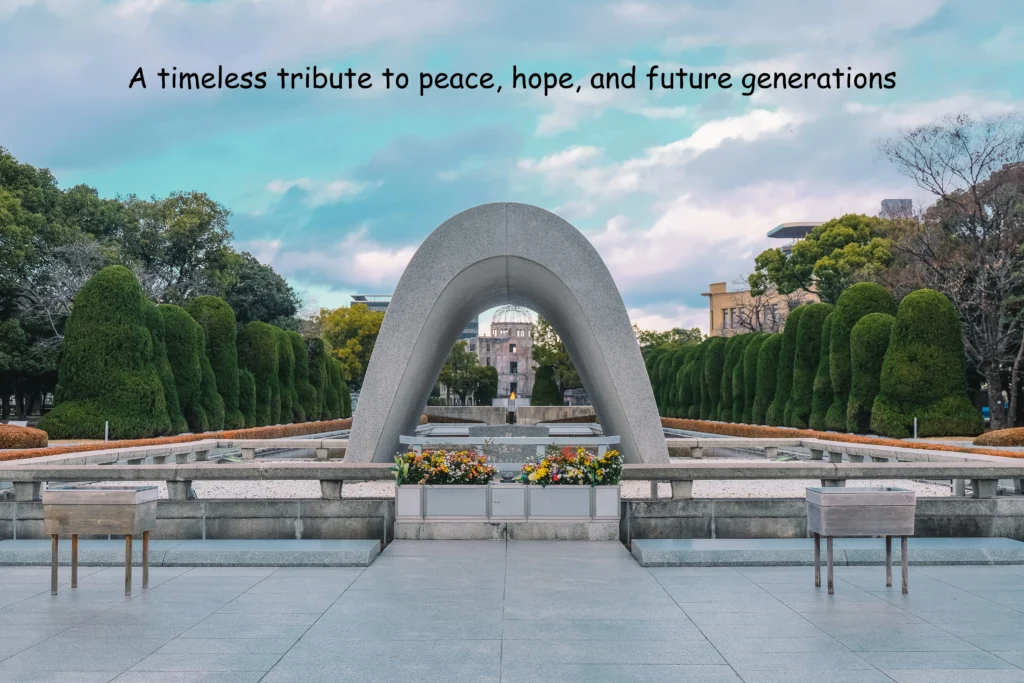
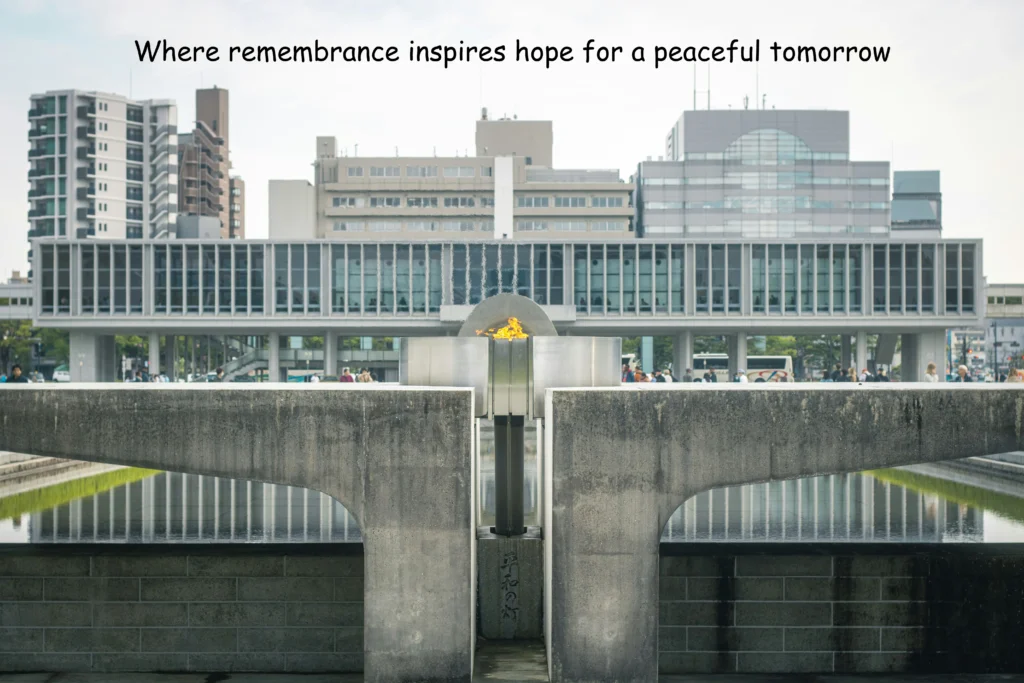
The spiritual center of any Hiroshima travel guide, this 12-hectare riverside park was designed by architect Kenzo Tange and contains the Cenotaph for the A-Bomb Victims, the Flame of Peace, and the Children’s Peace Monument covered in paper cranes. Across the river stands the Atomic Bomb Dome, the skeletal ruin of the former Industrial Promotion Hall and the only structure left standing near the blast’s hypocenter. Both are UNESCO World Heritage Sites and are free to visit 24 hours a day. Visit early in the morning (park opens at dawn) to experience it quietly before tour groups arrive, and keep your voice low and phone away while inside — this is a memorial site, not a photo backdrop.
2. Hiroshima Peace Memorial Museum
Inside the park, this museum documents the events of August 6, 1945, through survivor testimony, personal belongings, and photographs. Entry costs just ¥200 for adults (around ₹110) and ¥100 for high-school students, with children free. Give yourself at least 90 minutes to two hours. Advance online reservations are strongly recommended in 2026, especially around the August 6 anniversary and the Obon holiday period (August 8–16, 2026), when timed-entry slots fill quickly.
3. Itsukushima Shrine & the Floating Torii Gate, Miyajima Island
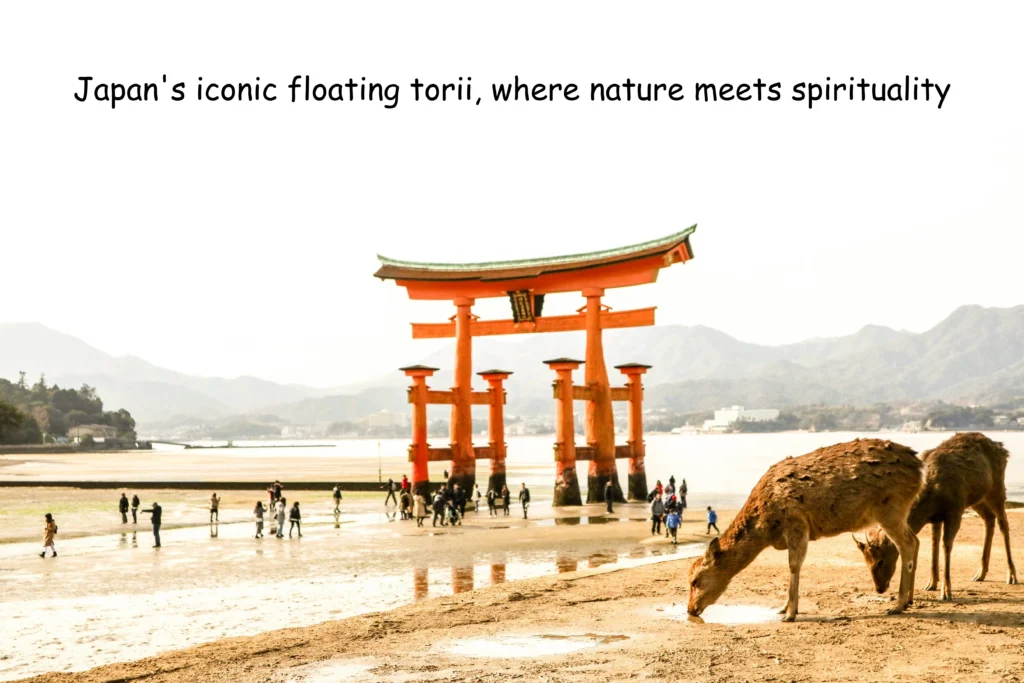
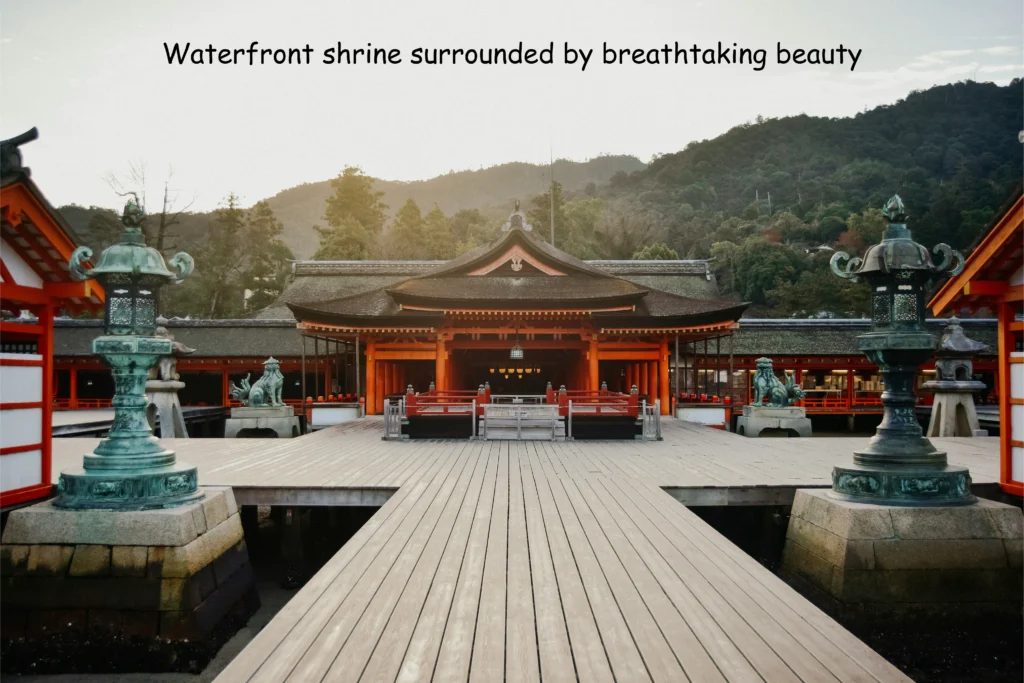
Miyajima is Hiroshima’s single most iconic side trip and one of Japan’s official “Three Views.” The vermilion Itsukushima Shrine and its enormous torii gate appear to float on the sea at high tide; at low tide, you can walk out to the gate’s base across the sand flats. Reach the island via a roughly 10-minute ferry from Miyajima-guchi (about 30–45 minutes from central Hiroshima by tram/train plus ferry). Shrine entry is around ¥300; the island itself is free to explore. Check tide tables before you go if the floating effect matters to your photos.
4. Hiroshima Castle
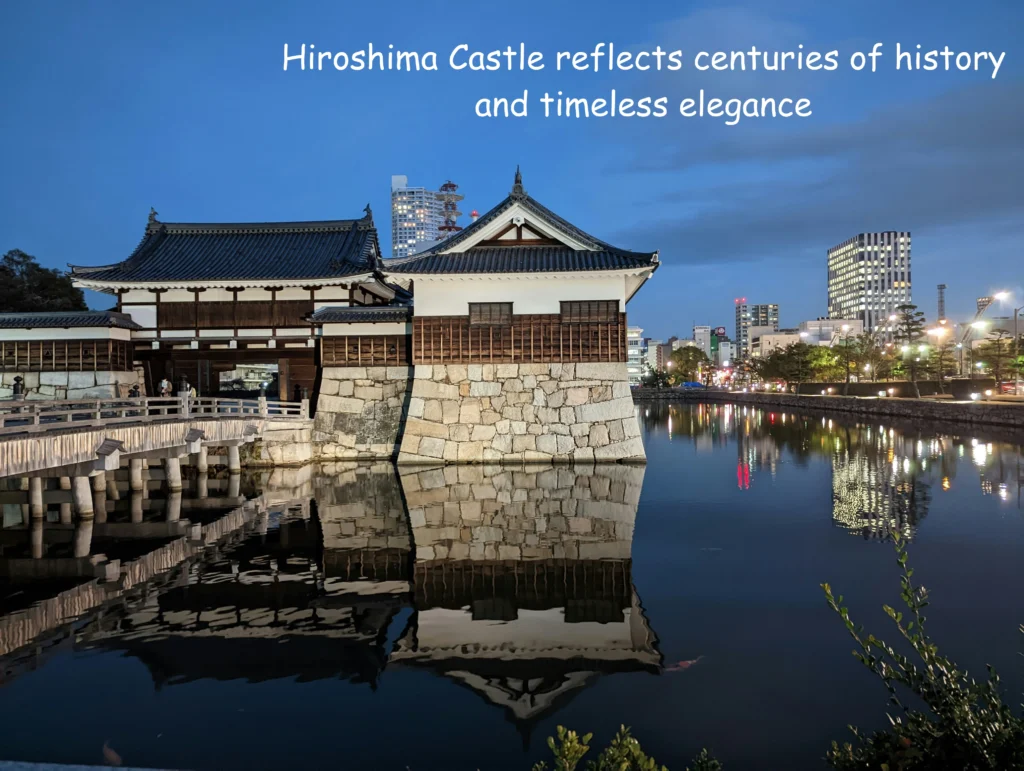
Nicknamed “Carp Castle,” this five-story reconstruction (rebuilt in 1958 after the original 1591 castle was destroyed in 1945) sits inside a moated historic park about a 15-minute walk from Peace Memorial Park. The grounds are free; the small museum inside the keep costs around ¥370–¥460 and rewards visitors with panoramic city views from the top floor. It’s especially photogenic during cherry blossom season and when illuminated at night.
Book Your Tour Package – Hiroshima
5. Shukkeien Garden
A beautifully compact Edo-period garden built in 1620 — a favorite stop in any Hiroshima travel guide worth its salt, styled to miniaturize famous scenic landscapes around a central pond. Entry is roughly ¥260. It’s a short walk from Hiroshima Castle, making it easy to combine both in one relaxed afternoon loop through central Hiroshima.
6. Okonomimura (“Okonomiyaki Village”)
A dedicated three-floor food building in downtown Hiroshima with around 25 individual okonomiyaki stalls, each with its own counter and chef. This is the single best place to try Hiroshima’s signature layered street food in one visit, and it’s a must-add to any Hiroshima travel guide focused on food.
7. Mitaki-dera Temple
A quieter, nature-focused alternative to the city’s memorial sites, Mitaki-dera climbs the forested slope of Mt. Mitaki and is named for its three waterfalls. It’s a good half-day escape if you want greenery and fewer crowds, particularly striking during autumn foliage season.
8. Hiroshima Orizuru Tower
Located directly opposite the Atomic Bomb Dome, this modern tower has an observation deck where visitors can fold a paper crane and add it to a glass “Orizuru Wall.” From the 12th-floor deck you can see the Peace Park, the Dome, and Miyajima Island in the distance on a clear day — a good orientation stop early in your trip.
9. Mount Misen, Miyajima
For travelers following this Hiroshima travel guide who want more than the shrine, Mount Misen is Miyajima’s highest peak, reachable by two connecting ropeways or a long forested hike. The summit observation points give sweeping views across the Seto Inland Sea. Budget half a day if you want to combine the ropeway with the shrine and Omotesando shopping street below.
10. Hiroshima Baseball Stadium (Mazda Zoom-Zoom Stadium)
Home of the fiercely loved Hiroshima Toyo Carp, this stadium (April–October season) offers one of Japan’s most fun, unscripted local experiences — cheap tickets, stadium food stalls, and passionate local fans. It’s an excellent add-on for travelers who want to see a side of Hiroshima beyond its historical sites.
Best Time to Visit Hiroshima (Best Seasons Guide)
Timing your trip right is one of the most important parts of any Hiroshima travel guide, since the city looks completely different in cherry blossom season versus the humid summer months.
| Season | Months | Why Visit | Watch Out For |
|---|---|---|---|
| Spring (Cherry Blossoms) | Late March–early April | Peace Park, Hiroshima Castle, and the riverside paths turn pink; comfortable 15–20°C weather | Peak domestic crowds, book hotels 2–3 months ahead |
| Early Summer | May–early June | Hiroshima Flower Festival (Golden Week) and Toukasan Yukata Festival; warm but not humid yet | Golden Week (Apr 29–May 5) is Japan’s busiest travel week nationwide |
| Rainy Season | Mid-June–July | Fewer tourists, lush green gardens, lower hotel prices | Frequent rain; carry a compact umbrella |
| Summer | August | Peace Memorial Ceremony (Aug 6), Miyajima Kangensai boat festival, fireworks displays | 32°C+ heat, 80%+ humidity, and Obon holiday crowds (Aug 13–16) |
| Autumn (Best Overall) | Mid-November | Momijidani Park on Miyajima and Mitaki-dera turn brilliant red and gold; mild, dry weather | Second-busiest season after cherry blossom time |
| Winter (Best Value) | January–February | Cold (3–9°C) but dry, sunny, and virtually rain-free; museums and shrines are at their emptiest | Cold ropeway/ferry rides; some rural transport runs less frequently |
Overall best time to visit Hiroshima: late March to mid-April for cherry blossoms, or November for autumn colour — both offer the classic postcard views of Peace Park and Miyajima. For budget travelers and photographers who prefer empty frames, January–February (excluding New Year) is the most underrated window.
Hiroshima Festival Calendar 2026
A city-specific festival calendar is one of the most searched parts of any Hiroshima travel guide, so plan around these dates if you want to time your trip to a festival:
- Hiroshima Flower Festival — May 3–5, 2026, Peace Boulevard & Peace Memorial Park. Japan’s largest Golden Week festival, with parades, stage performances, and floral displays; over a million visitors attend across the three days.
- Toukasan Yukata Festival — June 5–7, 2026, Enryu-ji Temple & Chuo-dori/Hondori districts. A 400-year-old festival marking the unofficial start of summer, when locals wear yukata (summer kimono) for the first time each year. Free entry, hundreds of food stalls, and taiko drumming into the night.
- Miyajima Kangensai — Late July/August (date follows the old lunar calendar), Itsukushima Shrine. A centuries-old floating boat festival with traditional court music performed on illuminated barges around the torii gate — one of Japan’s most atmospheric night festivals.
- Hiroshima Peace Memorial Ceremony — August 6, 2026, 08:00–08:50, Peace Memorial Park. A solemn annual ceremony marking the anniversary of the atomic bombing, with a moment of silence at 08:15 (the exact time of the blast). Free and open to the public; arrive by 07:00 for a seat with a clear view.
- Bentenjima Fireworks (Tomonoura) — Early August 2026, Fukuyama. Coastal fireworks with free shoreline viewing and paid reserved seating.
- Ebisu-ko Festival — Mid-to-late November 2026, central Hiroshima’s commercial districts. The city’s biggest shopping-district festival, marking the close of the autumn festival season.
Insider tip: If your goal is festival photography and yukata culture without overwhelming crowds, June’s Toukasan festival is far less internationally known than Kyoto’s Gion Matsuri but delivers a similar atmosphere.
What to Eat in Hiroshima: A Complete Food Guide
No Hiroshima travel guide is complete without its food, and Hiroshima’s cuisine is distinct enough from the rest of Japan to deserve its own itinerary slot.
- Hiroshima-style Okonomiyaki — The city’s signature dish. Unlike Osaka’s version, which mixes all ingredients into a batter, Hiroshima-style okonomiyaki is layered: a thin crepe base, then cabbage, bean sprouts, pork, a full portion of yakisoba noodles, and a fried egg, finished with savory-sweet okonomiyaki sauce. Try it at Okonomimura, where you can compare stalls side by side.
- Miyajima Oysters — The Seto Inland Sea is one of Japan’s top oyster-growing regions, and Miyajima’s Omotesando street is lined with stalls grilling them fresh — try them grilled, fried as oyster-don, or in oyster miso soup.
- Momiji Manju — Miyajima’s famous maple-leaf-shaped sweet cake, traditionally filled with red bean paste, though modern versions come with custard, chocolate, or matcha. Some shops sell a deep-fried version worth trying warm.
- Hiroshima Tsukemen — A spicy, cold dipping ramen local to the city, distinct from Tokyo-style tsukemen, with a chili-oil-forward dipping broth.
- Anago-meshi (Conger Eel Rice) — A Miyajima specialty of grilled saltwater eel served over seasoned rice, lighter than the more famous unagi (freshwater eel) found elsewhere in Japan.
- Hiroshima-style “Navy” Curry — From the nearby naval port city of Kure, a thick curry rice dish with roots in the old Imperial Japanese Navy’s rations, now a popular comfort food across the prefecture.
Enjoyment plan for foodies: Reserve one evening for an Okonomimura crawl and one afternoon on Miyajima’s Omotesando street for oysters and momiji manju — that alone covers Hiroshima’s food identity in under 24 hours.
Hotels & Tour Expenses: Family Trip vs. Solo Trip Budget Guide
Budgeting is where most Hiroshima travel guide resources fall short — this section breaks down real daily costs for solo travelers and families. Hiroshima is genuinely one of the more affordable major Japanese cities to visit,
Solo Traveler Daily Budget (approximate, per person)
| Category | Budget | Mid-Range | Comfort |
|---|---|---|---|
| Accommodation | ¥3,500–¥6,000 (hostel/capsule) | ¥8,000–¥13,000 (business hotel) | ¥18,000+ (upscale hotel/ryokan) |
| Food (3 meals) | ¥2,000–¥3,000 | ¥3,500–¥5,500 | ¥7,000+ |
| Local transport | ¥700 (tram day pass) | ¥1,000–¥2,500 (Visit Hiroshima Tourist Pass incl. ferry) | Taxis as needed |
| Attractions | ¥500–¥1,500 | ¥1,500–¥3,000 | Guided tours ¥5,000–¥12,000 |
| Daily Total | ~¥6,700–¥11,200 | ~¥14,000–¥24,000 | ¥30,000+ |
Family Trip Budget (4 people: 2 adults + 2 children, per day)
| Category | Budget-Friendly | Comfort |
|---|---|---|
| Accommodation (family room / aparthotel) | ¥12,000–¥20,000 | ¥25,000–¥45,000 |
| Food | ¥8,000–¥12,000 | ¥15,000–¥25,000 |
| Local transport & ferry | ¥3,000–¥5,000 (family day passes) | ¥6,000–¥10,000 |
| Attractions (museum, castle, aquarium) | ¥2,000–¥4,000 | ¥6,000–¥10,000 |
| Daily Total | ~¥25,000–¥41,000 | ~¥52,000–¥90,000 |
Note: Hiroshima Prefecture introduced an accommodation tax from April 1, 2026, added on top of nightly room rates — factor a small per-night surcharge into your hotel budget.
Where to Stay
Choosing where to stay is one of the most common questions in any Hiroshima travel guide, so here’s a quick breakdown by neighborhood:
- Hiroshima Station Area — best for first-timers; direct tram and Shinkansen access, plus shopping and dining at Ekie mall.
- Peace Park / Downtown (Hondori, Kamiyacho) — best for walkability to Peace Park, Castle, and Okonomimura; ideal for couples and solo travelers who want to explore on foot.
- Miyajima Island — best for one special night; staying overnight lets you see the torii gate lit up after day-trippers leave, though ryokans here run higher than city hotels.
Book Your Hotel Stay at Hiroshima
Guided Tours & Day-Trip Costs
As this Hiroshima travel guide’s budget section shows, half-day guided walking tours of Peace Park (with a local guide) typically run ¥4,000–¥8,000 per person, while a half-day Miyajima historical walking tour runs similarly. A combined full-day Hiroshima + Miyajima tour from Osaka or Kyoto, including return Shinkansen tickets, generally costs ¥25,000–¥35,000 per person — useful for travelers basing themselves in Kansai rather than staying overnight in Hiroshima.
Step-by-Step Schedule: Which Places to Visit First
For travelers asking exactly what order to visit Hiroshima’s sights, follow this sequence to minimize backtracking and match each site’s ideal time of day:
- Morning (8:30–11:00): Start at Hiroshima Peace Memorial Park and the Atomic Bomb Dome while it’s quiet and cool.
- Late Morning (11:00–13:00): Visit the Hiroshima Peace Memorial Museum (book your entry slot in advance).
- Lunch (13:00–14:00): Walk 10–15 minutes to Okonomimura for Hiroshima-style okonomiyaki.
- Afternoon (14:00–16:00): Walk to Hiroshima Castle, then Shukkeien Garden, 10 minutes further.
- Evening (16:30–18:30): Ride the tram to Hiroshima Orizuru Tower for sunset views over the Dome and river.
- Day 2, Morning (early departure): Take the tram/JR train to Miyajima-guchi, then the ferry to Miyajima Island — arrive as early as possible to see Itsukushima Shrine before the day-trip crowds.
- Day 2, Midday: Explore Omotesando Market for oysters and momiji manju, then Mount Misen ropeway if time allows.
- Day 2, Evening: Return to Hiroshima city (or stay overnight on Miyajima) for a final dinner.
- Day 3 (optional): Mitaki-dera Temple in the morning, then a Hiroshima Carp baseball game (April–October) or free time for shopping near Hiroshima Station before departure.
Suggested Itineraries
These ready-made itineraries pull together everything covered earlier in this Hiroshima travel guide into simple day-by-day plans you can follow as-is or adapt.
1-Day Hiroshima Itinerary (If You Only Have One Day)
Peace Memorial Park → Peace Memorial Museum → lunch at Okonomimura → Hiroshima Castle → Shukkeien Garden → evening at Orizuru Tower. This covers the essential history and food in a single, walkable loop centered on downtown.
2-Day Hiroshima + Miyajima Itinerary (Most Recommended)
- Day 1: Full day in central Hiroshima following the step-by-step schedule above (Peace Park, Museum, Castle, Garden, Okonomimura).
- Day 2: Full day on Miyajima Island — Itsukushima Shrine, Omotesando Market, Mount Misen ropeway, and an early return or overnight stay.
3-Day Extended Itinerary
- Day 1: Central Hiroshima (Peace Park, Museum, Castle, Shukkeien Garden, Okonomimura).
- Day 2: Full-day Miyajima Island, staying overnight in a ryokan for the lit-up torii gate at night.
- Day 3: Mitaki-dera Temple in the morning, then a relaxed afternoon — Mazda Museum, Hiroshima Baseball Stadium (in season), or a day trip to Onomichi/Kure for ramen and naval curry, before departing via Hiroshima Station or Hiroshima Airport.
Interactive Hiroshima Map (Google Maps)
Use this interactive map alongside the rest of this Hiroshima travel guide to plan routes between sights.
Exact Coordinates for a Custom Map Overlay:
| Place | Latitude | Longitude |
|---|---|---|
| Hiroshima Peace Memorial Park | 34.3955° N | 132.4536° E |
| Atomic Bomb Dome | 34.3955° N | 132.4534° E |
| Hiroshima Peace Memorial Museum | 34.3915° N | 132.4517° E |
| Itsukushima Shrine, Miyajima | 34.2960° N | 132.3197° E |
| Hiroshima Castle | 34.4027° N | 132.4594° E |
| Shukkeien Garden | 34.3999° N | 132.4636° E |
| Okonomimura | 34.3927° N | 132.4655° E |
| Mitaki-dera Temple | 34.4174° N | 132.4353° E |
| Hiroshima Orizuru Tower | 34.3946° N | 132.4544° E |
| Mount Misen, Miyajima | 34.2708° N | 132.3167° E |
| Mazda Zoom-Zoom Stadium | 34.3917° N | 132.4855° E |
| Hiroshima Station | 34.3978° N | 132.4753° E |
| Hiroshima Airport (HIJ) | 34.4361° N | 132.9194° E |
Best Places for Photoshoots in Hiroshima
Photography spots are one of the most requested additions to any Hiroshima travel guide, so here are the best frames the city has to offer.
- Itsukushima Shrine’s floating torii, Miyajima — best at high tide for the “floating” effect, or at low tide to walk right up to its base; sunset light on the vermilion wood is unbeatable.
- Hiroshima Castle moat — the reflection shot of the five-story keep against the water, especially during cherry blossom season.
- Motoyasu River bridge facing the Atomic Bomb Dome — the classic, respectful wide shot of the Dome (avoid posed selfies directly at the memorial itself).
- Momijidani Park, Miyajima — a canopy of maple trees over a stone bridge, best in mid-November for red and gold foliage.
- Hiroshima Orizuru Tower observation deck — a panoramic golden-hour skyline shot with Miyajima visible in the distance on clear days.
- Omotesando Shopping Street, Miyajima — lantern-lined evening shots once the day-trip crowds thin out.
Travel Tips for Hiroshima
These practical tips are the kind of small details a good Hiroshima travel guide should always include, since they can save you money and awkward moments on the ground.
- Dress and behave respectfully at Peace Memorial Park — speak softly and avoid posed photos directly at the Cenotaph or Children’s Peace Monument.
- Don’t feed Miyajima’s deer; unlike Nara’s deer, they are not fed by visitors and may tug at bags or maps.
- Get a Visit Hiroshima Tourist Pass (¥1,000–¥2,500) if you plan to use the tram and Miyajima ferry more than a couple of times a day — it pays for itself quickly.
- Book Peace Memorial Museum entry online in advance, especially around Golden Week, Obon (Aug 8–16, 2026), and the August 6 anniversary.
- Check Miyajima’s tide schedule before you go if you want the torii gate “floating” in your photos.
- Carry cash — many smaller okonomiyaki stalls and Miyajima food vendors are cash-only or IC-card only, not credit-card friendly.
- Slurp your noodles when eating ramen or tsukemen — it’s considered a compliment to the chef, not bad manners.
- Use both hands when giving or receiving cash and cards at shops and restaurants, a small courtesy widely appreciated in Japan.
Budget Guide Summary
Use this quick-reference table to compare every budget tier covered in this Hiroshima travel guide at a glance.
| Trip Style | Daily Cost (approx.) | Best For |
|---|---|---|
| Backpacker / Solo Budget | ¥6,700–¥11,200 (~₹3,600–₹6,000) | Hostels, self-guided sightseeing, street food |
| Mid-Range Solo/Couple | ¥14,000–¥24,000 (~₹7,500–₹13,000) | Business hotels, occasional guided tours |
| Family of 4 (Budget) | ¥25,000–¥41,000 (~₹13,500–₹22,000) | Aparthotels, self-guided days, public transport |
| Family of 4 (Comfort) | ¥52,000–¥90,000 (~₹28,000–₹48,500) | Upscale hotels, private tours, taxis |
(INR conversions are approximate and fluctuate with exchange rates — always check live rates before finalizing your budget.)
Nearby Airport & Transport for Travelers
No Hiroshima travel guide would be complete without transport details, so here’s how to get in and around the city. **Hiroshima Airport (HIJ)** is located in Mihara,
- Airport to City Center: Limousine bus to Hiroshima Station takes approximately 45–50 minutes and costs around ¥1,450–¥1,570. Buses run every 20–30 minutes, timed to flight arrivals.
- Airport to Hiroshima Bus Center (near Peace Park): About 55 minutes, ¥1,370 one-way (round-trip discount available).
- Taxi from Airport: Roughly ¥14,000 and 45–50 minutes — best for groups or heavy luggage.
- From Tokyo: Nozomi Shinkansen takes about 4 hours (~¥19,500 one-way); flights from Haneda take about 90 minutes plus airport transfer time.
- From Osaka (Shin-Osaka Station): Sanyo Shinkansen takes 80–90 minutes (~¥9,700–¥10,000 one-way).
- From Kyoto: About 1 hour 40 minutes by Shinkansen.
- Within the City: The Hiroden tram network reaches nearly every central sight for a flat ¥220–¥240 per ride; a day tram pass costs about ¥700.
- To Miyajima: JR train or tram to Miyajima-guchi, then a roughly 10-minute ferry (JR Pass holders ride the JR ferry free).
For official, up-to-date fares and timetables, check the Hiroshima Airport transport page and the Hiroshima Prefecture official tourism site before you travel, as schedules and prices are revised periodically.
Book Your Air Ticket
Nearby Tourist Places (Beyond Hiroshima City)
“To round out this Hiroshima travel guide, here are a few worthwhile day trips beyond the city itself:
- Onomichi — A hillside port town famous for ramen, temple walks, and as the starting point of the Shimanami Kaido cycling route to Shikoku, about 1 hour from Hiroshima.
- Iwakuni — Home to the striking wooden Kintai Bridge and a hillside castle, about 45–70 minutes from Hiroshima by bus or train.
- Okunoshima (“Rabbit Island”) — A small island near Tadanoumi Port populated by hundreds of friendly wild rabbits, roughly 90 minutes from Hiroshima.
- Kure — A historic naval port city known for its maritime museum and “Navy Curry,” about 40 minutes from Hiroshima.
- Fukuyama & Tomonoura — A scenic Seto Inland Sea port town, home to the Bentenjima Fireworks Festival, about 1 hour from Hiroshima by Shinkansen.
- Saijo (Higashi-Hiroshima) — A sake-brewing town with historic breweries you can tour and taste at, about 30–40 minutes from Hiroshima.
That wraps up this Hiroshima travel guide — from Peace Park and Miyajima to food, festivals, and budgets, you now have everything needed to plan a smooth 2–3 day trip in 2026.
Planning the rest of your Japan trip? Compare routes and book your onward journey with Ryde Travel for seamless transfers between Hiroshima, Osaka, Kyoto, and Tokyo.
Visit out other Blogs
10 Must-See Tourist Places in Tokyo, Japan You’ll Love
Tokyo Disneyland & DisneySea 2026: Definitive Amazing Guide
15 Amazing Osaka Tourist Places to Visit in 2026
Niigata Tourist Places: 10 Amazing Spots for Your 7-Day Trip
Mount Fuji Tourist Places: 7 Incredible Spots You Can’t Miss


Leave a Reply