This guide contains affiliate links. We may earn a commission at no extra cost to you — see our Affiliate Disclosure and Affiliate Disclosure Policy for details.
Quick Answer:
Gyeongbokgung Palace sits in central Seoul, is open daily except Tuesday, and costs 3,000 KRW (about $2) for adults — free if you wear a rented hanbok. Spring (April–June) and autumn (September–November) are the popular seasons to visit, the Royal Guard Changing Ceremony runs at 10:00 AM and 2:00 PM, and the nearest subway stop is Gyeongbokgung Station (Line 3, Exit 5). Budget 2–3 hours for a full walk-through, or a half day if you’re renting hanbok, eating nearby, and visiting Bukchon Hanok Village afterward.
Gyeongbokgung Palace is where Seoul stops being a city of glass towers and turns, for a few hours, into the beating heart of the Joseon Dynasty — golden roofs against a mountain skyline, guards in five-hundred-year-old armor, and a silence that somehow survives right in the middle of a 10-million-person capital.
If you only visit one royal site in South Korea, make it Gyeongbokgung Palace. This Gyeongbokgung Palace guide covers everything you need for a smooth, well-timed visit in 2026: the best season and festival dates, a step-by-step walking schedule, what to eat nearby, realistic budgets for solo, family, and honeymoon trips, the best photo spots, and how to get there from the airport.
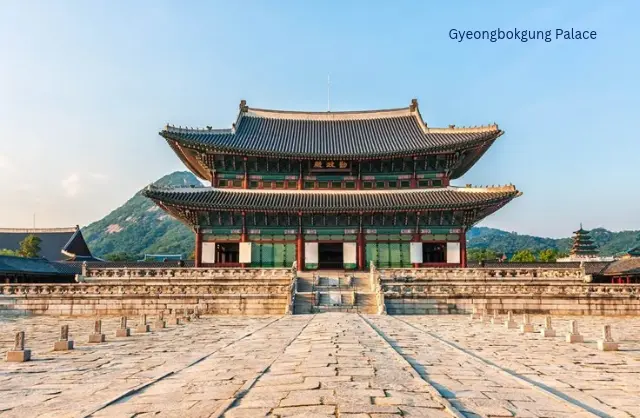
Table of Contents
Built in 1395 as the primary royal palace of the newly founded Joseon Dynasty, Gyeongbokgung Palace is the largest and grandest of Seoul’s five royal palaces. Its name translates roughly to “palace greatly blessed by heaven,” and standing inside the main courtyard with Bugaksan Mountain rising directly behind the throne hall, it’s easy to see why the site was chosen. The palace was burned down during the 1592 Japanese invasion, left in ruins for nearly 270 years, rebuilt in the 1860s under King Gojong, then partly demolished again during the Japanese colonial period. What visitors see today is the result of an ongoing restoration project that began in 1990 and continues to this day.
Book Your Tour package for Gyeongbokgung Palace – Recommended Tours
Inside the walls of Gyeongbokgung Palace, you’ll find the throne hall (Geunjeongjeon), the king’s private garden pavilion (Gyeonghoeru), the royal residential quarters, and two excellent museums — the National Palace Museum of Korea and the National Folk Museum of Korea — both built directly on the palace grounds. It’s also a well-known filming location for Korean dramas such as Dae Jang Geum, Rooftop Prince, and My Love from the Star, which adds an extra layer of recognition for K-drama fans walking the same courtyards.
Why Gyeongbokgung Palace Should Be First on Your Seoul List
Seoul has five Joseon-era palaces, but Gyeongbokgung Palace is the one that gives you everything in a single visit: the biggest scale, the most complete restoration, the free guard ceremony, two museums on-site, and a mountain backdrop that no other palace in the city can match. Changdeokgung is quieter and more intimate, Deoksugung is smaller and easier to combine with a city walk, but if your Seoul itinerary only has room for one royal site, the depth and variety at Gyeongbokgung Palace make it the obvious choice for first-time visitors and repeat travelers alike.
It also sits at the center of one of Seoul’s best walkable clusters. Within fifteen minutes on foot, you can move from the palace grounds to a 600-year-old hanok neighborhood, a contemporary art district, a century-old street food market, and one of the city’s most recognizable public squares. Few attractions anywhere in Asia pack that much variety into such a short walking radius.
Etiquette and Practical Tips
A few things make a Gyeongbokgung Palace visit smoother and more respectful:
- Wear comfortable, flat walking shoes — the grounds are large and paths are uneven stone in places.
- Bring a hat and sunscreen in summer; the open courtyards offer very little shade.
- Pack a light jacket for spring and autumn mornings, which stay cool until the sun is higher.
- Photography is allowed almost everywhere outdoors, but tripods and drones require prior permission.
- Some interior rooms are viewable only from doorways or windows — this is normal, not a restriction aimed at tourists.
- Bukchon Hanok Village nearby is a residential area with posted quiet hours, so keep noise down if you continue your walk there.
- Bottled water and small cafés are available on-site, and restrooms are free, as they are almost everywhere in Korea.
Best Time to Visit Gyeongbokgung Palace
The best time to visit Gyeongbokgung Palace is early morning, right at opening, in either spring or autumn. Arriving around 9:00 AM lets you walk through the main courtyards before tour groups and school trips fill up the space by mid-morning. Opening hours change slightly by season:
- January–February and November –December: 9:00 AM – 5:00 PM (last admission 4:00 PM)
- March–May and September–October: 9:00 AM – 6:00 PM (last admission 5:00 PM)
- June–August: 9:00 AM – 6:30 PM (last admission 5:30 PM)
- November–February: 9:00 AM – 5:00 PM (last admission 4:00 PM)
- Closed every Tuesday, including public holidays that fall on a Tuesday. If a public holiday overlaps a closed day, the palace opens and the first non-holiday becomes the closed day.
Adult admission to Gyeongbokgung Palace is 3,000 KRW, with free entry for visitors under 19 or over 65, and free entry for anyone wearing a proper hanbok — jeogori top plus a full bottom. If you’re planning to visit multiple royal sites, the Royal Palace Pass (10,000 KRW) covers Gyeongbokgung, Changdeokgung with the Secret Garden, Changgyeonggung, Deoksugung, and Jongmyo Shrine over three months, which is worth it if you’re seeing more than two sites.
Best Seasons for a Gyeongbokgung Palace Tour
Spring (April–June)
Cherry blossoms bloom along the palace walls and nearby Gyeongbokgung-adjacent streets in early April, and by May the courtyards are green and mild — this is the single most popular season for a Gyeongbokgung Palace tour, and also when the spring night-viewing event usually runs, so expect the biggest crowds of the year alongside the best weather.
Summer (July–August)
Hot, humid, and often rainy, but the extended evening hours (until 6:30 PM) give you more flexibility, and hanbok photos against deep green courtyards look beautiful. Bring sunscreen and water — shade is limited across the open stone courtyards.
Autumn (September–November)
Many locals consider this the best season to visit Gyeongbokgung Palace — golden ginkgo trees, comfortable walking weather, and (in most years) the autumn night-viewing event. Crowds are slightly lighter than spring while the scenery is just as dramatic.
Book Your Stay in Seoul
Winter (December–February)
Cold but genuinely peaceful. A light snowfall over the tiled roofs of Gyeongbokgung Palace is one of the most photogenic scenes in Seoul, and this is by far the quietest season if you want the courtyards mostly to yourself.
Festival Times and Special Events
Beyond the daily Royal Guard Changing Ceremony at 10:00 AM and 2:00 PM (free, no ticket required, roughly 20 minutes, none on Tuesdays), plan around these recurring events when timing your Gyeongbokgung Palace visit:
- Spring Night Viewing (야간관람): Runs roughly mid-May to mid-June, 7:00 PM–9:30 PM, last entry 8:30 PM, closed Mondays and Tuesdays. Tickets are capped daily and sell out within minutes online.
- Autumn Night Viewing: Usually held sometime between September and November, same evening hours as spring. Exact dates are typically announced only a month or two ahead on the official palace site, so keep your evenings flexible if you’re visiting in autumn.
- Starlight Tour: A smaller, ticketed evening program that includes access to areas like Gyotaejeon and Jibokjae, plus a short performance. Allocated by lottery rather than first-come tickets.
- Culture Day: On the last Wednesday of every month, admission across many Seoul cultural sites, including the palace, is free or discounted.
- Lunar New Year and Chuseok: Gyeongbokgung Palace usually offers free admission and traditional folk-game events during these two major Korean holidays — check dates each year since both follow the lunar calendar.
For up-to-date official festival and night-viewing dates, check the Korea Tourism Organization’s Gyeongbokgung Palace listing before you book flights or hotels: Visit Korea — Gyeongbokgung Palace.
Best Things to Do in Gyeongbokgung Palace
Here are the best things to do in Gyeongbokgung Palace, roughly in the order you’ll naturally reach them as you walk north through the grounds. For More information on Gyeongbokgung Palace visit Korean government cultural-heritage
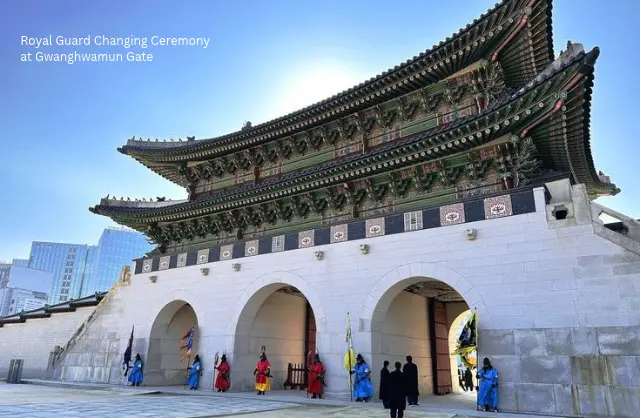
1. Watch the Royal Guard Changing Ceremony at Gwanghwamun Gate
Guards in full Joseon-era costume, with flags, traditional weapons, and live music, re-enact a centuries-old changing-of-the-guard ritual right outside the main gate. It’s free, doesn’t require a palace ticket, and happens at 10:00 AM and 2:00 PM daily except Tuesday. Arrive 10–15 minutes early for a good spot.
2. Rent a Hanbok and Enter Free
Dozens of hanbok rental shops cluster around Gyeongbokgung Station (west side) and Anguk Station (east side). A basic two-hour rental runs 15,000–25,000 KRW, with premium sets from 30,000–50,000 KRW. Wear it properly (top and bottom) and you skip the ticket line entirely.
3. Explore Geunjeongjeon, the Main Throne Hall
The largest and most important building at Gyeongbokgung Palace, where the king held court and received foreign envoys. Look up at the ceiling for the carved phoenix decorations and take in the scale of the courtyard, lined with rank stones marking where officials stood by seniority.
4. Sit by Gyeonghoeru Pavilion
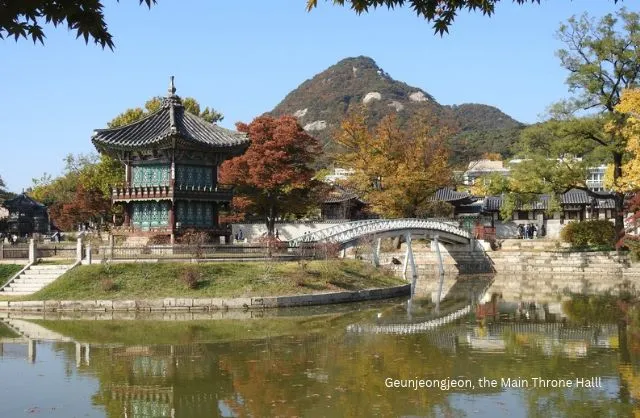
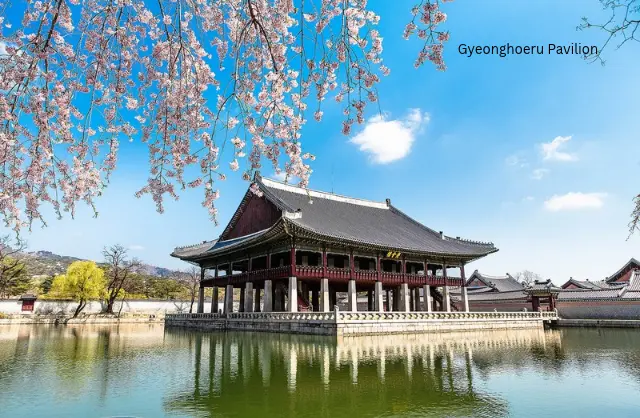
A two-story pavilion on an artificial lake, once used for state banquets. It’s one of the most photographed spots on the entire property and especially striking with autumn foliage or a light snow reflected in the water.
5. Find Hyangwonjeong, the Hidden Island Pavilion
Tucked toward the back of the grounds and connected by a small wooden bridge, this hexagonal pavilion is quieter than the main courtyards since most tour groups skip it. Worth the extra ten-minute walk.
6. Visit the National Folk Museum of Korea
Free entry, built on the eastern side of the grounds, and a genuinely useful stop for understanding everyday Korean life through history — from birth customs to the 1970s–80s recreated street. Air-conditioned, which makes it a good midday break in summer.
7. Tour the National Palace Museum of Korea
Located near Heungnyemun Gate, this museum holds royal artifacts, court paintings, and scientific instruments from the Joseon Dynasty — a good option if you want historical context before or after walking the grounds.
8. Join a Free English Guided Tour
Free tours in English (and other languages) start near the Gyeongbokgung Palace Information Center at Heungnyemun Gate, run about 90 minutes, and need no reservation. If you’ve never had a guide narrate a palace before, this is genuinely one of the best upgrades to a self-guided walk. English regular tours at 11:00, 13:30 and 15:30, except Tuesdays; groups of 10+ require reservation.
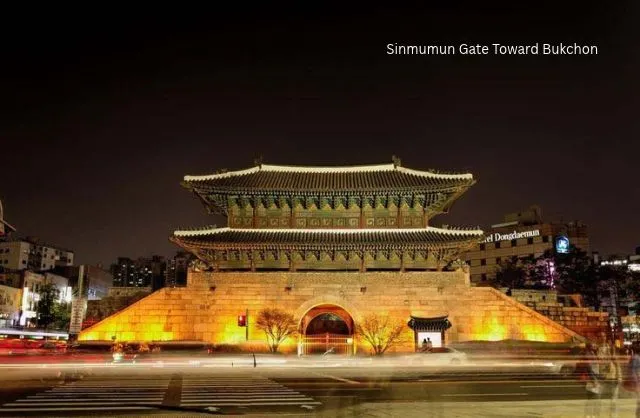
9. Walk Out Through Sinmumun Gate Toward Bukchon
Exit through the north gate and you’re a short walk from Bukchon Hanok Village and the President’s official residence area — a natural next stop after finishing your Gyeongbokgung Palace tour.
Best Places for a Photoshoot
If your Gyeongbokgung Palace visit is partly about the photos (and for most travelers, it is), these are the spots worth planning your route around:
- Gwanghwamun Gate at opening time — near-empty courtyard, soft morning light, the full gate structure in frame.
- Geunjeongjeon courtyard, side angle — captures the throne hall with Bugaksan Mountain layered behind it.
- Gyeonghoeru Pavilion, lake-side — the single most iconic photo at the palace; best in late afternoon light or with autumn leaves.
- Hyangwonjeong’s wooden bridge — quieter, fewer people in the background, especially good for hanbok portraits.
- Between the inner gates — the repeating rooflines and red pillars create natural leading lines for portrait shots.
- Snow season courtyards (Dec–Feb) — the emptiest crowds of the year, ideal if you want clean, uncluttered shots.
Many hanbok rental shops near the palace bundle a short photoshoot with a professional photographer into the rental price — worth it if photos are a priority, since navigating tripod rules and crowd timing yourself takes practice.
Famous Food Near Gyeongbokgung Palace
There’s no dining inside Gyeongbokgung Palace itself beyond a small café near the Folk Museum, but the surrounding neighborhoods — Tongin Market, Seochon, Gwangjang Market, and Insadong — are some of the best food areas in Seoul. Here’s what to taste after your palace visit:
- Ginseng chicken soup (samgyetang) — a whole young chicken stuffed with rice, ginseng, and jujube, simmered into a light, restorative broth. A short walk from the palace toward Jahamun-ro serves some of the city’s most famous versions.
- Korean pancakes (bindaetteok and pajeon) — crispy mung bean or scallion pancakes, a signature dish at Gwangjang Market, one subway stop from the palace.
- Tteokbokki — chewy rice cakes in a spicy-sweet gochujang sauce, sold at nearly every street stall around Tongin and Gwangjang markets.
- Bibimbap — mixed rice with vegetables, egg, and gochujang, widely available in the Insadong and Seochon neighborhoods near the palace.
- Korean royal court cuisine (hansik) — a handful of restaurants in Seochon recreate Joseon-era palace meals with dozens of small side dishes, echoing what would have actually been served inside Gyeongbokgung Palace centuries ago.
- Tongin Market’s “lunch box café” (dosirak café) — buy brass coins, trade them for small dishes across dozens of stalls, and build your own traditional lunch box. A favorite with families and a fun activity for kids.
Step-by-Step Visit Schedule
Here’s a practical, tested order for visiting Gyeongbokgung Palace and its surroundings in a single day:
- 8:30 AM — Arrive near Gyeongbokgung Station; rent a hanbok if you want free entry and photos.
- 9:00 AM — Enter through Gwanghwamun Gate right at opening for the emptiest courtyards.
- 9:15 AM — Walk through Geunjeongjeon (throne hall) and the surrounding courtyards.
- 9:45 AM — Continue to Gyeonghoeru Pavilion for photos by the lake.
- 10:00 AM — Head back toward Gwanghwamun Gate for the Royal Guard Changing Ceremony.
- 10:30 AM — Walk north to Hyangwonjeong’s island pavilion, then the royal residential quarters.
- 11:15 AM — Visit the National Folk Museum of Korea (free, air-conditioned).
- 12:15 PM — Exit through Sinmumun Gate and walk to Bukchon Hanok Village.
- 1:00 PM — Lunch in Seochon or Insadong (samgyetang or bibimbap).
- 2:30 PM — Optional: catch the 2:00 PM guard ceremony if you missed the morning one, or head to Gwangjang Market for street food and shopping.
Hotels and Trip Expenses
Staying within walking distance of Gyeongbokgung Palace — in Seochon, Bukchon, or around Gwanghwamun Square — saves significant time and subway fare across a multi-day Seoul trip. Indicative 2026 budgets below are per trip, not per person, unless noted.(verified OCt 2026, for exact rates visit corrospoding facilities web site before booking.
Solo Trip
- Guesthouse or hostel near Gyeongbokgung Station: ₩40,000–₩70,000/night (~$29–$50)
- Palace admission + hanbok rental: ₩20,000–₩30,000 (~$15–$22)
- Meals (3/day, mix of street food and casual restaurants): ₩30,000–₩45,000/day (~$22–$33)
- Local transport (T-money card, subway/bus): ₩10,000–₩15,000/day (~$7–$11)
- Estimated daily total: ₩100,000–₩160,000 (~$73–$116)
Family Trip (2 adults, 2 kids)
- Family room or serviced apartment near the palace: ₩180,000–₩350,000/night (~$130–$255)
- Palace admission (kids often free/discounted) + hanbok rentals for 4: ₩60,000–₩100,000 (~$44–$73)
- Meals for 4 (family-style Korean restaurants + market food): ₩120,000–₩180,000/day (~$87–$130)
- Transport, including occasional taxis with kids: ₩40,000–₩60,000/day (~$29–$44)
- Estimated daily total: ₩400,000–₩690,000 (~$290–$500)
Honeymoon Trip
- Boutique or 4–5 star hotel near Gwanghwamun/Bukchon: ₩300,000–₩700,000/night (~$218–$509)
- Premium hanbok rental with professional photoshoot: ₩100,000–₩200,000 (~$73–$145)
- Fine dining and hansik (royal court cuisine) dinners: ₩150,000–₩300,000/day for two (~$109–$218)
- Private guided palace tour (optional): ₩150,000–₩250,000 for the couple
- Estimated daily total: ₩700,000–₩1,400,000 (~$509–$1,018)
Across all three trip types, the single biggest cost lever is accommodation location — staying inside Jongno-gu (the palace district) trims subway time to almost zero and puts Bukchon, Insadong, and Gwangjang Market within easy walking distance.
For more South Korea trip-planning guides, including full city itineraries and seasonal packing lists, browse the rest of the travel library on RydeTravel.
Nearby Airport and Transport
Most international travelers arrive at Incheon International Airport (ICN), roughly 55–65 km from Gyeongbokgung Palace. The AREX express train runs directly from the airport to Seoul Station in about 43 minutes, from where the palace is a short taxi ride or a transfer to Line 1 then Line 3 to Gyeongbokgung Station. Gimpo International Airport (GMP), used mainly for domestic and some regional flights, is closer at around 20 km, connected via Line 5 and Line 9 with one transfer to reach the palace.
Book Your Local Transport to travel around Seoul
- Subway: Gyeongbokgung Station (Line 3), Exit 5 — roughly 216–492 m walk to Gwanghwamun Gate.
- Subway (alternate): Gwanghwamun Station (Line 5), Exit 2 — about 7 minutes’ walk.
- Bus: Multiple city bus routes stop directly outside Gwanghwamun Square.
- Taxi: Widely available and inexpensive within Seoul; roughly ₩15,000–₩25,000 from Seoul Station.
- Parking: On-site parking is limited and priced by the hour; public transport is strongly recommended.
Full official transport details and updated fares are maintained on the Korea Tourism Organization’s site
Korea Tourism Organization / official Korea tourism information
Official tourism guide for Seoul
Nearby Places to Visit After Gyeongbokgung Palace
- Bukchon Hanok Village — traditional hanok houses on a hillside, a 10–15 minute walk northeast.
- National Folk Museum of Korea — free entry, located inside the palace grounds.
- Insadong — traditional tea houses, art galleries, and souvenir shopping streets.
- Gwangjang Market — one of Seoul’s oldest and most famous street food markets.
- Seochon Village — quieter hanok neighborhood with cafés, ideal after the crowds of the palace.
- Gwanghwamun Square — statues of King Sejong and Admiral Yi Sun-sin, right outside the main gate.
Book Your Flight Ticket to Seoul
Planning a longer Korea trip beyond Seoul? See more city guides from Ryde Travel — including Busan and Daegu itineraries.
Insider Tips for a Better Gyeongbokgung Palace Visit
A few small adjustments make a real difference to how much you enjoy Gyeongbokgung Palace, especially if you’ve never visited a Korean royal site before:
- Skip the 10:00 AM ceremony crowd if you want empty photos. Arrive right at 9:00 AM opening instead, shoot your photos first, then circle back for the ceremony at 10:00 AM once the courtyards have already filled up anyway.
- Take the free guided tour once, even if you’re an independent traveler. Most visitors walk past the same buildings without knowing what they’re looking at. A 90-minute English tour turns a pretty backdrop into a place with real stories — assassinations, feng shui logic, and the reasoning behind each courtyard’s layout.
- Don’t rent hanbok from the very first shop you see. Prices and fabric quality vary noticeably between shops near Gyeongbokgung Station and those near Anguk Station — it’s worth comparing two or three storefronts before committing, especially for a honeymoon photoshoot.
- Visit on the last Wednesday of the month if your dates allow it. Culture Day discounts apply across several nearby cultural sites, not just the palace itself, so you can stretch a day’s budget further.
- Check the palace’s official site a month before your trip if you want night viewing. Dates are released late and tickets disappear fast — build flexibility into your evening plans rather than anchoring a whole trip around it.
- Pair your visit with a slow morning, not a rushed one. Because Gyeongbokgung Palace is best experienced early, avoid scheduling anything else before it — a 7:00 AM wake-up beats squeezing the palace in after a late breakfast.
Frequently Asked Question
Is Gyeongbokgung Palace worth visiting?
Yes — it’s the largest and most historically significant of Seoul’s five royal palaces, and consistently ranks among the top attractions in the city.
How much time do I need at Gyeongbokgung Palace?
Budget 2–3 hours for the palace grounds alone, or a half day if you’re including the Folk Museum, hanbok rental, and a nearby meal.
Is Gyeongbokgung Palace free with hanbok?
Yes, anyone wearing a proper hanbok (top and bottom) gets free entry to Gyeongbokgung Palace, no reservation required.
What day is Gyeongbokgung Palace closed?
Every Tuesday, and the following business day if a public holiday falls on a Tuesday.
Can I bring kids to Gyeongbokgung Palace?
Yes, it’s very family-friendly — flat wide courtyards, free entry for young children, the Folk Museum’s interactive exhibits, and the guard ceremony are all popular with kids. Bring a stroller-friendly plan since some paths are gravel or stone.
Do I need to book Gyeongbokgung Palace tickets in advance?
No advance booking is needed for standard daytime admission — tickets are sold on-site. The exception is the seasonal night-viewing event, which requires online reservation and sells out quickly.
How do I get to Gyeongbokgung Palace from Incheon Airport?
Take the AREX express train to Seoul Station (about 43 minutes), then transfer to Line 1 and Line 3 to reach Gyeongbokgung Station, or take a taxi directly from Seoul Station for roughly ₩15,000–₩25,000.
What should I eat near Gyeongbokgung Palace?
Ginseng chicken soup, Korean pancakes, tteokbokki, and royal court cuisine are the standout options within a short walk of the palace — see the food section above for exact neighborhoods.
Visit Our Related Articles on South Korea and Japan
Hiroshima Travel Guide 2026: Ultimate & Unmissable Guide
Tokyo Disneyland & DisneySea 2026: Definitive Amazing Guide
South Korea Visa Requirements 2026: Easy Guide for India
Kyoto Tourist Places: 9 Amazing Spots for Your 7-Day Trip
Information Source:
Information such as operating hours, admission fees, visitor guidelines, ceremonies, and event dates and timings is based on information published by official South Korean government and tourism websites, including VisitKorea.or.kr, Korea.net, VisitSeoul.net, royal.cha.go.kr, and heritage.go.kr, as available in October 2026.
Please note that opening hours, admission policies, ceremonies, and event schedules may change. For the latest and most accurate information, please refer to the respective official websites before planning your visit.


Leave a Reply