
This guide contains affiliate links. We may earn a commission at no extra cost to you — see our Affiliate Disclosure and Affiliate Disclosure Policy for details.
Where mountains fall straight into the sea, and a bowl of pork soup at dawn feels like a rite of passage — welcome to Busan, Korea’s most underrated coastal city.
These are the best places to visit in Busan in 2026 — a complete, ready-to-use guide for anyone planning a trip. Places to visit in Busan range from mountain-backed beaches to seaside temples, and this guide walks through all of them.
Click to Buy your eSim – 15% Special Discount
Table of Contents
If you’re searching for the best places to visit in Busan, you’ve landed on the right guide. Busan is South Korea’s second-largest city, and unlike fast-paced Seoul, it moves at the rhythm of the tide — beach mornings, mountain-temple afternoons, and neon-lit seafood nights. This complete Busan travel guide covers every place to visit in Busan, the best season to go, festival dates for 2026, the food you simply cannot skip, how many days you need, hotel budgets for solo, family, and honeymoon trips, a ready-made day-by-day schedule, the best photo spots, and how to get in and around the city.
Book Your Tour Package in Busan
Planning a wider South Korea trip? Our South Korea travel guides on RydeTravel cover visas for Indian travelers, seasonal planning, and city-by-city breakdowns to help you build the perfect itinerary.
Why Busan Deserves a Spot on Your South Korea Itinerary
Most first-time visitors to South Korea land in Seoul and never make it south — which is exactly why the best places to visit in Busan still feel refreshingly uncrowded compared to other major Asian coastal cities. Busan was one of the few Korean cities that stayed untouched during the Korean War, which is why refugees from across the peninsula settled here, bringing their regional recipes with them and quietly building the food culture the city is famous for today. That history is still visible everywhere: in the sprawl of Gukje Market, in the century-old fish stalls of Jagalchi, and in dishes like dwaeji gukbap and milmyeon that exist nowhere else in quite the same form.
Geographically, Busan is unlike anywhere else in Korea. The city is wedged between the Nakdong River, the Sea of Japan (East Sea), and a ring of granite mountains, so almost every neighborhood offers either a beach, a hiking trail, or a temple within a short subway ride. That mix — the ability to eat fresh sashimi for lunch, hike a coastal cliff trail in the afternoon, and watch a drone light show over the water by night — is what keeps this guide focused so heavily on getting the order of places to visit in Busan right, rather than just listing them.
Best Time to Visit Popular Tourist Places in Busan
Busan has four distinct seasons, and the “best” one really depends on which places to visit in Busan are on your list. Here’s a season-by-season breakdown to help you pick your travel window.
Spring (March–May) — Cherry Blossoms and Mild Weather
Spring is arguably the best season to visit Busan. Temperatures sit between 12–20°C, and by early April the Nakdonggang riverside and Samnak Park erupt into cherry blossoms. This is peak season for photography and outdoor walking tours, so book hotels early.
Summer (June–August) — Beach Season and Big Festivals
Summer is hot and humid (25–33°C) but this is when Busan’s beach culture and biggest festivals come alive — Haeundae and Gwangalli beaches are packed, and the city hosts its largest annual events. It’s the liveliest season, though also the busiest and most expensive for hotels.
Autumn (September–November) — The Sweet Spot
Many locals consider autumn the best time to visit Busan overall: cooler, dry, comfortable for walking, with fewer crowds than summer and a striking fireworks festival along Gwangalli Beach. Late October into November brings golden foliage at Beomeosa Temple and Taejongdae.
Winter (December–February) — Quiet Coastal Charm
Busan winters are far milder than Seoul’s thanks to the coastal climate (0–8°C). It’s a great time for budget travel, hot seafood stews, and the city’s New Year sunrise festivals at Haeundae Beach, without the summer crowds.
Quick verdict: Choose spring (April) or autumn (October) for the best weather-to-crowd ratio; choose summer for beach parties and festivals; choose winter for budget travel and quiet sightseeing. Whichever season you pick, most of the places to visit in Busan listed in this guide stay open and enjoyable year-round.
Busan Festival Calendar 2026 — Best Times for Festival Tourism
Busan builds much of its tourism calendar around festivals, and timing your trip around one can make the whole experience unforgettable. Here are the major 2026 dates to plan around.
- Busan New Year Festival (Dec 31–Jan 1) — bell-ringing ceremony at Yongdusan Park and sunrise celebrations at Haeundae Beach.
- Nakdonggang Riverside Cherry Blossom Festival (early April) — one of the city’s prettiest spring walks, along Samnak Eco Park.
- Busan International Performing Arts Festival (May 9–17, 2026) — theatre and performance art across Busan Cinema Center and the old town.
- Busan Wheat Festival (May 9–10, 2026) — a global food festival celebrating wheat-based dishes, including Busan’s own milmyeon noodles.
- Starry Night in Busan Night Festa (June 10–14, 2026) — night markets, candlelight concerts, and light installations at Hwamyeong Ecological Park.
- Busan Port Festival (June 19–20, 2026) — a large maritime celebration with fireworks and concerts along the waterfront.
- Busan One Asia Festival (late June, 2026) — K-pop concerts and K-culture exhibitions at Busan Asiad Stadium.
- Busan Sea Festival (Aug 1–6, 2026) — Korea’s biggest beach festival, spread across Haeundae, Gwangalli, Dadaepo, and Songjeong beaches, with concerts, fireworks, and water activities.
- Busan International Rock Festival (late July/early August) — outdoor concerts at Samnak Ecological Park.
- Busan Fireworks Festival (autumn, usually October) — one of Asia’s largest fireworks shows, best watched from Gwangalli Beach or Igidae Coastal Park.
- Busan International Film Festival (BIFF) (October) — Asia’s largest film festival, centered on BIFF Square and Busan Cinema Center.
Book Your Stay in Busan
For live updates and exact ticketing windows, check the official Busan city events calendar before you book flights. Timing a trip around one of these festivals is a great way to see the city’s places to visit in Busan at their liveliest.
Best Places to Visit in Busan: A Complete Tour
Here are the places to visit in Busan that consistently top every traveler’s list — from mountain temples to neon beach promenades.
1. Haeundae Beach — A Top Places to Visit in Busan Pick
Busan’s most famous beach and the heart of the city’s summer energy. A 1.5 km stretch of sand backed by high-rise hotels, seafood alleys, and the Sea Life Aquarium. Best visited early morning for a quiet walk or evening for the sunset and skyline lights. In summer, the beach hosts open-air concerts and beach volleyball courts, while in winter the same stretch of sand becomes the venue for Busan’s New Year sunrise festival, so the atmosphere changes dramatically depending on when you visit.
2. Gamcheon Culture Village — Among the Best Places to Visit in Busan
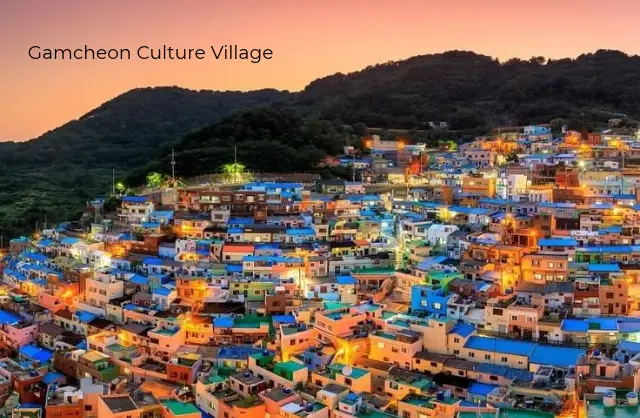
A hillside village of pastel-colored houses, murals, and narrow stairways, often called “Busan’s Santorini” or the Machu Picchu of Busan. It’s one of the most photographed places to visit in Busan and works well as a half-day walking tour. The village was originally built by refugee families during the Korean War, and today it doubles as an open-air art space, with small galleries, cafés, and workshops tucked into the same stairwells the original settlers used.
3. Haedong Yonggungsa Temple
A rare seaside Buddhist temple built directly on coastal rocks, connected by a stone bridge, with waves crashing beneath the pagodas. Visit at sunrise for the best light and thinnest crowds. Unlike most Korean temples, which sit deep in the mountains, Haedong Yonggungsa was built directly facing the ocean, and locals still visit to pray for good fortune before exams, travel, or business ventures — so you’ll often see small offerings and coin-tossing rituals along the pathway.
4. Gwangalli Beach and Gwangan Bridge
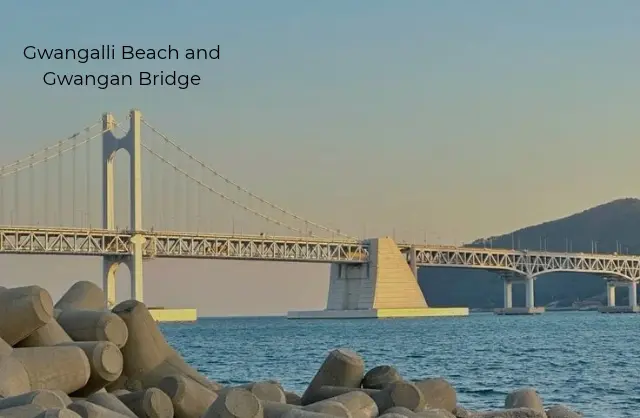
Slightly quieter than Haeundae, Gwangalli’s real draw is the nighttime view of the illuminated Gwangan Bridge stretching across the bay. The beachfront cafés and bars here are ideal for a relaxed evening. The Gwangan Bridge light show changes color and pattern through the night, and the beach itself is a popular spot for pyrotechnic-style firework shops that let visitors set off small hand-held fireworks right on the sand — a uniquely Busan evening activity you won’t find at Haeundae.
5. Jagalchi Fish Market — One of the Most Visited Places to Visit in Busan
Korea’s largest seafood market, running since the Korean War. Pick your own live seafood downstairs and have it prepared upstairs — a must for any food-focused Busan itinerary. The market is run largely by the “Jagalchi Ajumma,” generations of women fishmongers who have worked the stalls since the market’s founding during the Korean War, and bargaining respectfully is part of the experience.
6. Taejongdae Park
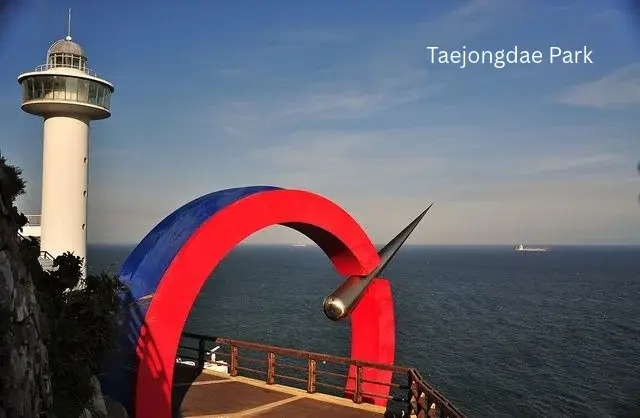
A dramatic cliffside park on Yeongdo Island with pine forests, a lighthouse, and ocean views. The Danubi Train loops around the park if you’d rather not walk the full 4.3 km trail. From the main observation deck you can sometimes see Japan’s Tsushima Island on exceptionally clear days, and the park’s small lighthouse museum is worth the short detour for anyone interested in Busan’s shipping history.
7. Gukje Market and BIFF Square
A sprawling traditional market in Nampo-dong for street food, clothing, and souvenirs, right next to BIFF Square — the walk of fame for the Busan International Film Festival, and the best place to try ssiat hotteok. Gukje Market alone spans dozens of narrow alleys, each historically specializing in a different trade — imported goods, hardware, fabrics — a layout that dates back to the black-market trading days right after the Korean War.
8. Songdo Beach and Sky Walk / Cable Car — A Family-Friendly Places to Visit in Busan Stop
Busan’s first public beach, now revived with a glass-floored ocean Sky Walk and a cable car offering panoramic views across the bay — a favorite for both families and couples. The Sky Walk’s glass panels extend out over the rocks below, so it’s not recommended for anyone uneasy with heights, but the cable car offers the same coastal views from a more comfortable seated ride.
9. Busan Tower and Yongdusan Park
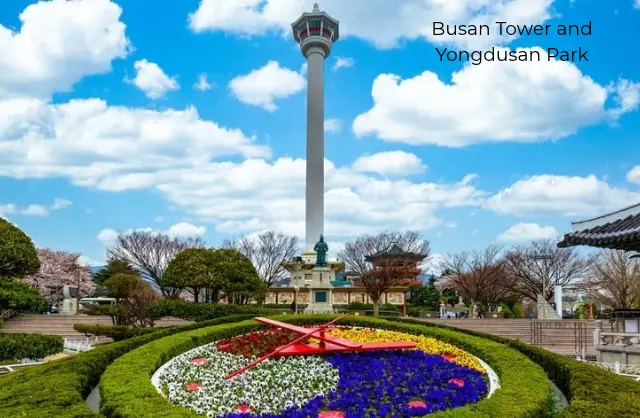
A centrally located park with a 120-meter observation tower giving 360-degree views of the port city. Easy to combine with a Gukje Market visit since it’s just up the hill. The park also houses a small statue commemorating Admiral Yi Sun-sin, one of Korea’s most celebrated naval commanders, and a bell pavilion that rings on New Year’s Eve as part of the city’s countdown celebrations.
10. Beomeosa Temple
One of Korea’s largest and oldest temples, tucked into the forested slopes of Geumjeongsan Mountain. Quieter and more contemplative than Haedong Yonggungsa, and beautiful in autumn foliage season. Founded during the Silla dynasty over 1,300 years ago, the temple complex includes a scenic hiking route up Geumjeongsan Mountain, making it a good half-day combination of culture and light trekking for travelers who want a break from the coastline.
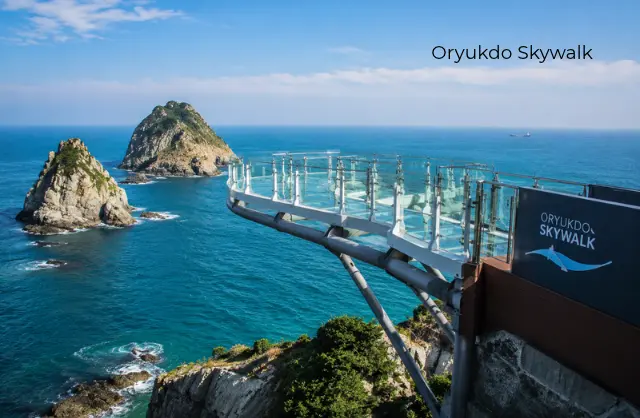
11. Oryukdo Skywalk
A horseshoe-shaped glass walkway suspended 35 meters above the sea, named after the five (or six, depending on the tide) small islands offshore. A quick but memorable stop, especially at sunrise. The name comes from the changing number of visible islets depending on the tide — locals joke that no two visitors ever agree on exactly how many they can count.
12. Songjeong Beach
A calmer, surf-friendly beach popular with locals rather than tour groups — good for beginner surf lessons and a slower-paced beach day away from Haeundae’s crowds. Several surf schools along the promenade rent boards and wetsuits by the hour, and the beach’s low-rise skyline makes it feel closer to a small fishing town than a major coastal city.
13. Dongbaekseom Island (APEC Naru Park)
A small pine-forested island connected to Haeundae by a walking path, home to the APEC House and excellent coastal views — a peaceful 30-minute detour right next to the city’s busiest beach. The walking path is fully paved and shaded, making it one of the easiest short nature walks in the city, and it connects directly onto the Haeundae Blueline Park coastal train route if you want to extend the trip toward Songjeong.
14. Igidae Coastal Walk — An Underrated Places to Visit in Busan Option
A rugged, less-touristed coastal hiking trail with sea cliffs and views back toward Gwangan Bridge — ideal for travelers who want Busan’s coastline without the crowds. The full trail takes about 1.5–2 hours one way, passing tide pools, small fishing spots, and dramatic rock formations shaped by centuries of wave erosion.
15. Busan X the Sky Observatory
Korea’s second-tallest observation deck, on the 100th floor of Haeundae’s LCT Landmark Tower, with a glass sky deck floor for a dramatic overhead view of the beach and city below. Tickets sell out fastest around sunset slots, so booking a day or two ahead is worth it if that specific time window matters to you.
Busan Food Guide: What to Eat in Busan
No list of places to visit in Busan is complete without its food — the city’s cuisine was shaped by Korean War-era refugees and its identity as Korea’s biggest port. These are the dishes to look for.
- Dwaeji Gukbap (Pork Soup) — Busan’s signature dish: pork bones simmered for hours into a milky broth, served with rice and pork slices. Try it for breakfast, the way locals do, near Bujeon Market.
- Milmyeon (Wheat Cold Noodles) — Busan’s answer to naengmyeon, invented during the Korean War when buckwheat was scarce. Served icy in summer (mul-milmyeon) or spicy and tossed (bibim-milmyeon).
- Ssiat Hotteok (Seed-Filled Pancake) — a deep-fried sweet pancake stuffed with sunflower seeds, peanuts, and cinnamon sugar, best eaten hot from a street cart around BIFF Square or Gukje Market.
- Hoe (Fresh Raw Fish) — Busan is Korea’s raw-fish capital thanks to Jagalchi Market; order it fresh and have it prepared right at the market stalls.
- Eomuk (Fish Cake) — Busan has nearly a century of fish-cake tradition; skewered eomuk in warm broth is a classic street-side snack, especially in winter.
- Naengchae Jokbal — chilled, thinly sliced pig’s trotters tossed with vegetables and a tangy mustard-vinegar dressing — an unusual but beloved Busan specialty.
- Grilled Gomjangeo (Sea Eel) — smoky, straw-grilled eel, available Gijang-style (grilled over straw) or Jagalchi-style (steamed then grilled).
Budget roughly ₩8,000–₩15,000 (about ₹500–₹950) per street or market meal, and ₩20,000–₩40,000 for a seafood sit-down meal for two. These dishes pair naturally with the places to visit in Busan covered above — try dwaeji gukbap near Jagalchi Market, then ssiat hotteok around BIFF Square.
How Many Days Do You Need for a Busan Tour?
Most travelers ask this before finalizing which places to visit in Busan to prioritize. Here’s a practical breakdown:
- 2 days — a fast highlight tour: Haeundae Beach, Gamcheon Culture Village, Jagalchi Market, and Gwangalli Bridge at night.
- 3–4 days — the recommended sweet spot: covers beaches, temples, markets, at least one observation deck, and a day trip to Taejongdae or Songjeong.
- 5–7 days — a relaxed pace with beach downtime, day trips to Gijang or nearby Gyeongju, and time to attend a festival if your dates line up.
If Busan is part of a bigger South Korea trip, 3 full days covering the top places to visit in Busan is usually enough before continuing on to Seoul, Gyeongju, or Jeju.
Busan Hotels and Trip Costs: Solo, Family, and Honeymoon Budgets
Costs below are approximate per-trip estimates for a 4-day / 3-night Busan tour (flights excluded), based on typical 2026 rates.
Book Your Local Travel/Tickets
Solo Traveler Budget
- Hotel: guesthouse or budget hotel in Seomyeon/Nampo-dong, ₩40,000–₩70,000/night (₹2,500–₹4,500)
- Food: ₩30,000–₩40,000/day eating mostly street food and gukbap
- Local transport: ₩15,000–₩20,000 total using a T-money subway/bus card
- Estimated 4-day total: ₹18,000–₹28,000
Family Trip Budget (2 adults + 2 kids)
- Hotel: mid-range family room or 2 connecting rooms near Haeundae, ₩150,000–₩250,000/night (₹9,500–₹16,000)
- Food: ₩120,000–₩160,000/day for the family across restaurants and markets
- Attractions: aquarium, cable car, museums — budget ₩150,000–₩200,000 total
- Estimated 4-day total: ₹65,000–₹1,00,000
Honeymoon Trip Budget
- Hotel: ocean-view or premium hotel in Haeundae/Gwangalli (e.g., Signiel Busan-tier or similar), ₩250,000–₩500,000/night (₹16,000–₹32,000)
- Food: a mix of fine dining and local favorites, ₩100,000–₩150,000/day for two
- Experiences: Busan X the Sky, Songdo Sky Walk, a sunset cruise or private photo session — ₩200,000–₩350,000 total
- Estimated 4-day total: ₹90,000–₹1,60,000
For family and honeymoon stays, Haeundae and Gwangalli give you the best mix of beach access, dining, and nightlife within walking distance. Your choice of neighborhood should match the places to visit in Busan you plan to prioritize — Haeundae keeps you closest to the beach highlights, while Nampo-dong sits nearest the historic old-town sites.
Busan Itinerary: Step-by-Step Schedule for a 4-Day Tour
Here’s a day-by-day schedule covering the top places to visit in Busan in a logical, low-backtracking order. This sequence keeps travel time low while still covering the essential places to visit in Busan across all four days.
Day 1: Old Town and Markets
- Morning: Jagalchi Fish Market — breakfast with fresh seafood
- Late morning: Gukje Market and BIFF Square — street food and shopping
- Afternoon: Busan Tower and Yongdusan Park
- Evening: Gamcheon Culture Village for sunset photos
Day 2: Beaches and Bridges
- Morning: Haeundae Beach walk and Dongbaekseom Island
- Afternoon: Sea Life Busan Aquarium or Busan X the Sky Observatory
- Evening: Gwangalli Beach for dinner with a view of Gwangan Bridge lit up
Day 3: Temples and Coastal Trails
- Early morning: Haedong Yonggungsa Temple (best light and least crowds)
- Late morning: Oryukdo Skywalk
- Afternoon: Songjeong Beach or a coastal café break
- Evening: Beomeosa Temple visit if timed for autumn foliage, otherwise return to Seomyeon for dinner and shopping
Day 4: Yeongdo Island and Departure
- Morning: Taejongdae Park (Danubi Train loop)
- Midday: Songdo Beach and Sky Walk / cable car
- Afternoon: Last-minute shopping at Seomyeon before heading to the airport or KTX station
Interactive Maps: Exact Locations
Here are three interactive maps pinned to exact coordinates for the most-searched places to visit in Busan, ready to embed directly into your Gutenberg post. Save them offline before you go, especially if you’re combining several places to visit in Busan into a single day.
Haeundae Beach
Gamcheon Culture Village
Haedong Yonggungsa Temple
Best Photoshoot Spots in Busan
If your Busan itinerary is partly built around photos, prioritize these spots and their best lighting windows. Several of these photo spots are also the most Instagrammed places to visit in Busan overall:
- Gamcheon Culture Village — golden hour (5–7 PM) for warm light on the pastel houses; go early morning to avoid crowds in the frame.
- Haedong Yonggungsa Temple — sunrise, when the sea and pagodas catch soft pink light with minimal foot traffic.
- Oryukdo Skywalk — sunrise or sunset over open water for a dramatic glass-floor silhouette shot.
- Gwangalli Beach at night — the illuminated Gwangan Bridge makes a striking backdrop; best 30 minutes after sunset.
- Songdo Sky Walk — blue-hour shots just after sunset with the cable car line visible in the background.
- Busan X the Sky — daytime for the glass-floor overhead beach shot; check visibility before booking your slot.
- Igidae Coastal Walk — early morning light on the sea cliffs, with far fewer people than Haeundae.
Nearby Airport and Transport for Travelers
Gimhae International Airport (PUS) is Busan’s main gateway, about 45–50 minutes from Haeundae and 30 minutes from Nampo-dong by taxi or Airport Limousine Bus. It handles direct flights from several Asian hubs, plus domestic connections from Seoul (both Incheon and Gimpo). Good transport planning makes it easy to reach every place on this list — the top places to visit in Busan are all connected by subway or a short taxi ride from the airport.
- From the airport: Light Rail Transit (Busan-Gimhae LRT) connects to the subway system; airport limousine buses run direct to Haeundae and Seomyeon.
- Subway: Busan’s metro (4 lines) covers most tourist areas — Nampo, Seomyeon, Haeundae, and Jagalchi all have direct stations.
- T-money card: a rechargeable card usable on subway, buses, and even some taxis — buy one at any convenience store on arrival.
- KTX high-speed rail: Busan Station connects to Seoul in about 2.5 hours, useful if you’re combining Busan with a wider Korea trip.
- Taxis: affordable and metered; useful late at night or for reaching Haedong Yonggungsa and Taejongdae where subway access is limited.
For more South Korea transport and visa planning, see our South Korea travel resources on RydeTravel.
Book Your Air Ticket
Nearby Places to Visit from Busan
If you’ve already covered the main places to visit in Busan, these destinations pair naturally with extra days on your trip:
- Gyeongju — the ancient Silla-dynasty capital, about 1 hour by train or bus, packed with UNESCO heritage sites.
- Tongyeong — a smaller coastal city 1.5–2 hours away, known for its cable car and island-hopping.
- Jinhae — famous for its cherry blossom festival, roughly 1 hour from Busan by bus.
- Ulsan — an easy day trip for the Daewangam Park coastline and whale-watching tours, about 1 hour away.
- Geoje Island — scenic coastal drives and beaches, around 2 hours from Busan by bus.
Planning your South Korea route beyond Busan? Check our full South Korea season-by-season travel guide on RydeTravel for what to pack and where to go next.
Practical Travel Tips for Busan
A few practical details worth knowing before you go, especially useful for first-time visitors planning places to visit in Busan on their own rather than through a package tour. Keep these tips handy while hopping between places to visit in Busan on public transport.
- Currency: South Korean Won (KRW). Cards are widely accepted, but keep some cash for street food stalls and traditional markets like Gukje and Jagalchi.
- Visa & entry rules: Check current requirements on the Korea Tourism Organization site before you book, since entry rules for Indian travelers are updated periodically.
- Language: Korean is the primary language; English signage exists in tourist zones like Haeundae, Nampo-dong, and Seomyeon, but is limited elsewhere. Translation apps are genuinely useful here.
- Connectivity: A local eSIM or pocket Wi-Fi rented at Gimhae Airport will make navigating the subway and using map apps far easier.
- Getting a T-money card: Available at any convenience store (CU, GS25) near subway stations; top it up as you go and use it for buses, subway, and some taxis.
- Modesty at temples: Dress modestly and keep noise levels low at Haedong Yonggungsa and Beomeosa, both of which remain active places of worship, not just tourist sites.
- Weather layering: Coastal wind makes Busan feel a few degrees cooler than the forecast suggests, especially around Oryukdo, Taejongdae, and Igidae — pack a light windbreaker even in warmer months.
Places to Visit in Busan at a Glance
Here’s the full list of places to visit in Busan covered in this guide, for a quick scroll-back reference while you plan:
- Haeundae Beach
- Gamcheon Culture Village
- Haedong Yonggungsa Temple
- Gwangalli Beach & Gwangan Bridge
- Jagalchi Fish Market
- Taejongdae Park
- Gukje Market & BIFF Square
- Songdo Beach & Sky Walk
- Busan Tower & Yongdusan Park
- Beomeosa Temple
- Oryukdo Skywalk
- Songjeong Beach
- Dongbaekseom Island
- Igidae Coastal Walk
- Busan X the Sky Observatory
Busan Travel Guide: Frequently Asked Questions
What are the best places to visit in Busan for first-time travelers?
Haeundae Beach, Gamcheon Culture Village, Haedong Yonggungsa Temple, and Jagalchi Market cover the essentials in a short trip.
What is the best time to visit Busan?
Spring (April) and autumn (October) offer the most comfortable weather, though summer suits beach lovers and festival-goers.
How many days are enough for a Busan tour?
3–4 days covers the main places to visit in Busan comfortably, including at least one day trip option.
Is Busan expensive for Indian travelers?
Busan is generally more affordable than Seoul; a comfortable mid-range trip costs roughly ₹15,000–₹20,000 per person per day including hotel, food, and local transport.
What food should I try in Busan?
Dwaeji gukbap, milmyeon, ssiat hotteok, fresh hoe (raw fish) from Jagalchi Market, and eomuk are the must-try local dishes.
What is the nearest airport to Busan?
Gimhae International Airport (PUS), about 45 minutes from Haeundae by taxi or airport limousine bus.
Which places to visit in Busan are best for couples?
Gwangalli Beach at night, Songdo Sky Walk at sunset, and Haedong Yonggungsa Temple at sunrise are the most romantic places to visit in Busan.
Are there any free places to visit in Busan?
Yes — Haeundae Beach, Gwangalli Beach, Gamcheon Culture Village, Taejongdae Park, and Yongdusan Park are all free to enter.
Ready to plan your Busan trip? Save this guide, pick your season, and start with our step-by-step itinerary above — it’s built to cover the best places to visit in Busan without wasted backtracking across the city.




Leave a Reply