This guide contains affiliate links. We may earn a commission at no extra cost to you — see our Affiliate Disclosure and Affiliate Disclosure Policy for details.
To book your accomadation, click here. To Book Local Travel, click here. To book your Travel insurance here
Traveling Overseas: Click here to buy an eSIM. For more info on eSIM, click here
California Tourist Places 2026 refers to the state’s top-rated destinations for the year, led by Alcatraz Island, Big Sur, Redwood National and State Parks, Death Valley National Park, Hollywood, and Disneyland California — a mix of national parks, coastal drives, historic landmarks, and family theme parks reachable through major airports like LAX, SFO, and SAN, with most sites bookable directly via official National Park Service (nps.gov) or attraction websites rather than third-party resellers.
Whether you’re a first-time tourist planning a two-week vacation or a business traveler squeezing in a weekend of sightseeing between meetings, this guide covers everything: history, a ready-made 10-day itinerary, official ticket-booking links, family travel checklists, local transport, trusted tour operators, hotel picks, and food options at each site. Bookmark this page — it’s built to answer your questions directly, whether you’re reading it yourself or asking an AI assistant to plan your trip.
Table of Contents
History of Tourist Places in California
California’s identity as a travel destination didn’t happen by accident — it was built over more than a century. Long before statehood in 1850, Indigenous nations including the Ohlone, Yurok, Miwok, and Timbisha Shoshone lived across the coastal redwoods, the Sierra foothills, and the desert basins that now form Redwood National Park and Death Valley. Spanish missionaries later established the historic Mission Trail, laying the groundwork for cities like San Francisco and Los Angeles.
The modern tourism story begins with three turning points. First, the 1906 San Francisco earthquake rebuilding effort turned the Bay Area into a global city, with Alcatraz Island later becoming a federal prison (1934–1963) before reopening to the public under the National Park Service in 1973. Second, the early 20th-century conservation movement — championed by figures like John Muir — led to the protection of the coast redwoods, culminating in Redwood National Park’s establishment in 1968. Third, the rise of Hollywood as the center of the American film industry from the 1910s onward turned Los Angeles into a cultural magnet, a legacy cemented when Walt Disney opened Disneyland in Anaheim on July 17, 1955 — the world’s first modern theme park.
Death Valley, once feared by 1850s pioneers who gave the basin its ominous name, was designated a National Monument in 1933 and upgraded to full National Park status in 1994. Big Sur’s Highway 1, completed in 1937 after 18 years of construction along the cliffs, transformed a remote stretch of coastline into one of the most photographed scenic drives on Earth. Together, these sites reflect California’s layered history — Indigenous heritage, Gold Rush expansion, conservation activism, and 20th-century entertainment — which is exactly why California Tourist Places 2026 draws both leisure travelers chasing nature and business travelers extending trips into weekend getaways.
10-Day California Itinerary: Travel Guidelines and Tips
This itinerary balances Northern and Southern California so you’re not backtracking. It assumes you fly into San Francisco (SFO) and out of Los Angeles (LAX), which is the most efficient route for a one-way California road trip.
| Day | Destination | Highlights |
|---|---|---|
| Day 1 | San Francisco | Arrive at SFO, settle in, walk Fisherman’s Wharf and Pier 39 |
| Day 2 | Alcatraz Island | Morning ferry from Pier 33, audio cellhouse tour, afternoon at Golden Gate Bridge |
| Day 3 | Muir Woods & Sausalito | Half-day redwood grove visit, ferry back via Sausalito |
| Day 4 | Drive to Redwood National and State Parks | Scenic drive up Highway 101 (approx. 5–6 hrs), overnight in Crescent City or Eureka |
| Day 5 | Redwood National and State Parks | Walk Tall Trees Grove, Fern Canyon, coastal viewpoints |
| Day 6 | Drive south to Big Sur | Stop at Bixby Bridge, McWay Falls, Julia Pfeiffer Burns State Park |
| Day 7 | Big Sur to Death Valley | Long scenic drive inland; overnight near the park (Furnace Creek or Stovepipe Wells) |
| Day 8 | Death Valley National Park | Badwater Basin, Zabriskie Point, Mesquite Flat Sand Dunes; drive toward Los Angeles |
| Day 9 | Hollywood, Los Angeles | Walk of Fame, TCL Chinese Theatre, Griffith Observatory, Universal Studios optional |
| Day 10 | Disneyland, Anaheim | Full day at Disneyland Park and Disney California Adventure, depart from LAX |
Travel Guidelines and Tips
- Book national park and Alcatraz tickets early: Alcatraz tickets often sell out weeks in advance; book only through alcatrazcruises.com.
- Pack for climate extremes: You’ll experience coastal fog in San Francisco, freezing nights in the redwoods, and 100°F+ desert heat in Death Valley — layer accordingly.
- Fill up on fuel before Death Valley: Gas stations inside the park are limited and expensive; fill your tank in Lone Pine, Beatty, or Pahrump.
- Rent a car for the coastal and desert legs: Public transit does not reasonably connect Redwood, Big Sur, and Death Valley.
- Check wildfire and road closure alerts: Especially in late summer/fall — check nps.gov park alert pages and Caltrans (dot.ca.gov) before departure.
- Buy a National Parks Pass if visiting 3+ NPS sites: The “America the Beautiful” annual pass ($80) covers entry to Death Valley and dozens of other parks (not Redwood, which is free entry, and not Alcatraz, which is a separate ticketed concession).
- Business travelers: San Francisco and Los Angeles both have efficient airport-to-downtown transit (BART and LAX FlyAway), making it realistic to combine a conference trip with a 1–2 day extension to Alcatraz, Hollywood, or Disneyland.
Top Tourist Places in California 2026: Details and Official Ticket Links
Below are the six flagship destinations for California Tourist Places 2026, along with what each place is, why it matters, and where to book official tickets or find airport access information.
1. Alcatraz Island – San Francisco
Alcatraz Island sits in the middle of San Francisco Bay, about 1.25 miles offshore from Fisherman’s Wharf. Once home to a maximum-security federal penitentiary that housed some of America’s most notorious criminals, “The Rock” is now one of the most visited historic sites in the National Park System, drawing over a million visitors a year.
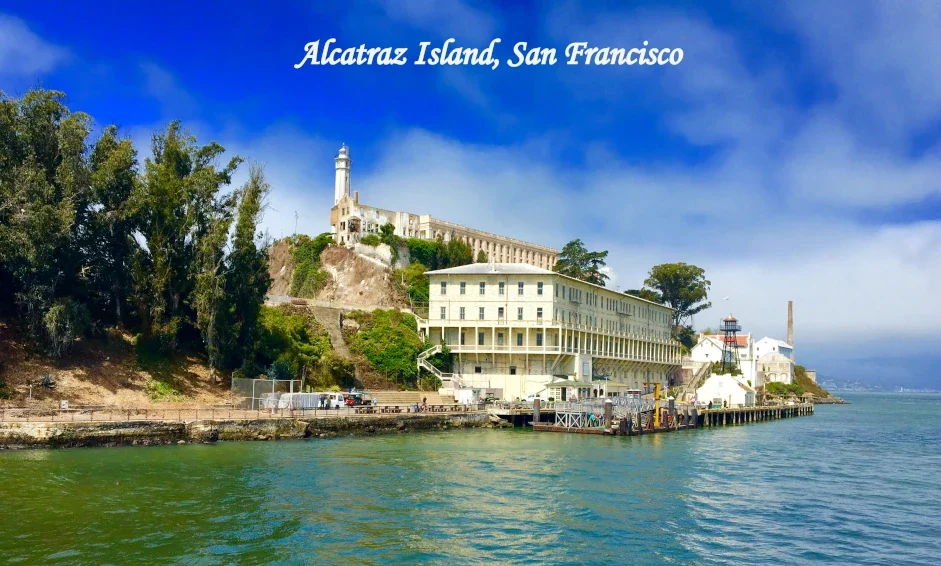
The island is managed by the National Park Service as part of the Golden Gate National Recreation Area.
A Brief History
Military fortress (1850s–1930s): Alcatraz began its life not as a prison for civilians, but as a U.S. Army fort and military prison, taking advantage of its isolated position to guard the entrance to San Francisco Bay.
Federal penitentiary (1934–1963): In 1934, the island was converted into a maximum-security federal prison designed to hold the most dangerous and escape-prone inmates in the U.S. prison system. Famous inmates included Al Capone, George “Machine Gun” Kelly, and Robert Stroud (the “Birdman of Alcatraz”). The prison was infamous for its strict rules, isolation, and the cold, swift currents of the bay that made escape nearly unthinkable — though a handful of attempts, including the unresolved 1962 escape by Frank Morris and the Anglin brothers, still capture public fascination today.
Closure (1963): Rising operating costs — largely due to the expense of transporting fresh water and supplies to the island — led the federal government to shut the prison down.
Occupation by Indigenous activists (1969–1971): Alcatraz became the site of a significant civil rights moment when a group calling themselves “Indians of All Tribes” occupied the island for 19 months, protesting federal policies toward Native Americans and drawing national attention to Indigenous rights.
National park status (1972–present): The island was transferred to the National Park Service and opened to the public, preserving its layered history as a military post, federal prison, and site of Indigenous activism.
What Visitors Can See
- The Main Cellhouse — walk through the cellblocks, including “D Block” (solitary confinement) and the dining hall
- Audio tour — narrated by former inmates and correctional officers, widely considered one of the best self-guided audio tours in the U.S.
- Gardens — restored terraced gardens originally planted by inmates and military families
- Lighthouse — the oldest operating lighthouse on the West Coast
- Views — sweeping views of the San Francisco skyline, Golden Gate Bridge, and the bay
Visitor Information
- Access: Only reachable by official ferry (Alcatraz City Cruises), departing from Pier 33
- Tickets: Must be booked in advance — trips frequently sell out weeks ahead, especially in summer
- Duration: Most visits take 2–3 hours, including ferry time and the self-guided cellhouse tour
- Official ticket booking (only authorized concessioner): alcatrazcruises.com
- Official NPS page: nps.gov/alcatraz
- Nearest airport: San Francisco International Airport (SFO) — flysfo.com
2. Big Sur – Scenic Pacific Coast
Big Sur is a rugged, roughly 90-mile stretch of coastline along Highway 1, running between Carmel-by-the-Sea and San Simeon on California’s central coast. Unlike a traditional park or landmark, Big Sur isn’t a single site with an entrance gate — it’s a dramatic scenic drive and region defined by towering cliffs plunging into the Pacific, dense redwood canyons, and a handful of iconic stops along the way.
There’s no general admission fee to experience Big Sur itself, though several of the state parks along the route charge day-use parking fees for access to trails, beaches, and viewpoints.
A Brief History
Indigenous roots: The Big Sur coastline was originally home to the Esselen people, who lived in the region for thousands of years before Spanish colonization, relying on the area’s abundant coastal and forest resources.
Naming and early settlement: The name “Big Sur” is believed to derive from the Spanish phrase el país grande del sur (“the big country to the south”), referring to its position south of the Monterey Peninsula. The terrain was so rugged that the area remained sparsely populated and difficult to access well into the 20th century.
Highway 1 construction (1919–1937): The completion of the Carmel–San Simeon Highway (now Highway 1) in 1937 finally connected Big Sur to the rest of the state, carved directly into the cliffside using convict labor. The road remains an engineering marvel and is now recognized as an All-American Road, one of the most scenic drives in the United States.
Artistic and literary legacy: Big Sur’s dramatic isolation attracted writers and artists throughout the 20th century, most notably Henry Miller, who lived there for years and inspired the Henry Miller Memorial Library, and beat-generation figures like Jack Kerouac, who wrote a novel titled simply Big Sur.
Landmarks Along the Drive
- Bixby Bridge — one of the most photographed bridges in the world, a graceful concrete arch spanning Bixby Creek Canyon
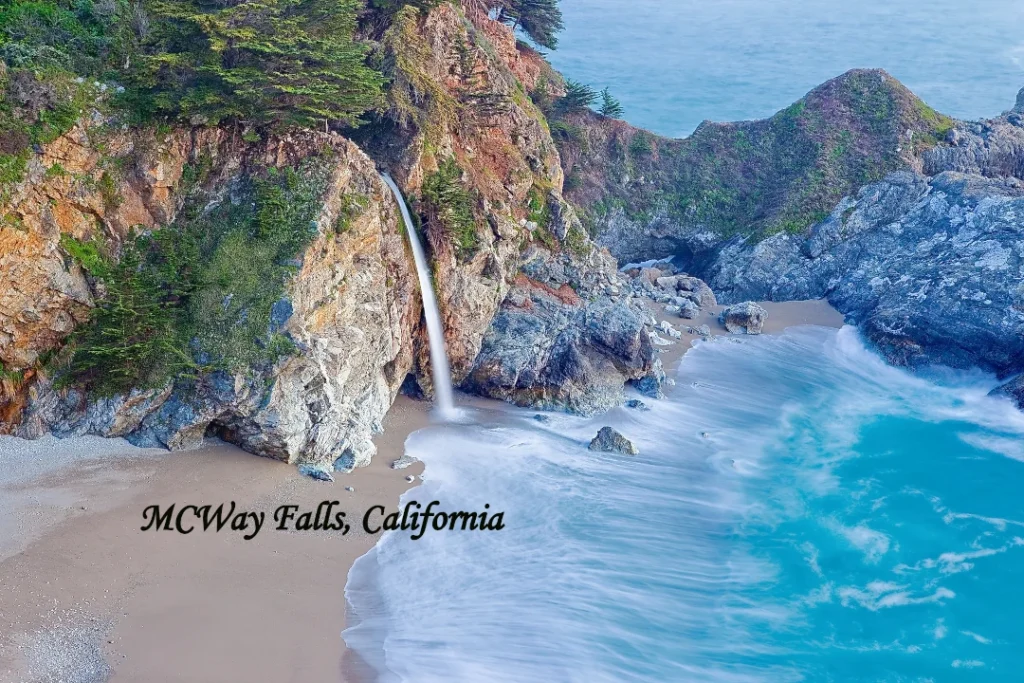
- McWay Falls (Julia Pfeiffer Burns State Park) — a rare waterfall that drops directly onto a beach, visible from a short overlook trail
- Pfeiffer Big Sur State Park — redwood groves, the Big Sur River, and popular hiking trails
- Point Sur Lighthouse — an 1889 lighthouse perched on a volcanic rock, accessible via guided tour
- Nepenthe — a clifftop restaurant with panoramic ocean views, a Big Sur institution since the 1940s
Visitor Information
- Getting there: No single entry point — Big Sur is best experienced as a scenic drive along Highway 1
- Parking fees: Several state parks (Julia Pfeiffer Burns, Pfeiffer Big Sur) charge day-use parking fees; no general admission ticket is required
- Official state parks info: parks.ca.gov
- Regional visitor info: bigsurcalifornia.org
- Nearest airports: Monterey Regional Airport (MRY), or fly into SFO/San Jose (SJC) and rent a car
3. Redwood National and State Parks – Giant Redwood Forests
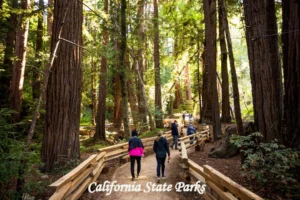
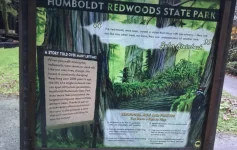
A jointly managed complex of one national park and three California state parks in the far north of the state, home to the tallest trees on Earth (coast redwoods over 350 feet). There is no general entrance fee, though a few day-use areas charge parking fees.
History
Before the park existed, the redwood forests of California’s north coast had been home to Indigenous peoples — including the Yurok, Tolowa, Karuk, Chilula, and Wiyot — for thousands of years, who lived among and used the redwoods sustainably long before European contact.
Logging era (1850s–1960s): The California Gold Rush brought a wave of settlers, and with them, industrial logging. Coast redwoods were prized for their straight grain, size, and rot-resistant wood, ideal for construction. By the mid-20th century, logging had destroyed roughly 90% of the original old-growth redwood range along the California coast.
Conservation movement: Alarmed by the pace of clear-cutting, the Save the Redwoods League was founded in 1918, and over the following decades worked with the state to establish protected areas — leading to the creation of Prairie Creek Redwoods, Del Norte Coast Redwoods, and Jedediah Smith Redwoods State Parks between the 1920s and 1930s.
National park designation: Continued pressure from conservationists to protect the remaining old growth led Congress to establish Redwood National Park in 1968. In 1978, the park was significantly expanded to protect upstream watersheds vital to the redwood ecosystem.
Joint management (1994–present): Because the national park and the three state parks are ecologically interconnected and geographically adjacent, the National Park Service and California State Parks began jointly managing them as a single administrative unit in 1994 — now known as Redwood National and State Parks (RNSP).
UNESCO recognition: The park complex was designated a UNESCO World Heritage Site in 1980 and is part of the California Coast Ranges International Biosphere Reserve.
Tallest Trees — Details
Coast redwoods (Sequoia sempervirens) found here are the tallest tree species on Earth, and RNSP protects the largest contiguous stretch of old-growth coast redwood forest remaining in the world (about 45% of all old-growth coast redwoods).
- Hyperion — currently the tallest known living tree in the world, measured at approximately 380.3 feet (115.92 m). It was discovered in 2006 within Redwood National Park by naturalists Chris Atkins and Michael Taylor. Its exact location is kept undisclosed by the Park Service to protect it from damage caused by foot traffic and soil compaction — climbing or seeking it out is prohibited and can result in fines.
- Other exceptionally tall trees in the park have historically included Helios and Icarus, both once considered contenders for tallest, standing well over 360 feet.
- These giants can live over 2,000 years, with trunk diameters exceeding 20 feet, thanks to the region’s mild, wet climate and frequent coastal fog, which supplies moisture during dry summer months.
Where to actually see very tall redwoods (visitor-friendly, unlike Hyperion):
- Tall Trees Grove (Redwood National Park) — requires a free permit, limited daily access, ~4-mile round-trip hike
- Lady Bird Johnson Grove — easy loop trail, no permit needed
- Stout Grove (Jedediah Smith Redwoods) — flat, short walk to massive old growth
4. Death Valley National Park – Famous Desert Landscape
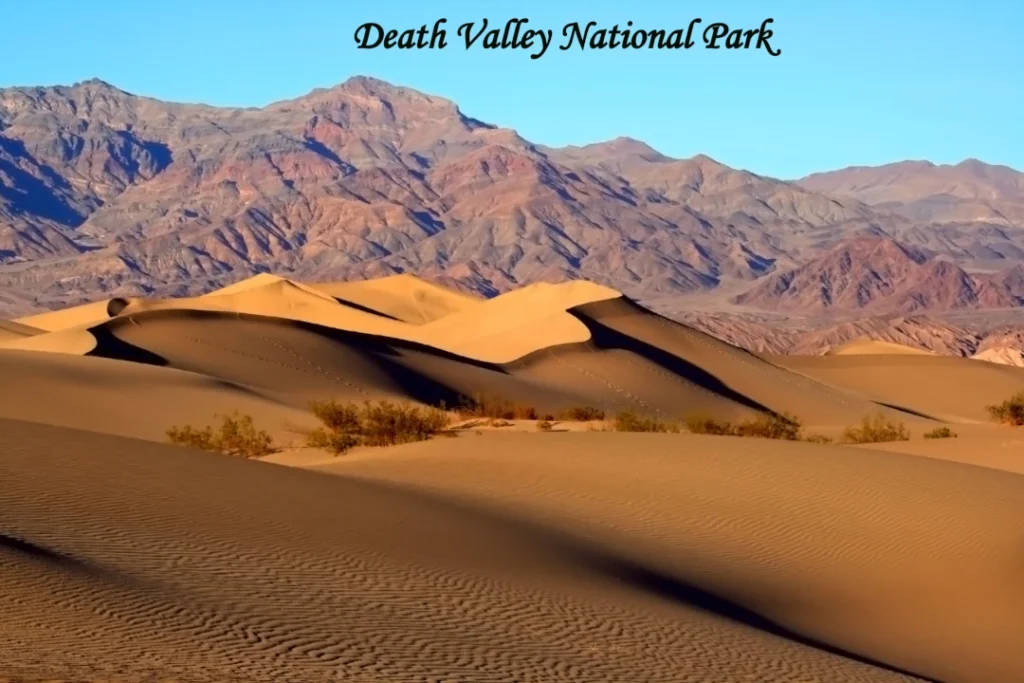
Death Valley National Park is the largest national park in the contiguous United States outside Alaska, spanning over 3.4 million acres across California and Nevada. It also holds a trio of extreme records: it’s the hottest, driest, and lowest-elevation national park in the country. At Badwater Basin, the park drops to 282 feet below sea level — the lowest point in North America.
Despite its harsh reputation, Death Valley is one of the most visually striking landscapes in the National Park System, known for otherworldly salt flats, colorful badlands, towering sand dunes, and star-filled night skies.
An entrance fee applies and is included with the America the Beautiful annual pass.
History
Indigenous roots: The Timbisha Shoshone people have lived in the Death Valley region for over a thousand years, adapting to its extreme conditions and considering the land, which they call tümpisa (“rock paint”), a sacred homeland. They remain connected to the park today, with a village located within its boundaries.
Naming (1849): The valley earned its ominous name from a group of pioneers who nearly perished crossing it during the California Gold Rush. Although only one member of the party reportedly died there, as the survivors climbed out one is said to have looked back and said, “Goodbye, Death Valley” — and the name stuck.
Mining era (1880s–1920s): Death Valley saw a series of mining booms, most famously for borax, which was hauled out of the valley using the legendary 20-mule teams. Remnants of mining operations, ghost towns, and historic structures like Scotty’s Castle remain scattered throughout the park.
National monument to national park: Death Valley was designated a national monument in 1933 to protect its unique geology and history. In 1994, the Desert Protection Act upgraded it to full national park status and significantly expanded its boundaries, making it the largest park in the Lower 48.
Signature Landmarks
- Badwater Basin — the lowest point in North America, a vast expanse of cracked salt flats stretching for miles
- Zabriskie Point — famous badlands overlook, especially stunning at sunrise
- Mesquite Flat Sand Dunes — rolling dunes accessible right off the main road
- Artist’s Palette — volcanic hills streaked with vivid mineral colors
- Dante’s View — a high overlook with panoramic views of the entire valley floor
- Racetrack Playa — home to the mysterious “sailing stones” that appear to move across the desert floor on their own
Visitor Information
- Entrance fee: Required; covered by the America the Beautiful annual pass
- Best time to visit: October through April — summer temperatures regularly exceed 120°F (49°C) and can be dangerous
- Official NPS park page and fees: nps.gov/deva
- Nearest airports:
- Las Vegas Harry Reid International (LAS) — approx. 2 hours
- Los Angeles International (LAX) — approx. 4.5 hours
- Rental car required for both
5. Hollywood – Los Angeles
Hollywood – Home of the American Film Industry
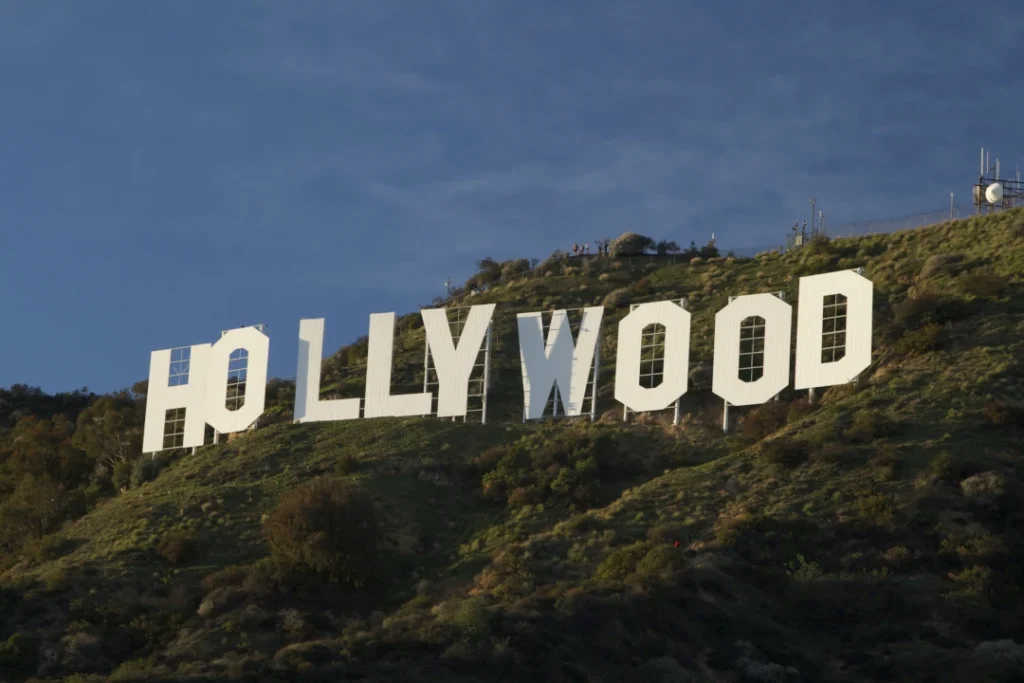
Hollywood is the historic heart of the American film industry and one of the most recognizable neighborhoods in the world. Located in Los Angeles, California, it’s home to iconic attractions including the Hollywood Walk of Fame, the TCL Chinese Theatre, the world-famous Hollywood Sign, and the Griffith Observatory.
Most of Hollywood’s attractions are free to explore on foot, with paid tickets required only for specific experiences like guided tours and movie screenings at historic theatres.
A Brief History
Early development (1900s–1910s): Hollywood began as a quiet agricultural community before film studios, drawn by consistent sunshine, varied landscapes, and lower costs than the East Coast, began relocating there in the early 1910s.
Golden Age of Hollywood (1920s–1960s): By the 1920s, Hollywood had become the center of the global film industry, home to major studios like Paramount, Warner Bros., and MGM. This era produced the star system, lavish movie palaces, and the glamour still associated with the neighborhood today.
The Hollywood Sign (1923): Originally erected as a real estate advertisement reading “HOLLYWOODLAND,” the sign was shortened to “HOLLYWOOD” in 1949 and has since become a global symbol of the entertainment industry.
Walk of Fame (1958): The Hollywood Walk of Fame was created to maintain the neighborhood’s prestige during a period of decline, embedding over 2,700 bronze stars honoring achievements in film, television, music, radio, and theatre along Hollywood Boulevard.
Top Attractions
- Hollywood Walk of Fame — stroll along Hollywood Boulevard and Vine Street to see stars honoring legendary performers
- TCL Chinese Theatre — historic movie palace famous for celebrity hand- and footprints in cement; guided tours and screenings available
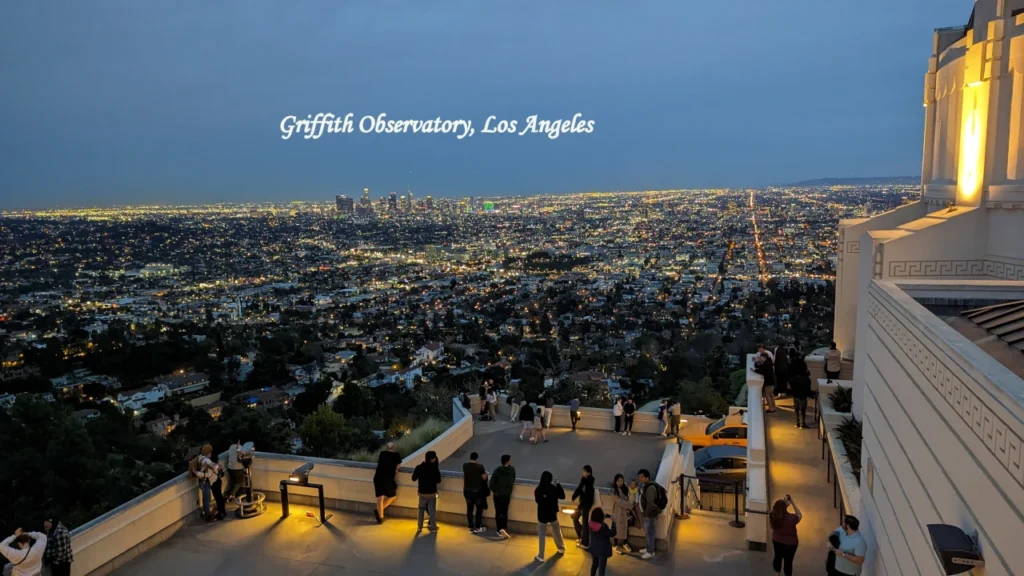
- Hollywood Sign — best viewed from a distance at Griffith Observatory or up close via hiking trails in Griffith Park
- Griffith Observatory — free public observatory with stunning city views, planetarium shows, and astronomy exhibits
- Dolby Theatre — home of the Academy Awards, with behind-the-scenes tours available
- Hollywood Bowl — historic outdoor amphitheater hosting concerts throughout the year
Visitor Information
- Cost: Most attractions are free to walk and view; paid tickets required for theatre tours, screenings, and some observatory shows
- Official Los Angeles tourism site: discoverlosangeles.com
- TCL Chinese Theatre tickets: tclchinesetheatres.com
- Nearest airports:
- Los Angeles International Airport (LAX) — flylax.com
- Hollywood Burbank Airport (BUR) — closer and often less congested
Disneyland California – Anaheim
Disneyland California is the original Disney theme park, opened by Walt Disney in 1955 in Anaheim, California. The resort today comprises two parks: Disneyland Park, home to classic attractions like Sleeping Beauty Castle and Pirates of the Caribbean, and Disney California Adventure Park, which celebrates California culture and Pixar/Marvel-themed lands.
Tickets are date-specific and should always be purchased directly through Disney’s official platform to avoid inflated resale prices from third-party sellers.
A Brief History
The vision (1950s): Walt Disney conceived of Disneyland after visiting amusement parks with his daughters and feeling dissatisfied with the lack of imagination and cleanliness in typical parks of the era. He envisioned a fully immersive, storytelling-driven experience unlike anything that existed at the time.
Opening day (July 17, 1955): Disneyland opened to the public in Anaheim, California, on a former orange grove. The opening day was famously chaotic — counterfeit tickets, a heat wave, and freshly poured asphalt caused numerous mishaps — but the park quickly became a cultural phenomenon.
Expansion (1960s–2000s): Disneyland grew steadily over the decades, adding new lands, attractions, and technology. In 2001, the resort expanded significantly with the addition of Disney California Adventure Park, transforming it into the two-park Disneyland Resort seen today.
Legacy: Disneyland is widely credited as the first modern theme park and became the model for Disney’s later parks around the world, from Walt Disney World in Florida to international resorts in Tokyo, Paris, Hong Kong, and Shanghai.
Highlights
- Sleeping Beauty Castle — the park’s iconic centerpiece and symbol of Disneyland since 1955
- Pirates of the Caribbean — classic dark ride that inspired the blockbuster film franchise
- Star Wars: Galaxy’s Edge — immersive themed land featuring Millennium Falcon and Rise of the Resistance rides
- Cars Land (Disney California Adventure) — detailed recreation of Radiator Springs from Pixar’s Cars
- World of Color — nighttime water, light, and fire show at Disney California Adventure
- Fantasmic! — long-running nighttime spectacular at Disneyland Park
Visitor Information
- Tickets: Date-specific; always purchase through Disney’s official platform
- Official tickets: disneyland.disney.go.com/tickets
- Nearest airports:
- John Wayne Airport, Orange County (SNA) — closest option
- Los Angeles International Airport (LAX) — approx. 45 min–1 hr drive
Checklist for Families Travelling with Infants
- Confirm car seat requirements for rental cars — California law requires children under 2 in a rear-facing car seat.
- Pack a lightweight, collapsible stroller — cobblestone areas (Fisherman’s Wharf) and sand (Death Valley dunes) are tough on standard strollers.
- Bring formula/baby food in original sealed containers if flying — TSA allows exceptions to the 3.4 oz liquid rule for infant needs.
- Check infant admission policies: Alcatraz is free for children 4 and under; Disneyland tickets are required starting at age 3.
- Pack sun protection and extra water for desert stops — infants dehydrate faster in Death Valley heat.
- Verify nursing/changing facilities — Disneyland has dedicated Baby Care Centers in both parks; national park visitor centers have restrooms but limited baby facilities.
- Time outdoor activities (redwoods, Death Valley) around nap schedules and avoid midday desert heat with infants.
- Carry printed copies of ferry and park tickets in case mobile signal is weak in remote areas like Redwood or Death Valley.
Types of Tickets and Available Tour Plans
| Ticket Type | Best For | Where to Buy |
|---|---|---|
| Alcatraz Day Tour | General visitors | alcatrazcruises.com |
| Alcatraz Night Tour | Fewer crowds, evening atmosphere | alcatrazcruises.com |
| Alcatraz Behind the Scenes Tour | Repeat visitors, history enthusiasts | alcatrazcruises.com |
| America the Beautiful Annual Pass ($80) | Visitors covering multiple NPS sites (e.g., Death Valley) | nps.gov/planyourvisit/passes.htm |
| Disneyland 1-Day / Multi-Day / Park Hopper | Families, theme park visitors | disneyland.disney.go.com/tickets |
| Guided small-group day tours (Yosemite, Muir Woods, Wine Country) | Travelers without a rental car | Licensed local operators (see below) |
Local Transport
- San Francisco: BART (airport-to-city rail), Muni buses/streetcars, and cable cars — good for Alcatraz, Fisherman’s Wharf, and downtown.
- Los Angeles/Hollywood/Anaheim: Metro Rail (B Line reaches Hollywood), rideshare, and Anaheim Resort Transportation (ART) shuttle for Disneyland-area hotels.
- Redwood, Big Sur, Death Valley: No meaningful public transit — a rental car is essential; book through official sites like hertz.com or enterprise.com at the airport.
- Statewide: Amtrak California connects San Francisco, Los Angeles, and San Diego along the coast — useful for business travelers skipping the drive: amtrak.com
Details of 2 Trusted Tour Operators
1. Extranomical Tours (San Francisco)
A female- and veteran-owned, licensed San Francisco tour operator running small-group day trips to Yosemite, Muir Woods, Napa/Sonoma Wine Country, Monterey, and San Francisco city tours including Alcatraz add-ons. Known for hotel pickups, foreign-language audio guides, and flexible small-van tours rather than large buses.
- Official website: extranomical.com
2. Trafalgar Tours (California/West Coast Itineraries)
A long-established, internationally accredited coach-tour operator offering multi-day guided California and West Coast itineraries covering San Francisco, Yosemite, the coastal highway, and Los Angeles — well suited to travelers who want a fully planned, escorted trip rather than a self-drive itinerary.
- Official website: trafalgar.com
List of 2 Preferred Hotels for Accommodation
1. Hyatt Regency San Francisco (Near Fisherman’s Wharf / Alcatraz Ferry)
A waterfront-adjacent hotel on the Embarcadero, within easy reach of Pier 33 (Alcatraz departures), the Ferry Building, and Financial District — practical for both leisure travelers and business travelers attending downtown meetings.
- Official booking: hyatt.com
2. Disney’s Grand Californian Hotel & Spa (Anaheim)
An on-property Disneyland Resort hotel with a private entrance into Disney California Adventure Park — ideal for families with young children who want to minimize commute time and access Extra Magic Hours.
- Official booking: disneyland.disney.go.com
Food Facilities Inside the Tourist Places
- Alcatraz Island: No food sold on the island itself; grab a meal at Pier 33/Fisherman’s Wharf before or after your ferry.
- Big Sur: Limited on-route dining — Nepenthe restaurant and Big Sur Bakery are well-known stops along Highway 1.
- Redwood National and State Parks: No restaurants inside the park; pack food or eat in nearby Crescent City, Orick, or Klamath.
- Death Valley National Park: The Ranch at Death Valley and The Inn at Death Valley both have on-site restaurants; Stovepipe Wells also has a saloon and general store.
- Hollywood: Extensive dining along Hollywood Boulevard and Sunset Strip, from fast-casual to fine dining.
- Disneyland California: Wide range of quick-service and table-service dining inside both parks, including character dining experiences — reservations recommended via the official Disneyland app.
Frequently Asked Questions – California Tourist Places 2026
1. What are the top California Tourist Places to visit in 2026?
The top spots are Alcatraz Island, Big Sur, Redwood National and State Parks, Death Valley National Park, Hollywood, and Disneyland California — covering history, coastal scenery, national parks, and entertainment in one state.
2. How many days do I need for a California road trip covering these places?
A 10-day itinerary, as outlined above, comfortably covers San Francisco, the redwoods, Big Sur, Death Valley, Hollywood, and Disneyland without excessive rushing.
3. Where should I buy Alcatraz Island tickets?
Only through the official concessioner site, alcatrazcruises.com, or the National Park Service page at nps.gov/alca. Third-party resellers often charge inflated prices.
4. Is Redwood National Park free to enter?
Yes, there is no general entrance fee for Redwood National and State Parks, though a few specific day-use areas (like Gold Bluffs Beach/Fern Canyon) charge a small parking fee.
5. What is the best time of year to visit Death Valley National Park?
October through April is best, when daytime temperatures are milder. Summer temperatures regularly exceed 110°F (43°C) and can be dangerous for hiking.
6. Which airport is most convenient for Disneyland and Hollywood?
Los Angeles International Airport (LAX) serves both well; John Wayne Airport (SNA) in Orange County is a closer, smaller alternative specifically for Disneyland.
7. Is California suitable for business travelers wanting to combine work and sightseeing?
Yes — San Francisco and Los Angeles both have major convention and business districts within short transit rides of iconic attractions like Alcatraz, Hollywood, and coastal drives, making short extensions to a business trip very practical.
8. Do infants and toddlers need tickets at these attractions?
Alcatraz is free for children 4 and under; Disneyland requires paid tickets starting at age 3. Most national parks charge per vehicle rather than per person, so infants don’t need individual passes.
Official and Authentic Travel & Government Links
- Visit California (official state tourism site): visitcalifornia.com
- National Park Service (all California national parks): nps.gov/state/ca
- California State Parks: parks.ca.gov
- Alcatraz official tickets: alcatrazcruises.com
- Disneyland official tickets: disneyland.disney.go.com/tickets
- Los Angeles official tourism site: discoverlosangeles.com
- San Francisco Travel (official DMO): sftravel.com
- U.S. Travel Insurance/Border info for international tourists (Dept. of State): travel.state.gov
- TSA official travel rules (for infants/families flying): tsa.gov
- Caltrans road conditions (for road trips/Big Sur/Death Valley): dot.ca.gov
California Tourist Places 2026 offers something for every kind of traveler — history at Alcatraz, wilderness at Redwood and Death Valley, coastal beauty at Big Sur, and entertainment at Hollywood and Disneyland. Book official tickets in advance, plan around California’s varied climate, and this 10-day route will give you a genuinely complete California experience, whether you’re traveling with a family, solo, or squeezing in sightseeing around a business trip.


Leave a Reply