This guide contains affiliate links. We may earn a commission at no extra cost to you — see our Affiliate Disclosure and Affiliate Disclosure Policy for details.
✨ Quick Take: Mirissa on Sri Lanka’s southern coast is one of the world’s best places to see blue whales in the wild, with peak-season sighting rates of up to 98%.
✨ Key Highlights:
- Best season is November–April, with the sweet spot being February–March for calmest seas and peak 95%+ sighting rates.
- Book only with small, ethical operators (under 20 passengers) like Raja & the Whales — avoid crowded budget boats that chase or circle whales.
- Tours run 3.5–4 hours, departing 6–7 AM from Mirissa Harbour, at USD 60–80 per person for a responsible small-group trip.
To book your stay, click here. To Book Local Travel, click here
Traveling overseas? Click here to buy an eSIM. For more info, click here
Table of Contents
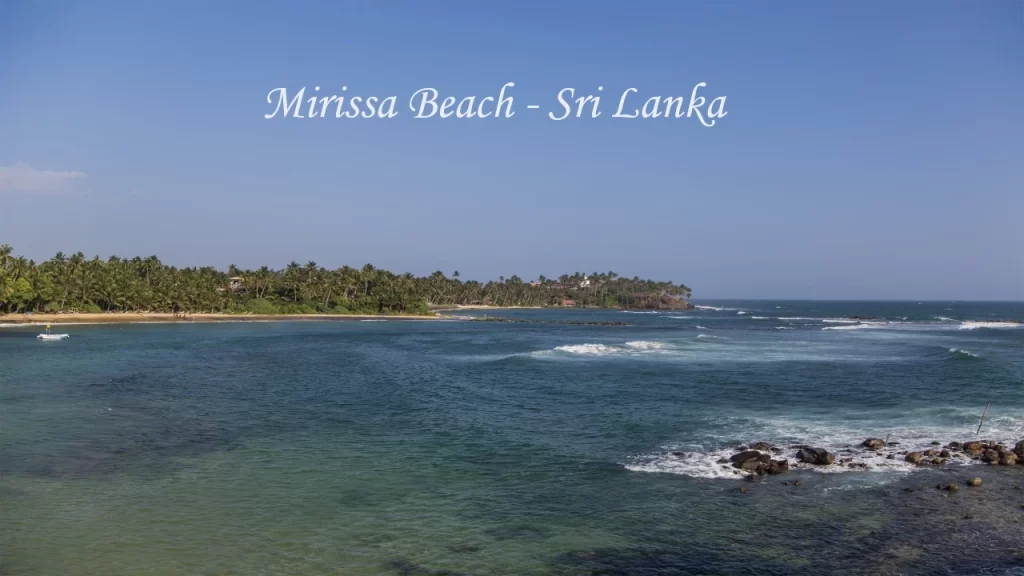
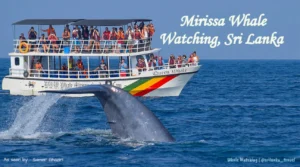
It is 6:15 in the morning let us go for whale watching Mirissa Sri Lanka. The sky over the Indian Ocean is turning pink. Your boat is 10 nautical miles off the coast of Mirissa. Then — a spout. A massive column of mist shoots 9 metres into the air, 200 metres off the starboard side. The captain cuts the engine. Nobody speaks. And then she rises. A blue whale. Thirty metres long. The biggest animal on Earth. She rolls slowly at the surface, takes three long breaths, and dives — her great tail lifting silently above the water before disappearing into the deep. You will remember this moment for the rest of your life.
This is whale watching in Mirissa. And it is one of the most extraordinary wildlife experiences on the planet.
Sri Lanka’s southern coast sits along one of the world’s most important blue whale migration routes. Every year, from November to April, these giants pass close to shore — and Mirissa puts you right in their path. In this guide, we cover everything you need to know. The best months to go. The species you’ll see. How to choose a responsible tour operator. And exactly what to expect on the boat. Read on — and then book your trip.
Book Your Tour Package in Mirissa
Why Is Mirissa One of the World’s Best Whale Watching Spots?
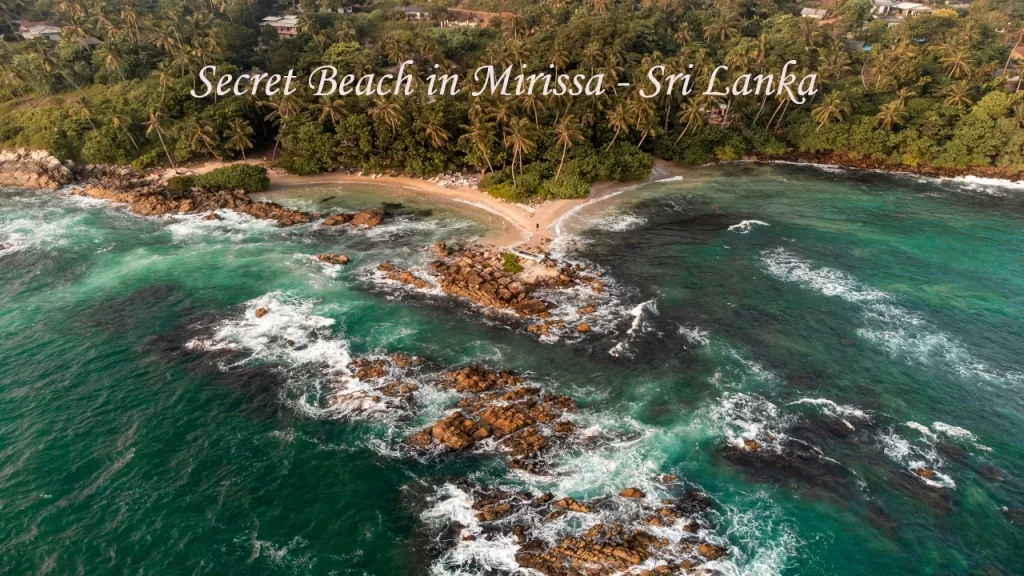
Most whale watching destinations offer a chance of a sighting. Mirissa offers something close to a guarantee. During peak season, reputable operators report sighting rates of 90 to 98 percent. That is remarkable for any wildlife experience. So what makes this small beach town so special?
Sri Lanka Tourism southern coast guide
The answer lies beneath the surface. Just offshore from Mirissa, the Indian Ocean floor drops sharply along the continental shelf. Cold, nutrient-rich water rises from the depths, creating a feeding zone packed with krill and small fish. Blue whales follow this food source on their annual migration between the southern hemisphere and the northern Indian Ocean — and the route takes them right past Sri Lanka’s southern tip.
The geography works in your favour too. Most whale sightings occur just 6 to 12 nautical miles offshore from Mirissa Harbour. That means a short boat ride — not a half-day voyage — before you reach the action. The seas are calm from December to March, making for comfortable trips even for those who worry about seasickness.
Book Your Local Transport
Add warm water, year-round sunshine during season, and a coastline that is genuinely beautiful, and you have the perfect setting for a world-class marine wildlife experience.
Best Season for Whale Watching in Mirissa
Whale watching season in Mirissa runs from November to April. But not every month is equal. Here is what to expect each month:
| Month | Sea Conditions | Sighting Chances | Best For |
|---|---|---|---|
| November | Calm, season opening | Good — 80%+ | Early season, fewer crowds |
| December | Very calm | Excellent — 90%+ | Blue whales, fin whales, dolphins |
| January | Excellent — flat seas | Excellent — 90%+ | Blue whales, orcas, sperm whales |
| February | Best of the season | Peak — 95%+ | Everything. Best month overall |
| March | Still very calm | Peak — 95%+ | Sperm whales, blue whales, dolphins |
| April | Winds picking up | Good — 80%+ | Final weeks before season ends |
| May – October | Rough monsoon seas | Low — not recommended | Go to Trincomalee instead |
💡 Sweet spot: February and March. The seas are at their calmest. Sighting rates are at their peak. And the school holiday crowds of December and January have thinned out. If you can only visit once, aim for February.
If you are visiting Sri Lanka outside Mirissa’s peak season, head to Trincomalee on the east coast. Blue whales in Trincomalee swim close to shore — just 6 to 8 nautical miles from the harbour — and the best viewing months there run from June through September. This creates a near year-round opportunity to see whales somewhere in Sri Lanka.
Marine Conservation and Ethical Wildlife Watching
What Whales and Dolphins Will You See during Whale Watching?
Mirissa’s waters are rich with marine life. Blue whales are the headline act — but they are far from the only species you might encounter. Here is a full guide to what lives in these waters:
🐋 Blue Whale
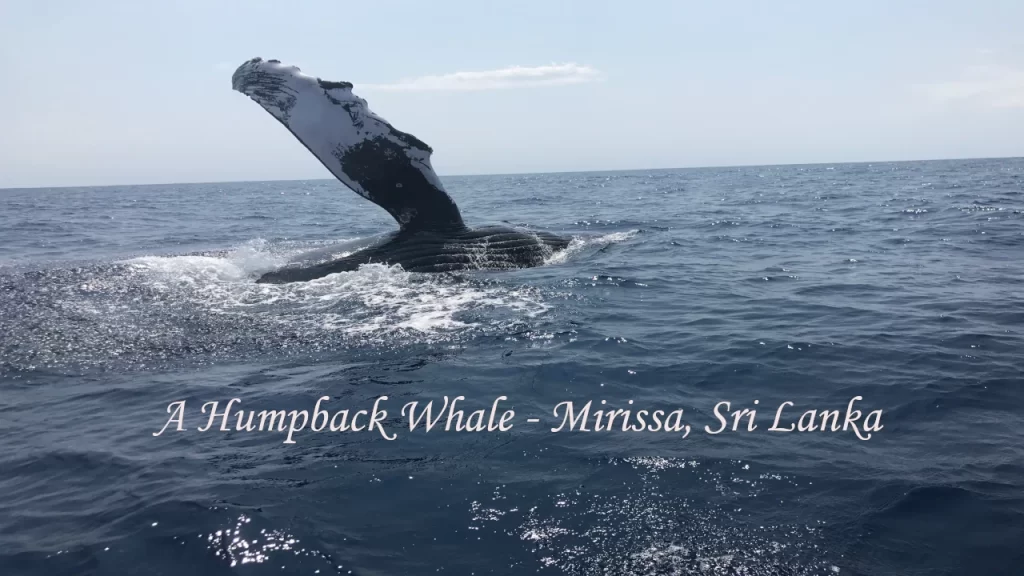
The blue whale is the largest animal ever to have lived on Earth. At 30 metres long and weighing over 200 tonnes, it is far bigger than even the biggest dinosaur. Its tongue weighs as much as an elephant. Its heart is the size of a car. Seeing one in the wild is a genuinely life-changing experience. Blue whales are most commonly seen from December to March. When one surfaces near your boat and exhales, the sound alone is unforgettable.
⚠️ Important note: Blue whale sightings have dropped since 2018, with marine researchers recording fewer sightings in recent years. This makes choosing an ethical operator even more important — irresponsible boat behaviour is a key factor in driving whales away from the area. More on this below.
Book Your Accommodation in Mirissa
🐳 Sperm Whale
Sperm whales are the deep-diving giants of the ocean. Known for their deep diving ability and distinctive square-shaped heads, they can hold their breath for over an hour and dive to depths of more than 1,000 metres. They are most commonly spotted at Mirissa in March. If you are lucky, you will see one raise its tail high before a deep dive — one of the ocean’s most iconic sights.
🐋 Bryde’s Whale
Bryde’s whales are resident in these waters year-round. Sightings of Bryde’s whales have actually increased in recent years, making them one of the most reliable species to spot on a Mirissa tour. They are frequently seen near the surface, often feeding actively. At up to 14 metres long, they are impressive animals — even if they are overshadowed by their blue whale cousins.
🐋 Fin Whale
Fin whales are the second-largest whale species and are sometimes spotted near Mirissa, particularly in December and January. Sleek and fast, they can be harder to follow than blue whales — but a sighting is a real treat.
🐬 Spinner Dolphins
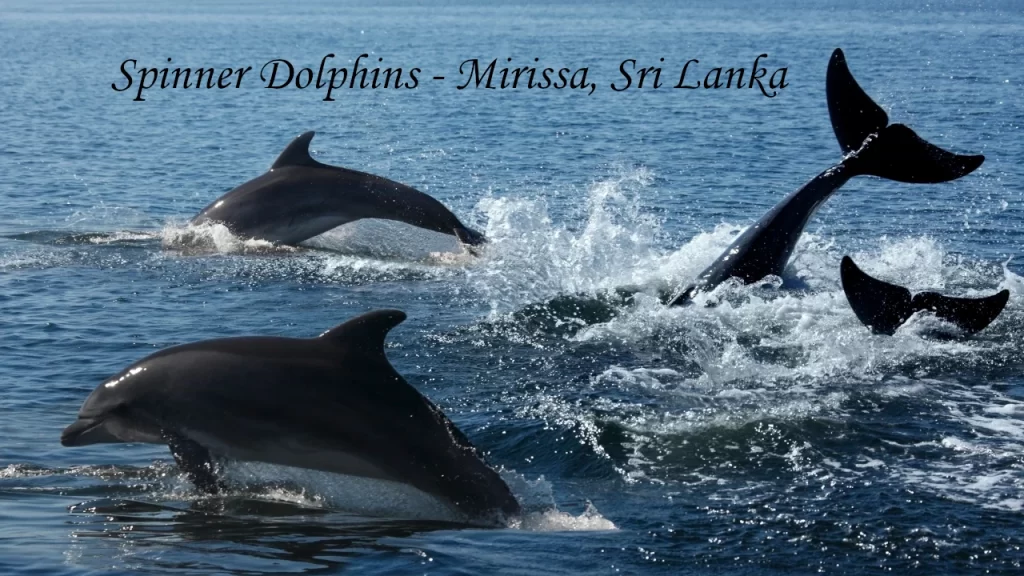
Spinner dolphins are the acrobats of the Indian Ocean. Large pods — sometimes hundreds strong — leap and spin alongside the boat as you head out to sea. Children and adults alike go wild for them. They are one of the most joyful wildlife sights in Sri Lanka and are spotted on almost every tour throughout the season.
🐬 Other Species
- 🦈 Orcas (Killer Whales) — Rare but recorded between December and April. Sightings tend to coincide with blue and sperm whale season, suggesting the orcas may be hunting in the area.
- 🐳 Pilot Whales — Often spotted in pods. They hit the headlines in 2020 when a pod of 120 pilot whales beached on the shore, leading to a major rescue effort.
- 🐢 Sea Turtles — Green and hawksbill turtles are spotted regularly on the journey out to sea.
- 🐬 Bottlenose and Risso’s Dolphins — Both species appear alongside spinner dolphins throughout the season.
How to Choose a Responsible Tour Operator for Whale Watching
This is the most important section in this guide. Read it carefully before you book.
Mirissa has a whale watching problem. Too many boats chasing too few whales. Studies have documented boat approaches that were too fast, too close, and too unpredictable, causing avoidance responses from blue whales. Researchers link this persistent harassment to a shift in the whales’ distribution and an increase in strandings. Some operators run large double-decker boats with over 80 passengers. They race each other to reach whales first. They circle dolphins until the animals change course to escape. This is harmful, unsustainable, and frankly not a great experience for you either.
The good news is that genuinely ethical operators do exist. Here is how to tell the difference:
✅ Signs of a Responsible Operator
- Small group sizes — ideally under 20 passengers per boat
- Follows the International Whaling Commission guidelines — maintains a minimum approach distance of 100 metres from whales
- Does not chase or circle whales and dolphins
- Has a trained marine biologist or naturalist on board
- Provides conservation information during the trip
- Contributes data to marine research organisations
- Has strong, consistent reviews on TripAdvisor and Google specifically mentioning ethical practices
🚩 Red Flags to Avoid
- Very low prices (USD 15–25 per person) — often a sign of large, overcrowded boats
- No mention of guidelines or conservation on their website or booking page
- Boats with 60+ passengers — too large and too noisy for responsible wildlife watching
- Touts on the beach selling tours with no fixed operator name or booking office
- Recent TripAdvisor reviews mentioning boats chasing or circling animals
🏆 Recommended Operators
These two operators are widely recognised as the most ethical and experienced in Mirissa:
- 🐋 Raja & the Whales — The original whale watching operator in Mirissa, the first local company to start whale and dolphin watching more than 14 years ago. They adhere to international whale watching regulations and provide research data to marine conservation organisations.
Raja & the Whales - 🐋 Whale Watching Club Mirissa — Another well-reviewed ethical operator with small group sizes and trained guides. Website: whalewatchingclub.com
Book directly with these operators rather than through a hotel or third-party booking site. You’ll pay a fair price and know exactly whose boat you’re on.
What to Expect on the Day
Here is exactly how a typical whale watching day in Mirissa unfolds — so you know what to expect and how to make the most of it.
⏰ The Night Before
Set your alarm for 5:30 AM. Yes, really. Early morning departures around 6:00 AM give the calmest seas and the best visibility. The ocean is always smoother at dawn. By 10 AM, winds pick up and swells increase. Every extra hour of morning calm is worth getting up for.
🌅 Arrival at the Harbour (6:00 AM)
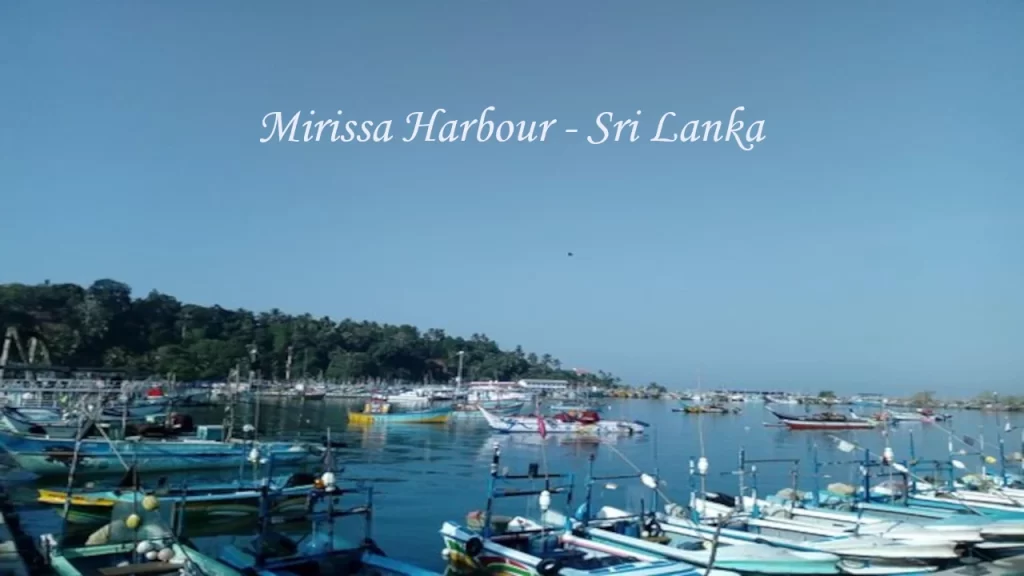
Walk down to Mirissa Harbour as the sky lightens. Fishing boats are returning from their night at sea. Your operator meets you at the dock with a cup of tea and a light breakfast — most ethical operators include this. Do a quick headcount, get a safety briefing, and board the boat.
🚢 The Journey Out (6:30 – 7:30 AM)
The boat heads south into the Indian Ocean. Within 20 to 30 minutes, spinner dolphins often appear alongside the bow, leaping and spinning in the wake. Your guide scans the horizon. The captain communicates by radio with other ethical operators, sharing whale positions without racing to reach them first. This is what responsible whale watching looks like.
🐋 The Sighting
When a whale is spotted, the captain reduces speed and approaches slowly from the side — never from directly ahead or behind. The engine is cut when you are within the safe distance. Everyone moves quietly to the railing. The whale surfaces again. And again. A responsible operator lets the whale set the pace. You wait. You watch. You do not chase.
Blue whales typically take three to five breaths at the surface before a long dive. Each surface sequence lasts about 8 to 12 minutes. You may see two or three whales during a single outing. Some tours encounter far more.
🏠 Return to Harbour (10:00 – 11:00 AM)
Most tours last 3.5 to 4 hours total. You are back at the harbour by mid-morning — leaving your whole afternoon free for the beach, Galle Fort, or just a long breakfast with the ocean views.
Book Ticket in Public Transport
Top Tips for First-Time Whale Watchers
- Take seasickness tablets the night before — Not the morning of. Tablets like Dramamine or Stugeron need time to work. Even on calm days, the open ocean has a slow swell that surprises people.
- Wear layers. It is warm on land but cool and breezy on the water at 6 AM. Bring a light jacket. You can take it off when the sun rises.
- Bring a zoom lens or binoculars. Whales surface at varying distances. A 200mm+ lens on a camera, or a good pair of binoculars, transforms your experience.
- Stand near the front of the boat. The bow gives the best view and the most dramatic vantage point when the captain cuts the engine near a whale.
- Watch the water — not your phone screen. You will see more with your own eyes than through a camera. Take a few shots, then put the phone down and just be present.
- Be patient. The ocean is wild. Some tours find whales within 30 minutes. Others take 90 minutes of searching. Trust your captain and enjoy the journey.
- Book at least 2 to 3 days ahead in peak season. Good ethical operators have limited seats and fill up fast in January to March.
- Go on a weekday. Weekend tours in December and January can be busy. A Tuesday or Wednesday morning will always feel more peaceful on the water.
Cost of Whale Watching in Mirissa
| Tour Type | Price Per Person | Group Size | Verdict |
|---|---|---|---|
| Budget / Large Boat | USD 15 – 30 | 60 – 100+ people | 🔴 Avoid — overcrowded and unethical |
| Standard Tour | USD 40 – 60 | 20 – 40 people | 🟡 Acceptable — check reviews first |
| Ethical Small Group | USD 60 – 80 | Under 20 people | 🟢 Recommended — worth every rupee |
| Private Charter | USD 300 – 500 (whole boat) | Your group only | 🟢 Best experience possible |
💡 Value tip: The difference between a USD 25 budget tour and a USD 65 ethical tour is not just about conservation — it is also about your experience. Smaller boats get closer to the action without the chaos. Quieter boats see more. It is genuinely worth paying more here.
Combine Whale Watching with Nearby Attractions
Mirissa is a brilliant base for exploring Sri Lanka’s beautiful southern coast. You are back from whale watching by 11 AM every day — leaving plenty of time for these nearby highlights:
- 🏰 Galle Fort (45 mins) — A UNESCO-listed Dutch colonial fort with cobblestone streets, boutique hotels, and world-class restaurants. A half-day here is never enough.
- 🏄 Weligama Beach (20 mins) — Sri Lanka’s best beach for beginner surfing. Rent a board, take a lesson, and spend the afternoon in the waves.
- 🐢 Kosgoda Sea Turtle Hatchery (1 hour) — Visit the hatchery where baby turtles are raised before being released into the ocean. A great family activity.
- 🌊 Unawatuna Beach (40 mins) — A crescent-shaped bay with calm water, coral reefs, and great snorkelling. One of Sri Lanka’s most beautiful beaches.
- 🐘 Udawalawe National Park (2 hours) — Sri Lanka’s best elephant safari, with almost guaranteed herds of wild elephants. A perfect contrast to a morning at sea.
- 🍹 Mirissa Beach itself — Spend your afternoon on one of the south coast’s finest beaches. Watch the sunset from the famous Parrot Rock at the western end of the bay.
How to Get to Mirissa from Colombo
By Train (Most Scenic)
Take the train from Colombo Fort to Matara — about 2.5 to 3 hours. The coastal train ride is beautiful, running along the beach for much of the journey. From Matara station, take a tuk-tuk to Mirissa (around 20 minutes, LKR 300–400).
By Car or Taxi
Take the Southern Expressway from Colombo. The total distance is around 150 km — about 2 to 2.5 hours by car. A private taxi costs around USD 25 to 40 one way.
By Bus
Buses run from Colombo Bastian Mawatha bus station to Matara regularly. Cheap but slow — allow 3 to 4 hours. From Matara, catch a local bus or tuk-tuk to Mirissa.
Frequently Asked Questions About Whale Watching in Mirissa
1. What is the best month to go whale watching in Mirissa?
February and March are the very best months. The sea is at its calmest. Sighting rates are at their peak — above 95 percent with good operators. Blue whales, sperm whales, and spinner dolphins are all active. Crowds are also slightly lower than in December and January. If you can only go once, aim for late February or early March.
2. Is whale watching in Mirissa ethical?
It can be — but it depends entirely on which operator you choose. Irresponsible operators chase whales too closely and use large, noisy boats that disturb the animals. This has been linked to declining blue whale sightings near Mirissa in recent years. Ethical operators like Raja & the Whales and Whale Watching Club Mirissa follow International Whaling Commission guidelines, use small boats, maintain safe distances, and contribute to marine research. Always book with a responsible operator. The extra cost is worth it — for you and for the whales.
3. How long does a whale watching tour take?
Most tours last 3.5 to 4 hours. Boats depart from Mirissa Harbour between 6:00 and 7:00 AM and return by 10:00 to 11:00 AM. This leaves your whole afternoon free. Some operators offer longer full-day trips, but the standard half-day morning tour is the most popular — and the calmest seas are always in the early morning anyway.
4. What should I do if I get seasick?
Take seasickness medication the night before your tour — not the morning of. Tablets like Dramamine or Stugeron need 6 to 8 hours to be fully effective. On the boat, sit in the middle of the vessel where movement is least and keep your eyes on the horizon — never look down at your phone or a map. Ginger sweets can also help. During peak season from December to March, seas are calm and seasickness is less common. April tours can be rougher as the monsoon approaches.
5. Are there guaranteed whale sightings?
No wildlife experience can offer a 100 percent guarantee — nature does not work like that. However, reputable Mirissa operators report sighting rates of 90 to 98 percent during peak season from December to March. Many ethical operators offer a free return trip or partial refund if no whales are spotted. This reflects genuine confidence in the sighting rates — and is another reason to choose a reputable operator over a cheap one.
6. Can I see whales in Mirissa with young children?
Yes — whale watching in Mirissa is a fantastic experience for families with children aged 6 and above. The spinner dolphins alone make children absolutely wild with excitement, and seeing a blue whale surface is the kind of memory that stays with a child forever. Choose a small-group operator with a stable boat and toilet facilities on board. Bring seasickness tablets for kids just in case — children can be surprisingly susceptible on the open water. Make sure everyone wears sunscreen and a hat from the moment you board.
Quick Reference: Mirissa Whale Watching at a Glance
| Detail | Info |
|---|---|
| Season | November – April (peak: February – March) |
| Tour Duration | 3.5 to 4 hours |
| Departure Time | 6:00 – 7:00 AM from Mirissa Harbour |
| Distance Offshore | 6 to 12 nautical miles |
| Price (ethical operator) | USD 60 – 80 per person |
| Sighting Rate (peak season) | 90 – 98% |
| Top Species | Blue whale, sperm whale, Bryde’s whale, spinner dolphin |
| Nearest City | Galle (45 mins), Colombo (2.5 hrs) |
| Recommended Operators | Raja & the Whales, Whale Watching Club Mirissa |
There is a moment on every great whale watching tour when everything goes quiet. The engine stops. The ocean is still. And something enormous rises from the deep. No screen, no documentary, no photograph prepares you for it. You have to be there. Book your Mirissa whale watching experience — and make it one you will never forget.
——————————————————————————————————————-
“Some operator recommendations in this post may be based on referral arrangements. We only recommend operators we believe deliver a quality, ethical experience. See our Affiliate Disclosure Policy for full details.”
——————————————————————————————————————-
Planning your Sri Lanka trip? Explore all our Sri Lanka travel guides at rydetravel.com — from whale watching on the southern coast to elephant safaris in the Cultural Triangle and hiking through the tea highlands.
Visit our related Articles on Sri Lanka
6 Stunning Hill Stations in Sri Lanka — A Chennai Family’s Honest Travel Diary
Ultimate 2025 Guide to Royal Botanical Gardens, Peradeniya
Whale Watching in Sri Lanka (2026 Guide) – Best Time, Cost & Tours
Best Water Sports in Bentota 2026 – Jet Ski, Paragliding & River Tours