This guide contains affiliate links. We may earn a commission at no extra cost to you — see our Affiliate Disclosure and Affiliate Disclosure Policy for details.
Quick answer: Jozani Forest (officially Jozani Chwaka Bay National Park) is Zanzibar’s only national park, about 35 km south-east of Stone Town, and the best place to see the rare Red Colobus Monkeys found only in Zanzibar. The easiest way to visit is on a guided Jozani Forest National Park tour that adds the Chwaka Bay mangrove boardwalk and hotel transfers. Swahili Bliss runs this tour on request, with listed prices of $40–$90. Visit between June and October for the driest, most comfortable walking.
Zanzibar is famous for white sand and turquoise water, but the island has a wilder side that most beach visitors miss. In the south-east, a lush groundwater forest meets a mangrove-fringed bay. Troops of rare monkeys leap through the canopy here, and a wooden boardwalk winds through the mangroves. This Jozani Forest Zanzibar travel guide comes from the local team at Swahili Bliss. It covers what to expect, how to plan the day, and how to visit Jozani Forest Zanzibar without stress.
Table of Contents

Why Visit Jozani Forest and Chwaka Bay?
Jozani Chwaka Bay protects roughly 50 square kilometres of ancient forest, coastal mangroves and salt marsh. It is the only national park on the island, and a gentle contrast to a beach day. It is easy to reach, easy to walk, and rewarding for families, couples, solo travellers and photographers. For anyone looking for Zanzibar wildlife and nature experiences, this is the island’s best half-day. Visit our Photo Gallery
Top Things to Do in Jozani Forest Zanzibar
These are the highlights our guides build the day around. They are also the main things to do in Jozani Forest Zanzibar.
1. Red Colobus Monkey Encounter

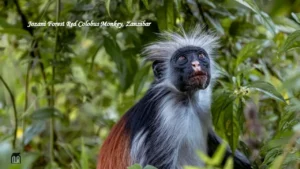
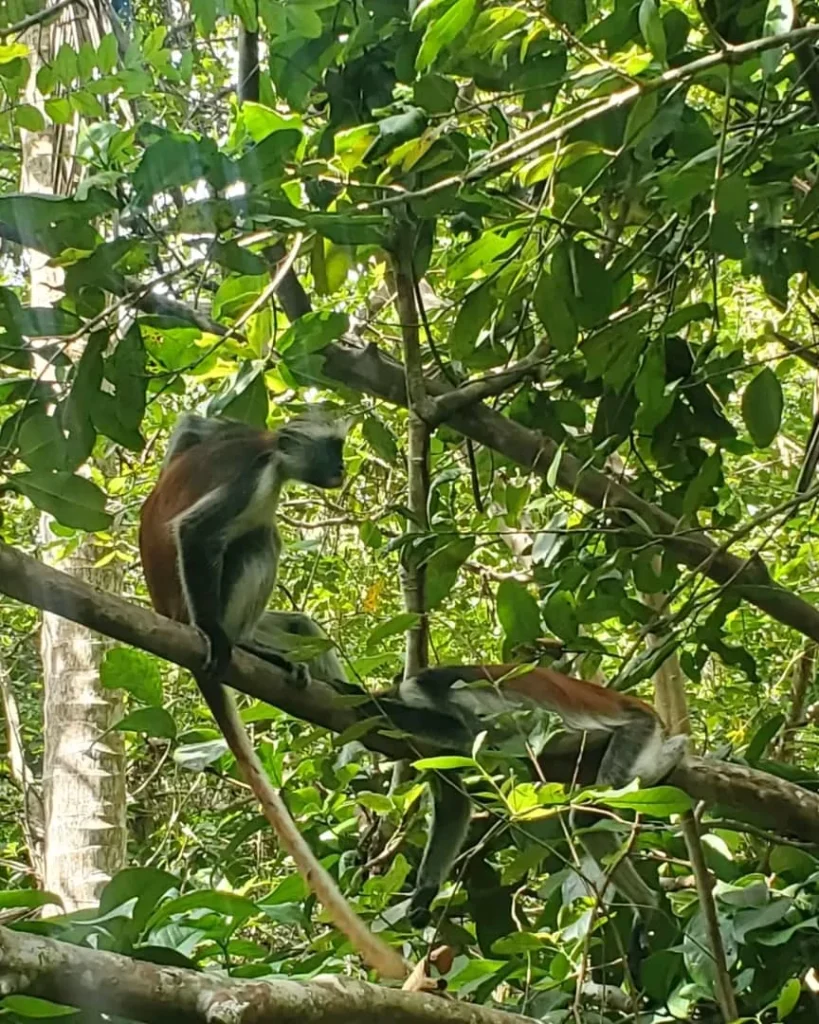
Your guided walk starts in the forest, home to the Red Colobus Monkeys Zanzibar is known for. They live nowhere else on Earth in the wild. Troops feed on young leaves, move quickly through the canopy, and often come down close to the trail, so you can watch them calmly and take good photos. Your guide explains their behaviour, why they are endangered, and how the park and nearby communities protect them. Sightings are never guaranteed because these are wild animals, but the troops in Jozani are used to people and sightings are very common.
2. Jozani Forest Nature Walk
The Jozani Forest walking trail is short, shaded and gentle. Expect tall tropical trees, damp earth, bird calls and the scent of leaf litter. Beyond the monkeys, you may spot Sykes’ monkeys, butterflies, small reptiles and, with luck, bushbabies’ habitat. Our guides point out medicinal plants and explain how the forest works as an ecosystem. This is the educational heart of the tour.

3. Chwaka Bay Mangrove Boardwalk
Next we continue to Chwaka Bay for the Jozani Forest mangrove boardwalk. A raised wooden path takes you through the mangrove forest without wet feet. It is quiet and cool, with fiddler crabs, bird life and tangled roots below you.
Why mangroves matter: Mangrove roots are nurseries for young fish, crabs and shellfish, so they support the marine life local fishers depend on. The same roots hold the shoreline together, soften wave energy and reduce erosion during storms. They also store large amounts of carbon. Walking through them is the easiest way to understand how coast, sea and community are linked.
4. Birdwatching and Wildlife Observation
Jozani is recognised by BirdLife International as an Important Bird Area, so bring binoculars if you have them. Early morning is the best time for both birds and monkeys.
5. Nature Photography
Photographers love this tour. The best subjects are the Red Colobus Monkeys, the forest canopy, the mangrove roots and the wide landscapes of the bay. A few tips from our guides:
- Shoot in soft morning light. It is gentler on the monkeys’ red-and-black fur and cooler for you.
- Bring a zoom lens (200 mm or longer) so you can photograph the monkeys without crowding them.
- Keep a steady, low-angle stance for mangrove roots and reflections.
- Never use flash on wildlife. Keep your distance and follow your guide’s instructions.
6. Guided Learning and Conservation Insight
A professional guide turns a pleasant walk into a real lesson in Zanzibar’s biodiversity. You learn how the forest formed, why the colobus population is fragile, how mangroves protect the coast, and how tourism income supports conservation and nearby villages. You also get a window into local culture and community traditions along the way.
7. Comfortable Return Transfer
Our tour includes a return transfer to your hotel, so there is no haggling over taxis and no waiting for dala-dalas. You walk, learn and relax while we handle the driving.
One-Day Jozani Forest and Chwaka Bay Itinerary
The Swahili Bliss Jozani Forest + Chwaka Bay Tour can start any day. This is how the day typically flows. Exact times depend on your hotel location and pickup, which we confirm when you book.
- Hotel pickup (morning): Your driver collects you at your hotel. Early departures give you the best light and the most active monkeys.
- Arrive at Jozani Chwaka Bay National Park: Meet your guide, collect park permits and get a short orientation.
- Red Colobus Monkey walk: Follow the forest trail to find the troops, learn about their behaviour and conservation, and take photos.
- Forest nature walk: Continue through the tropical trees to look for birds, butterflies and medicinal plants.
- Chwaka Bay mangrove boardwalk: Walk the raised path through the mangroves and learn how they protect marine life and the coast.
- Photo time and scenic stops: Take your time with the landscapes and mangrove roots.
- Return transfer: Relax on the drive back to your hotel with a full camera roll.
Want a longer day? Swahili Bliss also offers a Jozani + Kuza Cave + The Rock Restaurant combination tour.
Best Time to Visit Jozani Forest and Chwaka Bay
The park can be visited all year, but the dry season from June to October is the most comfortable, with firmer trails and cooler air. Some sources also list December to February as a good window. Visit in the morning for the best monkey activity and photography light. The long rains (peaking around April) make trails muddy and slippery. The park is generally open daily from about 7:30 am to 5:00 pm.
Tour Prices and Booking Information
The Swahili Bliss tour page lists the Jozani Forest + Chwaka Bay Tour at $40 – $90, with itineraries customised to your group. We confirm the exact price when you enquire. Park entrance fees are commonly quoted at around $10 per person (some sources say TZS 25,000), so ask us what is included and confirm current rates with the park.
| Tour | Jozani Forest + Chwaka Bay Tour |
| Price range (listed) | $40 – $90 |
| Area covered | South-East Zanzibar |
| Start dates | Any day |
| Highlights | Red Colobus Monkeys, forest walk, mangrove boardwalk, photography, hotel transfer |
About the Tour Operator: Swahili Bliss
Swahili Bliss is a local tour operator based in Pwani Mchangani, Zanzibar, organising travel across Zanzibar and mainland Tanzania.
- Tour operator: Swahili Bliss
- Address: Pwani Mchangani, Zanzibar, Tanzania
- Phone / WhatsApp: +255 717 474 412
- Email: info@swahilibliss.com
- Website: swahilibliss.com
- Google Maps pin: View location on Google Maps
- Tour page: Jozani Forest + Chwaka Bay Tour
Where to Stay Near Jozani Forest
There is no lodging inside the park. The nearest beach town is Paje on the south-east coast, roughly 12 miles from the forest, which makes it a good base. Two options:
- Amani Hotel Paje: a few steps from Paje Beach, with a 24-hour front desk, airport transport, room service and free Wi-Fi.
- Villa Huruma: an adults-only stay in Paje with a pool and restaurant, rated highly by guests.
Rates change by season, so check current prices before you book. Swahili Bliss can arrange pickup from most south-east coast hotels.
Food and Dining Near Jozani Forest and Chwaka Bay – Booking Reataurant
Eat before or after your walk, because there is little to buy inside the park. Paje has plenty of beachfront cafés and grills, including Shanga Paje and Corner Café and BBQ. Expect fresh seafood, grilled fish, Swahili curries with coconut and spices, chapati, and fresh tropical juice. For a memorable meal, The Rock Restaurant Experience is a Swahili Bliss day trip you can pair with Jozani. Bring water, cash for tips and small purchases, and ask about vegetarian or dietary needs when you book.
Best Places to Visit Near Jozani Forest and Chwaka Bay
- Paje Beach: white sand, shallow turquoise water and a lively kitesurfing scene.
- Jambiani and Bwejuu: quieter fishing-village beaches along the same coast.
- Kuza Cave: a cool, natural cave with swimming. See the Kuza Cave Experience.
- The Rock Restaurant: an ocean-view dining spot, also offered by Swahili Bliss.
- Zanzibar Butterfly Centre: a small eco-project close to the forest.
- Stone Town: about 35 km away. See the Stone Town Tour.
Official Resources
- Tanzania Tourist Board: Jozani Chwaka Bay National Park
- Zanzibar Investment Promotion Authority: Tourism Attractions
- BirdLife International: Jozani Forest Important Bird Area
- Lonely Planet: Jozani Forest
Frequently Asked Questions
1. What is Jozani Forest known for?
Jozani Forest is Zanzibar’s only national park and the home of the endemic Red Colobus Monkeys. It also protects groundwater forest and mangroves.
2. How do I visit Jozani Forest Zanzibar?
The easiest way is a guided tour with hotel pickup, such as the Swahili Bliss Jozani Forest + Chwaka Bay Tour. You can also go by taxi or dala-dala, but a guided tour handles permits and transport.
3. How much does a Jozani Forest tour cost?
Swahili Bliss lists the tour at $40 – $90. Contact the team for an exact quote for your group and hotel.
4. How long does the tour take?
Most people plan a half day. The park walk itself usually takes one to two hours, plus the mangrove boardwalk and transfers.
5. What is the best time to visit Jozani Forest?
June to October is the best dry-season window, and mornings are best for monkeys and photography.
6. Will I definitely see the Red Colobus Monkeys?
They are wild animals, so sightings can’t be guaranteed, but they are seen on most visits.
7. What should I wear and bring?
Wear light, closed shoes, breathable clothing, sun protection and insect repellent. Bring water, a camera with a zoom lens, and some cash for tips.
8. Is the mangrove boardwalk suitable for families?
Yes. The boardwalk and forest trails are short and gentle, which suits most families and older children. Ask us if you have mobility concerns.
Plan Your Jozani Forest Adventure
From the Red Colobus Monkeys to the quiet mangroves of Chwaka Bay, this is Zanzibar at its most natural. Come for the wildlife, stay for the conservation story, and leave with photos you will keep for years. Ready to go? Contact the Swahili Bliss team at info@swahilibliss.com or +255 717 474 412, or visit their tour page to book. Then explore more destination guides on RydeTravel.com and start planning your Zanzibar island trip today.
Explore More Travel Guides on RydeTravel.com
Amazing Salaam Cave Zanzibar: Magical Turtle Swim 2027
Mnemba Snorkeling, Dolphin Tours Zanzibar 2027: Best Escape
Ultimate Luxury Safari in Kenya: Complete 2026 Guide
Disclaimer
Jozani Forest and Chwaka Bay 2027: Discover Wild Beauty
Accuracy of Information
All information in this article, including contact details, website links, tour locations, and booking details, was verified through our direct contact with Swahili Bliss on 15 November 2026. While we have taken care to ensure accuracy as of that date, details such as prices, schedules, operating hours, entrance fees, locations, and contact information may change without notice. Please confirm all details directly with the operator before booking or travelling.
No Guarantee of Wildlife Sightings
Wildlife encounters, including sightings of the Zanzibar red colobus monkeys, depend on weather, season, time of day, and natural animal behaviour. These are wild animals, and we cannot guarantee that any sighting or activity will take place as described. Descriptions reflect information available at the time of writing and may differ from your own experience.
Safety and Personal Responsibility
Forest walks, mangrove boardwalk visits, and boat trips on Chwaka Bay carry inherent risks, including uneven terrain, slippery surfaces, insects, heat, humidity, and changing tides. Participation is at your own risk. Readers should assess their own health and fitness, wear suitable footwear and sun protection, follow guide and operator instructions, and consider appropriate travel insurance and recommended vaccinations or malaria precautions.
Respect for Wildlife and Nature
Please keep a safe distance from the monkeys and other animals, and do not touch, chase, or feed them. Stay on marked paths, avoid littering, and follow all park rules to help protect the forest and mangrove ecosystems.
Conservation Area Rules
Jozani Chwaka Bay National Park is a protected area, and access rules, fees, and regulations may change. Please follow all guidance from your operator, park rangers, and local authorities.
Third-Party Links and Services
This blog may link to third-party websites, including swahilibliss.com. We do not own or control these sites and are not responsible for their content, policies, services, or practices. Inclusion of a link does not imply endorsement beyond the verification described above.
Not Professional Advice
This content is for general informational purposes only and is not professional travel, medical, or legal advice. For official requirements such as visas, health guidelines, and local regulations, consult the relevant authorities.
Limitation of Liability
To the fullest extent permitted by law, the author and publisher accept no liability for any loss, injury, damage, or inconvenience arising from the use of, or reliance on, the information in this article.
Last verified: 15 November 2026

Leave a Reply