This guide contains affiliate links. We may earn a commission at no extra cost to you — see our Affiliate Disclosure and Affiliate Disclosure Policy for details.
Can business groups or companies organize activities at Valley of Fire State Park?
Standard sightseeing is fine for any group, but organized group activities, corporate outings involving special arrangements, or commercial photography and filming require a group-use or commercial permit from Nevada State Parks, arranged in advance.
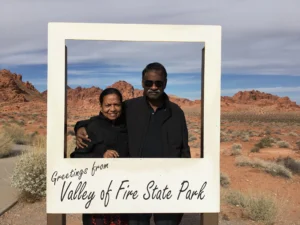
Valley of Fire State Park sits in the Mojave Desert in Clark County, Nevada, roughly 50 miles (about an hour’s drive) northeast of Las Vegas. It’s famous for its red Aztec sandstone formations, formations that appear to glow orange and crimson at sunrise and sunset, along with ancient petroglyphs and petrified wood scattered across nearly 46,000 acres. As Nevada’s oldest and largest state park, it’s a practical, low-cost day trip for anyone based in Las Vegas — but the desert setting means planning around water, heat, and seasonal trail closures matters more here than at most tourist stops. A rental car gives the most flexibility, though guided tours and, with some limitations, rideshare services also reach the park.
Table of Contents
What Is Valley of Fire State Park?
Valley of Fire State Park in Nevada covers nearly 46,000 acres of Mojave Desert. It is famous for its red and orange Aztec sandstone formations, which were formed about 150 million years ago.The rocks appear to glow like fire when sunlight hits them, giving the park its name. Located about an hour northeast of Las Vegas, it is a popular destination for hiking, photography, scenic drives, and sightseeing.Most visitors spend 3–6 hours exploring the park, while hikers and photographers may prefer to spend a full day.
History of Valley of Fire State Park
Valley of Fire’s famous sandstone formed about 150 million years ago from ancient sand dunes. Wind and water later shaped the rocks into arches, domes, and colorful ridges.The area was also important to Native American communities. Ancient petroglyphs, some more than 2,000 years old, can be seen at places like Atlatl Rock and Mouse’s Tank.Valley of Fire became Nevada’s first state park in 1935. In 1968, it was designated a National Natural Landmark.Today, the park protects its petroglyphs, petrified wood, rock formations, and fragile desert environment.
Best Places to Visit in Valley of Fire State Park
Elephant Rock Area and Valley of Fire Welcome Sign
Elephant Rock is one of the most photographed formations in the park, and for good reason — a natural arch of red sandstone that, from the right angle, genuinely resembles an elephant’s head and trunk. It sits close to the east entrance, just off the main road, with a small parking pullout and a short, easy walk of a few minutes over uneven but manageable terrain to reach a good viewing spot.
Valley of Fire State Park Visitor Center Area
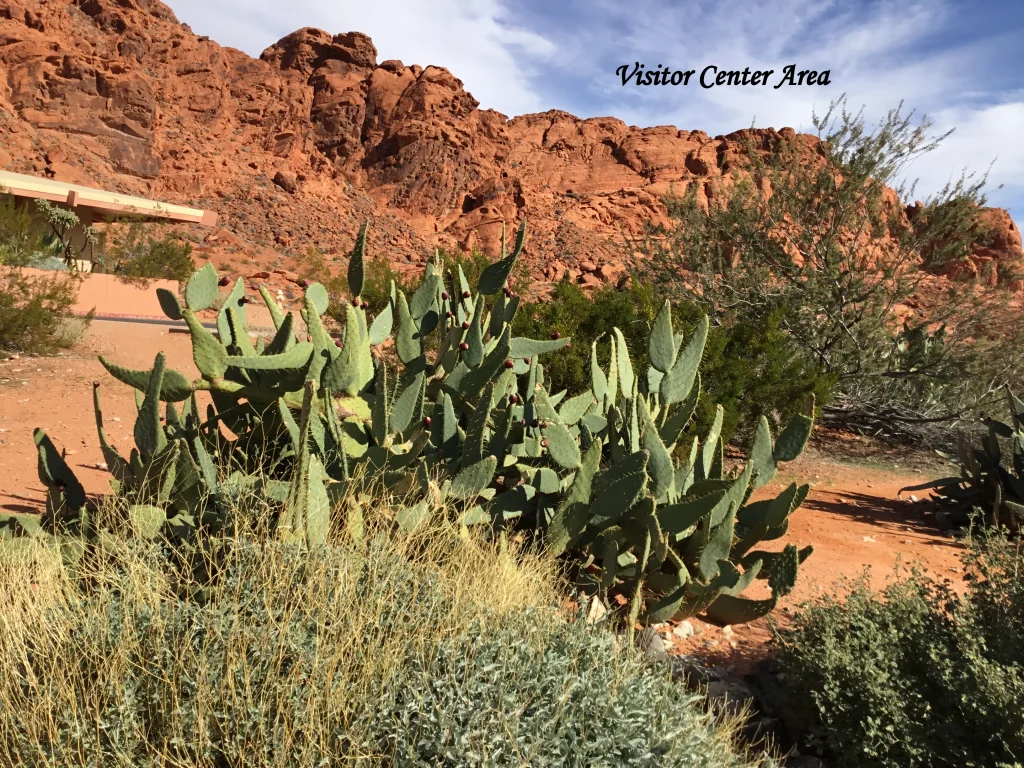
The Visitor Center sits where the park’s two main roads meet. It’s worth a stop even on a tight schedule.Inside are exhibits on geology, ecology, and history. Rangers can give current trail conditions and maps.There’s a small gift shop and restrooms on-site. This is the best place to get oriented before heading out.Hours can shift seasonally, so check the official Nevada State Parks site before you go.Fire Wave / Seven Wonders Area
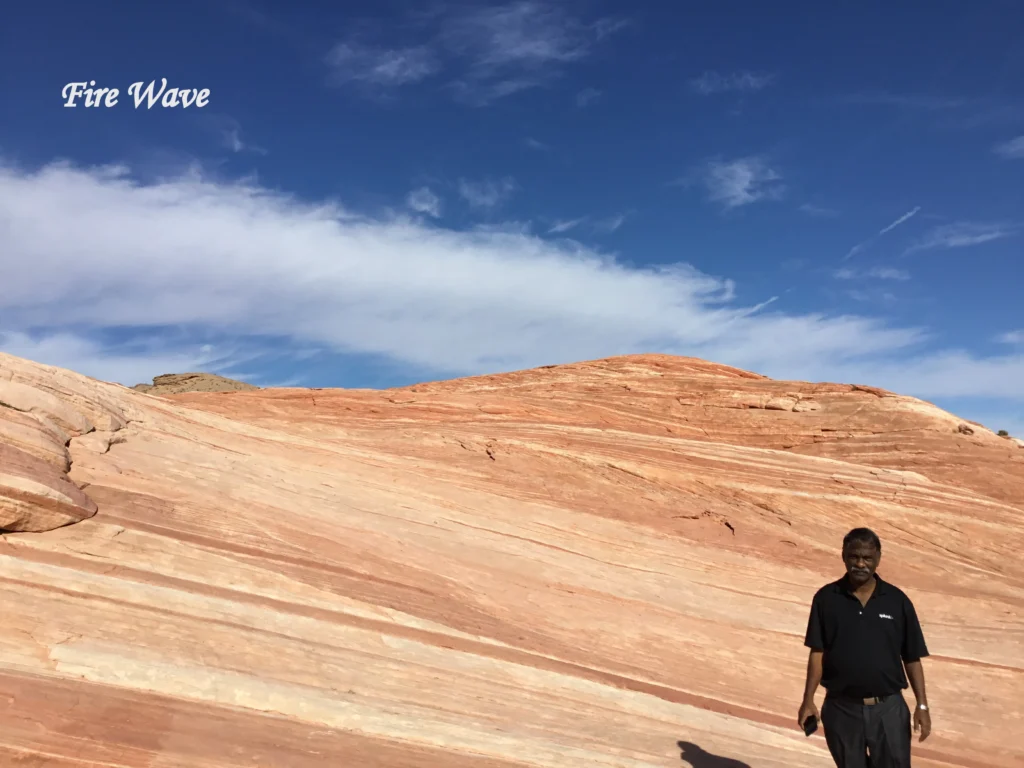
The Fire Wave is the park’s single most photographed formation. It’s a swirled, striped mound of red and white sandstone.It anchors the Seven Wonders Loop, a set of colorful formations near the same trailhead off Mouse’s Tank Road.
Important note: this trail closes from mid-May through October 1 each year. The closure is due to extreme heat and past search-and-rescue incidents.As of this writing (September), the closure is active. Always check the official alerts page before planning a summer or early-fall hike here.
Crazy Hill — Valley of Fire State Park
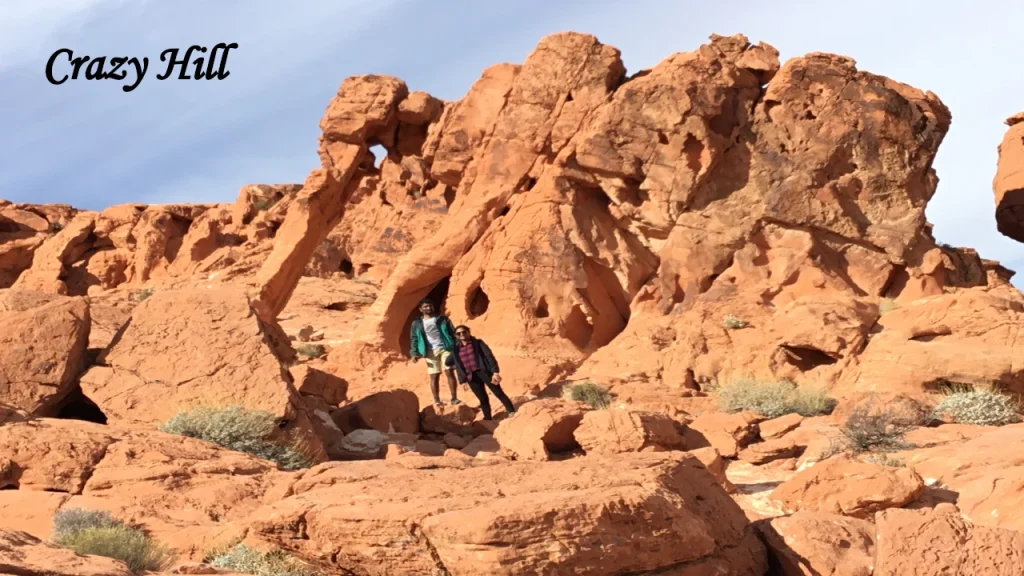
Crazy Hill (also called Rainbow Rock) is a striped, multicolored dome near the Fire Wave. It isn’t an official, maintained trail.Reaching it means an off-trail scramble from the Fire Wave parking area. Hikers typically use landmarks or GPS rather than signs.It suits only experienced, off-trail hikers. It’s not a fit for kids, wheelchairs, or strollers.It falls in the same zone affected by seasonal closures, so check conditions first. Footing can be loose near drop-offs.Fire Canyon — Valley of Fire State Park
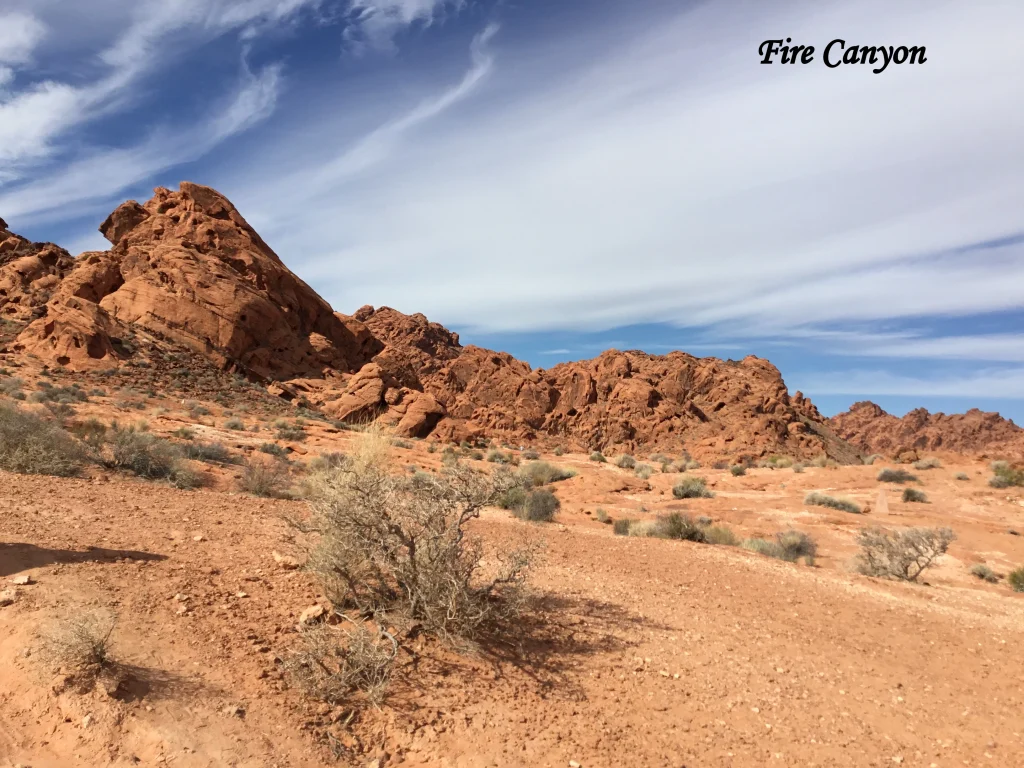
Fire Canyon is known for dramatic, deeply colored sandstone walls and a landscape that feels more remote than the busier roadside stops. It’s reachable via a spur off Mouse’s Tank Road, with a designated overlook area that gives sweeping views without requiring a strenuous hike.The overlook itself is accessible with minimal walking from the parking area, making it a good option for visitors who want a big payoff without a long trek. As with everywhere else in the park, stick to marked pullouts and designated parking — the surrounding terrain is fragile and off-road driving is not permitted.
Other Attractions Worth Visiting
- Atlatl Rock – A staircase climbs partway up this rock face to a close-up view of some of the park’s best-preserved petroglyphs.
- Arch Rock – A natural sandstone arch visible right along one of the park’s scenic loop roads.
- The Beehives – Rounded, swirl-patterned sandstone formations that resemble giant beehives, easily seen from the roadside.
- Seven Sisters – A cluster of tall, narrow rock formations near the park road, popular for quick photo stops.
- Mouse’s Tank – A short, mostly flat trail through Petroglyph Canyon leading to a natural rock basin that collects rainwater; petroglyphs line the canyon walls along the way.
- White Domes – A scenic loop trail passing pale sandstone domes, a narrow slot canyon, and the remains of an old film set.
- Petrified Logs – Sections of ancient fossilized wood visible along a short interpretive trail.
- Historic Cabins – Stone cabins built in the 1930s to shelter early travelers, now preserved as a historic stop.
- Balanced/Balancing Rock – A boulder perched precariously atop a narrow sandstone pedestal near the Visitor Center.
- Scenic drives – The main park road and White Domes Road together offer some of the best drive-by scenery in the park, with numerous pullouts for photos.
Book Your Tour Package in Valley of Fire State Park
3-Day Valley of Fire State Park Itinerary
Most visitors see Valley of Fire in a single day, but spreading a visit across three days allows time to slow down, avoid the midday heat, and combine the park with nearby Lake Mead or a Las Vegas stay. This itinerary treats Las Vegas as your home base each night.
Day 1 – Main Scenic Attractions
Leave Las Vegas early to beat both the heat and the traffic. Stop first at the Visitor Center for maps and current trail conditions, then head to Elephant Rock and the welcome sign for photos. Continue along the scenic drive to see the Seven Sisters and the Beehives. Time your final stop for sunset at one of the elevated overlooks along the main road, when the sandstone glows brightest, then drive back to Las Vegas for the night.
Day 2 – Hiking and Geological Wonders
If the Fire Wave and Seven Wonders Loop are open (roughly October through mid-May), start here early in the morning when temperatures are coolest. Follow with a stop at the Fire Canyon overlook, and if conditions and your hiking experience allow, budget extra time for the off-trail detour to Crazy Hill. Build in rest breaks in shade where available, and carry at least one liter of water per person per two hours of activity. If the seasonal closures are in effect, substitute Mouse’s Tank and Rainbow Vista, both of which typically remain open year-round.
Day 3 – History, Family Attractions and Nearby Experiences
Spend the morning at Atlatl Rock viewing petroglyphs, then walk the easy Petroglyph Canyon Trail to Mouse’s Tank. Visit the Petrified Logs area and the historic cabins for a relaxed, low-effort finish. From here, you can either head back to Las Vegas or continue on to nearby Lake Mead National Recreation Area or the small town of Overton for lunch before returning.
Adjust this order based on current weather, active fire restrictions, road conditions, and your own hiking ability — and always check official park alerts before finalizing your plan, since trail access and conditions can change with little notice.
| Day | Morning | Afternoon | Evening |
| Day 1 | Visitor Center, Elephant Rock, Welcome Sign | Seven Sisters, Beehives, scenic drive | Sunset photography, return to Las Vegas |
| Day 2 | Fire Wave / Seven Wonders (if open) | Fire Canyon, Crazy Hill (experienced hikers) | Rest, hydration, return to Las Vegas |
| Day 3 | Atlatl Rock petroglyphs | Mouse’s Tank, Petrified Logs, historic cabins | Onward to Lake Mead/Overton or back to Las Vegas |
Best Time to Visit Valley of Fire State Park
Spring and fall generally offer the most comfortable temperatures for hiking, with daytime highs that are warm rather than dangerous. Winter brings mild days but can be genuinely cold at night, so pack layers if you’re camping. Summer is a different story: daytime highs regularly exceed 100°F and can climb higher, and this heat is exactly why several popular trails, including the Fire Wave, close from mid-May through October 1 each year.
No single season is definitively “best” — it depends on whether you prioritize cooler hiking conditions, fewer crowds, or specific trail access. What’s consistent year-round is that sunrise and sunset produce the richest light on the red sandstone, and hiking during peak summer heat carries real risk of heat exhaustion or worse, regardless of how fit or well-prepared you feel.
| Fee Type | Nevada Vehicle | Non-Nevada Vehicle |
| Day-use entrance | $10 | $15 |
| Bike-in entry | $2 per bike | $2 per bike |
| Camping (per night) | $20 | $25 |
| Utility hookup add-on | +$10 | +$10 |
Fees confirmed via the official Nevada State Parks fee page. Always verify current prices before your visit, since park fees are subject to periodic revision.
Official Tickets and Reservations
- Official Valley of Fire State Park Page (Nevada State Parks)
- Official Nevada State Parks Fee Schedule
- Official Nevada State Parks Alerts and News (trail closures, construction updates)
For camping reservations, group-use permits, or commercial filming and photography permits, contact Nevada State Parks directly through the official park page above rather than third-party booking sites, which are not affiliated with the park and shouldn’t be treated as authoritative for entrance rules or fees.
Book your Air Ticket
Airports Near Valley of Fire State Park
Harry Reid International Airport (LAS) in Las Vegas is the practical arrival point for almost every visitor to Valley of Fire. From there, a rental car is the most flexible way to reach the park, since LAS has a large Rent-A-Car Center on-site with multiple companies. Private transfer services and guided day tours are also available directly from Las Vegas hotels and, in some cases, from the airport area.
Official airport information: Harry Reid International Airport.
How to Get to Valley of Fire State Park
By Rental Car
Driving is generally the most practical way to see the park, since Valley of Fire spans a large area connected by scenic roads with numerous pullouts, and public transit doesn’t serve the park directly. A rental car also lets you set your own pace for photography stops and short hikes, and gives you a reliable way out at the end of the day.
By Tour
Guided day trips from Las Vegas handle transportation, park entrance fees, and route planning, which appeals to visitors who’d rather not drive or navigate independently. These tours typically include hotel pickup and drop-off along the Las Vegas Strip.
By Taxi/Rideshare
Uber and Lyft can technically get you to Valley of Fire, but this option comes with a real practical limitation: cell service is unreliable or nonexistent through large parts of the park, and rideshare drivers are understandably reluctant to make the long trip out for a pickup in a remote area with poor connectivity. Multiple visitor accounts and travel guides describe difficulty arranging a return ride once inside the park. If you’re relying on rideshare, have a backup plan — such as a scheduled return pickup time arranged in advance, or a tour instead — rather than assuming you can simply request a ride home from inside the park.
By Private Transfer
A private transfer or car service can be useful for families with young children and lots of gear, groups traveling together, or business travelers who want reliable door-to-door transportation without driving themselves. This option typically costs more than a shared tour but offers a fixed schedule and dedicated vehicle.
Local Transportation
Once inside the park, your own vehicle, a tour vehicle, or a private transfer are the only realistic options — there’s no local shuttle system, and rideshare pickup is unreliable given the connectivity issues noted above. Walking between closely spaced attractions like the Beehives, Seven Sisters, and Elephant Rock is easy since they sit right along the road, but longer distances between areas like White Domes and the east entrance require driving.
Park only in designated, marked parking areas, and stick to approved roads at all times — off-road driving damages the fragile desert surface and is not permitted anywhere in the park.
| Transportation | Suitable For | Advantages | Limitations |
| Rental car | Independent travelers, families, photographers | Full flexibility, own schedule | Requires valid license, comfort driving desert roads |
| Guided tour | Solo travelers, visitors without a car, first-timers | No driving or navigation needed, guide narration | Fixed schedule, less flexibility at each stop |
| Rideshare (Uber/Lyft) | One-way trips only, generally not recommended | No advance booking needed to arrive | Poor cell service makes return pickups unreliable |
| Private transfer | Groups, families, business travelers | Fixed schedule, door-to-door service | Higher cost than shared tours |
Tour Operators and Tour Plans
If you’d rather not drive, several established operators run Valley of Fire tours from Las Vegas. Two worth knowing about:
Pink Adventure Tours — Type of tour: guided sightseeing excursion in a custom touring vehicle. Typical duration: roughly 5 to 6 hours. Pickup area: most hotels along the Las Vegas Strip. What’s generally included: hotel pickup and drop-off, a certified guide, park entrance fees, bottled water, and a boxed lunch. Who it’s suitable for: first-time visitors, families, and anyone who wants a fully guided, no-driving experience covering major landmarks like Elephant Rock, Atlatl Rock, and the White Domes. Official website: Pink Adventure Tours. Check the operator’s official website for current pricing and availability.
MaxTour — Type of tour: small-group sightseeing tour, sometimes combined with Hoover Dam and Lake Mead viewpoints. Typical duration: a half-day, generally 3 or more hours of guided exploration within the park. Pickup area: Las Vegas Strip and downtown hotels. What’s generally included: hotel pickup and drop-off, guided narration, and snacks or drinks depending on the package. Who it’s suitable for: travelers who prefer a smaller vehicle and group size over a large bus tour. Official website: MaxTour. Check the operator’s official website for current pricing and availability.
Before booking with any operator, confirm current tour inclusions, group size, and departure times directly on their official site, since these details can change.
Accommodation – 2 Preferred Hotels
Most visitors base themselves in Las Vegas rather than staying near the park itself, since Valley of Fire has no on-site lodging beyond its two campgrounds. Here are two options with practical access to the Strip, the airport, and transportation for a Valley of Fire day trip:
The Venetian Resort Las Vegas — Located on the Las Vegas Strip, with easy access to Interstate 15 for the drive out to Valley of Fire. Its scale and extensive meeting and convention space make it a common choice for business travelers attending conferences, while spacious all-suite rooms suit families who want extra room. Approximate relationship to Valley of Fire: about an hour’s drive via I-15. Official website: The Venetian Resort Las Vegas.
Residence Inn by Marriott Las Vegas Airport — Located a few minutes from Harry Reid International Airport, this all-suite hotel offers kitchens, separate living areas, and a free airport shuttle, making it practical for families traveling with young children and for business travelers with early flights. Its location near the airport also means a straightforward route onto I-15 toward Valley of Fire without navigating through the busiest parts of the Strip. Official website: Residence Inn Las Vegas Airport.
Neither property is being presented as objectively “the best” — they’re recommended here for their combination of location, family suitability, and business-traveler amenities. Compare current rates and availability directly on each hotel’s official site.
Food and Dining Facilities
Inside the Park
Valley of Fire does not have a restaurant or café inside the park. The Visitor Center gift shop sells some snacks and drinking water, but this shouldn’t be relied on as a meal source. There are picnic areas with shaded tables along the scenic roads, which are the best option for eating a packed lunch during your visit.
Nearby Areas
The nearest food and fuel options are in Overton and the wider Moapa Valley area, a short drive from the park’s boundaries, with basic restaurants, convenience stores, and gas stations. Las Vegas, about an hour away, offers the full range of dining options once you’re back in the city.
Because options thin out quickly once you leave Las Vegas, pack more than you think you’ll need: drinking water (at least one gallon per person for a full day in warm weather), shelf-stable snacks, any specific food your family needs, infant supplies if traveling with a baby, and electrolyte drinks or powders, especially if you’re hiking or visiting during warmer months.
Family Travel Guide – Traveling With Infants
Infant Travel Checklist
- Extra drinking water for yourself and for preparing formula if needed
- Formula or baby food in sufficient quantity, plus a little extra
- Bottles, pre-measured if possible
- Diapers (more than you expect to need)
- Wipes
- A portable changing mat
- Sun protection suitable for infants (shade, lightweight coverage — avoid direct sunscreen application on very young infants without checking current pediatric guidance)
- A wide-brimmed hat for the baby
- Lightweight, breathable clothing, with a spare set
- A stroller suited to sandy or uneven terrain, or a plan to limit stroller use on rougher trails
- A baby carrier for areas where a stroller won’t work well
- Basic first-aid supplies
- Cooling items such as a small battery-powered fan or damp cloths
- Extra clothes for spills, heat, or unexpected messes
- Age-appropriate snacks for older infants
- Trash bags for diapers and waste, since bins are limited
- Emergency contact information written down, not just stored on a phone
- A fully charged mobile phone
- An offline map downloaded in advance, since cell coverage is unreliable in much of the park
Desert heat can turn dangerous quickly, especially for infants and young children, who dehydrate and overheat faster than adults. Plan visits with infants for the cooler parts of the day, keep outdoor exposure short, and don’t hesitate to cut a visit shorter than planned if your baby seems uncomfortable. This is general safety guidance, not medical advice — consult your pediatrician about specific concerns before traveling.
Is Valley of Fire State Park Suitable for Children?
Yes, with some sensible precautions. Roadside attractions like Elephant Rock, the Beehives, and the Seven Sisters require little to no walking, making them easy wins with kids. Mouse’s Tank is a short, mostly flat walk that older children generally enjoy, especially with petroglyphs to spot along the way.
Heat precautions matter more here than at most family destinations — bring more water than seems necessary, dress kids in breathable clothing and hats, and plan outdoor time around the cooler morning or late-afternoon hours rather than midday. Closed-toe shoes with good grip help on sandy or rocky surfaces. Supervise children closely near rock formations, since sandstone can be slicker or more crumbly than it looks, and some viewpoints have real drop-offs. Strollers work fine on paved pullouts and flat trails but struggle on sand and uneven rock, so a baby carrier is a useful backup for longer walks.
Travel Tips and Safety Guidelines
- Start early to avoid both crowds and peak heat
- Check official Nevada State Parks alerts before you go
- Confirm current trail closures, since some trails close seasonally from mid-May through October 1
- Check for any active fire restrictions before camping or picnicking
- Carry more water than you think you’ll need — the desert is unforgiving
- Wear closed-toe shoes with good traction
- Use sunscreen, sunglasses, and a hat
- Stay on designated routes and trails
- Park only in designated parking areas
- Never remove rocks, petrified wood, or other artifacts — this is illegal and damages the park permanently
- Do not touch or make physical contact with petroglyphs; skin oils and pressure damage the rock art
- Don’t feed wildlife, including bighorn sheep and desert reptiles
- Keep pets on a leash at all times
- Follow any posted fire restrictions exactly
- Respect posted rules on photography and filming, especially for commercial shoots
- Avoid hiking during the hottest parts of the day, particularly in summer
- Keep your phone charged and consider a portable battery pack
- Download offline maps before you lose cell signal, since coverage inside the park is unreliable
Current restrictions and closures should always be confirmed through the official Nevada State Parks alerts page rather than assumed from past visits or general travel guides.
Business Travel Guide
A half-day trip to Valley of Fire State Park works well during a Las Vegas business trip. Visit early in the morning or after your meetings to explore the main scenic spots without feeling rushed.Renting a car is convenient for solo travelers. For groups, a private tour or transfer can make transportation easier and keep everyone on the same schedule.For corporate events, professional photography, or commercial filming, check the park’s permit requirements in advance. Personal sightseeing photography is generally simpler.For reliable transportation, choose a rental car, private transfer, or scheduled tour instead of relying on rideshare services. Staying near the airport or along routes with easy I-15 access can also make your trip more convenient.
Photography Tips
Sunrise and sunset — the golden hour on either side of the day — bring out the most saturated reds and oranges in the sandstone, and they’re also the coolest and most comfortable times to be outside. A wide-angle lens works well for capturing the scale of formations like the Fire Wave or Fire Canyon, while including a person in the frame at some of the larger formations helps convey just how big they actually are.
Be careful near cliff edges and drop-offs when composing shots — some of the best viewpoints have no railings, and sandstone can crumble unexpectedly at the edges. If you’re planning any kind of commercial photography or filming (for advertising, stock photography sales, or paid content), check with Nevada State Parks about permit requirements before your visit, since personal photography and commercial work fall under different rules.
What to Pack for Valley of Fire State Park
- Plenty of water — more than you think you’ll need
- Snacks that hold up in heat
- Sturdy hiking or walking shoes
- A wide-brimmed hat
- Sunglasses
- Sunscreen
- Lightweight, breathable clothing
- A physical or offline map, since cell service is unreliable
- A power bank for your phone
- A basic first-aid kit
- A camera, plus extra memory and battery
- Extra water specifically for children if traveling with family
- Infant supplies if applicable — see the checklist above
Valley of Fire State Park Travel Costs
A rough sense of what to budget for a Valley of Fire trip from Las Vegas:
- Entrance fee: $10 per vehicle (Nevada) or $15 per vehicle (out-of-state), per the official fee schedule
- Parking: included in the entrance fee; no separate parking charge at designated lots
- Rental car: varies significantly by season, company, and vehicle class — check current rates with your preferred rental provider
- Fuel: budget for roughly two hours of round-trip driving from Las Vegas, plus any driving within the park
- Guided tour: pricing varies by operator and changes frequently — check the operator’s official website for current pricing and availability
- Hotel in Las Vegas: rates vary enormously by season, day of week, and property; check official hotel sites for current pricing
- Food: minimal inside the park; budget normally for meals in Las Vegas or Overton
- Camping (optional): $20–$25 per night per vehicle, plus $10 for hookups, per official park fees
- Permits: group-use, special-use, and commercial photography/filming permits are priced separately — contact Nevada State Parks directly for current rates
Do not treat any of these figures as fixed — check the official Nevada State Parks fee page and your chosen hotel or tour operator’s official website before finalizing a budget.
Official Travel Resources and Useful Links
- Official Valley of Fire State Park Website
- Nevada State Parks – Official Fee Schedule
- Nevada State Parks – Alerts, Closures, and News
- Harry Reid International Airport – Official Site
- Official Las Vegas Tourism Website
For general context on the wider region, see our Las Vegas travel guide and Nevada travel guide for more on planning a Southern Nevada trip, or our USA road trips resource if you’re combining Valley of Fire with a longer Southwest itinerary.
Frequently Asked Questions
Where is Valley of Fire State Park located?
Valley of Fire State Park is located in Clark County, Nevada, in the Mojave Desert, about 50 miles (roughly an hour’s drive) northeast of Las Vegas, near the town of Overton.
How much does it cost to enter Valley of Fire State Park?
The official day-use entrance fee is $10 per vehicle for Nevada-plated vehicles and $15 per vehicle for out-of-state vehicles, according to Nevada State Parks. Always confirm current pricing on the official fee page before your visit.
How far is Valley of Fire State Park from Las Vegas?
It’s approximately 50 miles from the Las Vegas Strip, generally taking around an hour to drive depending on traffic and your exact starting point.
What are the best places to visit in Valley of Fire State Park?
Popular highlights include Elephant Rock, Atlatl Rock’s petroglyphs, the Fire Wave (when open), Fire Canyon, Mouse’s Tank, the Beehives, and White Domes
Can I visit Valley of Fire State Park without a car?
It’s possible through a guided tour or private transfer from Las Vegas, but relying on rideshare services is risky due to unreliable cell coverage inside the park, which makes arranging a return pickup difficult.
What is the best time to visit Valley of Fire State Park?
Spring and fall generally offer the most comfortable hiking temperatures, while summer brings extreme heat and seasonal trail closures. There’s no single “best” season — it depends on your priorities around temperature, trail access, and crowd levels
Is Valley of Fire State Park suitable for families with children and infants?
Yes, with precautions. Many attractions require little walking, but desert heat, sun exposure, and uneven terrain call for extra water, sun protection, and careful timing around the cooler parts of the day, especially with infants.
Can business groups or companies organize activities at Valley of Fire State Park?
Standard sightseeing is fine for any group, but organized group activities, corporate outings involving special arrangements, or commercial photography and filming require a group-use or commercial permit from Nevada State Parks, arranged in advance.
Conclusion
Valley of Fire State Park earns its reputation as one of Southern Nevada’s most rewarding day trips — a landscape of glowing red sandstone, ancient petroglyphs, and quiet desert scenery within easy reach of Las Vegas. It suits nearly everyone: families looking for an accessible outdoor outing, photographers chasing dramatic light, hikers seeking short but memorable trails, and business travelers with a free afternoon to spare.
The one constant across all of these visitor types is that planning around the desert heat and seasonal trail closures isn’t optional — it’s the difference between an enjoyable visit and a genuinely dangerous one. Check official Nevada State Parks information before you go, carry more water than you think you need, and treat the petroglyphs, petrified wood, and fragile rock formations with the same respect you’d want extended to any 150-million-year-old landscape that isn’t coming back once it’s damaged.
Visit our Article:
1.8 Best Things to Do in San Diego: Ultimate Guide
2.USA Visa Types & Requirements: Complete 2026 Guide
3. History of Petra in Jordan: Full Guide to the Rose City (2026)
4.Moraine Lake 2026: The Ultimate Breathtaking Road Trip Guide
5.Best California Tourist Places 2026: Ultimate Travel Guide





Leave a Reply