This guide contains affiliate links. We may earn a commission at no extra cost to you — see our Affiliate Disclosure and Affiliate Disclosure Policy for details.
✈️ Quick Take: Spain in 2026 offers Indian travelers a perfect mix of iconic cities, beaches, and culture, with Barcelona, Madrid, and Seville topping the list of must-visit destinations for a memorable first-time trip.
✈️ Key Highlights:
- Plan a 7–10 day itinerary covering Madrid, Barcelona, and Seville to experience Spain’s top cities without rushing.
- Indian travelers need a Schengen Visa — apply at least 4–6 weeks before travel and book accommodation and flights in advance for the best rates.
- Visit between April–June or September–October for pleasant weather and fewer crowds compared to peak summer months.
To book your accomadation, click here. To Book Local Travel, click here. To book your Travel insurance here
Traveling Overseas: Click here to buy an eSIM. For more info on eSIM, click here
Table of Contents
History of Spain (2026): A Traveler’s Guide to Its Cities, Civilizations and Culture
Spain Tourism isn’t just about beaches and tapas — it’s a living museum where Roman ruins, Islamic palaces, Gothic cathedrals, and modernist masterpieces sit within a single afternoon’s drive of each other. Spain’s history spans over 3,000 years, shaped by Iberian tribes, Roman rule, nearly 800 years of Moorish civilization (711–1492 AD), the Catholic Reconquista, and a Golden Age of global exploration — and today, that layered past is best experienced firsthand in Barcelona, Madrid, Seville, Granada, and Valencia, each offering a distinct chapter of the country’s story for travelers and families planning a 2026 trip.
I’ve walked these five cities more than once, and every time I go back, I notice something new — a tile pattern in the Alhambra, a hidden courtyard in the Gothic Quarter, a side street in Seville that smells like orange blossoms. This guide is built the way I’d explain it to a friend packing their bags for the first time: what each city means historically, what to see, how to plan it with kids in tow, and which official resources to trust. Let’s get into it.
Barcelona – Gaudí’s Legacy Meets Gothic Roots
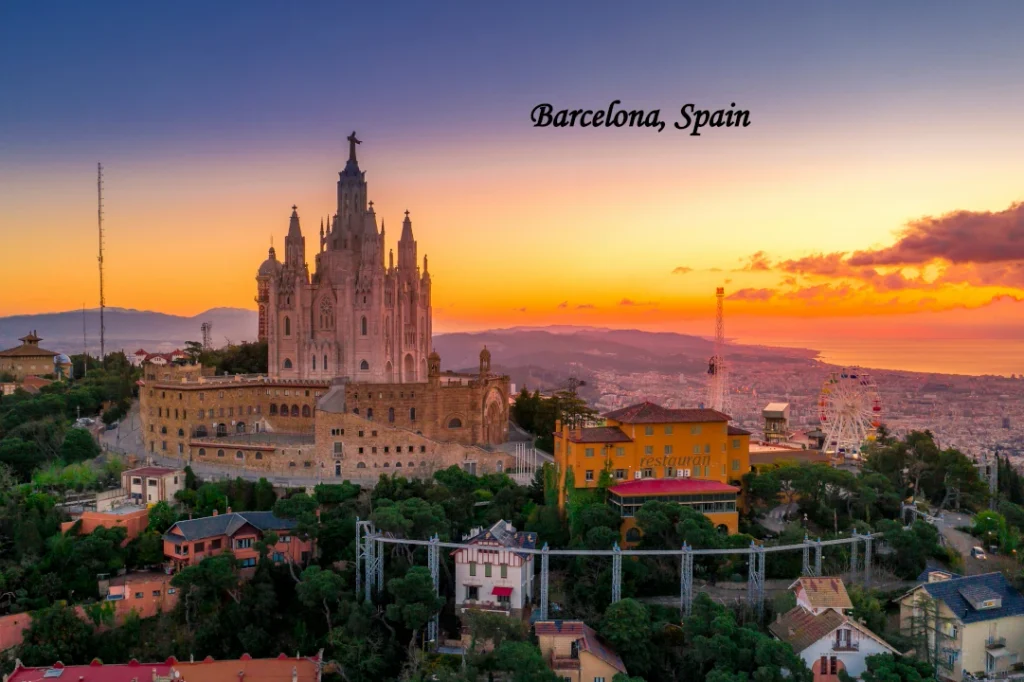
Barcelona’s story begins over 2,000 years ago as Barcino, a small Roman settlement founded around 15 BC. You can still trace its outline today — fragments of the original Roman wall are tucked into the Gothic Quarter (Barri Gòtic), sometimes forming the foundation of a medieval church or hiding behind a modern café facade. Few cities let you walk through this many centuries in a single afternoon: Roman stone gives way to Gothic arches, which open onto squares where Antoni Gaudí’s surreal, nature-inspired architecture takes over completely. It’s this collision of eras — ancient, medieval, and modernist — that makes Barcelona feel less like a city with history and more like a city built from it.
I always tell first-time visitors to slow down here. Barcelona rewards wandering more than any checklist-driven day ever could — but if you only have a couple of days, these four experiences capture the city’s full arc, from Roman roots to Catalan Modernisme.
- Sagrada Família – Gaudí began this basilica in 1883 and it remains unfinished to this day, funded entirely by ticket sales and donations rather than public money — a detail that surprises most first-time visitors. It’s Spain’s most-visited monument and a UNESCO World Heritage Site, with a facade that tells the story of Christ’s birth on one side and his Passion on the other, in dramatically different sculptural styles. Book timed-entry tickets at least 3–4 weeks ahead in peak season (June–September); slots for tower access sell out even faster than general entry.
- Park Güell – Originally designed by Gaudí as a private housing estate for Barcelona’s elite, the project failed commercially and was later opened as a public park. Today it’s known for its curving mosaic-tiled benches, the famous salamander sculpture, and terraces that offer one of the best panoramic views of the city and the Mediterranean beyond. Note that the monumental zone — where most of the iconic mosaic work is — requires a separate timed ticket from general park access, so book this in advance too.
- Gothic Quarter – This is Barcelona’s oldest neighborhood, built directly over the old Roman city grid. Wander its narrow, shaded lanes to find Barcelona Cathedral (with a cloister housing 13 resident geese, one for each century of Santa Eulàlia’s age), the lively Plaça Reial with its Gaudí-designed lampposts, and quiet corners where laundry still hangs between medieval buildings. It’s best explored on foot in the early morning before the crowds arrive, or in the evening when the stone facades are lit up.
- Mediterranean beaches – Barcelona is one of the few major European capitals with a proper city beach. Barceloneta and Nova Icaria are both a short metro ride from the center, with beachfront chiringuitos (casual beach bars) serving fresh seafood and sangria. After a morning of museums and monuments, this is where families and locals alike unwind — a reminder that Barcelona has always been a Mediterranean port city at heart, not just a museum of its own past.
Insider tip: Buy Sagrada Família and Park Güell tickets together in one sitting if you can — both sell out independently, and coordinating your visit times between them (they’re about 30 minutes apart by metro) saves a lot of backtracking later in your trip.
Madrid – The Royal Capital
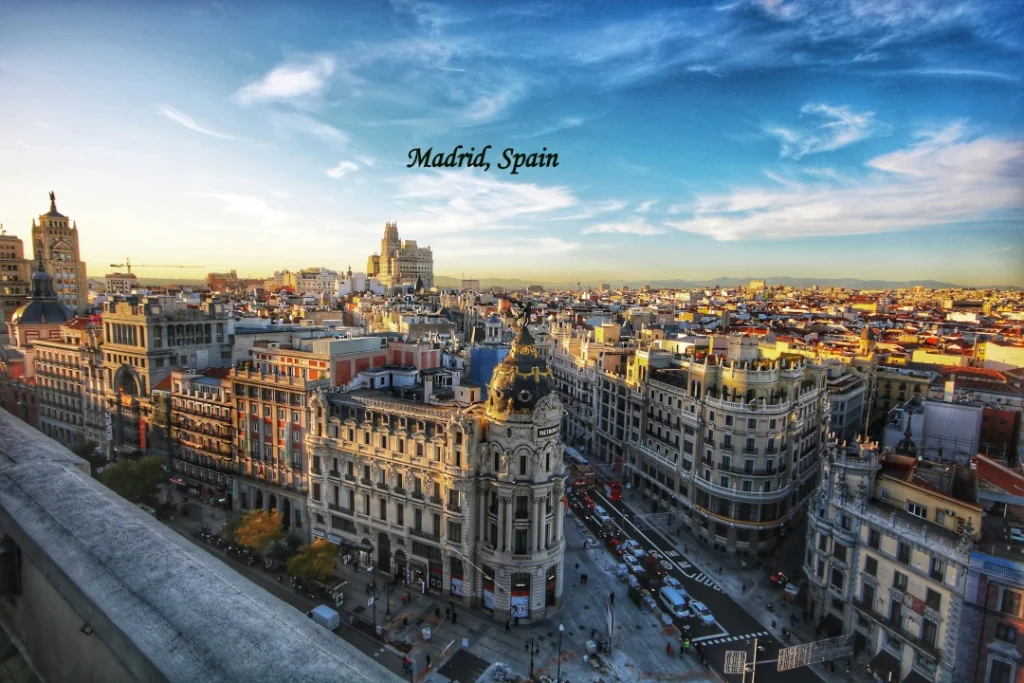
Madrid wasn’t always destined to be Spain’s capital — in fact, it was a relatively minor town until 1561, when King Philip II moved the royal court here, largely because of its central location on the Iberian Peninsula rather than any existing grandeur. What followed were centuries of deliberate reinvention: Habsburg kings built the city’s first grand institutions, and the Bourbon dynasty later reshaped it with wide boulevards, formal gardens, and palaces designed to rival Versailles. Unlike Barcelona or Seville, Madrid’s history isn’t written in ancient ruins — it’s written in political ambition, royal patronage, and a determination to look like the capital of an empire, because for a long time, it was exactly that.
Walking through Madrid today, you feel that inherited confidence everywhere — in its wide, tree-lined avenues, its grand museums, and a royal palace that still hosts state ceremonies. Here’s where to see that legacy up close.
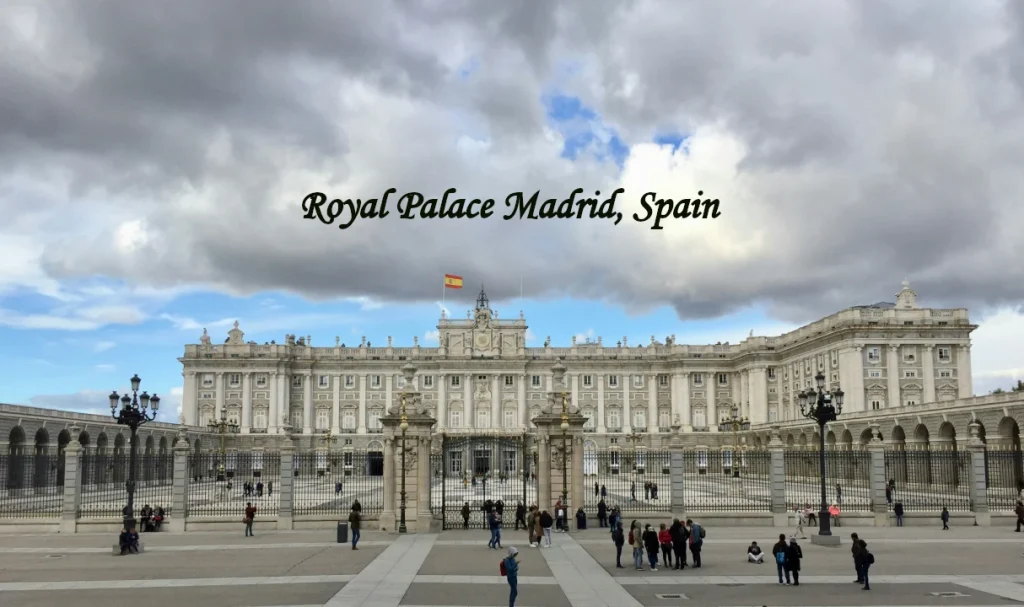
- Royal Palace (Palacio Real) – Built on the site of a former Moorish fortress that burned down in 1734, the current palace is Europe’s largest royal residence by floor area, with over 3,000 rooms — though only around 50 are open to visitors. Inside, you’ll walk through the Throne Room, the Royal Armoury, and galleries hung with Goya tapestries, all still used today for official state receptions when foreign dignitaries visit.
- Prado Museum – Opened in 1819, the Prado holds one of the world’s most important collections of European art, anchored by Velázquez’s “Las Meninas,” Goya’s “Black Paintings,” and rare works by El Greco. Unlike many major museums, the Prado’s collection was built almost entirely from Spanish royal holdings — meaning many of these paintings were once hanging in the same palaces you’ll visit elsewhere on this trip.
- Retiro Park – Originally a private retreat for Spanish royalty in the 17th century, Retiro was opened to the public in 1868 and remains Madrid’s favorite green escape. Rent a rowboat on the central lake, stroll past the striking glass-and-iron Crystal Palace, or simply find a bench under the trees — it’s one of the easiest, most rewarding stops for families needing a slower-paced afternoon between museum visits.
- Historic city centre – Puerta del Sol marks the symbolic center of Spain (literally — Kilometre Zero, the point from which all Spanish road distances are measured, is marked here). From there, Plaza Mayor showcases Habsburg-era architecture with its uniform arcades and red-and-gold frescoes, while the nearby Austrias Quarter’s narrow streets reveal how Madrid looked before the Bourbons arrived and widened everything.
Insider tip: The Prado is free every evening for the last two hours before closing (check current timings on the official site, as they shift seasonally). If you’re traveling with older kids or just want to see the highlights without the midday crowds, this free window is one of Madrid’s best-kept secrets.
Seville – Andalusia’s Historic Heart
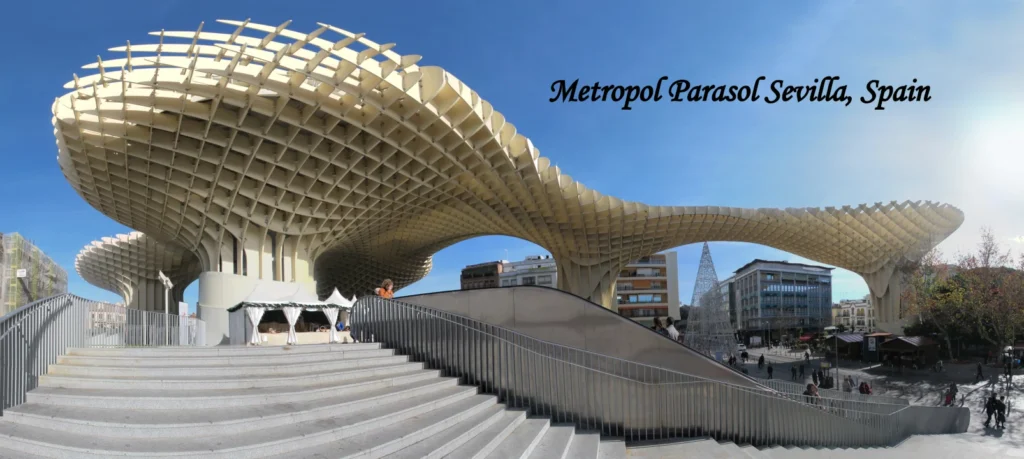
No city in Spain layers its history quite like Seville. Founded by the Romans as Hispalis, conquered by the Moors in 712 AD, and later reclaimed by Christian forces in 1248, Seville often stacks all three civilizations into a single structure — a mosque’s minaret becomes a cathedral’s bell tower, a Moorish palace gets a Christian throne room built inside it. Then came the 16th century, when Seville held the exclusive royal monopoly on trade with the Americas, making it briefly one of the richest cities in the world. That wealth is exactly why Seville’s monuments feel disproportionately grand for a city its size — this was once the financial capital of the Spanish Empire, and it built accordingly.
Walking through Seville today, that layered, wealthy past shows up in almost every direction you look. These four stops trace it best.
- Plaza de España – Built for the 1929 Ibero-American Exposition, this sweeping semicircular plaza was designed to showcase Spain’s regional diversity, with a tiled alcove and painted mural dedicated to each of the country’s 48 provinces. Its canal, bridges, and Renaissance-Moorish Revival architecture have made it one of the most photographed and filmed locations in Spain — you’ll recognize it even if you’ve never been, from Star Wars: Attack of the Clones to countless magazine covers.
- Seville Cathedral – Completed in 1528 on the site of a 12th-century mosque, this is the largest Gothic cathedral in the world by volume, built deliberately oversized — church records from the time reportedly stated the goal was to build something “so beautiful and so magnificent” that future generations would think its builders were mad. It also holds the tomb of Christopher Columbus, carried by four ceremonial pallbearers representing the medieval kingdoms of Spain.
- Giralda – Rather than tearing down the original mosque’s 12th-century minaret, Seville’s Christian rulers converted it into the cathedral’s bell tower, making it one of the few structures in the city where you can see Moorish and Christian architecture literally fused into one. Instead of stairs, the tower uses a series of internal ramps — originally built wide enough for the muezzin to ride a horse to the top — and climbing them today rewards you with one of the best panoramic views in Andalusia.
- Real Alcázar – Still an active royal residence, making it the oldest royal palace in Europe still in use, the Alcázar was built primarily by Christian king Pedro I using Moorish craftsmen, resulting in Mudéjar architecture — Islamic design techniques applied to a Christian palace. Its horseshoe arches, carved stucco walls, and tiered gardens later found international fame as the fictional Kingdom of Dorne in Game of Thrones.
Insider tip: Buy a combined ticket for the Cathedral, Giralda, and Real Alcázar if available — not only is it more cost-effective, but visiting them back-to-back (they’re a 5-minute walk apart) makes the Roman-Moorish-Christian layering of Seville’s history much easier to follow while it’s fresh in your mind.
Granada – The Last Stronghold of Moorish Spain
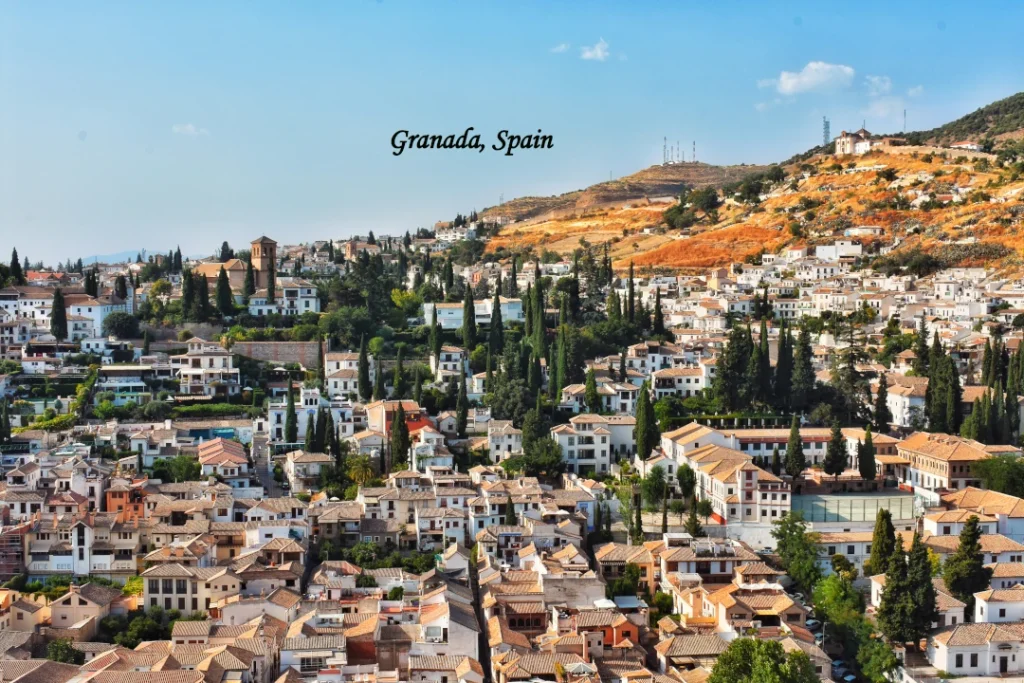
Granada holds a weight in Spanish history that no other city quite matches. In January 1492, it became the last Moorish stronghold to fall to the Catholic Monarchs, Ferdinand and Isabella, bringing an end to nearly 800 years of Islamic rule on the Iberian Peninsula. Legend says the last Nasrid sultan, Boabdil, paused on a mountain pass while fleeing the city to look back at the Alhambra one final time — a spot still known today as “El Suspiro del Moro,” the Moor’s Sigh. That single moment captures what makes Granada different from every other city on this trip: it isn’t just a place where history happened, it’s the place where an entire era of Spanish civilization ended.
Everything worth seeing in Granada circles back to that final chapter of Moorish Spain — and nowhere is it more visible than in these three places.
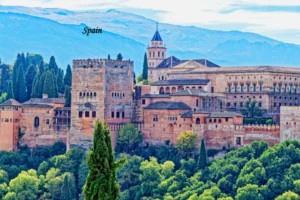
- Alhambra Palace – Built primarily during the 13th–14th centuries by the Nasrid dynasty, the Alhambra is widely regarded as the finest surviving example of Islamic art and architecture in the world. Its Nasrid Palaces are covered floor-to-ceiling in carved stucco, geometric tilework, and calligraphy quoting the Quran and Nasrid poetry — designed so intricately that Moorish architects reportedly believed excessive ornamentation brought the palace closer to representing paradise on earth. Reflecting pools throughout the complex weren’t just decorative; they were engineered to cool the air in the Andalusian heat, an early form of passive architecture still admired by architects today.
- Generalife Gardens – Just a short walk from the main palace, the Generalife was the sultans’ summer retreat, built specifically to escape the heat and pressures of court life within the Alhambra itself. Its terraced gardens, fountains, and shaded courtyards were designed around the sound of running water — a deliberate architectural choice, since flowing water was considered both a cooling mechanism and a symbol of paradise in Islamic garden design.
- Albaicín Quarter – Granada’s old Moorish neighborhood survived largely intact even after the Christian reconquest, and its maze of cobbled lanes still follows the original medieval Islamic street plan. Climb to Mirador de San Nicolás at sunset — the single best viewpoint of the Alhambra glowing against the Sierra Nevada mountains — and you’ll understand why this spot draws both photographers and street musicians every evening without fail.
Insider tip: The Alhambra caps daily visitor numbers, and the Nasrid Palaces section specifically requires a fixed entry time printed on your ticket — arriving even 10 minutes late can mean being turned away. Book your slot the moment your travel dates are confirmed, ideally 1–2 months ahead in peak season.
Valencia – Where Tradition Meets Modern Spain
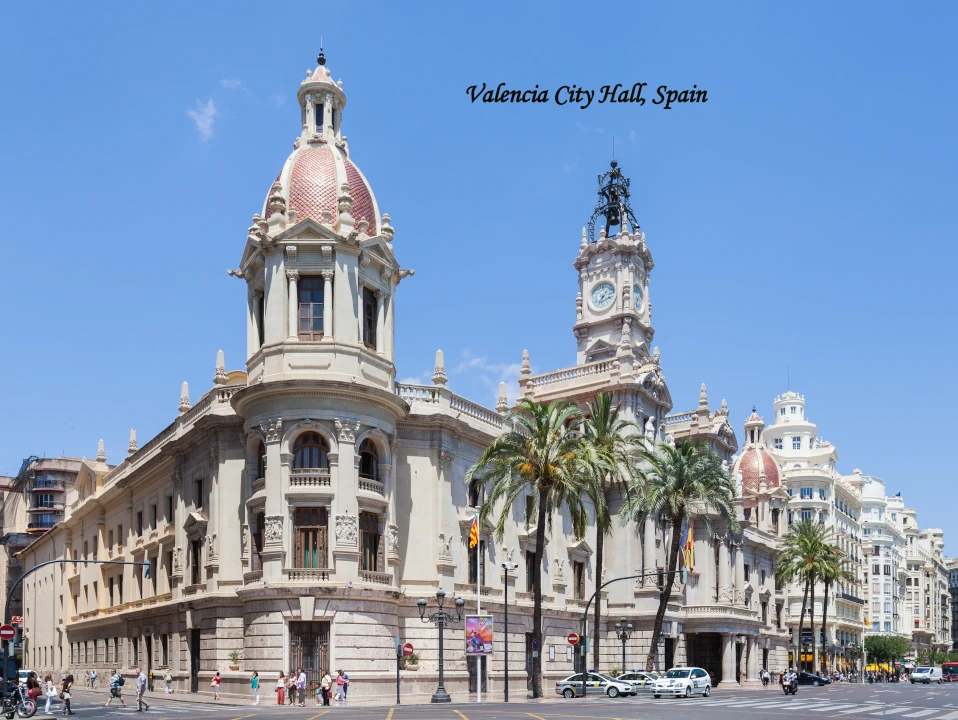
Valencia is Spain’s clearest example of a city refusing to choose between its past and its future. Founded by Roman settlers in 138 BC as Valentia Edetanorum, it spent centuries as a fortified medieval trading port before a devastating flood in 1957 changed its shape forever — the Turia River, which regularly flooded the city center, was diverted around Valencia entirely, and the old riverbed was left empty for decades.
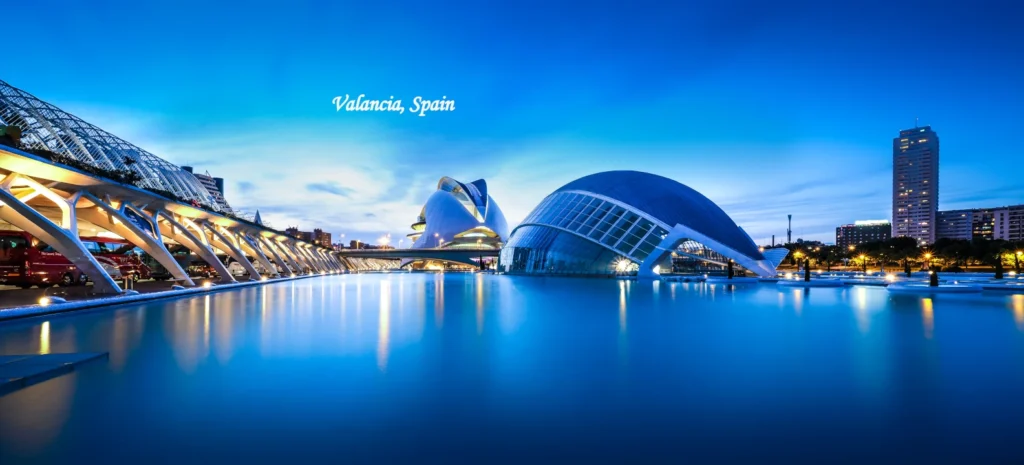
Rather than filling it with roads, the city turned that scar into one of the most ambitious urban transformations in modern Europe, eventually building a futuristic architectural complex where the river used to run. It’s a very Valencian move: instead of erasing a difficult chapter of its history, the city built something extraordinary on top of it.
That same instinct — honoring tradition while embracing reinvention — shows up everywhere in Valencia, from its architecture to its food to its festivals.
- City of Arts and Sciences – Designed by Valencia-born architect Santiago Calatrava and built directly along the old Turia riverbed, this complex includes Europe’s largest oceanarium (L’Oceanogràfic), an interactive science museum shaped like a whale skeleton, and an opera house with a design inspired by the human eye. It’s one of the most photographed modern architectural sites in the world, and unlike most futuristic complexes, it sits within walking distance of Valencia’s medieval old town — a five-minute reminder of just how far this city has come.
- Valencia beaches – Malvarrosa and Patacona stretch along the city’s eastern edge, wide and sandy, with a boardwalk lined with paella restaurants serving the dish in its original coastal setting. Unlike Barcelona’s more compact urban beaches, Valencia’s shoreline feels unhurried — locals treat it as an everyday extension of the city rather than a tourist attraction, which is exactly what makes it worth visiting.
- Mediterranean culture – Valencia’s Central Market (Mercado Central) is one of Europe’s oldest operating markets still housed in its original early-20th-century Art Nouveau building, and it’s the best place to understand the city’s obsession with fresh, local ingredients — the same obsession that gave the world paella valenciana, originally cooked over an open fire by farmers using rabbit, chicken, and local Bomba rice. Time your visit around mid-March if you can, when the city erupts into Las Fallas, a centuries-old festival of elaborate satirical sculptures, fireworks, and street parties that culminates in the ritual burning of the monuments themselves.
Insider tip: Skip the paella served at restaurants directly facing the beach promenade — locals will tell you the better, more authentic versions are found a few streets back, where restaurants cater to Valencians rather than passing tourists, and prices are noticeably lower for the same (often better) dish.
Family Travel Checklist: Visiting Spain with Infants
Spain is genuinely one of the easier European destinations to navigate with a baby or toddler — but a little preparation goes a long way. Here’s what I’d pack and plan for:
- Carry a lightweight travel stroller — most historic quarters (Gothic Quarter, Albaicín) have cobblestone streets, so a compact, sturdy stroller works better than a bulky one.
- Pack baby formula, diapers, and basic medicines for the first 2–3 days; pharmacies (marked with a green cross) are widely available for restocking.
- Check infant admission policies in advance — most major monuments (Sagrada Família, Alhambra, Royal Palace) offer free entry for children under a certain age, but strollers may not be allowed inside some historic interiors.
- Book accommodation with a lift/elevator and request a crib (cuna) in advance — most 3-star-and-above hotels provide this on request.
- Plan sightseeing around nap times — mornings (9–11 AM) and evenings (after 6 PM) are cooler and less crowded than midday.
- Carry a copy of your child’s passport, visa, and travel insurance documents separately from the originals.
- Spain is Schengen territory, so a single Schengen visa covers infants too — but they still need their own passport and visa application.
Types of Tickets and Tour Plans Available
Depending on how you like to travel, Spain’s major sites offer a few different ticket formats:
- Standard/general admission tickets – Timed-entry access to the monument itself (e.g., Sagrada Família basic ticket, Alhambra general ticket).
- Skip-the-line combo tickets – Bundle two or more attractions (e.g., Sagrada Família + Park Güell, or Alhambra + Granada Cathedral) at a discounted rate.
- Guided tour tickets – Include an official local guide who explains the history and architecture in depth — highly recommended for the Alhambra and Seville Cathedral, where context adds a lot.
- Audio-guide tickets – Self-paced options with a downloadable app-based audio guide, good for families moving at a child’s pace.
- City passes – Passes like the Barcelona Card or Granada Card bundle multiple attractions with public transport, often working out cheaper for multi-day stays.
- Night visits – Some sites (Alhambra, Alcázar) offer evening entry with fewer crowds and dramatic lighting.
Always book directly through each monument’s official website — third-party resale sites often charge a premium and sometimes sell invalid slots.
Local Guides: Getting Help On the Ground
Every major historic site in Spain — the Alhambra, Sagrada Família, Seville Cathedral, and the Prado — has licensed official local guides available for hire, either pre-booked online or arranged on arrival through the site’s ticket office. Tourist information offices (marked with an official blue “i” symbol) are present in every major city center and can help with maps, transport queries, and last-minute guide bookings. For families, hiring a local guide for at least one major monument per city is worth it — they make the history tangible for kids in a way a self-guided audio tour often can’t.
Recommended Tour Operators for Spain
If you’d rather not piece together every ticket and transfer yourself, these two platforms are reliable for booking Spain tours, skip-the-line access, and local guided experiences:
- Viator – Wide range of Spain city tours, day trips, and skip-the-line monument access, with free cancellation on most bookings.
- GetYourGuide – Strong selection of guided walking tours and combo tickets for Barcelona, Madrid, Seville, and Granada, with verified reviews from real travelers.
Preferred Hotels for Your Spain Stay
These two properties are well-located, family-friendly bases if you’re splitting time between Barcelona and Madrid:
- Hotel Catalonia Sagrada Família, Barcelona – Walking distance from the Sagrada Família, with easy metro access to the Gothic Quarter and beaches. Compare current rates on Hotels.com.
- Petit Palace Puerta del Sol, Madrid – Centrally located near Plaza Mayor and the Royal Palace, with family rooms and easy access to Retiro Park. Check availability on Expedia.
For the widest comparison across price ranges, Booking.com remains one of the most reliable platforms for Spain-wide hotel search and free-cancellation bookings.
Food Facilities Near Your Hotel
Spanish cities are built around food — you’ll rarely walk more than a few blocks without finding a good tapas bar, bakery, or family-run restaurant. Near central hotel zones in Barcelona and Madrid, expect easy access to:
- Traditional tapas bars serving jamón, patatas bravas, and croquetas — most welcome families and offer simple menus for children.
- Local bakeries (panaderías) for breakfast pastries, ideal for an early start with kids before sightseeing.
- Paella restaurants, especially near Valencia and Barcelona’s waterfront, for an authentic regional meal.
- Supermarkets and pharmacies (usually within a 5–10 minute walk of central hotels) for baby food, formula, and snacks.
- Vegetarian and international options are increasingly common in city centers, especially around Madrid’s Malasaña and Barcelona’s Eixample districts.
Frequently Asked Questions About Spain Tourism
1. Do Indian citizens need a visa to visit Spain?
Yes. Indian passport holders need a Schengen visa to visit Spain, applied for through the official visa partner appointed by the Spanish Embassy in India. There is no visa-on-arrival for Indian nationals.
2. How many days are ideal to cover Barcelona, Madrid, Seville, Granada, and Valencia?
A realistic itinerary covering all five cities comfortably needs 12–14 days, allowing 2–3 days per major city plus travel time by train or flight between them.
3. What is the best time of year to visit Spain?
April–June and September–October offer the most pleasant weather, moderate crowds, and comfortable sightseeing conditions, especially for families traveling with young children.
4. Is the Alhambra worth visiting with an infant or toddler?
Yes, but plan for uneven, sloped pathways and limited stroller access in the Nasrid Palaces section. A baby carrier is often more practical than a stroller for this particular site.
5. Can I buy monument tickets on the spot, or do I need to book in advance?
For high-demand sites like the Sagrada Família and Alhambra, advance booking (weeks ahead in peak season) is strongly recommended, as on-the-day tickets are frequently sold out.
6. Is Spain considered a safe destination for family holidays?
Yes, Spain is generally considered safe for tourists and families, though standard precautions against pickpocketing apply in crowded tourist areas like Las Ramblas and central train stations.
7. How do I travel between these five cities?
Spain’s high-speed AVE train network connects Madrid, Barcelona, Seville, and Valencia efficiently, usually in 2–3 hours between major cities. Granada is best reached by train or a short domestic flight from Madrid or Barcelona.
8. What travel insurance is required for a Spain trip from India?
Schengen visa rules require travel insurance covering medical emergencies up to a minimum coverage amount, valid for the entire duration of stay in Spain and other Schengen countries.
Official & Authentic Travel Resources
For accurate, up-to-date information before you travel, always refer to official government and monument sources:
- Spain’s Official Tourism Portal (spain.info) – Destinations, entry requirements, and travel planning.
- BLS Spain Visa India – Official Schengen visa application partner for Indian applicants.
- Sagrada Família Official Website – Tickets and visitor information.
- Alhambra Official Ticket Portal – The only authorized site for Alhambra tickets.
- UNESCO World Heritage Sites in Spain – Full list of Spain’s UNESCO-recognized sites.
- Ministry of External Affairs, India – Travel advisories and consular information for Indian travelers abroad.
Visit Our Related Articles
Ultimate Pekoe Trail Sri Lanka: A 7-Day Tea Country Hiking Adventure
Nuwara Eliya Hill Station: Your Complete Travel Guide to Sri Lanka’s Little England
Best Surf Camps in Sri Lanka 2026: Ultimate Surfing & Guide
Final Thoughts
Spain isn’t a country you check off — it’s one you layer, city by city, the same way its own history stacked Roman stone under Moorish palaces under Christian cathedrals. Whether you’re chasing Gaudí’s unfinished basilica in Barcelona, the royal grandeur of Madrid, the Moorish-Christian fusion of Seville, the bittersweet last chapter of Granada, or Valencia’s reinvention of its own scars, each city adds a different note to the same story.
Give yourself 12-14 days if you can, book your big-ticket sites well ahead of time, travel in the shoulder seasons for easier weather and shorter lines, and don’t rush the in-between moments — the courtyard you stumble into, the tapas bar with no sign, the sunset view from a random mirador. That’s usually where Spain actually gets you.





Leave a Reply