This guide contains affiliate links. We may earn a commission at no extra cost to you — see our Affiliate Disclosure and Affiliate Disclosure Policy for details.
✈️ Quick Take: Moraine Lake, one of the most photographed lakes in the Canadian Rockies, is best visited between mid-June and early October when its glacier-fed turquoise waters are at their most vivid.
✈️ Key Highlights:
- The lake sits inside Banff National Park, about 14–20 minutes’ drive from Lake Louise Village, and access is strictly by shuttle, tour bus, or bike after the parking lot closure.
- The iconic view from the Rockpile Trail takes only 10–15 minutes round trip and needs no hiking experience — arrive before 6 AM in July-August to avoid shuttle queues.
- Insider tip: Book Parks Canada shuttle or Roam Transit tickets weeks in advance, since Moraine Lake Road is closed to private vehicles during peak season.
Table of Contents
Moraine Lake Road Trip: The Ultimate Banff Adventure
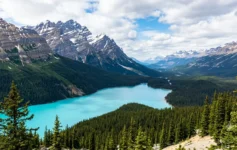
If there’s one image that defines the Canadian Rockies, it’s the impossibly blue waters of Moraine Lake cradled beneath the jagged peaks of the Valley of the Ten Peaks. Long before Instagram existed, this lake was already famous — it appeared on the old Canadian $20 bill. Today, travellers from India, the US, the UK, and beyond fly halfway across the world just to stand on the Rockpile and see that colour with their own eyes.
This guide covers everything: where Moraine Lake actually is, the best time to visit, top things to do around Lake Louise, where to stay, what to eat, how to reach Banff, a realistic budget breakdown, a suggested one-day itinerary, and honest travel tips from people who’ve actually made the trip. Whether you’re planning a Canada-US road trip or flying in specifically for the Rockies, consider this your one-stop Moraine Lake travel guide for 2026.
Introduction to Moraine Lake Destination
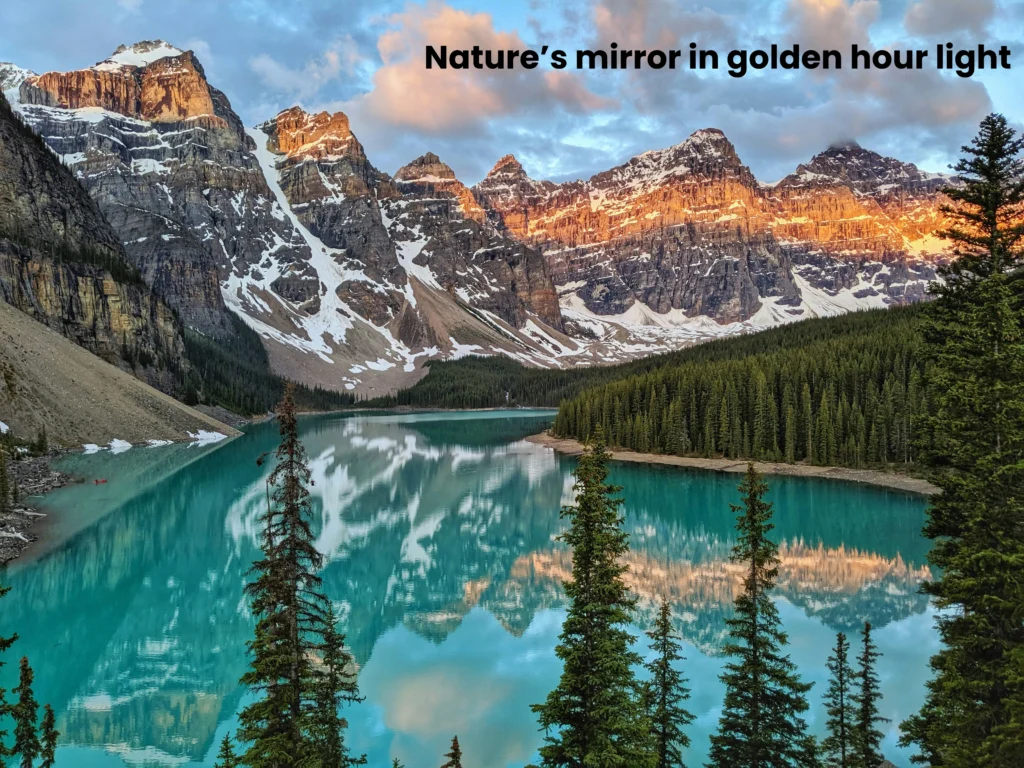
Moraine Lake is a glacially fed lake located inside Banff National Park, Alberta, Canada. Its vivid turquoise-blue colour comes from rock flour — fine glacial sediment suspended in the meltwater that reflects sunlight in a way that makes the water look almost artificially bright.
Unlike Lake Louise, which has a grand historic hotel right on its shore, Moraine Lake feels wilder and more remote. It’s ringed by ten dramatic mountain peaks, which is why the surrounding valley is called the Valley of the Ten Peaks. The lake itself sits at an elevation of roughly 1,884 metres (6,181 feet), and it typically remains frozen until early-to-mid June each year.
For photographers, hikers, and honeymooners alike, Moraine Lake has become a bucket-list stop on almost every Canadian Rockies itinerary — and for good reason. Few places on earth combine accessible natural beauty with such dramatic mountain scenery in one frame.
The lake was named after the glacial moraine that early explorers mistakenly believed had formed the natural dam holding back the water — geologists later confirmed the barrier is actually a massive rockslide deposit, though the original name stuck. That view from the Rockpile became so iconic that it earned the nickname “the Twenty Dollar View” after appearing on Canada’s 1969–1979 series banknote, and it remains one of the most searched-for and photographed natural landmarks in North America. For many international visitors, especially those travelling from India, the Middle East, and Southeast Asia, Moraine Lake is often the single image that first sparked their interest in visiting Canada at all.
Where Is Moraine Lake Destination?
Moraine Lake is located about 14 km (roughly a 20-minute drive) from Lake Louise Village, and around 45 minutes to an hour from the town of Banff, depending on traffic and shuttle schedules. It falls entirely within Banff National Park in the province of Alberta, Canada.
Geographically, the lake sits in the Canadian Rockies, close to the border of Alberta and British Columbia, along the Icefields Parkway corridor. The nearest major international gateway is Calgary International Airport (YYC), roughly a 2- to 2.5-hour drive away.
Because Moraine Lake Road is narrow and parking is extremely limited, Parks Canada now restricts private vehicle access during peak season (roughly June to early October). Visitors must use the official Parks Canada shuttle, a Roam Transit public bus, a licensed tour operator, or arrive by bicycle.
Best Time to Visit Moraine Lake
Timing your trip correctly can make or break the experience, so this is one of the most important sections of this Moraine Lake travel guide.
Summer (Late June to Early September)
This is peak season and the only time the lake is fully thawed and at its brilliant turquoise best. Expect warm days (15–25°C), long daylight hours, and busy trails. Wildflowers bloom along the Larch Valley trail by late July.
Fall (Mid-September to Early October)
A magical but short window. The larch trees along nearby hiking trails turn golden, creating a striking contrast against the blue lake and snow-dusted peaks. This is a favourite time for photographers, though the lake can start icing over by early October.
Winter and Spring (November to May)
Moraine Lake Road is closed to all vehicle traffic in winter, and the lake itself is frozen and snow-covered. Access during this period is only possible via a long backcountry ski or snowshoe trip, which is not recommended for casual travellers.
Bottom line: For most visitors, the best time to visit Moraine Lake is between the last week of June and mid-September, with mid-to-late July offering the most reliably ice-free, vivid-blue water.
Top Things to Do in Lake Louise & Around Moraine Lake
Since most travellers base themselves in Lake Louise Village while visiting Moraine Lake, here are the top experiences to combine into your trip.
1. Walk the Rockpile Trail
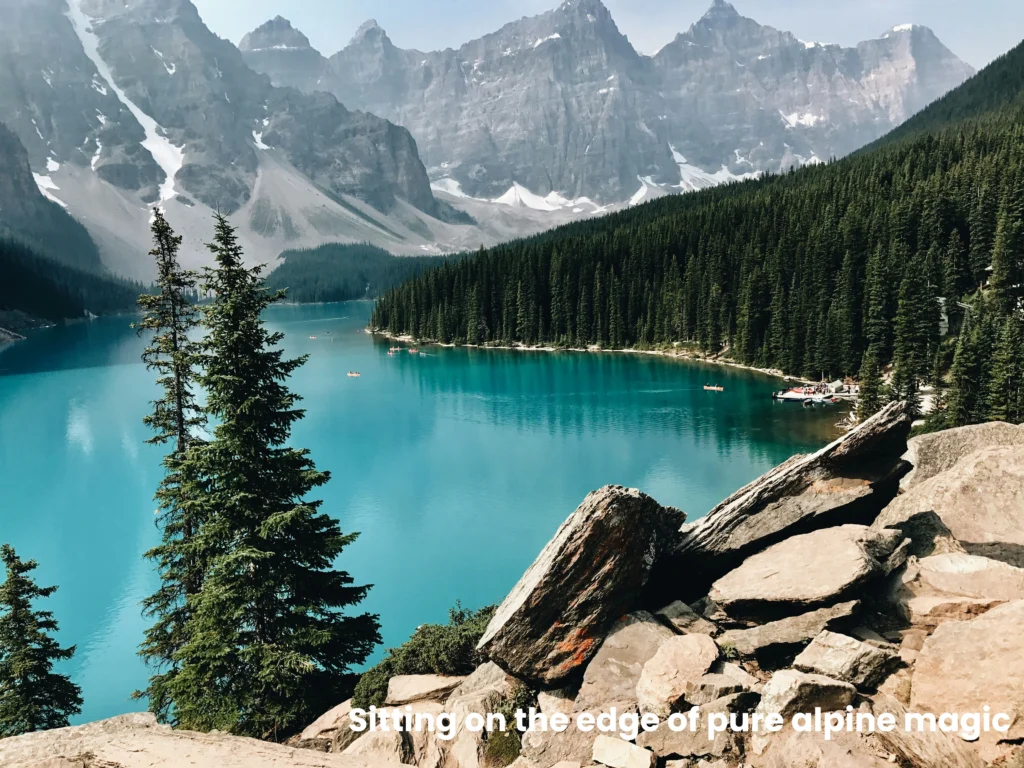
A short, steep 10–15 minute climb that rewards you with the classic postcard view of Moraine Lake and the Ten Peaks. This is the single most popular activity at the lake.
2. Canoe on Moraine Lake
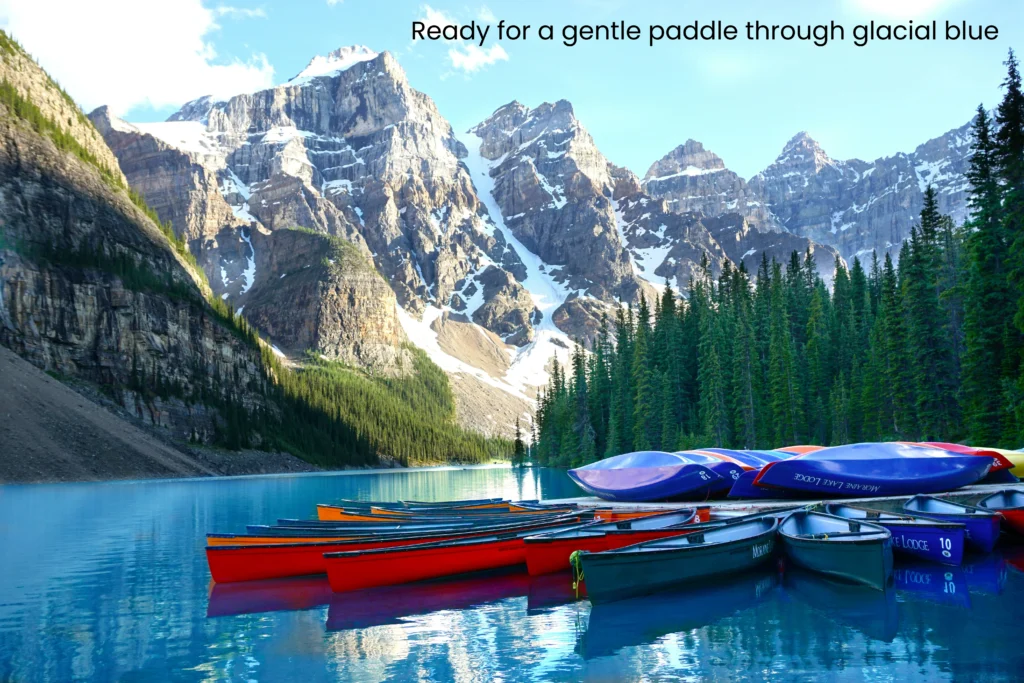
Renting a canoe (through the Moraine Lake Lodge boathouse) lets you paddle out onto the glacial water itself — arguably the single best way to experience the lake’s colour up close.
3. Hike the Larch Valley and Sentinel Pass Trail
A moderately strenuous half-day hike starting near the lake, famous for golden larch trees in September. Note: this trail sometimes requires group hiking in bear season for safety.
4. Visit Lake Louise
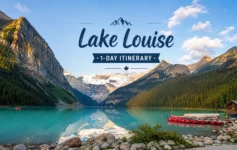
Just 20 minutes away, Lake Louise offers its own iconic turquoise lake, the historic Fairmont Chateau, and easier lakeside walking trails suitable for families.
5. Ride the Lake Louise Gondola
For sweeping views over the valley and a chance to spot grizzly bears from a safe distance, the sightseeing gondola near Lake Louise Ski Resort is well worth the detour.
6. Photograph Sunrise at Moraine Lake
Arriving before sunrise (around 5:30–6 AM in summer) not only avoids the crowds but also gives you the softest, most dramatic light for photography.
7. Try a Guided Interpretive Walk
Parks Canada and local outfitters occasionally run short guided walks around the lakeshore, sharing details on the area’s glacial geology, wildlife, and indigenous history — a great option if you want context beyond just the view.
Photography tip: The classic Rockpile shot works best in the first hour after sunrise when the water is calm and mirror-like, before wind ripples set in later in the morning. A polarizing filter helps cut glare and deepen the turquoise tones in your photos.
Tourist Spots Near Moraine Lake
Beyond the lake itself, several nearby tourist spots are worth adding to your itinerary:
- Lake Louise – the “twin” turquoise lake with the famous Fairmont hotel
- Icefields Parkway – one of the world’s most scenic drives, connecting Lake Louise to Jasper
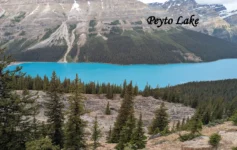
- Peyto Lake – a wolf-shaped, electric-blue lake about an hour’s drive north
- Banff Gondola & Sulphur Mountain – panoramic views over Banff town
- Johnston Canyon – a family-friendly waterfall hike between Banff and Lake Louise
- Bow Falls and Banff Town – for shopping, hot springs, and dining after a day of hiking
Hotels & Resorts Near Moraine Lake
Accommodation options range from rustic lakeside lodges to five-star resorts.
| Category | Property | Approx. Price/Night (2026) |
|---|---|---|
| Luxury (on the lake) | Moraine Lake Lodge | CAD 900–1,500 (US$657–1,095) |
| Luxury (Lake Louise) | Fairmont Chateau Lake Louise | CAD 700–1,300 (US$511–949) |
| Mid-range | Lake Louise Inn | CAD 280–450 (US$204–329) |
| Budget/Hostel | HI Lake Louise Alpine Centre | CAD 80–150 (US$58–110) |
| Base in Banff | Rimrock Resort Hotel, Banff | CAD 350–650 (US$255–474) |
Because rooms right by Moraine Lake and Lake Louise sell out months ahead — especially for July, August, and the September larch season — booking 3–6 months in advance is strongly recommended. Many travellers instead base themselves in Banff town, which has a wider range of budget-friendly hotels, and drive or shuttle in for day trips.
Food to Try Near Moraine Lake & Banff
Dining options right at Moraine Lake are limited to the lodge’s restaurant, so most food experiences happen in Lake Louise Village or Banff town. After a full day of hiking and shuttle-hopping, sitting down to a hearty Rockies meal is one of the simple pleasures of this trip, and Banff’s compact downtown makes it easy to find something for every budget and craving.
- Wild Alberta Bison and Elk Burgers – a Rockies specialty found in several Banff restaurants
- Poutine – Canada’s iconic dish of fries, cheese curds, and gravy, a must-try after a long hike
- Fresh Rocky Mountain Trout – often served pan-seared at lakeside lodges
- Maple-Glazed Salmon – a Canadian classic available across Banff’s restaurant scene
- Butter Tarts and Nanaimo Bars – sweet Canadian desserts worth sampling in local bakeries
- Indian Cuisine in Banff – for Indian travellers craving home flavours, Banff town has a handful of well-reviewed Indian restaurants serving curries, biryani, and tandoori dishes
Pro tip: pack trail snacks (nuts, energy bars) since food options directly at Moraine Lake are minimal and pricier than in town.
How to Reach Banff (and Onward to Moraine Lake)
By Air
The nearest major airport is Calgary International Airport (YYC), well connected with direct and one-stop flights from major Indian cities via hubs like London, Frankfurt, or Vancouver. From Calgary, it’s roughly a 1.5-hour drive to Banff.
By Road
Banff is connected to Calgary via the Trans-Canada Highway (Highway 1), making it an easy and scenic self-drive or shuttle-bus route. Several shuttle companies run direct Calgary Airport-to-Banff transfers.
By Bus/Shuttle
Companies like Banff Airporter and Brewster Express offer scheduled shuttle service between Calgary Airport, Banff, and Lake Louise — a convenient option for travellers who prefer not to self-drive in mountain conditions.
From Banff to Moraine Lake
Once in Banff or Lake Louise, you cannot simply drive to Moraine Lake during peak season. You’ll need to book a Parks Canada shuttle, a Roam Transit Route 8X bus, or a guided tour, as private vehicle access is closed at the Moraine Lake Road gate from roughly early June through early October.
Budget Guide: Cost of Visiting Moraine Lake
Here’s a realistic daily budget breakdown per person (in CAD, with approximate INR conversion) for 2026:
| Expense | Budget Traveller | Mid-Range | Luxury |
|---|---|---|---|
| Accommodation | CAD 80–120 (US$59–88) | CAD 250–400 (US$183–292) | CAD 700+ (US$511+) |
| Food | CAD 30–40 (US$22–29) | CAD 60–90 (US$44–66) | CAD 120+ (US$88+) |
| Transport (shuttle/car rental) | CAD 20–40 (US$15–29) | CAD 50–80 (US$37–58) | CAD 150+ (US$110+) |
| Park Entry Fee | CAD 11/adult (~US$8) | Same | Same |
| Total per day | CAD 140–210 (~US$102–153) | CAD 360–570 (~US$263–416) | CAD 970+ (~US$708+) |
Note: A Banff National Park day pass or annual Discovery Pass is mandatory for entry and should be factored into every budget.
Suggested 1-Day Itinerary for Moraine Lake
5:00 AM – Depart from Banff or Lake Louise Village to catch the earliest Parks Canada shuttle or Roam Transit bus.
6:00 AM – Arrive at Moraine Lake for sunrise; walk the Rockpile Trail for the classic panoramic view before crowds build up.
7:30 AM – Rent a canoe for 30–60 minutes to experience the lake’s colour up close.
9:00 AM – Grab breakfast at the Moraine Lake Lodge café or bring a packed breakfast.
10:00 AM – If time and fitness allow, hike partway up the Larch Valley trail for elevated views of the Ten Peaks.
1:00 PM – Take the shuttle back toward Lake Louise Village; have lunch and explore Lake Louise itself and the Fairmont Chateau grounds.
3:30 PM – Drive or shuttle back toward Banff, stopping at Johnston Canyon en route if time permits.
6:00 PM – Relax in Banff town, enjoy dinner, and consider a soak at the Banff Upper Hot Springs.
What to Pack for a Moraine Lake Trip
Mountain weather at Moraine Lake changes fast, even in the middle of summer, so packing smart matters more here than on most trips.
- Layered clothing – a moisture-wicking base layer, a fleece or light down mid-layer, and a waterproof shell for sudden rain or wind
- Sturdy hiking shoes – the Rockpile Trail is short but steep and rocky, and longer trails like Larch Valley need proper grip
- Sun protection – sunglasses, a hat, and high-SPF sunscreen, since UV exposure is stronger at altitude
- Reusable water bottle – refill stations are limited near the lake, so carry enough water for the day
- Bear spray – essential if you’re hiking beyond the main viewpoint trails
- Portable power bank – cold mountain air and constant photo-taking drain phone batteries quickly
- Cash and a physical map or offline map download – for the patchy signal near the lake
Travel Tips for Visiting Moraine Lake
- Book your shuttle or tour tickets online in advance — same-day slots sell out fast in July and August.
- Arrive as early as possible; by mid-morning, shuttle queues at Lake Louise can stretch over an hour.
- Carry bear spray or hike in groups of four or more on backcountry trails, as this is active grizzly bear country.
- Layer your clothing — mountain weather can shift from sunny to cold and rainy within hours.
- Wi-Fi and mobile signal are unreliable near the lake, so download offline maps beforehand.
- Respect posted trail closures; some routes near Moraine Lake are seasonally restricted for wildlife safety.
- Carry cash or a Canadian-friendly card, since some smaller lakeside kiosks have limited card machines.
Nearby Attractions Worth Adding to Your Trip
- Emerald Lake, Yoho National Park (British Columbia) – roughly 1.5 hours away
- Takakkaw Falls – one of Canada’s tallest waterfalls, near Emerald Lake
- Columbia Icefield & Athabasca Glacier – a few hours north along the Icefields Parkway
- Banff Upper Hot Springs – a relaxing soak with mountain views after a day of hiking
- Two Jack Lake and Vermilion Lakes – quieter, easily accessible lakes near Banff town itself
Interactive Google Map
Frequently Asked Questions (FAQ)
Can I drive directly to Moraine Lake?
No, not during peak season (roughly June to early October). Private vehicles are restricted, and access is only via Parks Canada shuttle, Roam Transit bus, licensed tour, taxi, or bicycle.
How much does it cost to visit?
Beyond your Banff National Park day pass (around CAD 11 per adult), the Parks Canada shuttle has its own ticket cost, and canoe rentals are an optional extra. Total daily costs vary widely depending on your travel style.
Is Moraine Lake worth visiting if I’ve already seen Lake Louise?
Yes. While both lakes share a similar turquoise colour, Moraine Lake’s Valley of the Ten Peaks backdrop offers a more dramatic, rugged mountain view that many travellers find even more striking than Lake Louise.
What is the best month to see the turquoise colour at its peak?
Late June through August typically offers the most vivid blue, as glacial melt is at its highest and the lake is fully thawed.
Do I need a hiking permit?
Standard day hikes don’t require a special permit, but a valid Banff National Park pass is mandatory, and some trails may require tight group sizes during bear activity advisories.
How many days should I spend in the Banff/Moraine Lake area?
Most travellers find 3–4 days ideal to comfortably cover Moraine Lake, Lake Louise, Banff town, and at least one drive along the Icefields Parkway.
Is Moraine Lake suitable for families with kids?
Yes, the Rockpile Trail is short and manageable for most children, though strollers won’t work on the rocky path. Longer hikes like Larch Valley are better suited to older kids and fit adults.
Can international travellers rent a car to reach Moraine Lake area?
Yes, self-driving from Calgary to Banff or Lake Louise is common and straightforward with a valid international driver’s permit, but remember the final stretch to Moraine Lake itself requires the shuttle during peak season regardless of how you arrived.
Final Thoughts
A trip to Moraine Lake rewards those who plan ahead. Between limited shuttle seats, a short ice-free season, and a viewpoint that draws crowds from every corner of the globe, a little preparation goes a long way toward making the experience feel peaceful rather than rushed. Book your shuttle tickets early, arrive before sunrise if you can, and give yourself time to simply sit by the water and take in the Valley of the Ten Peaks. Few places reward that kind of patience quite like Moraine Lake.
Plan the Rest of Your Canadian Rockies Trip
For more help planning your Canada road trip, check out these related guides on RydeTravel:
- Complete Banff National Park Travel Guide
- Best Road Trips Across Canada
- Canada Tourist Visa Guide for Indian Travellers
Official external resources:

Leave a Reply