
This guide contains affiliate links. We may earn a commission at no extra cost to you — see our Affiliate Disclosure and Affiliate Disclosure Policy for details.
⚡Quick Take: Top 10 Best Beaches India’s best beaches for 2026 span three coasts and every season Goa and Kerala from October to March, Tamil Nadu and Odisha from November to February, and the Andaman Islands nearly year-round making it possible to plan a trip around Radhanagar, Baga, Varkala, Marina, or Puri no matter when you travel.
⚡Key Highlights:
- Radhanagar Beach (Havelock Island) was rated Asia’s best beach by TIME and stays pleasant October–April, outside the June–September monsoon.
- Swimming is unsafe at Marina Beach and Dhanushkodi due to strong undercurrents — stick to Radhanagar, Kovalam, or Baga for a safe swim.
- Book Havelock ferry tickets and peak-season hotels 3–4 weeks ahead; business travelers can pair a Chennai OMR or Kochi IT-hub trip with a nearby beach day.
Top 10 best beaches If you’re weighing where to go among India Beaches this year, the honest answer is: it depends on which coast, and which month. India doesn’t have one beach season — it has three. Goa and Kerala are at their best from October through March. Tamil Nadu and Odisha’s east coast cool down and calm down between November and February. And the Andaman Islands, tucked closer to Southeast Asia than to the mainland, stay inviting almost year-round, aside from the June–September monsoon.
That’s actually good news if you’re planning a 2026 trip: whatever month you’re free, there’s a coastline that’s in its prime. This guide walks through the ten beaches worth building a trip around, the history behind why each region became a beach destination in the first place, a realistic 10-day itinerary, and the practical stuff — transport, food, hotels, tickets, and tips for families and business travelers alike.
To book your stay, click here. To Book Local Travel, click here
Traveling overseas? Click here to buy an eSIM. For more info, click here
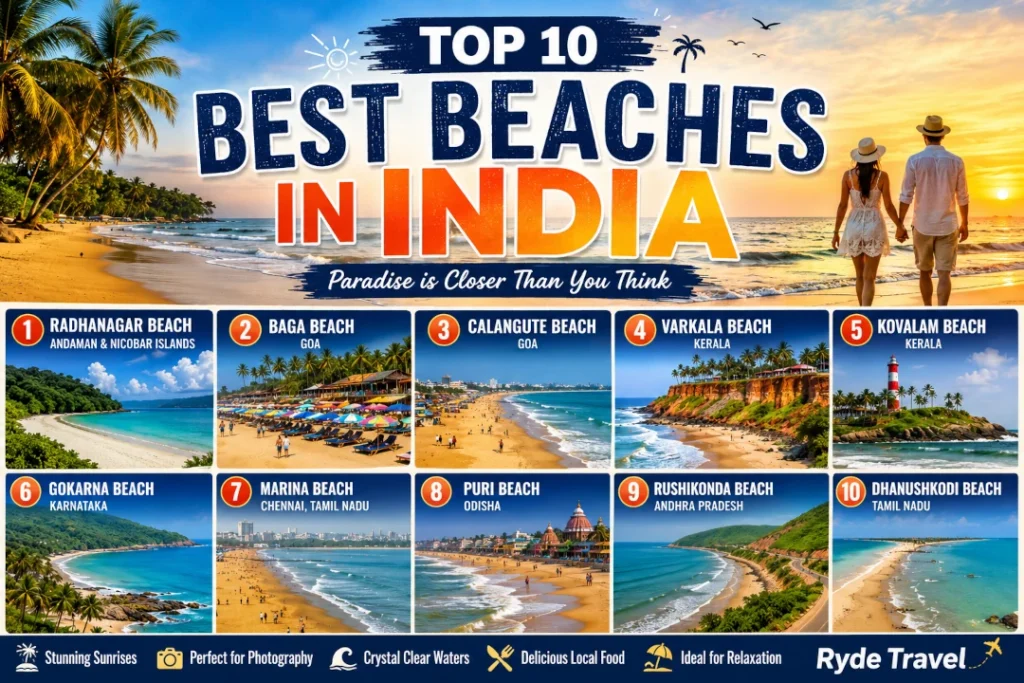
Table of Contents
A Quick History of India’s Beach Regions
Top 10 Best Beaches India’s coastline didn’t become a tourist draw all at once, and each stretch has its own backstory. Goa’s laid-back, café-lined beach culture traces back to 450 years of Portuguese rule — the churches, forts, and slow pace you feel today are a direct legacy of that history, and they’re most enjoyable in the dry winter months. Kerala’s coast built its reputation differently, through centuries-old Ayurvedic wellness traditions that draw travelers once the northeast monsoon retreats by September.
Chennai’s Marina Beach became a formal promenade in the 1880s and later served as a gathering ground during India’s freedom movement — walk it today between November and February, when the Bay of Bengal humidity finally eases. Puri Beach in Odisha has been a pilgrimage site for centuries, anchored by the 12th-century Jagannath Temple, and is part of the Char Dham circuit. And the Andamans, geographically closer to Myanmar and Thailand than to Chennai or Kolkata, have a shorter tourism history but the most forgiving weather window of them all.
The Top 10 Beaches, Season by Season
1.Radhanagar Beach, Havelock Island (Andaman) Best October April
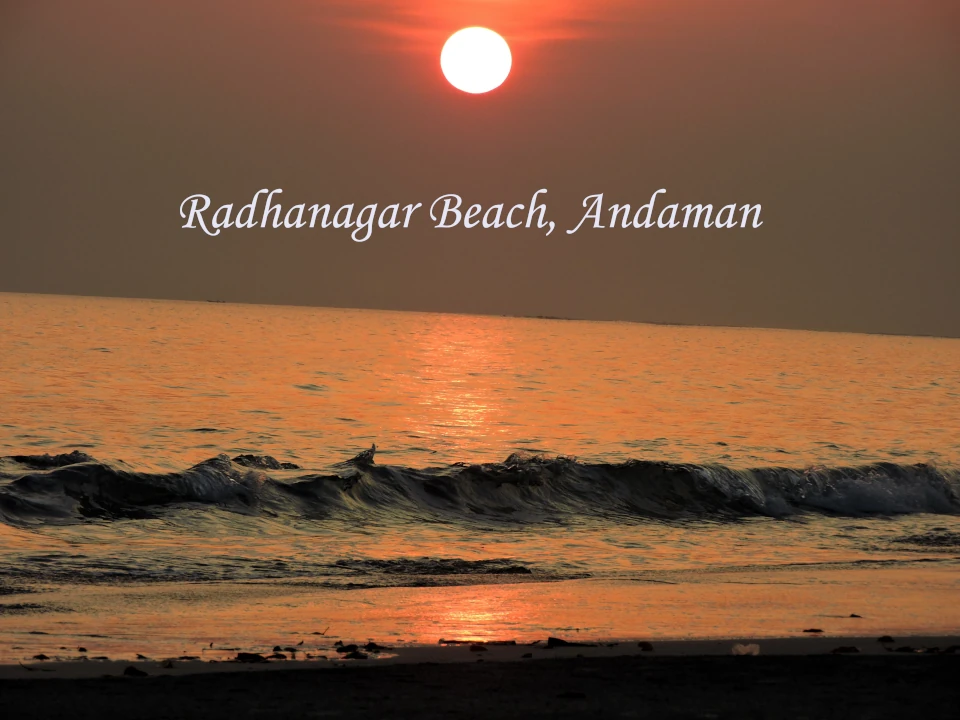
Radhanagar Beach – Top 10 Best Beaches in India 2026 (also called Beach No. 7) is the reason most people put Havelock Island on their list in the first place. Its sand is a fine, almost powdery white, framed by dense tropical forest on one side and the turquoise water of the Andaman Sea on the other the combination that earned it a spot as Asia’s best beach from TIME magazine back in 2004, a reputation it’s held onto ever since.
The beach itself is long enough that it never feels crowded even in peak season (December–February), and the shallow, gently sloping shoreline makes it one of the safer swimming spots on this list — a rarity among India’s beaches. Sunset here is the main event: the sky turns amber over the water, and it’s worth timing your visit to catch it.
What to pair it with: Elephant Beach, a short boat ride or jungle trek away, is the better choice if you want snorkeling or diving among coral reefs. Neil’s Cove, a quieter, less-visited spot nearby, suits travelers who’d rather skip the crowds altogether.
Tourist Attractions in Havelock Island
Getting there: Fly into Port Blair, then take a government or private ferry (Makruzz, Green Ocean, or Nautika) to Havelock Island — the crossing takes roughly 1.5–2 hours. From Havelock Jetty, it’s about 10–12 km to the beach: a private cab or pre-booked taxi is the most reliable option, a rented scooter gives you flexibility to also visit Elephant Beach and the town, and the local bus is the budget option but runs on a limited schedule, so check timings in advance.
Good to know: Radhanagar has no major hotels directly on the beach — most travelers stay in Govind Nagar or Vijaynagar and commute in, so factor a short daily transfer into your plans. There are a few basic food stalls near the entrance, but options are limited, so eating a proper meal in town beforehand is worth doing.
2. Baga Beach, Goa Best November February
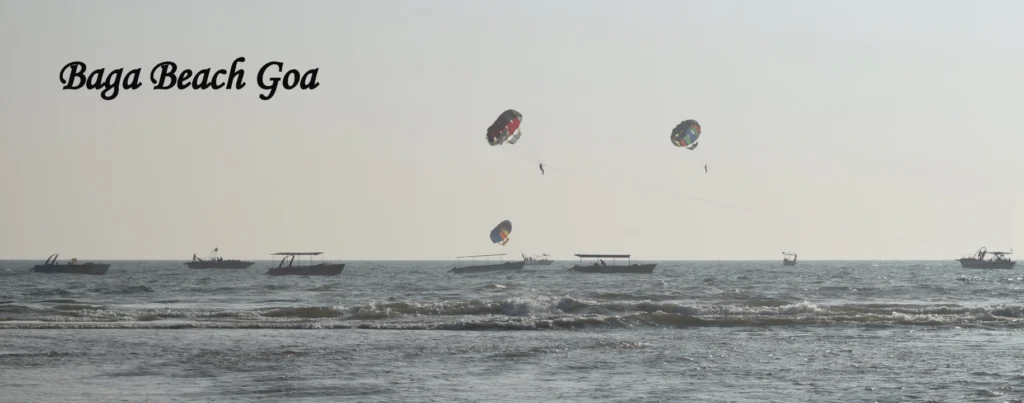
Baga Beach – Top 10 Best Beaches in India 2026 is North Goa’s party beach, and it makes no apologies for it. By day, the stretch fills with parasailing rigs, jet-skis, and banana boats hauling groups of screaming tourists across the water; by night, the beach shacks turn into full-blown clubs, with Tito’s Lane just behind the sand anchoring Goa’s most famous nightlife strip. If you want a quiet, contemplative beach walk, this isn’t it but if you want energy, this is the one to pick.
Top 10 Best Beaches The water sports scene here is Goa’s most developed, with operators lined up along the shore offering parasailing, jet-skiing, banana boats, bumper rides, and windsurfing at fairly standardized rates — it’s worth comparing two or three stalls before booking, since prices aren’t fixed. Baga River, which empties into the sea at the beach’s northern end, is also where a lot of the dolphin-watching boat trips depart from.
Book Your Tour Package in Baga, Goa
What to pair it with: Baga flows almost seamlessly into Calangute to the south, so many travelers cover both in a single day walk the shoreline between them, or hop between shacks. Anjuna, with its flea market and cliffside cafés, is a short scooter ride further north if you want a change of pace.
Getting there: A rented scooter is genuinely the easiest way to get around North Goa — roads are flat, distances are short, and rentals are cheap and everywhere. If you’d rather not drive, local buses run frequently between Baga, Calangute, and Panaji, and app-based taxis and pre-paid cabs are widely available, especially at night when the shacks are still going.
Good to know: Baga gets genuinely crowded from late December through early January, so book accommodation well ahead if you’re traveling in that window. The beach shacks serve food late, but kitchens can get backed up on busy nights — order early if you’re hungry rather than waiting until you’re starving. Keep valuables close; like any high-footfall tourist beach, petty theft on the sand is a known risk.
3. Calangute Beach, Goa — Best November–February

Calangute – Top 10 Best Beaches in India 2026 earned its nickname, “Queen of Beaches,” honestly it’s the widest, most developed stretch of sand in North Goa, and for decades it’s been the default first stop for anyone visiting the state. It’s less rowdy than Baga next door but still buzzing: expect a steady mix of families, groups of friends, and vendors selling everything from fresh coconut water to beachwear.
Water sports are on offer here too parasailing, jet-skiing, and banana boat rides though the scene is a notch calmer than Baga’s. What sets Calangute apart is the shopping and food. The Calangute Top 10 Best Beaches market strip is packed with stalls selling Goan cashews, spices, and souvenirs, and the restaurant density is among the highest in North Goa, ranging from beach shacks to proper multi-cuisine sit-down spots.
What to pair it with: Baga is genuinely walkable from here the two beaches blend into one long shoreline, so most travelers treat them as a single day out. If you want a break from the crowds, Candolim to the south is quieter and worth the short detour.
Getting there: Scooter rentals are the easiest way to get around, and Calangute’s roads are well paved and flat. Local buses connect it to Panaji and other North Goa beaches, and taxis are easy to flag down, especially near the main market.
Good to know: Calangute’s beach is patrolled by lifeguards along the main stretch, which makes it a slightly safer choice for families than some of Goa’s other beaches but currents can still pick up near the rockier edges, so stick to the flagged safe-swimming zones. Peak season (late December to mid-January) brings heavy crowds and traffic on the approach roads, so plan extra travel time if you’re coming from elsewhere in Goa.
4.Gokarna Beach, Karnataka — Best October–March
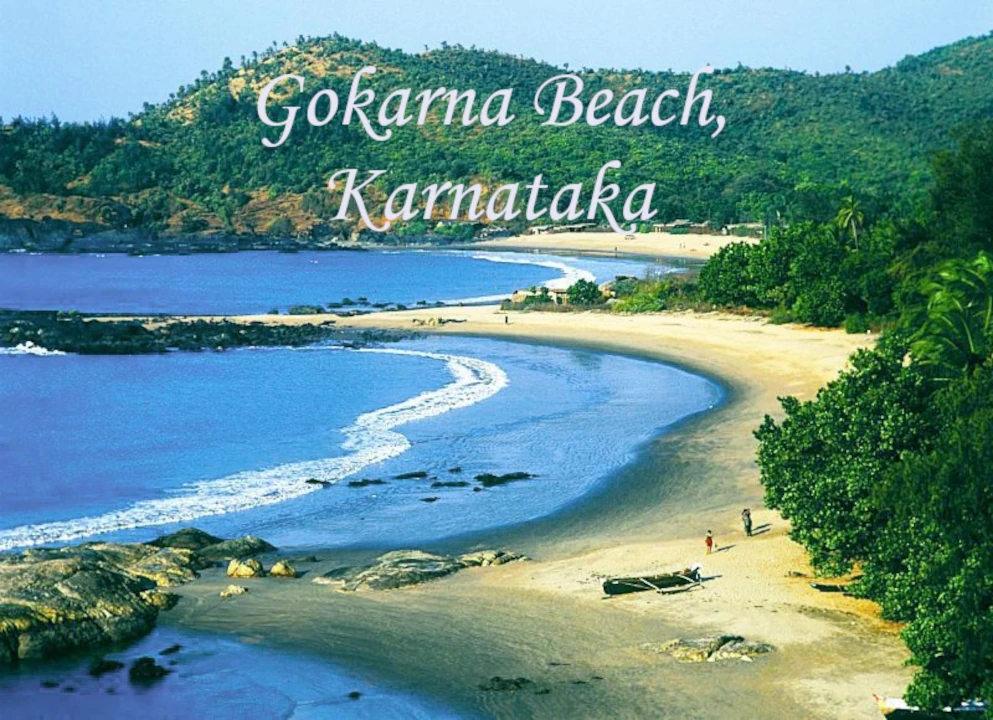
Gokarna Beach – Top 10 Best Beaches in India 2026 is what Goa felt like decades ago a cluster of quieter, more laid-back beaches strung along a rugged coastline, connected by cliffside trekking trails rather than roads. It’s grown popular with backpackers and travelers looking for a slower pace than Goa’s, without giving up beach shacks, yoga retreats, or a decent sunset view.
The beach cluster itself has a clear hierarchy. Om Beach, shaped like the “OM” symbol from above, is the most developed and easiest to reach, with a good spread of shacks and water sports. Kudle Beach, just a 20–30 minute cliffside walk from Om, is calmer and popular with longer-stay travelers and yoga practitioners. Half Moon Beach is smaller, more secluded, and reachable mainly on foot or by boat — it’s the pick if you want fewer people around you. A fourth, Paradise Beach, sits even further along the trail for those willing to walk further for more solitude.
In town, the Mahabaleshwara Temple, an ancient Shiva shrine, draws pilgrims year-round and gives Gokarna a genuine dual identity part beach town, part temple town that’s rare on this list.
What to pair it with: The cliffside trek connecting Om, Kudle, and Half Moon beaches is an attraction in its own right budget half a day if you want to walk the full stretch rather than rushing between beaches by jeep.
Getting there: Auto-rickshaws and shared jeeps run between Gokarna town and the beach cluster, and are the most common way to get around if you’re not walking the cliff trail. The nearest railway station is Gokarna Road, about 8–9 km from town, with taxis and buses available for the onward trip.
Good to know: Facilities thin out fast beyond Om Beach Half Moon and Paradise have minimal shacks and no reliable phone signal in places, so carry water and cash, and let someone know your plan if you’re trekking alone. Because Gokarna is also a pilgrimage town, modest dress is appreciated near the temple area, even if you’re headed straight to the beach afterward
5. Varkala Beach, Kerala: Best September March
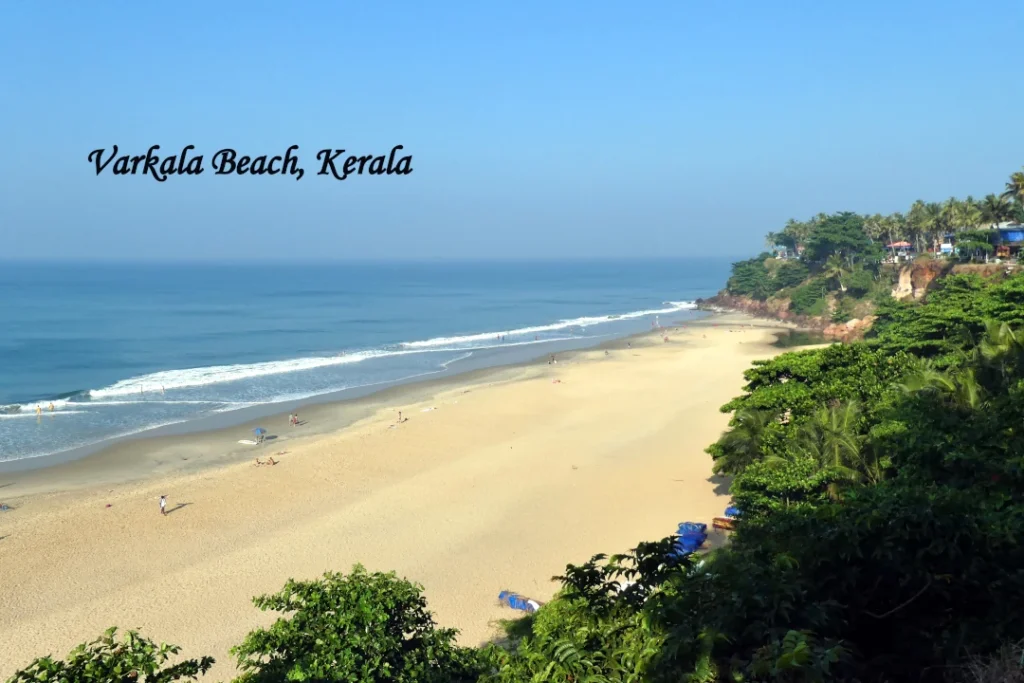
Varkala Beach – Top 10 Best Beaches in India 2026 is unlike anywhere else on this list a red laterite cliff runs for nearly two kilometers directly above the beach, with a strip of cafés, guesthouses, and Ayurvedic spas built right along the edge. It’s the one beach here where the view from the shore is almost as much of a draw as the beach itself.
The main beach below the cliff, often called Papanasam Beach, has a spiritual dimension too — Hindu pilgrims come here to perform rituals believed to wash away sins, and it sits beside the Janardanaswamy Temple, one of Kerala’s oldest. Below the cliff, the swimming zone is flagged and lifeguard-monitored in season, though the undertow can get strong, so it’s worth sticking to the marked safe areas.
Up on the cliff itself, the pace slows right down. Cafés serve everything from fresh seafood to banana pancakes and continental fare, many with unobstructed sea views, and the string of Ayurvedic centers along the clifftop offer everything from a one-hour massage to multi-day wellness programs — Varkala has built its reputation as much on rejuvenation as on the beach.
What to pair it with: A sunset walk along the cliff path is close to mandatory here — the cafés fill up fast around that hour, so grab a table early if you want a sea-facing spot.
Getting there: Varkala Railway Station is well connected to Thiruvananthapuram and Kochi, and it’s just a short auto-rickshaw ride (around 5 km) from the station to the cliff and beach. Auto-rickshaws and taxis are the easiest way to get around locally; the cliff area itself is walkable once you’re there.
Good to know: Top 10 Best Beaches The cliff path has uneven sections and no railings in places, so watch your footing at night. Varkala’s shops and Ayurvedic centers vary widely in quality — check reviews before committing to a spa package, and confirm credentials if you’re booking a longer treatment course.
6. Kovalam Beach, Kerala: Best September March
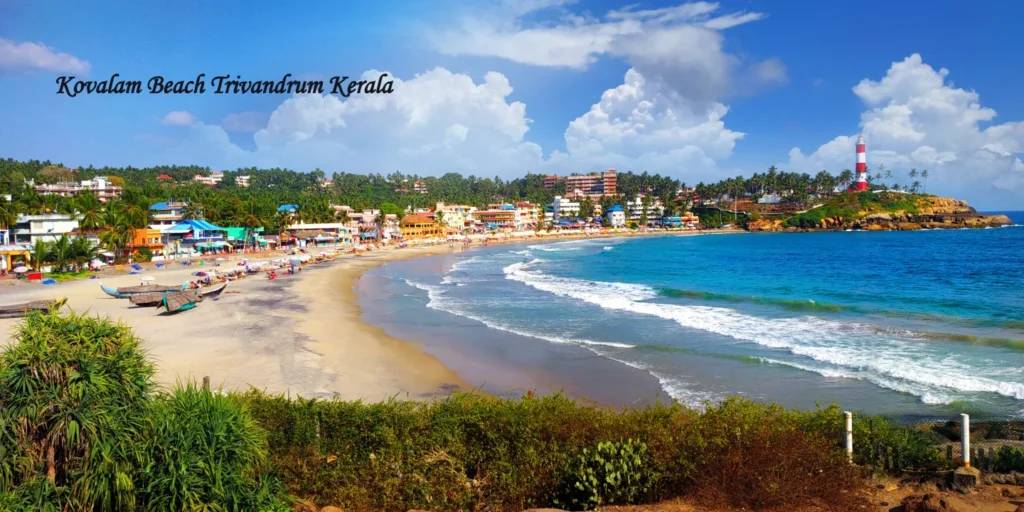
Kovalam Beach – Top 10 Best Beaches in India 2026September–March, as the northeast monsoon eases and the Arabian Sea coast settles into calm, dry weather.
About 16 km from Thiruvananthapuram, Kovalam has been Kerala’s flagship beach resort town since the 1930s, when the erstwhile royal family built a palace here that later became the Halcyon Castle Hotel — one of India’s earliest beach tourism ventures. Its signature crescent-shaped coves, separated by a rocky headland, still give it a more sheltered, resort-town feel than the open stretches further north.
Book Your Hotel Stay – Kovalam
Attractions: Lighthouse Beach, named for the century-old red-and-white lighthouse that visitors can climb for coastal views, plus Hawah Beach and Samudra Beach making up the three main coves. Kovalam is also one of India’s best-known centres for authentic Ayurvedic treatments, with many resorts offering short wellness programs alongside the beach stay. Local transport: Taxis and auto-rickshaws from Thiruvananthapuram Airport take about 30 minutes; within Kovalam, the coves are close enough to walk between along the beach or the cliff path above.
Food: Fresh seafood grills right on the sand, Kerala thalis served on banana leaf, and beachfront dining at resorts like The Leela Kovalam a good spot for sunset dinners given its clifftop position.
Good to know: Kovalam’s coves are calmer than most on this list, but lifeguard flags still mark safer swimming zones worth checking before going in, especially with children.
7. Marina Beach, Chennai, Tamil Nadu: Best November February
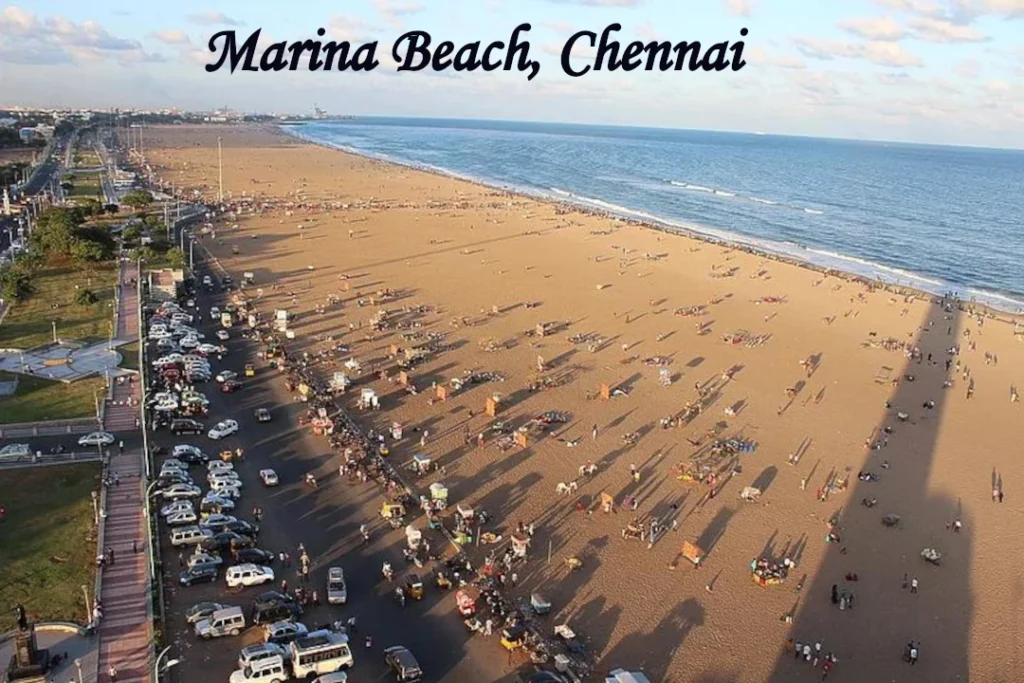
Marina Beach – Top 10 Best Beaches in India 2026 November–February, when Bay of Bengal humidity eases and evening sea breezes make the promenade genuinely pleasant to walk.
Stretching roughly 13 km along Chennai’s coastline, Marina Beach is India’s longest urban beach and one of the longest natural urban beaches in the world. Laid out as a formal promenade in the 1880s under Governor M.E. Grant Duff, it later became a rallying ground for freedom-movement gatherings and remains one of Tamil Nadu’s most recognisable public spaces today — as much a civic landmark as a beach.
- Attractions: The 1887 Chennai Lighthouse (one of the few in India accessible by lift), statues and memorials honouring Tamil literary figures and freedom fighters along the promenade, the Ice House, and Anna Square and MGR Memorial nearby. Sunrise and early evening are the best times for photography and a quieter walk.
- Local transport: Chennai Metro (Government Estate or LIC station), MTC city buses running along Kamarajar Salai, and app-based cabs — all convenient given the beach’s central location.
- Food: The promenade comes alive in the evenings with street stalls selling sundal, bajji, murukku, and roasted corn — a classic Chennai beach-evening experience.
- Good to know: Strong undercurrents make swimming unsafe here; it’s best enjoyed as a walking and people-watching beach rather than a swimming one (a point worth repeating since it’s easy to miss in a long guide).
8. Mahabalipuram Beach, Tamil Nadu: Best November–February
Mahabalipuram Beach – Top 10 Best Beaches in India 2026 November–February, when coastal humidity drops and it’s comfortable to explore the temple complex on foot.
Roughly 55 km south of Chennai along the East Coast Road, Mahabalipuram (also called Mamallapuram) pairs a working beach with one of India’s most remarkable open-air museums. The town flourished as a major seaport under the 7th-century Pallava dynasty, and its shoreline is still lined with rock-cut monuments carved directly from granite outcrops — a rare combination of beach holiday and UNESCO World Heritage Site in one stop.
- Attractions: The UNESCO-listed Shore Temple, right at the water’s edge, along with the Five Rathas, Arjuna’s Penance rock relief, and Krishna’s Butterball — a massive balanced boulder that draws its own crowd of visitors. The beach itself is a working fishing beach, so early mornings bring a glimpse of the local catch coming in.
- Local transport: Regular buses and cabs run along the East Coast Road (ECR) from Chennai (roughly 1–1.5 hours); once in town, cycles and autos are the easiest way to move between the beach, temple complex, and craft villages.
- Food: Beachside seafood shacks serve the day’s catch, while the town centre has solid South Indian meal options — Mahabalipuram is also known for its stone-carving workshops, worth a browse if you’re picking up a souvenir.
- Good to know: Like most of this coastline, currents can be strong, so treat it as a sightseeing-and-photography beach first, swimming spot second. Aim to visit the monuments early morning or late afternoon to avoid the midday heat on the open rock surfaces
9. Dhanushkodi Beach, Tamil Nadu: Best October–February
Dhanushkodi Beach – Top 10 Best Beaches in India 2026 Best season: October–February, when the weather is calm enough for the exposed, treeless drive out to the sandbar.
At the southeastern tip of Rameswaram, Dhanushkodi is one of India’s most haunting coastal destinations — a former port town levelled by a devastating cyclone in 1964 that killed hundreds and left the settlement permanently abandoned. What remains is a stark “ghost town” of roofless stone ruins scattered across a narrow sandbar, with the Bay of Bengal on one side and the Indian Ocean on the other, and views toward Ram Setu (Adam’s Bridge), the chain of shoals believed in Hindu tradition to connect India to Sri Lanka.
- Attractions: The ruined church, railway station, and government buildings left as they stood after the cyclone, the meeting point of two seas at the very tip of the sandbar, and distant views of Ram Setu on a clear day. The stark, empty landscape itself is the main draw for photographers.
- Local transport: Shared jeeps or private vehicles from Rameswaram cover the final stretch, since the road is restricted and vehicle-only, generally open from around 6 AM to 5 PM — plan to arrive well before the afternoon cutoff.
- Food: Only a handful of basic stalls near the entry point, so most travellers eat in Rameswaram town before heading out or after returning.
- Good to know: Strong currents and unpredictable tides make swimming here genuinely dangerous, not just discouraged — stick to the shoreline for photos rather than wading in. Carry a valid photo ID, as this is a restricted zone with checks along the way, and carry water since there’s little shade on the exposed sandbar.
10. Puri Beach, Odisha: Best October February
Puri Beach, Odisha – Top 10 Best Beaches in India 2026 October–February, when the coastal humidity eases and pilgrim crowds are more manageable outside major festival dates.
One of Hinduism’s four sacred Char Dham pilgrimage sites, Puri’s beach sits alongside the 12th-century Jagannath Temple, making this as much a spiritual destination as a coastal one. The wide, gently sloping shore has drawn pilgrims for centuries, and it’s also home to a living tradition of sand art — this is where the celebrated sculptor Sudarsan Pattnaik has created many of his large-scale works, and informal sand artists still work the beach daily.
- Attractions: Sand-art displays along the shore, easy day trips to the 13th-century Konark Sun Temple (a UNESCO World Heritage Site) about an hour away, and Chilika Lake — Asia’s largest brackish water lagoon and a major migratory-bird habitat — roughly 1.5 hours from Puri.
- Local transport: Cycle-rickshaws and auto-rickshaws cover the town easily, and the beach is a short ride from Puri Railway Station, which has direct connections to Kolkata, Bhubaneswar, and other major cities.
- Food: Traditional Odia thalis, the Jagannath Temple’s sacred Mahaprasad offerings (prepared in one of the world’s largest temple kitchens), and beachside seafood stalls in the evenings.
- Good to know: Puri gets extremely crowded during the annual Rath Yatra chariot festival (usually June–July); if you’re after a quieter beach experience, avoid that window and check the temple’s dress code before visiting, as it has specific entry requirements.
A Realistic 10-Day Itinerary Across India’s Beaches
Top 10 best beaches Trying to see all ten beaches on one trip isn’t realistic — they’re spread across four time zones’ worth of geography. Here’s a 10-day route that strings together one east-meets-island circuit without exhausting yourself in transit:
- Day 1–2: Fly to Port Blair, ferry to Havelock Island, explore Radhanagar Beach
- Day 3: Return to the mainland, fly to Goa
- Day 4: Baga and Calangute beaches, North Goa sightseeing
- Day 5: Drive to Gokarna, explore Om and Kudle beaches
- Day 6: Fly to Thiruvananthapuram, settle into Kovalam
- Day 7: Day trip to Varkala’s cliffside cafés
- Day 8: Fly to Chennai, evening at Marina Beach
- Day 9: Day trip to Mahabalipuram’s Shore Temple and beach
- Day 10: Optional extension to Rameswaram/Dhanushkodi or Puri, or fly home from Chennai
Most travelers do better picking one or two regional circuits — Andaman + Goa, or a South India loop through Kerala and Tamil Nadu — rather than chasing all ten in a single trip.
Travel Guidelines & Tips
- Match your dates to each coast’s season: Goa/Karnataka/Kerala favor October–March, Tamil Nadu/Odisha favor November–February, and the Andamans stay pleasant October–April.
- Avoid swimming at Marina Beach and Dhanushkodi — the undercurrents are genuinely dangerous. Radhanagar and Kovalam are safer choices.
- Book Havelock ferries and peak-season hotels 3–4 weeks out; they sell out fast in December and January.
- Pack reef-safe sunscreen, light cotton clothing, and a reusable water bottle.
- Business travelers can combine Chennai’s Guindy/OMR corridor or Kochi’s IT hubs with a beach afternoon — both cities have well-connected airports close to the coast.
- Carry a valid photo ID at all times; restricted zones like Dhanushkodi require ID checks at entry.
Checklist for Families Traveling with Infants
- A lightweight, foldable stroller that handles sand and uneven paths
- Enough diapers, wipes, and formula on hand — stock varies between island and mainland towns
- Infant-safe sunscreen, a wide-brimmed hat, and a portable shade tent
- A baby carrier for jetties, promenades, and jeep transfers
- Basic fever, motion-sickness, and stomach-upset medicine, plus your pediatrician’s contact
- Confirmed crib/cot availability with your hotel in advance, especially on Havelock Island
- Bottled or purified water, including pre-boiled water for formula
Types of Tickets & Tour Plans
- Ferry tickets to Havelock: Government ferries (budget-friendly) or private operators like Makruzz and Green Ocean (faster, pricier)
- State tourism day tours: Goa Tourism, Kerala Tourism, TTDC, and Odisha Tourism all run coach-based multi-beach day tours
- Restricted-zone entry: A small per-vehicle fee applies at Dhanushkodi’s Green Zone; most other beaches are free to enter
- Fixed-departure holiday packages: Bundled flights, hotels, and sightseeing across one or more coasts
- Customized/independent tours: A better fit for business travelers extending a work trip, or families who want flexible timing
10 Best India Beach Tour Packages to Consider
- Goa Beach Getaway (4N/5D) — North + South Goa beach-hopping with water sports
- Andaman Island Escape (3N/4D) — Port Blair + Havelock, including Radhanagar Beach
- Andaman Extended (3N/4D, Havelock-focused) — More time on Havelock’s beaches and reefs
- Kerala Backwaters & Beaches (5N/6D) — Cochin, Munnar, Thekkady, Alleppey/Kumarakom
- Classic Kerala Coast (4N/5D) — Cochin, Munnar, Thekkady, Alleppey
- Golden Triangle with Goa Beach Stay — Delhi, Agra, Jaipur culture paired with a Goa beach extension
- Best of India Beaches (10N/11D) — Mumbai, Goa, Trivandrum, Kovalam, Varkala in one circuit
- South India Beach & Backwater Loop (7N/8D) — Kerala beaches combined with a backwater houseboat stay
- Lakshadweep Island Package (4N/5D) — A quieter, permit-based alternative for travelers wanting fewer crowds
- Tamil Nadu Coastal Heritage Tour (5N/6D) — Chennai, Mahabalipuram, and Rameswaram/Dhanushkodi
Local Transport by Region
- Andaman/Havelock: Private cabs, rented scooters, local buses from the jetty
- Goa: Rented scooters and bikes (most common), local buses, taxis
- Karnataka (Gokarna): Auto-rickshaws, rented scooters, shared jeeps
- Kerala (Varkala/Kovalam): Auto-rickshaws and taxis from the nearest railway station or airport
- Tamil Nadu (Chennai/Mahabalipuram/Dhanushkodi): Chennai Metro, MTC buses, app-based cabs, ECR buses, shared jeeps
- Odisha (Puri): Cycle-rickshaws and auto-rickshaws, short ride from Puri Railway Station
2 Tour Operators Worth Knowing
1. Tour My India — An established beach-tour operator with local offices in Goa, Kerala, Andaman, Odisha, and Maharashtra, and certifications from IATA, IATO, TAAI, and India’s Ministry of Tourism. Good for multi-region beach circuits like the “Best of Indian Beaches” 10-night route.
2. TourRadar — A booking platform aggregating beach-focused itineraries across India, including Kerala backwater-and-beach combinations and Andaman island trips, with verified traveler reviews on each tour.
Always verify current licensing, itinerary details, and pricing directly with the operator before booking — Ryde Travel does not independently endorse or manage third-party tour bookings.
2 Preferred Hotels for Accommodation
- Taj Exotica Resort & Spa, Goa (Benaulim) — A beachfront luxury resort in South Goa with multiple pools, a full-service spa, and easy access to nearby beaches. Well suited for families and business travelers extending a trip.
- The Leela Kovalam, A Raviz Hotel — India’s only clifftop 5-star resort in Kovalam, Kerala, with private beach access, Ayurvedic wellness treatments, and Arabian Sea views.
Food Facilities at India’s Beaches
Top 10 best beaches Food varies as much as the coastline does. In Goa, beach shacks serve seafood thalis, prawn balchão, and continental fare right on the sand. Kerala’s Varkala and Kovalam lean toward fish fry, banana chips, and cliff-top cafés with both local and continental menus. Gokarna’s shacks mix Israeli and continental-fusion dishes with South Indian thalis. Chennai’s Marina has evening street stalls for sundal, bajji, and roasted corn, while Mahabalipuram’s beach road is lined with fresh seafood shacks. Puri offers traditional Odia thalis and the Jagannath Temple’s sacred Mahaprasad.
Dhanushkodi has limited food options near the entry point, so most travelers eat in Rameswaram before or after the visit. If you’re traveling with children or have a sensitive stomach, stick to stalls with visible hygiene practices and high turnover, and choose freshly cooked hot food over anything pre-made.
Closing Thought
Whichever coast you choose, matching your trip to India’s seasonal calendar is what separates a rushed vacation from a relaxed one. Plan around the season, lock in transport and hotels early, and let each region’s history and food guide the rest. Safe travels.
Frequently Asked Questions
1. What is the best season to visit India’s beaches overall?
October to February works well across most of the country, though the Andaman Islands stay pleasant through April and Kerala’s coast is comfortable from September onward.
2. Can I visit all 10 beaches in a single 10-day trip?
Not comfortably the Andamans, Goa, Karnataka, Kerala, Tamil Nadu, and Odisha are geographically far apart. Most travelers pick one or two regional circuits instead.
3. Is swimming safe at all these beaches?
No. Marina Beach and Dhanushkodi have strong undercurrents, so swimming is discouraged there. Calmer beaches like Radhanagar, Kovalam, and Baga are safer options.
4. Can business travelers combine work trips with a beach visit?
Yes. Chennai’s Guindy/OMR corridor, Kochi’s IT hubs, and Goa’s business districts all sit close to major beaches, making it easy to fit in leisure time around meetings.
5. What is the best time to visit Dhanushkodi Beach?
October to February has the most pleasant weather. The restricted final stretch is generally open from around 6 AM to 5 PM, so plan to arrive by early afternoon.
6. Are these beaches suitable for families traveling with infants?
Yes, with planning. Calmer beaches like Kovalam, Radhanagar, and Calangute suit young children better than high-current beaches like Marina and Dhanushkodi.
7. How do I reach Havelock Island for Radhanagar Beach?
Fly into Port Blair, then take a government or private ferry (such as Makruzz or Green Ocean) to Havelock Island, followed by a short local transfer to the beach.
8. What food safety precautions should I take at beachside stalls?
Choose stalls with visible hygiene and high turnover, prefer freshly cooked hot food, and carry bottled water — especially when traveling with children or infants.
OFFICIAL & AUTHENTIC GOVERNMENT/TRAVEL RESOURCES
Always cross-check timings, safety advisories, and permit requirements directly from official sources before your trip:
- Incredible India – Ministry of Tourism, Government of India
- Ministry of Tourism, Government of India – Official Site
- Andaman & Nicobar Islands Administration – Official Portal
- Goa Tourism Development Corporation – Official Site
- Karnataka Tourism – Official Site
- Kerala Tourism – Official Site
- Tamil Nadu Tourism – Official Site
- Odisha Tourism – Official Site
- Ministry of External Affairs, India – Travel Advisories
For business travelers, the Invest India portal (national investment facilitation agency) is useful for verifying business-visa and corridor information before combining work and travel.
RYDE TRAVEL INTERNAL LINKS TO INCLUDE
Weave these naturally into the body copy (not as a dumped list at the end) — suggested placements below:
| Anchor text idea | Link | Suggested placement |
|---|---|---|
| Havelock Island activities | https://rydetravel.com/tourist-activities-in-havelock-island/ | Radhanagar Beach section |
| Sri Lanka visa guide | https://rydetravel.com/sri-lanka-visa-for-indians-2026-eta-cost-full-guide/ | Travel Guidelines (for readers combining India + Sri Lanka) |
| Flight booking tips | https://rydetravel.com/flight-booking-tips-2026/ | Ticket & Tour Plans section |
| Travel insurance comparison | https://rydetravel.com/travel-insurance-compared/ | Travel Guidelines / Family checklist |
| India Travel category hub | https://rydetravel.com/category/india-travel/ | Introduction, first mention of “India Beaches” |
| Maldives vs Seychelles comparison | https://rydetravel.com/maldives-vs-seychelles-compare-beaches-and-costs/ | Closing thought, as a “if you’re also considering…” link |
| Book Accommodation hub | https://rydetravel.com/book-accomadation/ | Preferred Hotels section |
| Tours & Activities hub | https://rydetravel.com/tours-and-activities/ | Tour Packages section |
Top 10 Best Beaches in India to Visit in 2026, featuring breathtaking coastal destinations perfect for relaxation, adventure, and unforgettable vacations. From the crystal-clear waters of Radhanagar Beach in the Andaman Islands to the vibrant shores of Goa, the serene cliffs of Varkala, and the golden sands of Marina Beach, this guide covers India’s most beautiful beach destinations. Whether you’re looking for water sports, family holidays, romantic getaways, or peaceful sunsets, these beaches offer something for every traveler. Plan your 2026 beach vacation with our expert travel tips, the best time to visit, and must-try activities at each destination
- Relax on beautiful sandy shores.
- Enjoy exciting water sports and adventure activities.
- Experience breathtaking sunrises and sunsets.
- Explore local culture, seafood, and nearby attractions.
- Perfect destinations for family vacations, honeymoon trips, and solo travel.
Plan your 2026 beach vacation with Ryde Travel and discover the most beautiful coastal destinations across India!






Leave a Reply