This guide contains affiliate links. We may earn a commission at no extra cost to you — see our Affiliate Disclosure and Affiliate Disclosure Policy for details.
⚡ Quick Answer: UNESCO Heritage Sites in Sri Lanka
Sri Lanka has 8 UNESCO World Heritage Sites — 6 cultural and 2 natural. They are: Sigiriya (Lion Rock), Anuradhapura, Polonnaruwa, Dambulla Cave Temple, Kandy (Temple of the Tooth), Galle Fort, Sinharaja Forest Reserve, and the Central Highlands. All 8 sites are reachable from Colombo within 2–6 hours by road or rail. For travellers from Chennai, Sri Lanka is just a ~2-hour flight away, making it a perfect 4–5 day long-weekend itinerary. Entry fees range from USD 15–30 per site for foreign nationals. The best time to visit is December to April for dry, pleasant weather across most of the island.
It was August 2018. Six families. Forty-something adults, a handful of excited kids, mountains of luggage, and an itinerary we had argued over for weeks. The destination? Sri Lanka — the teardrop island hanging just off the southern tip of India, barely two hours from Chennai by air.
Table of Contents
None of us quite expected what we found. We went for a holiday. We came back transformed. The UNESCO Heritage Sites in Sri Lanka aren’t just “tourist spots.” They are living, breathing monuments to civilisations that built empires, worshipped with extraordinary devotion, and left behind art so beautiful it makes your throat tighten. Standing at the base of Sigiriya at dawn, or stepping barefoot into the cool dimness of the Dambulla caves, you feel something most modern travel simply doesn’t give you — a genuine sense of awe.
If you’re based in Chennai (or anywhere in South India), this is your reminder: Sri Lanka is not a far-away dream. It’s a long-weekend trip. Here is everything you need — the sites, the stories, the hotels, the budget, the local transport, and the honest tips — all from someone who’s actually been there, with family, in the humidity of August.
The 8 UNESCO Heritage Sites in Sri Lanka — And What Makes Each One Unforgettable
1. 🦁 Sigiriya (Lion Rock) — The Eighth Wonder of the Ancient World
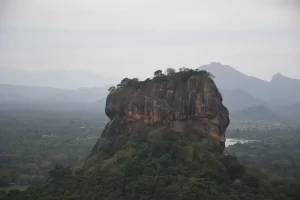
Nothing on this trip prepared us for Sigiriya. Rising nearly 200 metres above the surrounding jungle, this 5th-century rock fortress was built by King Kashyapa — a king who stole his father’s throne, feared his brother’s revenge, and built himself a palace in the sky. The climb is steep and breathless, but somewhere near the famous frescoes — vivid apsaras painted 1,500 years ago, still glowing with colour — you forget you’re tired.
The mirror wall, polished so finely that the king could see his reflection, still bears poems written by visitors in the 8th century. At the summit, the ruins of the palace and the staggering 360° view over jungle canopy make it all worth it.
- 📍 Location: Matale District, Central Province
- 🕐 Distance from Colombo: ~170 km (3–3.5 hrs by road)
- 💵 Entry Fee: USD 30 (foreign nationals)
- ⏱️ Time needed: 3–4 hours (climb + gardens)
- 💡 Pro Tip: Start the climb before 7 AM — the rock heats up fast, the crowds multiply by 9 AM, and the morning light on the frescoes is magical.
🏨 Hotels Near Sigiriya
1. Heritance Kandalama
An architectural masterpiece built into a rock face. Pool, jungle views, spectacular sunrises.
💰 ~USD 120–180/night
2. Jetwing Vil Uyana
Luxury eco-resort in a wetland sanctuary, 5 min from Sigiriya. Birdwatching at dawn from your villa deck.
💰 ~USD 150–220/night
Book Your Tour Package in Srilanka
2. 🌳 Sacred City of Anuradhapura — A Civilisation That Thrived Before Rome
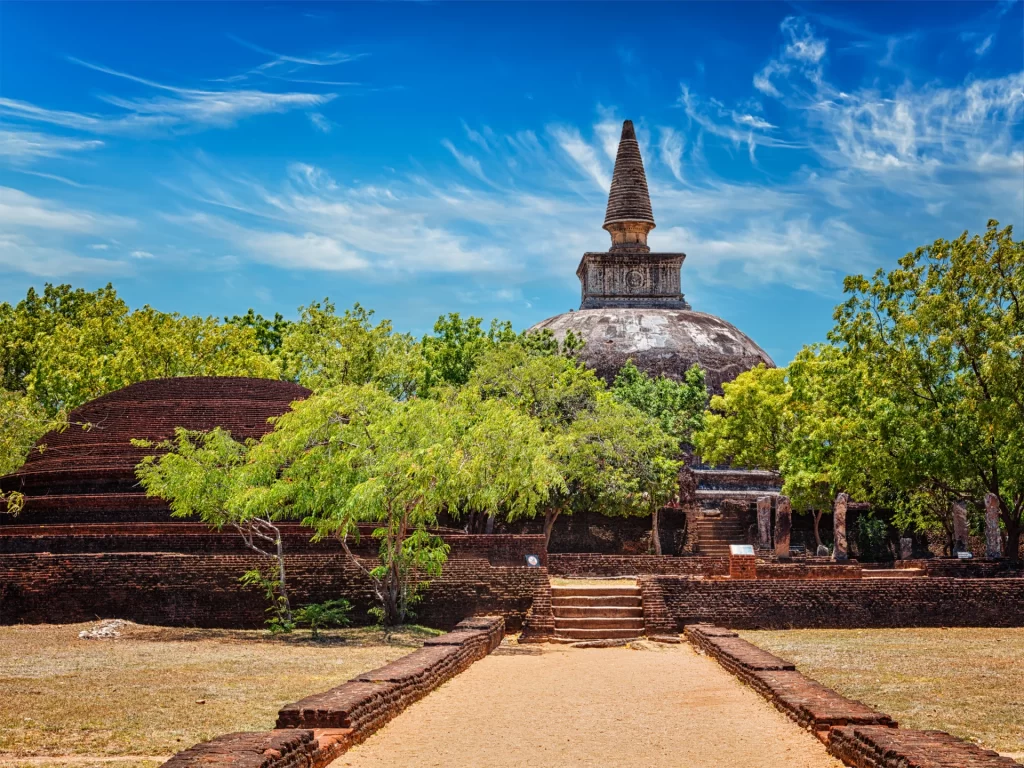
Anuradhapura humbled us. Established in the 4th century BCE, this was one of the great cities of the ancient world at a time when much of Europe was still tribal. The dagobas (stupas) here are gigantic — some as tall as the Egyptian pyramids — and they were built to house relics of the Buddha.
But the single most moving sight is the Jaya Sri Maha Bodhi: a sacred fig tree grown from a cutting of the very tree under which the Buddha attained enlightenment. It is the oldest historically documented tree on Earth, over 2,300 years old. Pilgrims come at all hours, draped in white, carrying jasmine and lotus. The air smells of incense and devotion. It is impossible not to feel something standing beside it.
- 📍 Location: North Central Province
- 🕐 Distance from Colombo: ~205 km (4–4.5 hrs by road or train)
- 💵 Entry Fee: USD 25 (foreign nationals)
- ⏱️ Time needed: Full day (the ruins are spread across a large area)
- 💡 Pro Tip: Rent a bicycle from town — it’s the best way to cover the vast archaeological zone. Dress modestly; the Bo Tree area is an active place of worship.
🏨 Hotels Near Anuradhapura
1. Ulagalla by Uga Escapes
A serene eco-retreat with village-style bungalows surrounded by ancient tanks. Exceptional Sri Lankan cuisine.
💰 ~USD 180–260/night
2. Palm Garden Village Hotel
Mid-range resort with a pool, 10 min from the sacred zone. Good breakfast, helpful staff.
💰 ~USD 60–90/night
Book Your Hotel Stay
3. 🗿 Ancient City of Polonnaruwa — Carved by Kings, Frozen in Time
After the fall of Anuradhapura, the kingdom moved south to Polonnaruwa — and what they built here in the 11th and 12th centuries is extraordinary. The ancient city is compact, well-preserved, and deeply photogenic.
The showstopper is the Gal Vihara: four colossal Buddha figures carved directly from a single slab of granite. The reclining Buddha — 14 metres long, the face in an expression of absolute peace — is among the finest pieces of sculpture in all of Asia. Nearby, the 12th-century Parakrama Samudra (Sea of Parakrama), an ancient irrigation reservoir so vast it looks like a natural lake, will make you marvel at medieval engineering.
- 📍 Location: North Central Province (near Dambulla)
- 🕐 Distance from Colombo: ~215 km (4–5 hrs by road)
- 💵 Entry Fee: USD 25 (foreign nationals; covers the whole ancient city)
- ⏱️ Time needed: 4–6 hours
- 💡 Pro Tip: Visit on a bicycle (rentals outside the park gate). Pair this day with Sigiriya — both are in the same cultural triangle, about 1 hour apart.
🏨 Hotels Near Polonnaruwa
1. The Lake Hotel Polonnaruwa
Overlooks the ancient Parakrama Samudra reservoir. A peaceful mid-range pick with great sunset views from the terrace.
💰 ~USD 70–100/night
2. Deer Park Hotel
Garden resort on the lake’s edge. Excellent Sri Lankan rice-and-curry buffets. Wildlife (deer, peacocks) in the garden.
💰 ~USD 80–120/night
4. 🕌 Golden Temple of Dambulla — 2,000 Years of Art in Five Caves
We were not prepared for Dambulla. You climb a bare granite slope in the heat, remove your shoes at the top, and step into the first cave — and suddenly you’re surrounded by 150 Buddha statues and walls covered floor-to-ceiling in murals painted with extraordinary skill over two millennia. Five caves, each different in scale and mood, filled with gilded Buddhas in meditation, reclining, standing.
The largest reclining Buddha here is 15 metres long. The detail in the painted ceilings is the kind of thing that makes you stop walking and simply look up, open-mouthed. This is the largest and best-preserved cave temple complex in Sri Lanka, and it deserves every superlative.
- 📍 Location: Matale District (en route between Kandy and Sigiriya)
- 🕐 Distance from Colombo: ~148 km (2.5–3 hrs)
- 💵 Entry Fee: USD 15 (foreign nationals)
- ⏱️ Time needed: 2–3 hours
- 💡 Pro Tip: Remove jewellery and cover your shoulders and knees. The cave floors are rough — a thin pair of socks helps. Go before 9 AM to avoid tour groups.
🏨 Hotels Near Dambulla
1. Cinnamon Lodge Habarana
Sprawling eco-resort in Habarana (30 min from Dambulla). Excellent base for the entire Cultural Triangle. Elephant safaris on site.
💰 ~USD 130–180/night
2. Amaya Lake
Lakeside bungalow resort near Dambulla. Beautiful sunrise views, pool, and a warm Sri Lankan welcome.
💰 ~USD 90–130/night
5. 🦷 Sacred City of Kandy — Where a Tooth Became a Crown
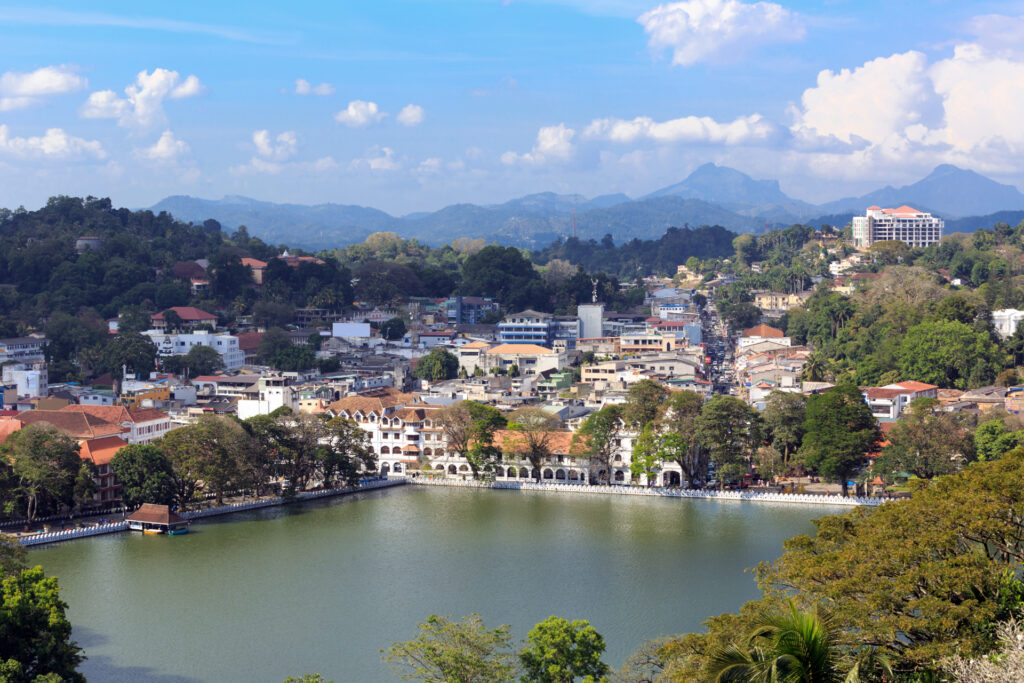
Kandy is the cultural soul of Sri Lanka — a hill city ringed by mountains, its centre anchored by a glittering lake and the Temple of the Sacred Tooth Relic. For centuries, whoever possessed the Buddha’s tooth possessed the right to rule Sri Lanka. Today, the tooth (housed in a gold casket, inside another casket, inside another) is enshrined in the Dalada Maligawa, one of the holiest sites in all of Buddhism.
The nightly puja ceremony — with drumbeats, conches, and the smell of incense drifting through the gilded halls — is something you simply have to experience. If you visit in July or August, the week-long Esala Perahera festival turns the entire city into a procession of elephants, dancers, and fire-torch bearers. We were lucky enough to catch it, and none of us will ever forget it.
- 📍 Location: Central Province
- 🕐 Distance from Colombo: ~115 km (2.5–3 hrs by road or scenic train)
- 💵 Entry Fee: USD 15 (foreign nationals)
- ⏱️ Time needed: Half day to full day (include Kandy Lake, Royal Botanical Gardens)
- 💡 Pro Tip: Take the train from Colombo Fort to Kandy — it’s a beautiful 2.5-hour journey through hills and rubber plantations. Book tickets in advance from Sri Lanka Railways.
🏨 Hotels Near Kandy
1. Mahaweli Reach Hotel
Riverside hotel in the heart of Kandy, 5 min from the Temple of the Tooth. Rooftop pool with panoramic hill views.
💰 ~USD 80–130/night
2. The Kandy House
A restored 19th-century manor house in the hills above Kandy. Only 9 rooms — intimate, beautiful, highly personal service.
💰 ~USD 150–220/night
6. ⚓ Old Town of Galle — Europe Meets the Orient on a Seaside Rampart
Book Your Air Ticket
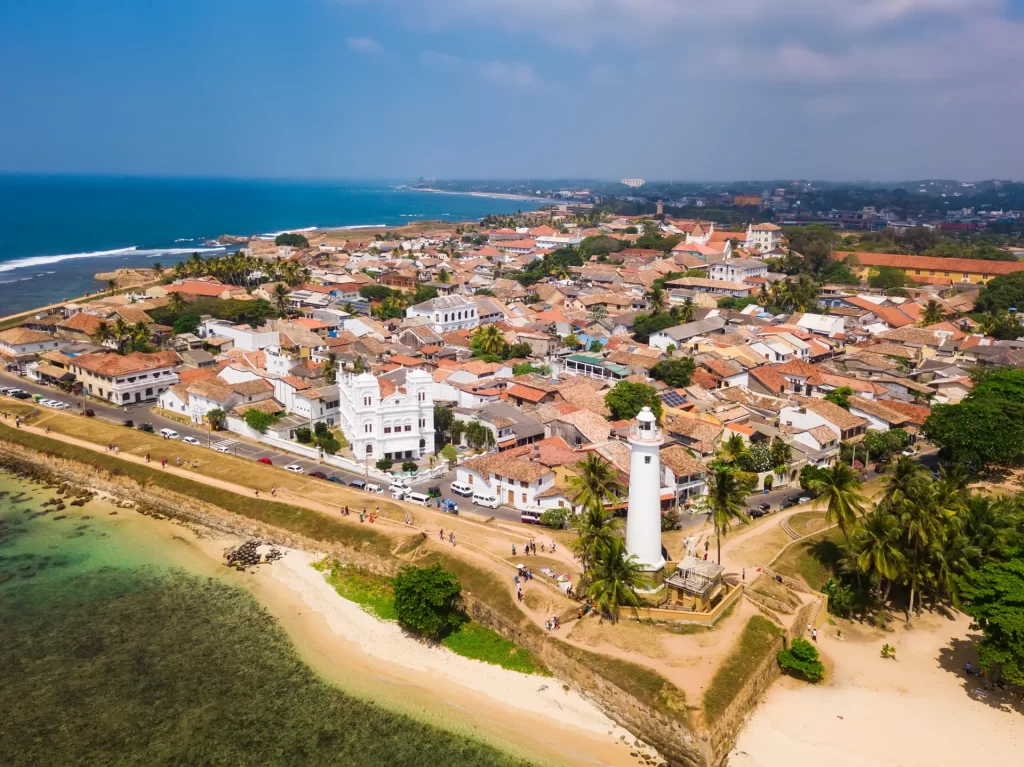
Galle Fort feels like stepping into a colonial novel. The Portuguese built it in 1588, the Dutch expanded it into a formidable fortress city in the 17th century, and today the 90-acre walled town is one of the best-preserved examples of European colonial fortification anywhere in South or Southeast Asia. Walking the ramparts at sunset — the Indian Ocean on three sides, old Dutch villas and churches within — is genuinely romantic.
The streets inside are a beautiful maze of boutique hotels, art galleries, bookshops, and cafés. It’s the kind of place you arrive planning to spend two hours and leave five hours later, having had three cups of coffee and bought things you didn’t know you needed.
- 📍 Location: Southern Province
- 🕐 Distance from Colombo: ~120 km (2–2.5 hrs by expressway or train)
- 💵 Entry Fee: Free (open fort; museums inside have small charges)
- ⏱️ Time needed: 3–5 hours
- 💡 Pro Tip: Walk the full perimeter of the ramparts for stunning ocean views. Visit the Galle National Maritime Museum and the Dutch Reformed Church. Evenings here are perfect.
🏨 Hotels Near Galle
1. Amangalla
A legendary hotel inside the fort, occupying the original Dutch governor’s residence. The most atmospheric stay in Galle.
💰 ~USD 400–600/night (splurge-worthy)
2. Galle Fort Hotel
A boutique heritage hotel inside the fort walls, colonial-style with a rooftop terrace and gorgeous pool.
💰 ~USD 180–260/night
7. 🌿 Sinharaja Forest Reserve — The Last Rainforest of Its Kind
Sinharaja is Sri Lanka’s ecological soul — the last viable stretch of primary tropical rainforest on the island. Over 60% of its trees are found nowhere else on Earth. Walking through it with a guide is like entering another world: the canopy closes overhead, the light goes green and filtered, and somewhere in the branches above you, endemic birds call to each other in sounds you’ve never heard before. More than 50% of Sri Lanka’s endemic species of mammals, birds, and butterflies live here.
This is not a day-trip destination — it requires some planning and physical effort — but for anyone who loves nature, it is unlike anything else you will experience in South Asia.
- 📍 Location: Sabaragamuwa/Southern Province
- 🕐 Distance from Colombo: ~130 km (3–3.5 hrs by road)
- 💵 Entry Fee: USD 12 + mandatory local guide fee (~LKR 1,500)
- ⏱️ Time needed: Half day to full day trek
- 💡 Pro Tip: A local guide is compulsory and genuinely invaluable. Wear light, quick-dry clothes. Bring insect repellent and waterproof footwear — the forest floor stays wet year-round.
🏨 Hotels Near Sinharaja
1. Rainforest Ecolodge
Rustic cabins on the forest edge near Deniyaya. Best access point for morning treks. Organic meals and bird checklists provided.
💰 ~USD 50–80/night
2. Boulder Garden Hotel
A charming property near Ratnapura, an hour from Sinharaja. Beautiful gardens and excellent local food.
💰 ~USD 60–90/night
8. 🏔️ Central Highlands — Where Clouds Touch the Earth and Leopards Walk Free
The youngest of Sri Lanka’s UNESCO sites (inscribed in 2010), the Central Highlands comprise three protected zones: Horton Plains National Park, the Knuckles Conservation Forest, and the Peak Wilderness Protected Area. Horton Plains alone is worth the journey — a misty, windswept plateau at 2,100 metres, where the famous World’s End drop falls sheer for 870 metres into the lowland jungle below. The highland air is cool and clean.
Waterfalls appear around every bend. The Sri Lankan Leopard — one of the world’s most endangered big cats — calls this landscape home, along with sambar deer, purple-faced langurs, and hundreds of endemic bird species. The scenic train through the tea country to reach the highlands is, on its own, one of the world’s great rail journeys.
- 📍 Location: Uva and Central Provinces
- 🕐 Distance from Colombo: Nuwara Eliya is ~170 km (4–5 hrs by road or train)
- 💵 Entry Fee: USD 15 for Horton Plains National Park
- ⏱️ Time needed: 1–2 days recommended
- 💡 Pro Tip: Visit Horton Plains early morning (before 8 AM) — the mist clears to reveal World’s End at its most dramatic. The Ella to Nuwara Eliya train through tea plantations is iconic.
🏨 Hotels Near Central Highlands
1. Jetwing St. Andrew’s, Nuwara Eliya
A classic colonial hill-country hotel with fireplaces, manicured gardens, and a genuine old-world atmosphere.
💰 ~USD 100–160/night
2. 98 Acres Resort, Ella
Hillside resort with stunning views over the tea estate valleys. Infinity pool, excellent food, close to the train.
💰 ~USD 120–180/night
🗓️ Suggested Itinerary: 5-Day UNESCO Heritage Tour of Sri Lanka from Chennai
This is our recommended itinerary for a 5-day trip (4 nights), designed around the Cultural Triangle and Southern Coast. It works brilliantly as a long-weekend or Diwali/Pongal holiday extension.
| Day | Route | UNESCO Sites | Stay |
|---|---|---|---|
| Day 1 | Fly Chennai → Colombo (morning). Drive to Dambulla (~3 hrs) | 🕌 Dambulla Cave Temple (afternoon) | Habarana / Dambulla |
| Day 2 | Habarana → Sigiriya → Polonnaruwa (1 hr apart) | 🦁 Sigiriya (morning) + 🗿 Polonnaruwa (afternoon) | Polonnaruwa / Habarana |
| Day 3 | Drive to Anuradhapura (1.5 hrs), then south to Kandy (4 hrs) | 🌳 Anuradhapura (morning) + 🦷 Kandy (evening puja) | Kandy |
| Day 4 | Drive Kandy → Galle (3.5 hrs via expressway) | ⚓ Galle Fort (afternoon + sunset walk) | Galle |
| Day 5 | Morning in Galle → Drive to Colombo (2 hrs) → Fly home | Colombo sightseeing (optional Colombo Fort / Gangaramaya Temple) | Fly back |
💡 Planning Tip: Add 2 more days to include Sinharaja Forest or the Central Highlands (Nuwara Eliya/Ella). Both are best done as separate trips or combined with a Kandy extension.
🚌 How to Get to Each UNESCO Heritage Site from Colombo
Sri Lanka has surprisingly good transport links, and for group travel (like our six-family expedition), a private van with a driver-guide is absolutely the most practical and cost-effective option. Here is a full breakdown:
| Site | Distance from Colombo | By Private Car/Van | By Train | By Bus | Approx. Cost (Private) |
|---|---|---|---|---|---|
| Sigiriya | ~170 km | 3–3.5 hrs via A9 | Train to Habarana, then tuk-tuk | Bus to Dambulla, then tuk-tuk | LKR 8,000–12,000/day |
| Anuradhapura | ~205 km | 4–4.5 hrs via A9 | Train from Colombo Fort (~4 hrs) | Express bus ~4.5 hrs | LKR 10,000–14,000/day |
| Polonnaruwa | ~215 km | 4–5 hrs via A6 | Train to Polonnaruwa (limited) | Bus from Colombo ~5 hrs | LKR 10,000–14,000/day |
| Dambulla | ~148 km | 2.5–3 hrs via A9 | No direct train; bus hub | Frequent buses from Colombo | LKR 7,000–10,000/day |
| Kandy | ~115 km | 2.5–3 hrs via A1 or Expressway | Scenic train ~2.5 hrs (recommended!) | Frequent buses ~3 hrs | LKR 6,000–9,000/day |
| Galle | ~120 km | 2 hrs via Southern Expressway | Coastal train ~2.5 hrs (scenic) | Express bus ~2.5 hrs | LKR 6,000–9,000/day |
| Sinharaja | ~130 km | 3–3.5 hrs via Ratnapura | No rail access | Bus to Ratnapura, then local | LKR 8,000–11,000/day |
| Central Highlands | ~170 km (Nuwara Eliya) | 4–5 hrs via Kandy | Train to Nanu Oya (scenic!) | Bus to Nuwara Eliya ~5 hrs | LKR 10,000–15,000/day |
🚐 Our Recommendation for Groups: Private Van with Driver-Guide
For groups of 4 or more (or families), hire a private AC van with a driver-guide for LKR 10,000–15,000 per day (roughly INR 2,500–3,500). This covers fuel, driver food, and tolls. A good driver-guide is worth their weight in gold — they’ll navigate, translate, recommend the best local lunch spots, and share history that no guidebook carries. Book through your hotel or reputable platforms like Sri Lanka Tourism Development Authority.
💰 Budget Guide: How Much Does It Cost to Visit UNESCO Heritage Sites in Sri Lanka?
Sri Lanka is excellent value for Indian travellers, especially with the INR-to-LKR exchange rate. Here is a realistic per-person budget for a 5-day trip from Chennai:
| Expense | Budget (₹) | Mid-Range (₹) | Luxury (₹) |
|---|---|---|---|
| ✈️ Flights (Chennai–Colombo return) | ₹8,000–12,000 | ₹12,000–18,000 | ₹20,000+ |
| 🏨 Accommodation (4 nights) | ₹6,000–10,000 | ₹15,000–25,000 | ₹40,000–80,000 |
| 🚐 Transport (Private van, 5 days, per person in group of 6) | ₹4,000–6,000 | ₹6,000–8,000 | ₹10,000–15,000 |
| 🎟️ Entry Fees (5 key sites) | ₹8,000–10,000 | ₹8,000–10,000 | ₹10,000–12,000 |
| 🍛 Food & Drinks (5 days) | ₹3,000–5,000 | ₹5,000–8,000 | ₹10,000–15,000 |
| 🛍️ Shopping & Miscellaneous | ₹2,000–4,000 | ₹4,000–8,000 | ₹10,000+ |
| Total (Per Person) | ₹31,000–47,000 | ₹50,000–77,000 | ₹1,00,000+ |
💡 Group travel significantly reduces per-person transport and accommodation costs. Our six-family trip averaged around ₹50,000–60,000 per person for 5 days including flights, for a truly memorable experience.
✈️ Essential Travel Tips for Visiting UNESCO Heritage Sites in Sri Lanka
📋 Visa & Entry
Indian citizens require an ETA (Electronic Travel Authorisation) to enter Sri Lanka. Apply online before travel at eta.gov.lk. Standard tourist ETA costs USD 20 and allows a 30-day stay. Processing is usually instantaneous. Do not use third-party sites — only the official government portal.
📅 Best Time to Visit
December to March is ideal for the Cultural Triangle and south coast. April to June suits the hill country. The southwest monsoon (May–August) brings heavy rain to the south and west, but the Cultural Triangle in the north remains dry. We visited in August 2018 — it was hot and occasionally rainy, but entirely manageable with good planning.
👗 Dress Code at Cultural Sites
At all Buddhist and Hindu sites — Kandy, Anuradhapura, Dambulla, Sigiriya — shoulders and knees must be covered. Carry a light scarf or sarong. Remove shoes before entering temples. This applies equally to men and women. Disrespect, even unintentional, can cause genuine hurt to local communities.
💱 Currency & Payments
The currency is the Sri Lankan Rupee (LKR). As of 2026, approximately 1 INR = 3.5–4 LKR. Entry fees at UNESCO sites are charged in USD and must often be paid in USD or by card. Carry some USD cash for site entries. ATMs are widely available in Colombo and major towns, but limited near remote sites like Sinharaja.
📱 Connectivity
Buy a local SIM at Colombo’s Bandaranaike Airport on arrival (Dialog or Mobitel are the best networks). A tourist data SIM with 10GB costs around LKR 500–700 (~₹125–175). Coverage is good at all major heritage sites. WhatsApp-based coordination works brilliantly for large groups.
🍛 Food & Water
Sri Lankan rice-and-curry is extraordinary — and very familiar to South Indian palates. Hoppers (appa), string hoppers, kottu roti, and fresh seafood are must-tries. Drink only bottled or filtered water at smaller establishments. At heritage sites, carry your own water bottle — vendors outside sell overpriced drinks. Coconut water from roadside stalls is safe, delicious, and inexpensive.
🔗 Official & Authentic Links for Planning Your Sri Lanka Heritage Trip
- 🌐 Sri Lanka Tourism Development Authority (Official): www.srilanka.travel — Official tourism portal for itineraries, licensed guides, and travel advisories
- 🏛️ UNESCO World Heritage — Sri Lanka: whc.unesco.org/en/statesparties/lk — Official UNESCO listing of all Sri Lankan heritage sites with inscriptions and conservation status
- 🎟️ Sri Lanka ETA (Official Visa Portal): www.eta.gov.lk — Only official government source for Sri Lanka visitor visas
- 🚂 Sri Lanka Railways (Official Ticket Booking): www.eticket.railway.gov.lk — Book Colombo–Kandy and Kandy–Ella train tickets in advance
- 🌿 Department of Wildlife Conservation Sri Lanka: www.dwc.gov.lk — Permits and information for Horton Plains, Sinharaja, and other natural sites
- ✈️ IndiGo / Air India Express: Direct Chennai–Colombo flights from INR 6,000 return. Check goindigo.in and airindia.in
- 🏨 Sri Lanka Hotels & Accommodation: www.sltda.gov.lk — Sri Lanka Tourism Development Authority’s official list of licensed hotels
Book Your Local Travel Tickets in Sri Lanka
❓ Frequently Asked Questions: UNESCO Heritage Sites in Sri Lanka
1. How many UNESCO Heritage Sites are there in Sri Lanka?
Sri Lanka has 8 UNESCO World Heritage Sites in total — 6 cultural sites (Sigiriya, Anuradhapura, Polonnaruwa, Dambulla, Kandy, and Galle Fort) and 2 natural sites (Sinharaja Forest Reserve and the Central Highlands). The first three were inscribed in 1982; the most recent, the Central Highlands, was added in 2010.
2. Can I visit all 8 UNESCO Heritage Sites in Sri Lanka in one trip?
Yes, but it’s ambitious in under 7 days. The most practical approach is to cover the 4 Cultural Triangle sites (Sigiriya, Polonnaruwa, Anuradhapura, Dambulla) in 2 days, add Kandy on day 3, and Galle on day 4–5. Sinharaja and the Central Highlands are best added as extensions — either on a separate trip or with 2–3 extra days. For a well-paced trip covering all 8 sites, plan for 9–10 days.
3. What is the entry fee for UNESCO Heritage Sites in Sri Lanka for Indian tourists?
Entry fees for foreign nationals (including Indians) range from USD 12 to USD 30 per site. Sigiriya is the most expensive at USD 30. Anuradhapura and Polonnaruwa are USD 25 each. Dambulla and Kandy are USD 15. Galle Fort is free to enter (with small charges for individual museums inside). Fees must typically be paid in USD or by card. Always carry both — rural sites may not accept cards reliably.
4. How long is the flight from Chennai to Colombo?
The flight from Chennai (MAA) to Colombo Bandaranaike International Airport (CMB) takes approximately 1 hour 45 minutes to 2 hours. Multiple airlines operate this route including IndiGo, Air India Express, SriLankan Airlines, and Air Arabia. Return tickets can be found for INR 7,000–15,000 depending on the season and how far in advance you book. This short flying time makes Sri Lanka one of the most practical international destinations for South Indian families.
5. Do Indian citizens need a visa to visit Sri Lanka?
Yes. Indian citizens need an ETA (Electronic Travel Authorisation), which can be obtained online at eta.gov.lk before departure. The tourist ETA costs USD 20, allows a 30-day stay, and is usually approved within minutes of application. It can be extended at the Department of Immigration in Colombo if needed. Only apply through the official government portal — third-party sites often charge higher fees for the same service.
6. What is the best time to visit UNESCO Heritage Sites in Sri Lanka?
December to March is generally the best time for most of Sri Lanka, including the Cultural Triangle and southern coast — weather is dry, clear, and comfortable. April to June suits the Central Highlands and the east coast. If you’re planning around Indian school holidays (Pongal in January, or summer in May), both are good windows for the heritage sites. We visited in August — the Cultural Triangle was hot and mostly dry, though the south was wetter. With good planning and early starts, August worked perfectly for us.
7. Is Sri Lanka safe for family travel with children?
Absolutely. Sri Lanka is one of the safest and most family-friendly destinations in Asia. Local people are warm, welcoming, and genuinely delighted to see children. The heritage sites are well-managed with good facilities. The main cautions are practical: the Sigiriya climb is steep and not suitable for very young children or elderly travellers with mobility issues; the Sinharaja trek involves uneven rainforest terrain; and heat exhaustion is a real risk at open sites like Anuradhapura — keep hydrated, start early, and carry sun protection.
8. What should I wear when visiting temples and heritage sites in Sri Lanka?
Dress modestly at all religious sites: shoulders and knees must be covered for both men and women. Remove footwear before entering any temple — the Dambulla and Kandy temple floors can be hot stone, so thin socks help. White or light-coloured clothing is appropriate and comfortable in the heat. Avoid torn or revealing clothing out of respect for local communities. Most sites have sarongs available for rent at the entrance if you arrive underprepared, but it’s far better to dress appropriately from the start.
The Island Was Waiting — and So Was a Version of Us We Hadn’t Met Yet
We went to Sri Lanka as six families looking for a holiday. We came back as people who had touched something ancient, something vast, something that reminded us — in the middle of ordinary lives and ordinary worries — that human beings are capable of extraordinary beauty.
The UNESCO Heritage Sites in Sri Lanka are not just historical monuments. They are an invitation. To slow down. To look up at murals painted 2,000 years ago and feel the continuity of human devotion. To stand on a rock fortress above the jungle at dawn and understand why a king chose this place to build his paradise. To walk barefoot in a cave temple and hear, faintly beneath the incense and the drumbeats, something that sounds very much like peace.
Visit Our Related Articles on Sri Lanka Tourism
Sri Lanka Visa Fee for Indians 2026 – Smart, Complete Cost Guide
Top 3 Water Sports in Bentota Sri Lanka – Expert Picks
Ultimate Mirissa Whale Watching Guide: Breathtaking Blue Whales, Best Season 2026
Ultimate Pekoe Trail Sri Lanka: A 7-Day Tea Country Hiking Adventure
From Chennai, the flight is two hours. The memory, as we discovered, lasts considerably longer.
📌 Useful Resources — Bookmark These Before You Go
- 🌐 Official Tourism Sri Lanka: srilanka.travel
- 🏛️ UNESCO Heritage Sites Listing: whc.unesco.org
- 🎟️ Sri Lanka ETA Visa: eta.gov.lk
- 🚂 Train Bookings: eticket.railway.gov.lk
- 🌿 Wildlife & Parks: dwc.gov.lk
📌 Disclaimer: Entry fees, transport costs, and hotel rates are indicative and subject to change. Always verify current rates at official government and UNESCO sources before travel. Exchange rates mentioned are approximate as of May 2026.

Leave a Reply