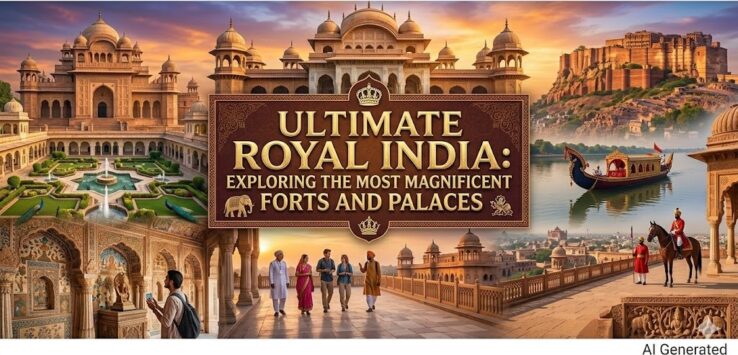
India’s landscape is dotted with extraordinary Forts and Palaces of India — stone witnesses to centuries of ambition, artistry, and royal splendour. These monuments were not simply buildings; they were declarations of power, devotion, and civilisation. Built by Mughal emperors, Rajput warriors, and Deccan sultans, they continue to inspire awe and draw millions of visitors each year. This guide takes you through India’s most legendary forts and palaces, along with practical tips to plan your visit.
🏯 Famous Forts and Palaces of India – Forts
Forts and Palaces of India were the backbone of ancient Indian kingdoms — strategically placed, heavily fortified, and often the site of decisive battles. Each one tells a different story of the dynasty that built it.
1. Forts and Palaces of India: Red Fort (Lal Qila) — Delhi
- Built by Mughal Emperor Shah Jahan in 1638, completed 1648
- UNESCO World Heritage Site
- India hoists its national flag here every Independence Day
Standing majestically in the heart of Delhi, the Red Fort is arguably the most iconic monument in India. Mughal Emperor Shah Jahan commissioned it in 1638 and it was completed in 1648 — built from deep red Agra sandstone that gives it its famous name. For nearly two centuries, it served as the primary residence of the Mughal emperors.
The fort complex spans over 254 acres enclosed by 2.5 km of imposing walls. Inside lie magnificent palaces, audience halls, and pavilions — including the Diwan-i-Aam (Hall of Public Audience) and the pearl-white Diwan-i-Khas (Hall of Private Audience), where the legendary Peacock Throne once stood.
Today, the Red Fort is a UNESCO World Heritage Site and a symbol of India’s sovereignty. Every year on Independence Day (15th August), the Prime Minister hoists the national flag here and addresses the nation.
| 📍 Location | Netaji Subhash Marg, Chandni Chowk, Delhi |
| 🎟️ Entry Fee | ₹35 (Indians) | ₹550 (Foreigners) |
| 🕐 Timings | 9:30 AM – 4:30 PM (closed Mondays) |
| 📅 Best Time | October to March |
| 🚇 Nearest Metro | Lal Qila (Violet Line) |
2. Forts and Palaces of India: Agra Fort — Uttar Pradesh
- Built by Emperor Akbar in 1565 using red sandstone
- UNESCO World Heritage Site, just 2.5 km from the Taj Mahal
- Shah Jahan spent his final years imprisoned here
Agra Fort often gets overshadowed by its famous neighbour the Taj Mahal — but it absolutely deserves its own visit. Emperor Akbar began construction in 1565 as a military garrison in red sandstone. His grandson Shah Jahan later transformed it into a palatial royal residence, adding white marble structures that blend beautifully with the earlier stonework.
The fort stretches across 94 acres along the Yamuna riverbank. It was home to several Mughal emperors, including Aurangzeb, who famously kept his own father Shah Jahan imprisoned here in his final years. From the towers, Shah Jahan reportedly spent his days gazing at the distant silhouette of the Taj Mahal — a poignant image history has never forgotten.
Key highlights include the Jahangir Palace, the ornate Khas Mahal, the Sheesh Mahal (Mirror Palace) with its intricate glass inlay work, and the Musamman Burj where Shah Jahan was held captive.
| 📍 Location | Rakabganj, Agra, Uttar Pradesh |
| 🎟️ Entry Fee | ₹40 (Indians) | ₹600 (Foreigners) |
| 🕐 Timings | Sunrise to Sunset (open all days) |
| 📅 Best Time | October to March |
| 🚂 Nearest Railway | Agra Cantonment (3 km) |
3. Forts and Palaces of India: Chittorgarh Fort — Rajasthan
- Largest fort in India — spreads across 700 acres
- UNESCO World Heritage Site and symbol of Rajput bravery
- Home to the magnificent Vijay Stambha (Victory Tower)
Chittorgarh Fort is not just the largest fort in India — it is a monument to Rajput honour, sacrifice, and an indomitable spirit that refused to bow. Perched atop a 180-metre rocky hill in southern Rajasthan, it spreads across a staggering 700 acres, dwarfing virtually every other fort in the country.
The fort witnessed three major sieges — by Alauddin Khilji (1303), Bahadur Shah of Gujarat (1535), and Mughal Emperor Akbar (1567). Each time, rather than surrender, the Rajput warriors performed Saka (a fight to the death) while women and children performed Jauhar — a mass self-immolation to preserve their honour. The most celebrated story is that of Rani Padmini, whose legend has been passed down through centuries in poetry, paintings, and film.
The most breathtaking structure within the fort is the Vijay Stambha (Victory Tower) — a 37-metre marvel built by Rana Kumbha in 1448 to celebrate his victory over the Sultan of Malwa, and recognised as one of the finest examples of medieval Indian architecture.
| 📍 Location | Chittorgarh, Rajasthan |
| 🎟️ Entry Fee | ₹15 (Indians) | ₹200 (Foreigners) |
| 🕐 Timings | 9:45 AM – 6:15 PM (open all days) |
| 📅 Best Time | October to February |
| 🚂 Nearest Railway | Chittorgarh Junction (1 km) |
4. Forts and Palaces of India: Mehrangarh Fort — Jodhpur, Rajasthan
- Founded by Rao Jodha in 1459, rising 125 metres above the Blue City
- One of the largest and best-preserved forts in India
- Features a world-class museum of royal artefacts
Rising 125 metres above the city of Jodhpur, Mehrangarh Fort is one of the most visually dramatic forts in the world. Founded by Rao Jodha in 1459, it has been continuously maintained by the Jodhpur royal family (the Rathore clan) ever since — making it one of the few forts in India that feels genuinely alive rather than merely preserved.
The fort’s thick walls — up to 36 metres high in places — are almost impenetrable in appearance. Seven gates guard the winding ascent to the top, including the Jayapol (Victory Gate), built to celebrate victories over the armies of Jaipur and Bikaner. Near the gates, you can still see the marks left by cannonballs from a 19th-century battle.
Inside, a superb museum holds royal palanquins, howdahs, armour, miniature paintings, and musical instruments from the Marwar kingdom. The views over Jodhpur’s famous blue rooftops from the ramparts are unforgettable, especially at sunset.
| 📍 Location | Mehrangarh Fort Road, Jodhpur, Rajasthan |
| 🎟️ Entry Fee | ₹100 (Indians) | ₹600 (Foreigners) — includes audio guide |
| 🕐 Timings | 9:00 AM – 5:30 PM (open all days) |
| 📅 Best Time | October to March |
| ✈️ Nearest Airport | Jodhpur Airport (5 km) |
5. Forts and Palaces of India: Golconda Fort — Hyderabad, Telangana
- Famous for extraordinary acoustic engineering — a clap at the entrance is heard 1 km away
- Historic centre of the global diamond trade
- Evening sound and light show brings its dramatic history to life
Golconda Fort is among the most architecturally and acoustically remarkable forts in India. Originally a mud fort built by the Kakatiya dynasty, it was dramatically expanded by the Bahmani Sultans and later the Qutb Shahi dynasty between the 14th and 17th centuries. At its peak, Golconda was a renowned centre of the diamond trade — the Koh-i-Noor and Hope Diamond are believed to have passed through here.
The fort’s most astonishing feature is its acoustic design: a hand clap at the main entrance (Fateh Darwaza) can be heard clearly at the topmost pavilion, nearly a kilometre away. This was deliberately engineered as an early warning system against surprise attacks — a feat of acoustic engineering that continues to astonish visitors and engineers alike.
The complex contains royal apartments, mosques, stables, and beautiful temples. An evening sound and light show brings the fort’s dramatic history vividly to life — highly recommended for first-time visitors.
| 📍 Location | Ibrahim Bagh, Hyderabad, Telangana |
| 🎟️ Entry Fee | ₹25 (Indians) | ₹300 (Foreigners) |
| 🕐 Timings | 9:00 AM – 5:30 PM (open all days) |
| 🌙 Light Show | Evenings — check local timings seasonally |
| 📅 Best Time | November to February |
👑 Forts and Palaces of India: Famous Palaces of India
Unlike forts built for defence, palaces were designed to dazzle — to express the wealth, taste, and cultural sophistication of their royal patrons. India’s palaces are among the most ornate and varied in the world, blending architectural influences from across centuries and continents.
1. Forts and Palaces of India: Mysore Palace — Mysuru, Karnataka
- India’s most visited monument after the Taj Mahal (6 million+ visitors annually)
- Official residence of the Wadiyar dynasty for nearly six centuries
- Illuminated by 97,000 bulbs during the Dasara festival
Mysore Palace — officially the Amba Vilas Palace — is India’s most visited monument after the Taj Mahal, welcoming over 6 million visitors annually. It served as the official residence of the Wadiyar dynasty, who ruled the Kingdom of Mysore for nearly six centuries. The current palace was built between 1897 and 1912 by British architect Henry Irwin after the previous wooden structure was destroyed by fire.
The palace is a breathtaking example of Indo-Saracenic architecture, blending Hindu, Muslim, Rajput, and Gothic elements into a spectacular whole. Its three storeys rise to nearly 45 metres, topped by five golden domes. Inside, the Kalyana Mantapa (marriage hall) features a stunning stained-glass ceiling with peacock motifs, while the Durbar Hall contains magnificent paintings of the royal court.
The palace becomes truly magical during the Dasara festival (October), when it is illuminated by 97,000 lightbulbs — a spectacle visible from miles around, watched by hundreds of thousands of visitors.
| 📍 Location | Sayyaji Rao Road, Mysuru, Karnataka |
| 🎟️ Entry Fee | ₹100 (Indians) | ₹200 (Foreigners) |
| 🕐 Timings | 10:00 AM – 5:30 PM (open all days) |
| 📅 Best Time | October (Dasara) or November to February |
| ✈️ Nearest Airport | Mysore Airport (10 km) |
2. Forts and Palaces of India: City Palace — Jaipur, Rajasthan
- Built by Maharaja Sawai Jai Singh II from 1727, in the heart of the Pink City
- Fusion of Rajput, Mughal, and European architectural styles
- Part of the palace is still the official residence of the Jaipur royal family
The City Palace of Jaipur is a sprawling complex at the heart of the Pink City, built by Maharaja Sawai Jai Singh II beginning in 1727 when he shifted his capital from Amber to newly founded Jaipur. What makes this palace unique is that it remains a living palace — part of it continues to serve as the official residence of the Kachwaha Rajput royal family.
The palace’s architecture is a graceful fusion of Rajput, Mughal, and European styles. The complex includes several palaces, courtyards, and gardens. The most photographed section is the Mubarak Mahal (Welcome Palace), now housing a textile museum with royal costumes, shawls, and carpets.
The Diwan-i-Khas (Hall of Private Audience) is home to two enormous silver urns — the largest silver objects in the world according to the Guinness Book of Records. Maharaja Sawai Madho Singh II had them made to carry sacred Ganges water on his trip to England in 1901.
| 📍 Location | Tulsi Marg, Gangori Bazaar, Jaipur |
| 🎟️ Entry Fee | ₹190 (Indians) | ₹500 (Foreigners) — includes Jantar Mantar |
| 🕐 Timings | 9:30 AM – 5:00 PM (open all days) |
| 📅 Best Time | October to March |
| 🚂 Nearest Railway | Jaipur Junction (5 km) |
3. Forts and Palaces of India: Falaknuma Palace — Hyderabad, Telangana
- Built in 1884 for Nawab Vikar-ul-Umra; later gifted to the Nizam of Hyderabad
- Designed in Italianate and Tudor style with legendary opulence
- Now a Taj Heritage luxury hotel — heritage tours available
Falaknuma — meaning “Mirror of the Sky” in Urdu — is one of the most extravagant palaces ever built in India. Perched on a hilltop 2,000 feet above Hyderabad, it was originally constructed in 1884 for Nawab Vikar-ul-Umra, a prime minister of Hyderabad, who later gifted it to the sixth Nizam, Mahbub Ali Khan — one of the wealthiest men in the world at the time.
The palace was designed in an Italianate and Tudor style, and filled with extraordinary treasures: Italian marble staircases, English chandeliers, French furniture, Venetian glass, and one of the finest collections of jade, silver, and crystal in the world. Its library holds some 10,000 books, including rare manuscripts and editions.
After decades of neglect, the Taj Hotels group undertook a meticulous decade-long restoration, reopening it as the Taj Falaknuma Palace hotel in 2010. Guests arrive via horse-drawn carriages and dine at what is said to be the world’s longest dining table setting. Heritage tours and high tea experiences are available even for non-guests.
| 📍 Location | Engine Bowli, Falaknuma, Hyderabad |
| 🎟️ Access | Heritage tours and high tea (booking required) |
| 🕐 Timings | Check with Taj Hotels for current schedules |
| 📅 Best Time | November to February |
| ✈️ Nearest Airport | Rajiv Gandhi International Airport (24 km) |
4. Forts and Palaces of India: Lake Palace (Jag Niwas) — Udaipur, Rajasthan
- Built in 1743 by Maharana Jagat Singh II on a natural island in Lake Pichola
- Constructed entirely of white marble — appears to float on the water
- Filming location for James Bond’s Octopussy (1983); now a Taj heritage hotel
Built in 1743 by Maharana Jagat Singh II, the Lake Palace appears to float serenely on the shimmering waters of Lake Pichola, with the Aravalli Hills rising behind it. Constructed almost entirely of white marble on a natural island, it was originally a royal summer retreat and pleasure palace for the Mewar royal family.
The palace spans about 1.5 acres and is adorned with lotus ponds, elegant gardens, and intricately carved interiors. It gained international fame as a filming location for the James Bond film Octopussy (1983) and has since become one of the most recognised and romantic heritage hotels in the world, now operated by the Taj Hotels group.
| 📍 Location | Lake Pichola, Udaipur, Rajasthan (boat access only) |
| 🎟️ Access | Hotel guests and dining reservations only |
| 📅 Best Time | October to March |
| ✈️ Nearest Airport | Maharana Pratap Airport (25 km) |
📊 Forts and Palaces: Key Differences
| Feature | Forts | Palaces |
|---|---|---|
| Primary Purpose | Military defence and protection | Royal residence and display of wealth |
| Architecture | Thick walls, battlements, watchtowers | Ornate halls, courtyards, landscaped gardens |
| Location | Hilltops, riverbanks, strategic passes | City centres, lakesides, scenic hilltops |
| Materials | Granite, red sandstone, local stone | Marble, precious stones, imported materials |
| Key Example | Chittorgarh Fort, Mehrangarh Fort | Mysore Palace, Falaknuma Palace |
📌 Why These Monuments Matter
India’s Forts and Palaces are far more than tourist attractions. They are living classrooms of history, architecture, engineering, and culture:
- Cultural Heritage: Each monument preserves centuries of art, craft, and royal tradition that would otherwise be lost to time.
- Architectural Innovation: From Golconda’s acoustic engineering to the floating illusion of the Lake Palace, these structures demonstrate extraordinary ingenuity.
- Historical Narratives: Visiting these sites connects you directly to the stories of emperors, warriors, queens, and ordinary people who shaped the subcontinent.
- Economic Significance: Heritage tourism supports millions of livelihoods — from guides and craftspeople to hoteliers and artisans.
- Inspiration for Future Generations: They remind us of what human ambition, creativity, and craftsmanship can achieve.
🧭 Planning Your Visit: Top Travel Tips
- Best Overall Season: October to March offers comfortable temperatures across most of Forts and Palaces of India.
- Combine Destinations: The Golden Triangle (Delhi – Agra – Jaipur) lets you cover Red Fort, Agra Fort, and City Palace in a single trip.
- Book Heritage Hotels Early: Places like Falaknuma and Lake Palace require advance reservations, especially in peak season.
- Hire a Local Guide: Context transforms these sites. A knowledgeable guide will bring the stories behind each wall and courtyard to life.
- Visit Early: Most forts and palaces are far less crowded in the early morning, and the light for photography is beautiful.
- Respect the Monuments: Avoid touching carved surfaces, stay on designated paths, and follow all conservation guidelines.
✍️ Conclusion
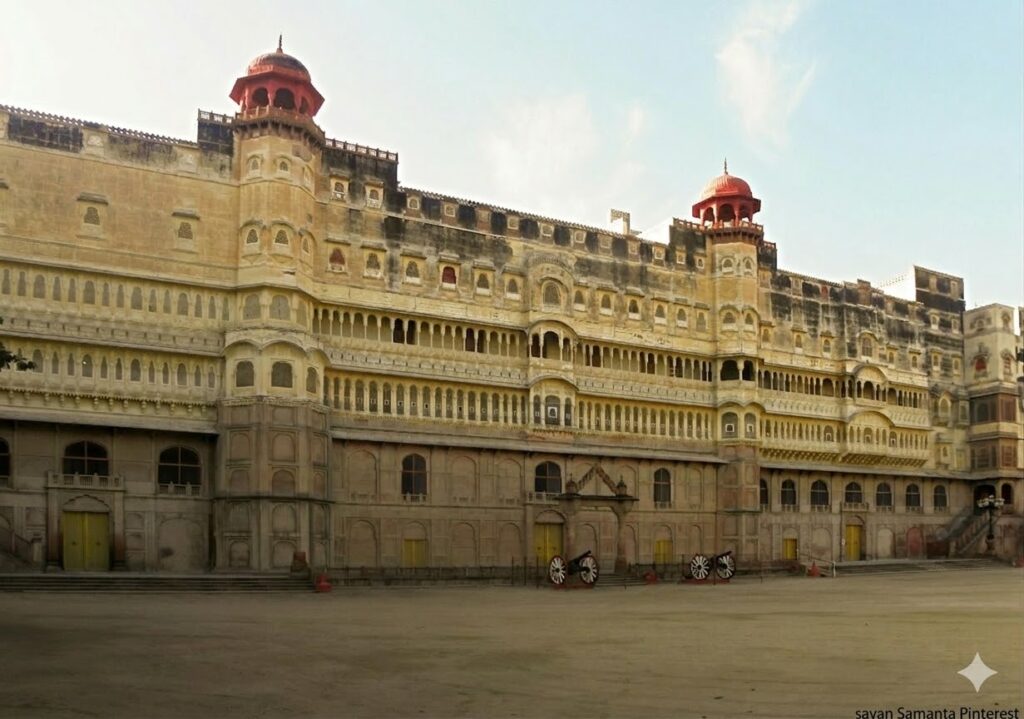
The Forts and Palaces of India are priceless gifts from history — stone and marble testimonies to human ambition, artistry, and the relentless desire to leave something beautiful behind. From the battle-scarred ramparts of Chittorgarh to the dreamlike white marble of the Lake Palace, each monument offers a different window into India’s extraordinary past.
Whether you are a history enthusiast, an architecture lover, or simply a traveller seeking beauty, these royal landmarks will leave you humbled and inspired. Visiting them is not just a journey through India — it is a journey through time itself.
Frequently Asked Questions: Forts and Palaces of India
1. What is the largest fort in India?
Chittorgarh Fort in Rajasthan is the largest fort in India, spreading across a massive 700 acres atop a 180-metre rocky hill. It is also a UNESCO World Heritage Site and a symbol of Rajput bravery, having witnessed three major sieges throughout its history.
2. Which of the Forts and Palace in India receives the most visitors every year?
Mysore Palace (Amba Vilas Palace) in Mysuru, Karnataka, is India’s most visited monument after the Taj Mahal, welcoming over 6 million visitors annually. It is especially popular during the Dasara festival in October, when it is illuminated by 97,000 lightbulbs.
3. What is the best time of year to visit Forts and Palaces in India?
The best time to visit most forts and palaces in India is between October and March, when the weather is cooler and more comfortable for sightseeing. Summer months (April–June) can be extremely hot, especially in Rajasthan and central India, while the monsoon season (July–September) may limit access to some hilltop forts.
4. Which Indian fort is famous for its incredible acoustic engineering?
Golconda Fort in Hyderabad, Telangana, is renowned for its extraordinary acoustic design. A single hand clap at the main entrance (Fateh Darwaza) can be heard clearly at the topmost pavilion nearly a kilometre away. This was deliberately engineered as an early warning system against surprise attacks — a remarkable feat that continues to amaze visitors today.
5. Can visitors stay inside any of India’s historic Forts and Palaces?
Yes! Several iconic Indian palaces have been converted into luxury heritage hotels. The Taj Falaknuma Palace in Hyderabad and the Lake Palace (Jag Niwas) in Udaipur, both managed by Taj Hotels, allow guests to stay amidst royal grandeur. Advance booking is strongly recommended, especially during the peak travel season from October to March.
6. Which Forts and Palaces in India are UNESCO World Heritage Sites?
Several forts and palaces in India have been designated as UNESCO World Heritage Sites, including the Red Fort and Agra Fort in North India, and Chittorgarh Fort in Rajasthan (part of the Hill Forts of Rajasthan group). These sites are recognised for their outstanding universal value in terms of history, architecture, and cultural significance.
Visit other Blogs
Your Ultimate Guide to Water Adventures Around Sri Lanka
Ultimate Pekoe Trail Sri Lanka: A 7-Day Tea Country Hiking Adventure

Leave a Reply
You must be logged in to post a comment.