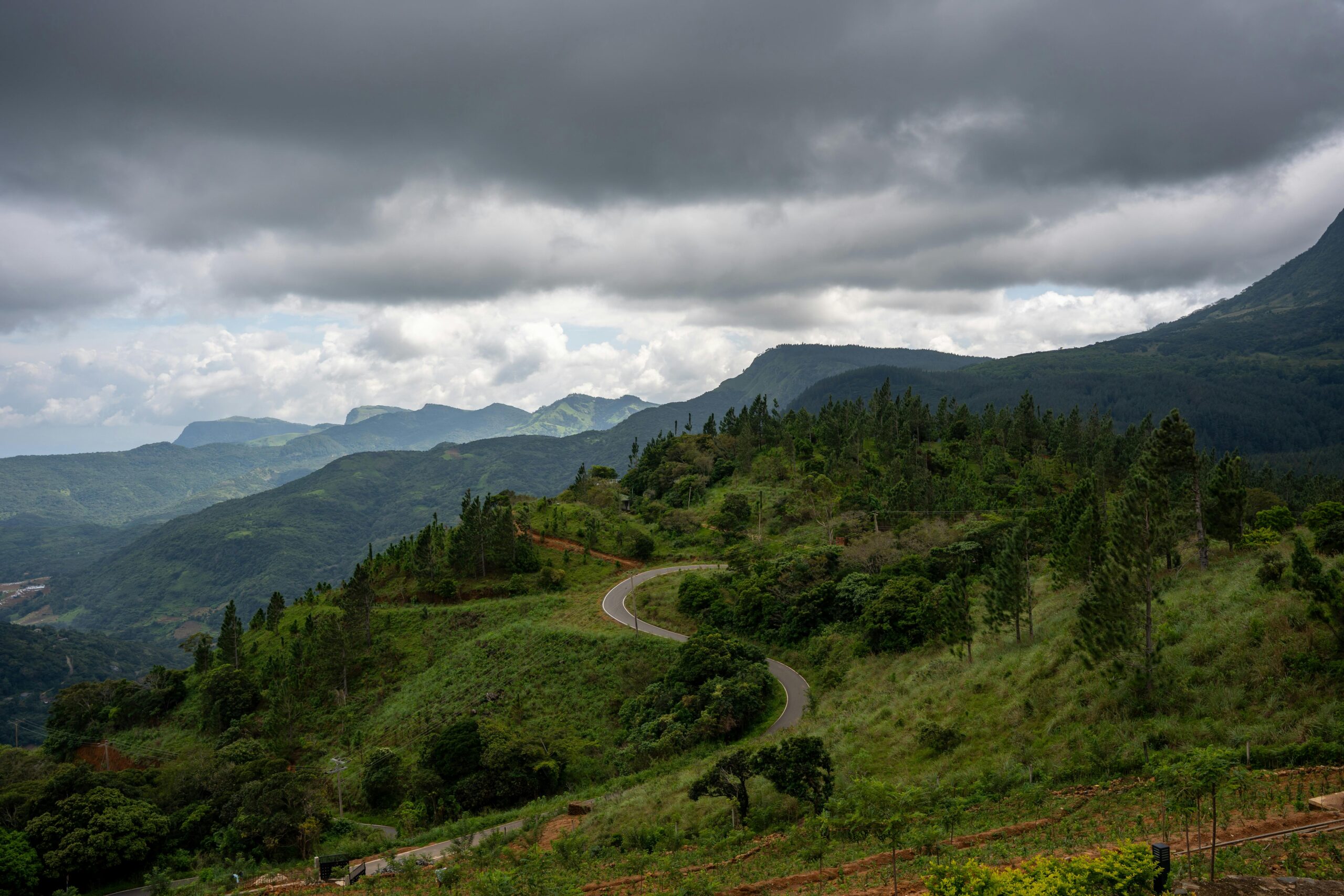
The mist rolls in without warning. One moment you can see the valley below — rice paddies, a silver river, a cluster of red-roofed houses. The next, everything disappears. You are standing in a cloud. Around you, the forest drips. A bird calls from somewhere deep in the trees. You take a breath of cool, clean air and keep walking. Welcome to the Knuckles Mountain Range — Sri Lanka’s most wild, most beautiful, and most underrated place to trek.
Most visitors to Sri Lanka never make it here. They do Ella. They do Sigiriya. They do the train ride. And those are all wonderful. But the Knuckles? This is something else entirely. A UNESCO World Heritage Site covering over 18,500 hectares of cloud forest, grassland, waterfalls, and mountain peaks — with barely a tourist in sight.
In this guide, we give you a practical 3-day trekking itinerary for the Knuckles Mountain Range. Day by day. Trail by trail. We cover the best routes, the best waterfalls, where to eat, where to sleep, what it costs, and how to get there from Kandy. Let’s go.
What Is the Knuckles Mountain Range?
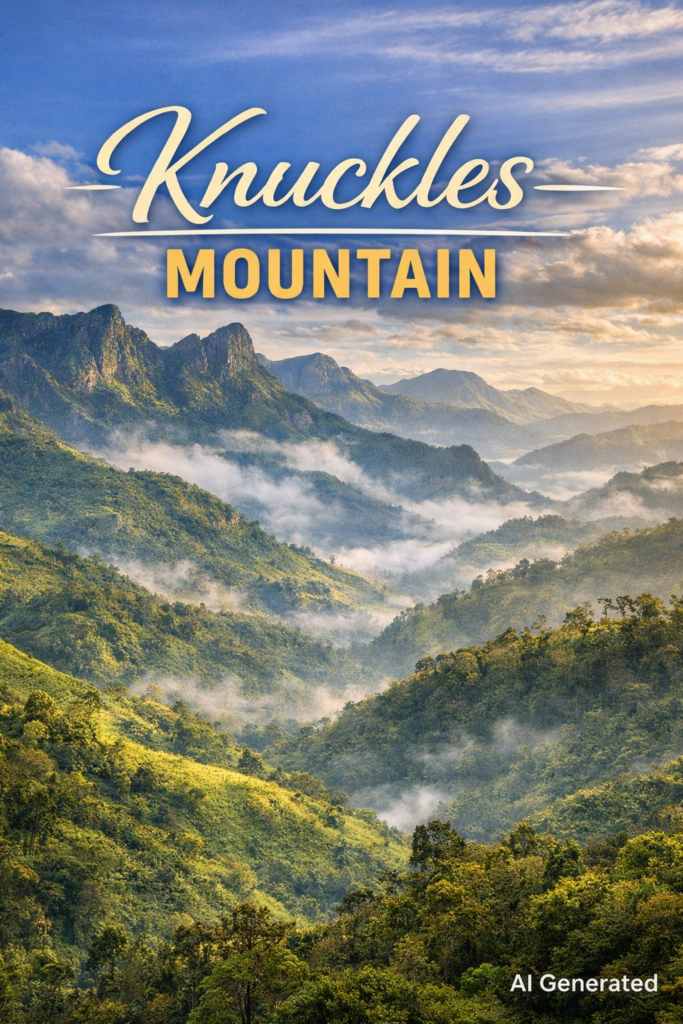
The Knuckles Mountain Range — also known as the Dumbara Hills — sits in the districts of Kandy and Matale in central Sri Lanka. It covers roughly 234 square kilometres of protected wilderness and reaches a maximum height of 1,906 metres at Gombaniya Peak.
The name comes from the British. When you look at the range from a distance, the cluster of jagged peaks resembles the knuckles of a clenched fist. UNESCO designated it a World Heritage Site in 2010, recognising its extraordinary biodiversity and its role as one of Asia’s most important cloud forest ecosystems.
What makes the Knuckles truly special is the way the landscape shifts as you walk. Within a single day’s hike, you can move from tropical lowland forest through tea plantations, into open montane grassland, and up into misty cloud forest — each zone home to its own unique plants and animals. You can literally walk from ecosystem to ecosystem, with such an obvious change in the landscape that you feel like you could be on several completely different treks.
Biodiversity at a Glance
The numbers in the Knuckles Mountain Range are staggering for an area this size. Many of these species are classified as threatened on the IUCN Red List:
- 🦜 128 species of birds — including many Sri Lanka endemics
- 🐆 31 species of mammals — including leopard, sambar deer, and purple-faced langur
- 🦎 53 species of reptiles — many found nowhere else on Earth
- 🐸 20 species of amphibians — the cloud forest is especially rich in endemic frogs
- 🦋 60 species of butterflies
- 🌿 Over 1,000 flowering plant species — including 150 endemic to Sri Lanka
The cloud forest is a very unique eco-region. It can only be found above 1,000 metres in the central highlands of Sri Lanka and is considered a hotspot for endemic flora and fauna — the only home in the world to more than 20 endangered species.
How to Get to the Knuckles Mountain Range from Kandy
Kandy is your gateway. It sits around 1 to 1.5 hours from the main Knuckles entry points — making it the perfect base before and after your trek.
Getting to Kandy from Colombo
Take the train from Colombo Fort to Kandy — a beautiful 2.5 to 3-hour journey through the hill country. Trains run several times daily. Book a reserved seat in advance on the Sri Lanka Railways official booking site. Alternatively, private taxis take around 2 to 2.5 hours via the expressway and cost USD 25 to 40.
Kandy to the Knuckles
There are three main entry routes into the Knuckles Mountain Range:
- 🚗 Via Hunnasgiriya — Take the A26 road east from Kandy through Digana and Teldeniya to Hunnasgiriya, then on to Deanston and the Knuckles Conservation Centre. This is the most popular approach. Around 1.5 hours by car or tuk-tuk.
- 🚗 Via Corbett’s Gap — Take the road from Hunnasgiriya up to Corbett’s Gap at around 1,300 metres. Corbett’s Gap opens up magnificent views of the Knuckles range. This is the starting point for several key trails including the Nitro Cave trail.
- 🚗 Via Riverston (Matale side) — Take the road from Matale through Rattota to Riverston. A longer approach but offers dramatic viewpoints and the Pitawala Pathana trail.
Best option: Hire a private car or tuk-tuk from Kandy for the full 3 days. Public transport in this part of Sri Lanka is sparse, intermittent, and quite unreliable. Roads are often steep, very windy and narrow. If you can afford it, the best way to get there and around is to hire a private car and driver, either from Colombo or from Kandy. Budget around USD 30 to 50 per day for a private driver.
Permits and Guides: What You Need to Know
Before you set foot on any trail in Knuckles Mountain Range, you need two things: a permit and a guide.
Permits
The official policy from the Forest Department of Sri Lanka requires an entrance permit of 1,000 to 2,500 LKR per person depending on the trail. Permits are purchased at the Knuckles Conservation Centre in Deanston or at the relevant trail entry point. Carry cash — card machines are not available at these remote offices.
Guides
A registered guide is mandatory for protected areas within the Knuckles Forest Reserve. This is not just a rule — it is genuinely good advice. Besides the area’s vastness and the possibility of getting lost, hikers are only allowed to enter the protected reserve with a qualified guide.
A good local guide knows every trail, every waterfall, and every endemic bird call. They add enormous value to the experience. Expect to pay around USD 25 to 50 per day for a qualified guide.
Recommended operators based in Kandy include Trek Knuckles, Nipuna Knuckles Trekking, and Hidden Trails Sri Lanka. Book in advance — good guides fill up fast in peak season.
3-Day Knuckles Mountain Range Trekking Itinerary
This itinerary is designed for first-time trekkers with a reasonable level of fitness. It covers three of the most rewarding trails in the range — combining waterfalls, viewpoints, cloud forest, and village culture. Total trekking distance across 3 days: approximately 35 to 40 km.
🥾 Day 1-Deanston to Mini World’s End and Duwili Ella Waterfall
📍 Start: Knuckles Conservation Centre, Deanston
📍 End: Deanston / Corbett’s Gap
📏 Distance: 10 to 12 km
⏱️ Time: 5 to 6 hours
💪 Difficulty: Easy to Moderate
🎫 Permit: Required — buy at Conservation Centre
Start your first morning at the Knuckles Conservation Centre in Deanston, about 1.5 hours from Kandy. Get your permits, meet your guide, and set off on a day that combines two of the range’s most iconic highlights.
The first trail takes you to Mini World’s End — a dramatic cliff edge at 1,192 metres on the southern end of the range. It is where a cliff drops at 1,192 metres giving views of surroundings for miles — hence the name, derived in resemblance to World’s End in Horton Plains. The trail from the Conservation Centre is around 1.5 km one way and takes just over an hour. On a clear morning, you can see villages far below in the valleys. Go early — cloud rolls in fast by mid-morning.
After returning from Mini World’s End, your guide leads you deeper into the forest on the trail to Duwili Ella — one of the most magical waterfalls in Sri Lanka. The Duwili Ella trail leads to a 40-metre waterfall hidden in the forests of the Knuckles Mountain Range. It’s the cave behind this waterfall that makes it worth the walk, as it means you can sneak behind the waterfall. Standing behind the curtain of water in the cool, dark cave is an experience you will not forget quickly.
In the afternoon, walk the Dothalugala Nature Trail — a gentle 4 km path through beautiful forest. This trail offers excellent birdwatching opportunities and stunning valley viewpoints on clear days. Your guide will point out endemic birds, medicinal plants, and the incredible diversity of ferns and orchids that cling to the trees.
Key highlights: Mini World’s End viewpoint at sunrise, the cave behind Duwili Ella waterfall, endemic birdwatching on the Dothalugala trail.
🍽️ Where to eat: Bring a packed lunch from Kandy or ask your guesthouse to prepare one. There are no restaurants on the trail. Stock up on snacks at the small shops near the Conservation Centre entrance.
🛏️ Where to sleep: Corbett’s Gap area guesthouses or homestays. Recommended: Corbett’s Rest — a simple, clean guesthouse right at the gap with spectacular valley views. Budget: USD 20 to 35 per night including dinner and breakfast.
🥾 Day 2 — Corbett’s Gap to Nitro Caves and Heel Oya Village Trek
📍 Start: Corbett’s Gap
📍 End: Heel Oya / Meemure Road
📏 Distance: 14 to 16 km
⏱️ Time: 6 to 7 hours
💪 Difficulty: Moderate
🎫 Permit: Required — available at Corbett’s Gap entry point
Day 2 is the most varied day of the three. You start at Corbett’s Gap — already at 1,300 metres — with views stretching across the range in every direction. The morning air is sharp and cool. If you stayed overnight, step outside at dawn. The sunrise from Corbett’s Gap is worth every early alarm.
The first trail of the day heads to the Nitro Caves — a massive limestone cave system inhabited by hundreds of bats. Download the Nitro Caves GPX trail on Wikiloc before you leave Kandy. The 11-kilometre path starts at Corbett’s Gap and will take about five hours to complete. The caves do make for a great, albeit slightly unnerving, sight. The trail winds through dense jungle, crossing streams and climbing through patches of bamboo forest. The sound of the river below accompanies you for much of the morning.
In the afternoon, switch to the Heel Oya Village Trek. This is the cultural heart of the day. The walk goes downhill through rainbow-painted villages to a small river, and then up the other side, through tea estates and a pine forest, to a spectacular viewpoint. Then it is back down through terraced rice paddy fields, past vivid red African tulip trees, to the Heel Oya Waterfall, where you can swim in the refreshing water.
The villages you pass through on this route are not tourist villages. They are real, working communities where farmers grow rice, cardamom, and spices on steep terraced hillsides. Your guide will introduce you to local families, explain traditional farming practices, and translate conversations. This is the kind of authentic cultural encounter that most visitors to Sri Lanka never get.
Key highlights: Dawn views from Corbett’s Gap, the Nitro Cave bat colony, Heel Oya Waterfall swim, rainbow-painted village houses, rice terrace viewpoints.
🍽️ Where to eat: Your guesthouse breakfast before you start. Pack lunch on the trail. In the evening, many village homestays in the Heel Oya area cook fresh Sri Lankan rice and curry — simple, home-cooked, and absolutely delicious.
🛏️ Where to sleep: Village homestay near Heel Oya or continue to a guesthouse near Meemure road. Budget: USD 15 to 30 per night including meals. Wild Glamping Knuckles is a well-reviewed glamping option near here for those who want something a little more special.
🥾 Day 3 — Meemure Village and the Knuckles Spice Trail
📍 Start: Meemure Village
📍 End: Kandy (via private transfer)
📏 Distance: 10 to 12 km trekking
⏱️ Time: 4 to 5 hours hiking + transfer
💪 Difficulty: Easy to Moderate
🎫 Permit: Check with guide on entry requirements
Save the most remote experience for last. Day 3 takes you to Meemure — described by many as the most isolated village in Sri Lanka.
Shrouded in clouds and cloaked in mystery lies Sri Lanka’s most isolated village, Meemure. Far away from the worlds of ‘Little England’ (Nuwara Eliya) or ‘Backpacker Town’ (Ella), Meemure offers something different. With a population of 400 surrounded by the towering mountains of the Knuckles Range, visiting Meemure will give you an insight into the Sri Lankan way of life — isolated, basic, and beautiful. Lonely Planet describes the journey to Meemure as one of the most adventurous drives in the whole of Sri Lanka. Getting here is half the adventure.
Spend the morning on the Knuckles Spice Trail — a moderate walk through spice gardens and forest that takes you past cardamom, pepper, cloves, and cinnamon growing wild alongside the path. You will explore traditional spice gardens, meet local farmers, and learn about centuries-old farming practices while enjoying comfortable terrain suitable for most fitness levels. Your guide will crush a cardamom pod in their palm and hand it to you. The scent alone is worth the walk.
After the spice trail, walk the short but rewarding trail to Rathna Ella waterfall — a multi-tiered cascade tumbling through the forest. There are also plenty of waterfalls to explore in this area, including Jodu Ella, a 25-metre cascade near Gomara village. Take a dip in the natural pool at the base. On Day 3, your legs have earned it.
In the late morning, explore Meemure village itself. Wander through the narrow paths between houses. Watch children play in the stream. Sit with a family over a cup of sweet tea. Meemure is a little-known attraction, even among locals, so it is easy to have an experience minus the selfie sticks and loud tourists. Mingle with the villagers, who are more than happy to converse, and discover Sri Lanka’s much-famed hospitality.
By early afternoon, your driver picks you up for the return journey to Kandy. The road back winds through the mountains — even the drive is beautiful.
Key highlights: Meemure village life, the Knuckles Mountain Range Spice Trail, Rathna Ella waterfall swim, the wild and winding drive back through the mountains.
🍽️ Where to eat: Breakfast at your Day 2 guesthouse before departure. Lunch in Meemure — ask a local family if they can cook for you. Many will say yes. Dinner back in Kandy — treat yourself to a good meal after three days in the mountains.
🛏️ Where to sleep: Return to Kandy. You have earned a comfortable hotel. Mid-range options in Kandy: USD 40 to 80 per night.
3-Day Itinerary at a Glance
| Day | Trails | Key Highlights | Distance | Sleep |
|---|---|---|---|---|
| Day 1 | Mini World’s End + Duwili Ella + Dothalugala | Cliff viewpoint, cave waterfall, endemic birds | 10–12 km | Corbett’s Gap |
| Day 2 | Nitro Caves + Heel Oya Village Trek | Bat caves, rainbow villages, waterfall swim, rice terraces | 14–16 km | Heel Oya / Meemure area |
| Day 3 | Meemure Village + Spice Trail + Rathna Ella | Isolated village, spice gardens, waterfall, return to Kandy | 10–12 km | Return to Kandy |
Budget Breakdown: 3 Days in the Knuckles
| Expense | Budget | Mid-Range | Comfort |
|---|---|---|---|
| Accommodation (per night) | USD 15–25 | USD 35–60 | USD 70–120 |
| Meals (per day) | USD 6–10 | USD 12–20 | USD 25–40 |
| Guide (per day) | USD 25–35 | USD 35–50 | USD 50–80 |
| Private driver (per day) | USD 30–40 | USD 40–55 | USD 55–80 |
| Trail permits (per day) | USD 5–10 | USD 5–10 | USD 5–10 |
| Total 3 days (estimated) | USD 250–350 | USD 380–550 | USD 600–900 |
💡 Money tip: The biggest cost is your guide and driver. Split this between 2 to 4 people and the per-person cost drops significantly. The Knuckles is ideal for a small group of friends or couples travelling together.
Best Time to Trek the Knuckles Mountain Range
Check the Kandy climate data on Meteoblue and the official Sri Lanka Tourism climate guide before you book. Here is our seasonal breakdown:
| Season | Months | Conditions | Verdict |
|---|---|---|---|
| Best Season | February – April | Dry, clear skies, good trail conditions. Waterfalls still flowing from earlier rains. | ✅ Ideal |
| Good Season | May – September | Some rain. Leeches active. Trails can be muddy but forest is lush and green. | 🟡 Good with preparation |
| Shoulder Season | October – November | Inter-monsoon showers. Trails slippery. Not recommended for beginners. | 🟡 Experienced hikers only |
| Avoid | December – January | Heavy northeast monsoon on this side of the island. Very wet and slippery. | 🔴 Not recommended |
Sweet spot: February to April. Trails are dry and clear. Waterfalls are full from the previous monsoon. Skies are clear enough for the views from Mini World’s End and Corbett’s Gap. And the forest is at its most alive.
Essential Packing List for the Knuckles
- 🧦 Leech socks — Non-negotiable. Leeches are common on any trail after rain. Leech socks keep them off your ankles. Buy them in Kandy before you go.
- 👟 Waterproof hiking boots — Many trails cross streams and get muddy. Ankle support also helps on rocky descents.
- 🧴 Insect repellent — Apply generously and reapply after stream crossings.
- 🌧️ Light rain jacket — Even in dry season, afternoon showers are possible in the mountains.
- 💧 Water bottle (2 litres minimum) — Refill at streams on the trail — your guide will show you safe spots.
- 🎒 Daypack (20–25 litres) — Keep it light. Send your main bag to your next guesthouse with your driver.
- 🍱 Packed lunch and snacks — There are no restaurants on the trails. Always bring more food than you think you need.
- 📱 AllTrails or Wikiloc offline maps — Download the Knuckles GPX tracks before you leave Kandy. Mobile signal is patchy in the mountains.
- 💵 Cash in Sri Lankan Rupees — Permits, tips, and village purchases all require cash.
- 🧢 Sun hat and sunscreen — The altitude means UV exposure is intense even on cloudy days.
Combine the Knuckles with Nearby Attractions
The Knuckles sits in perfect position for combining with other key Sri Lanka highlights:
- 🏯 Kandy (1 to 1.5 hours) — Sri Lanka’s cultural capital. Visit the Temple of the Tooth Relic, explore the vibrant Kandy market, and walk around Kandy Lake. A natural before and after the trek.
- 🗿 Matale (45 mins from Deanston) — The Aluvihara Rock Cave Temple is a fascinating ancient monastery carved into a granite cliff. Worth a half-day stopover on your way to or from the Knuckles.
- 🏔️ Dambulla Cave Temple (1.5 hours) — Sri Lanka’s largest UNESCO-listed cave temple complex, with five caves of Buddhist murals dating back over 2,000 years. Combine easily with a Knuckles trek if you are based in Kandy.
- 🦁 Sigiriya Rock Fortress (2 hours) — The iconic UNESCO-listed lion rock fortress. A full-day excursion from Kandy either before or after your Knuckles trek.
- 🍃 Pekoe Trail — If you love hiking, the Pekoe Trail starts near Kandy and takes you through tea country all the way to Ella. The Knuckles pairs brilliantly as a wilder, off-trail complement to the Pekoe Trail experience.
Frequently Asked Questions About Trekking the Knuckles Mountain Range
1. Do I need a guide to trek the Knuckles Mountain Range?
Yes — a guide is mandatory for protected areas within the Knuckles Forest Reserve, and it is strongly recommended everywhere else. The range covers over 18,500 hectares of dense, unmarked forest. Trails can be hard to follow, especially in mist. A good local guide knows the forest intimately, keeps you safe, helps with permits, and adds enormous cultural and ecological context to what you see. Expect to pay USD 25 to 50 per day. It is money very well spent. We recommend Trek Knuckles as a starting point for finding a qualified local guide.
2. Are there leeches in the Knuckles Mountain Range?
Yes. Leeches are common throughout the Knuckles, especially after rain and during the wetter months from May to November. They are not dangerous — just annoying. The solution is simple: buy a pair of leech socks before you go. You can find them in outdoor shops in Kandy for around LKR 500 to 1,000. Tuck your trousers into the socks, spray with insect repellent, and check yourself every hour or so. Your guide will help remove any that get through. Don’t let leeches put you off — the Knuckles is absolutely worth it.
3. How hard is the trekking in the Knuckles Mountain Range?
The Knuckles has trails for every fitness level. The routes in our 3-day itinerary range from easy (Mini World’s End — just 1.5 km one way) to moderate (Nitro Caves trail — 11 km). None require technical climbing or specialist equipment. If you can walk 10 to 15 km comfortably on uneven terrain with a daypack, you can manage all three days. The key challenges are the heat, the humidity, and the occasional steep section. Start early each morning, stay hydrated, and take your time. Browse all available Knuckles trails on AllTrails to compare difficulty ratings before you book.
4. What wildlife might I see in the Knuckles Mountain Range?
The Knuckles is one of Sri Lanka’s richest wildlife habitats. Birdwatchers are in paradise — 128 species have been recorded here, including many Sri Lankan endemics like the Sri Lanka junglefowl, the Sri Lanka whistling thrush, and the dull-blue flycatcher. You have a good chance of spotting sambar deer, purple-faced langurs, and giant squirrels on any day’s walk. Leopards are present but extremely elusive — a sighting is rare but possible in the denser forest sections. Many of these species are listed on the IUCN Red List as threatened or near-threatened. For responsible wildlife watching principles, visit Responsible Travel.
5. Can I camp overnight in the Knuckles Mountain Range?
Yes. Camping is possible in certain areas of the Knuckles and it is a wonderful way to experience the mountains after dark — the stars at altitude are spectacular. Organised camping trips with guides, tents, and meals are offered by operators like Trek Knuckles. Wild camping without a guide is not recommended and may not be permitted in protected areas. If camping appeals, book a package with a registered operator who handles permits, equipment, and cooking. Budget around USD 60 to 100 per person per night for a fully organised camping experience.
6. How does the Knuckles compare to other Sri Lanka treks like the Pekoe Trail or Horton Plains?
Each of Sri Lanka’s major trekking destinations has its own character. Horton Plains offers wide open plateau landscapes and the drama of World’s End — but it is crowded and requires an expensive entry fee. The Pekoe Trail is a long-distance tea country walk — structured, well-marked, and culturally rich, but relatively gentle. The Knuckles is the wildest of the three. It is more remote, less visited, more physically varied, and more biodiverse than either. You walk through real forest, cross real rivers, and visit real villages that see very few outsiders. If you want raw, authentic Sri Lanka — choose the Knuckles.
The Knuckles Mountain Range rewards the traveller who is willing to step off the main road and into the mist. Three days here will give you memories that last far longer than any beach sunset or temple photo. Wild forest. Hidden waterfalls. Ancient villages. And a silence so deep you can hear your own heartbeat. Book your Knuckles trek — and discover the Sri Lanka that most tourists never find.
Love adventure travel in Sri Lanka? Browse all our hiking and trekking guides at rydetravel.com — including our complete guide to the Pekoe Trail, whale watching in Mirissa, and wildlife safaris at Hurulu Eco Park.
Visit other Blogs
Hurulu Eco Park Sri Lanka: Safari Guide, Wildlife & Best Time to Visit

Leave a Reply
You must be logged in to post a comment.